
What is the bow tie effect in a diamond?
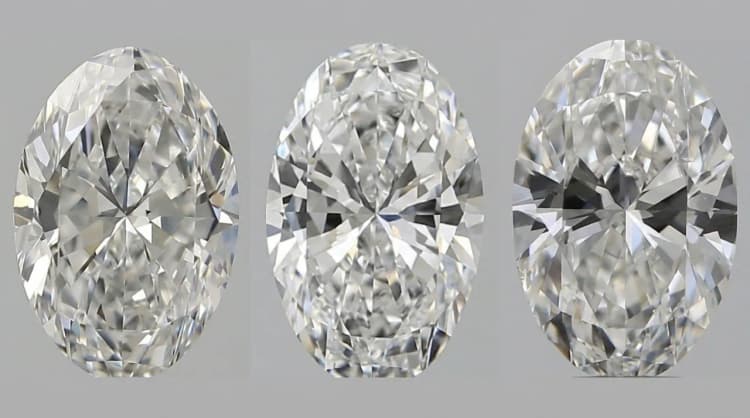
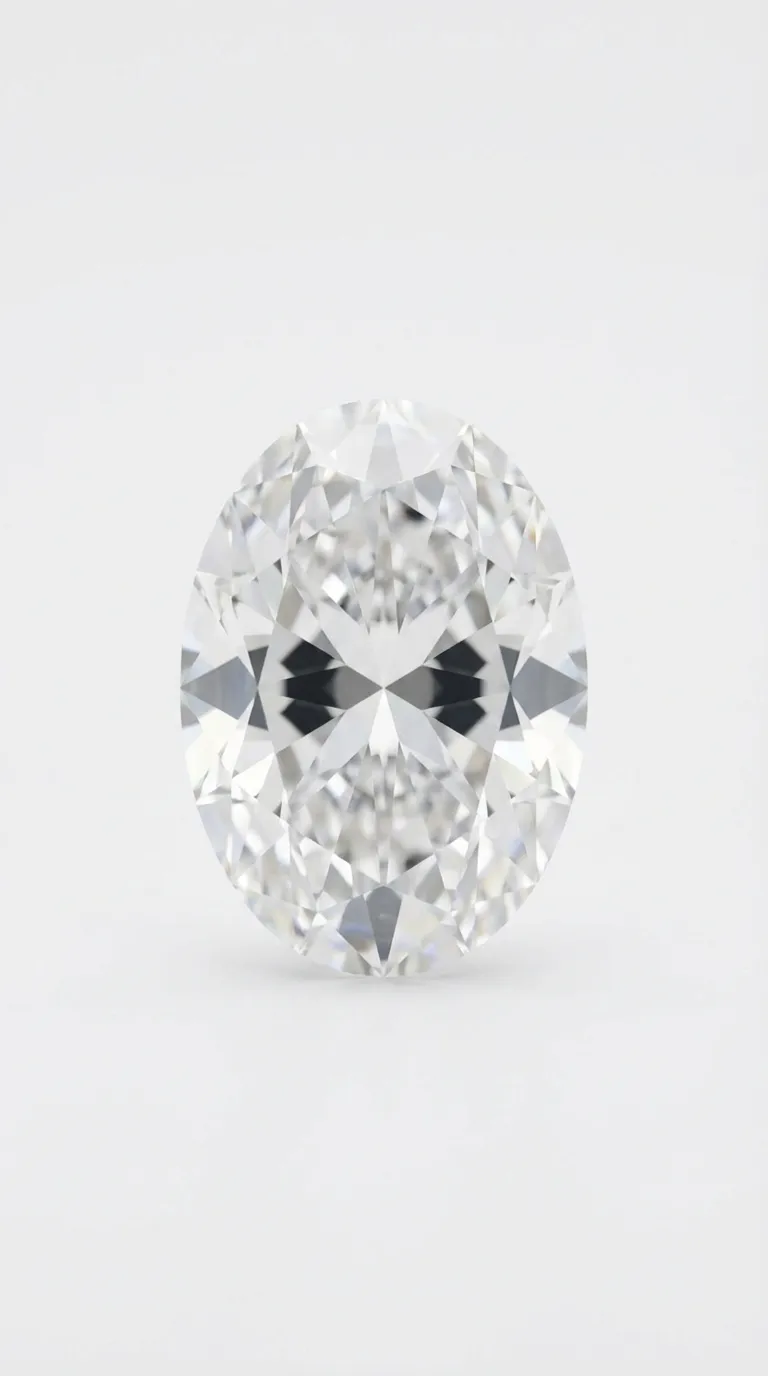
A dark shadow shaped like a bow tie that runs across the middle of elongated diamond shapes, most visibly in ovals, pears, and marquises. It's an optical effect caused by how light moves through the stone, so it shows up the same way every time you look at the diamond face-on. Every oval has at least a faint bow tie. Whether the bow tie ruins the diamond comes down to how dark and how wide it is.
What causes a bow tie in a diamond?
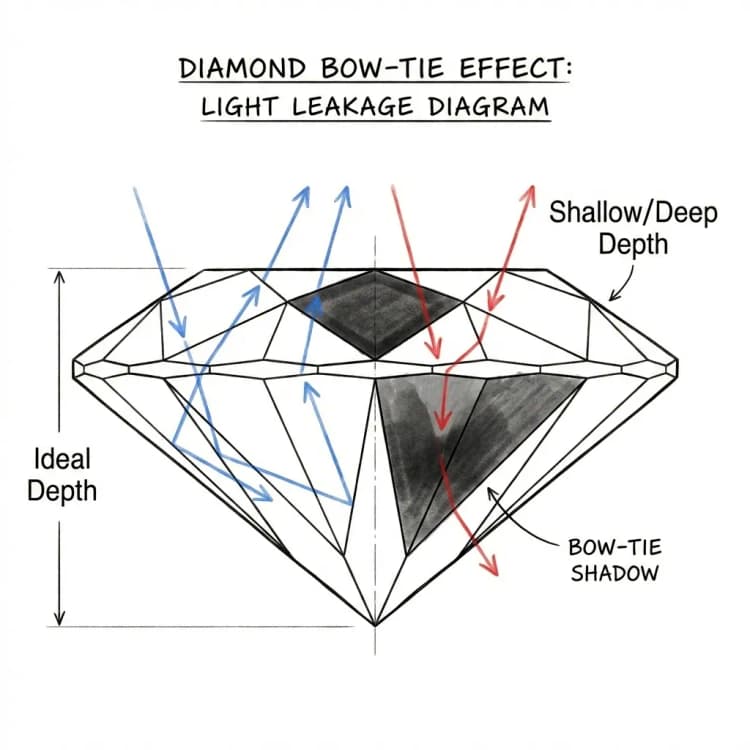
Light leakage through the pavilion facets in the middle of the stone. Here's what's happening:
In a well-cut diamond, light enters through the top (the crown and table), bounces off the pavilion facets at the bottom, and reflects back up at your eye as sparkle. In an oval or pear, the pavilion is long and shallow through the middle, and the facets that should reflect light in that section sit at angles that send it out the bottom or sides instead of back up. The areas where the light escapes look dark from above, and the shape of those dark areas is the bow tie.
The bow tie is a geometric effect. It depends entirely on how the diamond was cut, and it shows up the same way every time you look at the stone face-on.
Which diamond shapes are most affected?
Three shapes carry the bow tie risk because all three are elongated:
- Oval. The most common bow tie shape. The long, curved pavilion is the hardest to cut without leakage.
- Pear. Bow tie sits in the broader part of the stone, below the point.
- Marquise. Bow tie runs the full midsection between the two points and is often the most visible of the three.
Round, princess, cushion, asscher, and emerald cuts don't get bow ties, because their pavilions don't have the long shallow midsection that creates the leakage zone. The shapes most vulnerable to bow ties also happen to be the ones that look largest for their carat weight, which is part of why they stay popular despite the risk.
Do all oval diamonds have a bow tie?
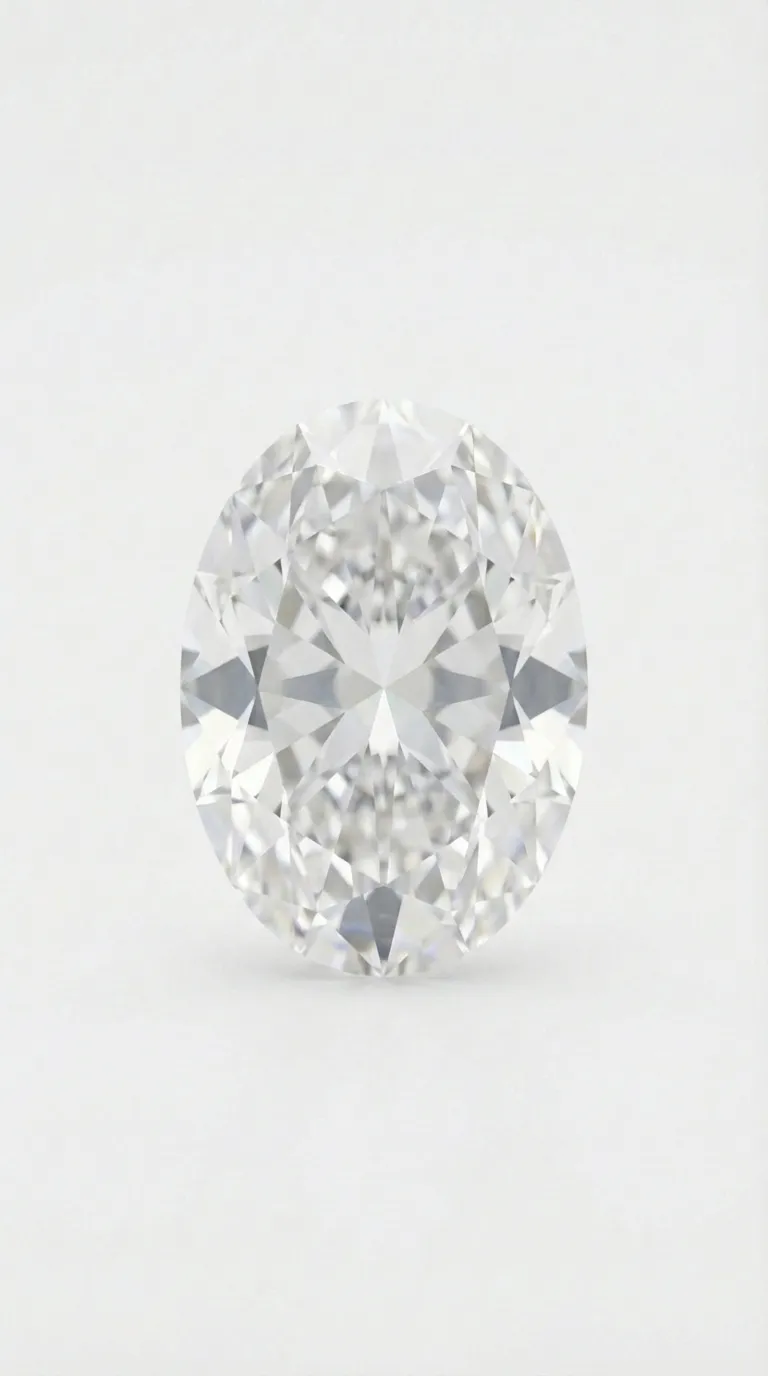
Yes, every oval has at least some bow tie. It's an inherent property of the shape, built into the geometry of any elongated cut. The question is how visible the bow tie is and whether it dominates the stone:
- Faint or no visible bow tie: the cutter did their job well. Light fills the entire stone face when you look at it face-on. This is what you want.
- Subtle bow tie: a soft grey shadow you can see if you look for it. Plenty of buyers prefer this, since it adds depth and contrast. Acceptable.
- Pronounced bow tie: a clear dark bow tie shape that catches your eye before anything else. The stone looks dull through the middle. Not ideal.
- Severe bow tie: large black zones across the middle that kill the sparkle. The stone looks half-dead. Avoid.
Roughly 70% of ovals on the market sit in the faint-to-subtle range. The 30% with pronounced or severe bow ties are often the ones with aggressive length-to-width ratios or shallow proportions, sometimes chosen to keep the carat weight up.
Is a bow tie in a diamond bad?
A subtle one is fine. A pronounced one is a problem. There's no industry threshold for "too much bow tie" because GIA and IGI don't grade fancy-shape cut quality the way they grade rounds, so the judgement is on you and the jeweller.
A useful rule: if the bow tie is the first thing you notice when you look at the stone face-on under normal indoor lighting, it's too much. If you have to angle the stone or hunt for it to see it, you're in the safe zone. Severe bow ties also tend to reduce the price the diamond fetches at resale, so they hurt twice.
How to spot a bow tie before you buy
The bow tie is a visual call, so look at the actual stone (or a high-resolution video of it) rather than judging from the GIA certificate alone. A few practical checks:
- Look at the stone face-on under normal indoor lighting. Hold it about 30 cm from your face and move it around slowly. If a dark bow tie appears immediately, that's the answer.
- Watch a 360° video. Most reputable diamond sellers (online retailers like James Allen and Blue Nile, plus most Australian custom workshops) show high-resolution video. Pause it at the face-on angle and check the middle of the stone.
- Check it under a few different light sources. A stone that looks fine under spotlights and bad under a desk lamp has a worse bow tie than one that looks the same under both.
- Compare side by side. If you're shopping for ovals, ask to see three or four next to each other. The differences in bow tie severity are easier to see in comparison than in isolation. Our lab-grown diamond engagement rings are photographed in detail so you can make the same comparison online.
If you can't see the stone in person, insist on video and on the right to return if the bow tie looks worse in hand than on screen.
Does GIA or IGI grade the bow tie?
No. Both labs grade symmetry, polish, and proportion measurements for fancy-shape diamonds, but neither assigns a cut grade or a bow tie grade to ovals, pears, or marquises. You'll see "Excellent" or "Very Good" for symmetry and polish on a strong report, and those grades correlate with a smaller bow tie, but they don't guarantee it.
This is the main reason fancy shapes need to be seen rather than bought sight-unseen on certificate alone. A round brilliant with an Excellent cut grade is a known quantity. An oval with Excellent symmetry could still have a strong bow tie depending on how the cutter chose to handle the proportions, which is why our diamond cut quality guide treats fancy shapes differently from rounds.
What proportions help minimise a bow tie?
The cutter's choices on depth, table, and length-to-width ratio do most of the work. Numbers that tend to produce well-controlled bow ties in ovals:
- Total depth: 58% to 62% of the width. Shallow stones leak light out the bottom; deep stones trap it.
- Table percentage: 53% to 63%. The flat top is where light enters, and a table outside this range distributes light unevenly across the pavilion.
- Length-to-width ratio: 1.30:1 to 1.50:1. Skinnier ovals (above 1.50:1) tend to show more pronounced bow ties because the longer midsection gives more room for facets to misalign.
- Symmetry grade: Excellent or Very Good. If one side of the stone is cut at a slightly different angle to the other, the bow tie becomes more visible.
These are guides for ovals. Pears and marquises have their own ideal ranges, with similar depth and symmetry targets but different length-to-width sweet spots (1.45:1 to 1.65:1 for pears, 1.85:1 to 2.05:1 for marquises).
Cutters often have to choose between cutting for ideal light performance and cutting for carat weight retention. Choosing weight means a heavier finished stone that sells for more per carat but tends to show a worse bow tie. This is part of why aggressive value-buying on fancy shapes, where you push for the biggest possible carat at a given price, often leaves you with a stone that has a strong bow tie.
Why the bow tie looks worse under jewellery store lights
Bright overhead spotlights of the kind used in jewellery showrooms exaggerate bow ties because your own head casts a shadow onto the diamond at the same time you're looking at it. Moving or tilting the stone shifts the shadow and can hide the bow tie completely.
Soft natural daylight fills the whole stone evenly and shows the real distribution of brilliance and shadow. A diamond you're considering should look good in both conditions, because you'll wear it in both. If the bow tie disappears under spotlights but reappears at home under a lamp, the showroom lighting was masking it.
If you're shopping for an oval, our oval engagement ring collection shows the ones we've cut or sourced with bow ties kept in the faint-to-subtle range. You pick the exact stone yourself in the lab-grown diamond collection, each one listed with its own certificate and measurements. Contact us if you'd like us to walk you through a specific stone before you commit.
Thanks for reading,
Jared & Brie
Designed by us in Melbourne, made to order
Lily Dia is a small studio, so every ring is drawn, set and finished for the person wearing it. If this article helped, the collection shows how these choices look on real rings, and you can ask us anything before you decide.
View lab-grown diamond ringsOr ask us a question first