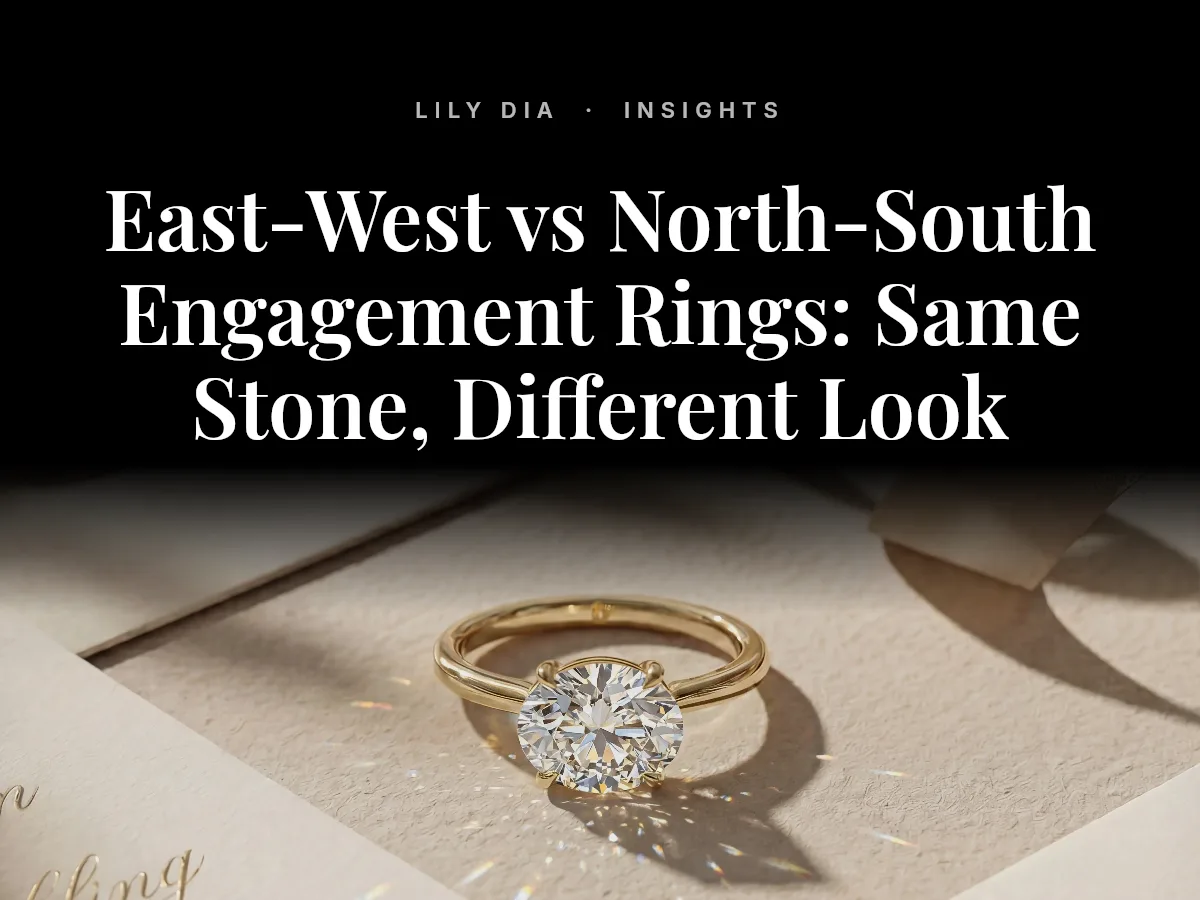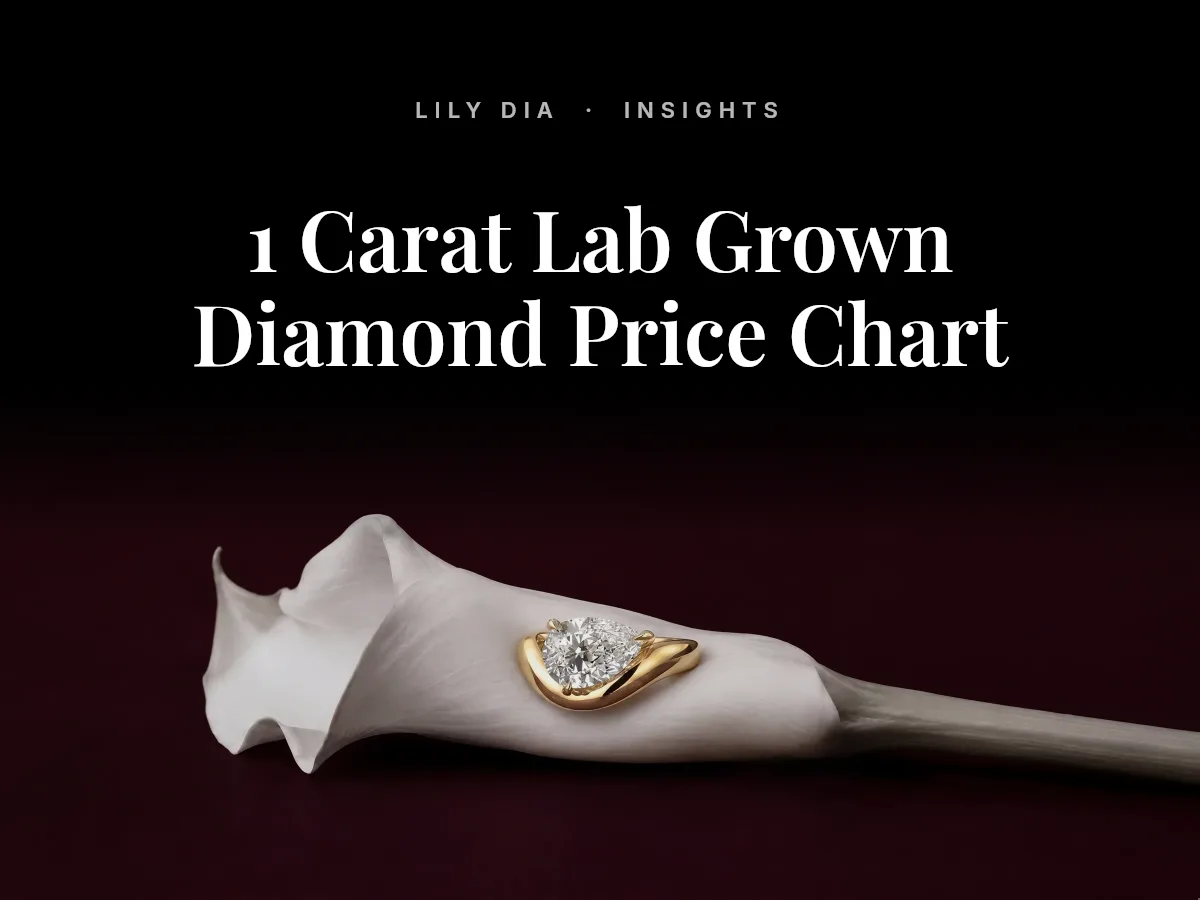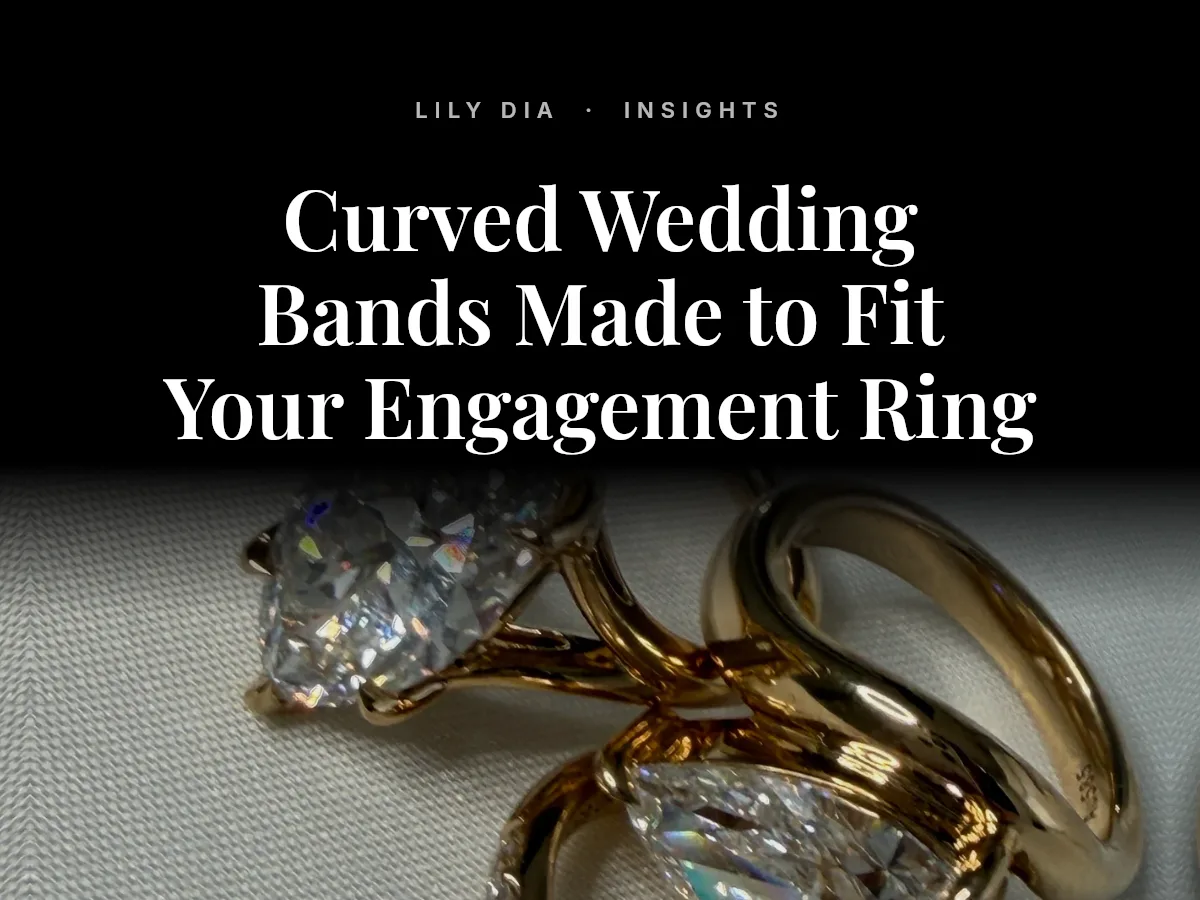
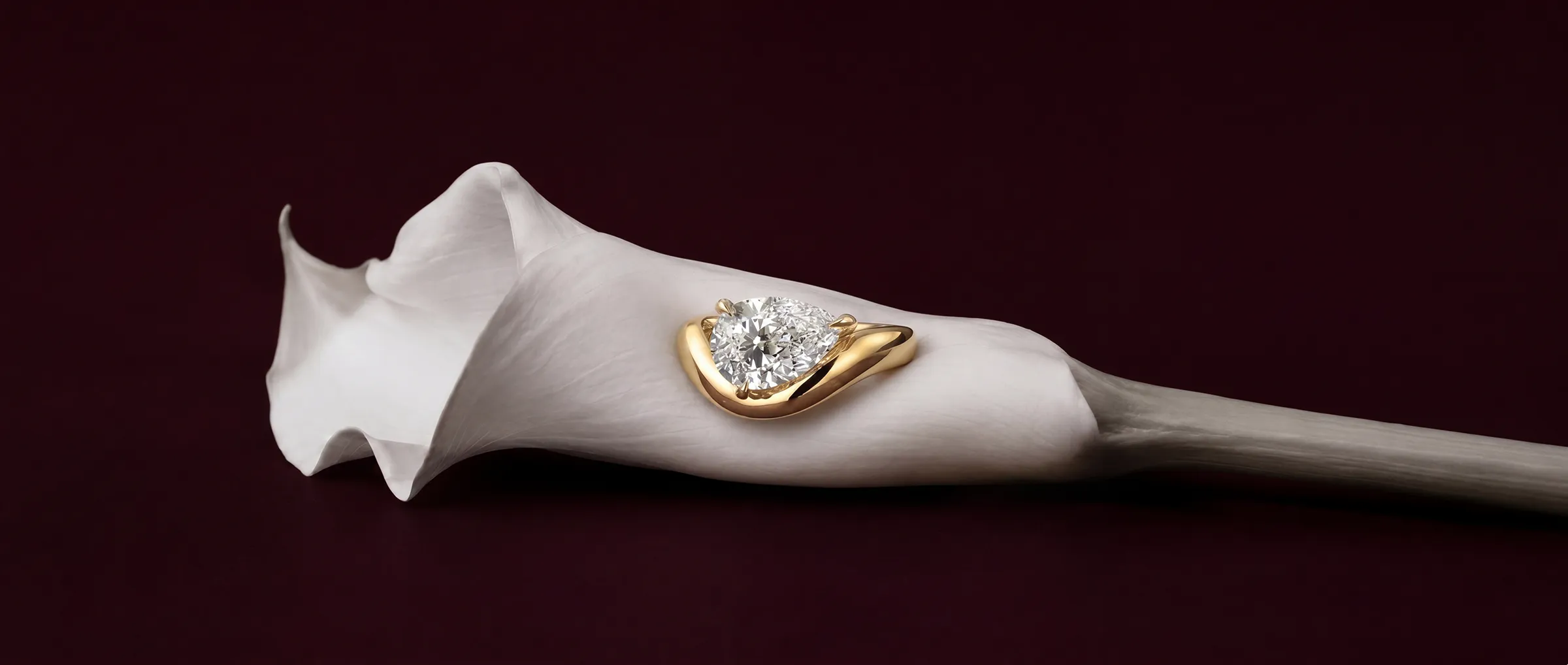
East-west pear diamond engagement ring in yellow gold resting on a white calla lily, by Lily Dia Jewellery

Jewellery Insights

Trends, behind-the-scenes stories and expert perspectives on lab-grown diamonds, moissanite and engagement ring design.
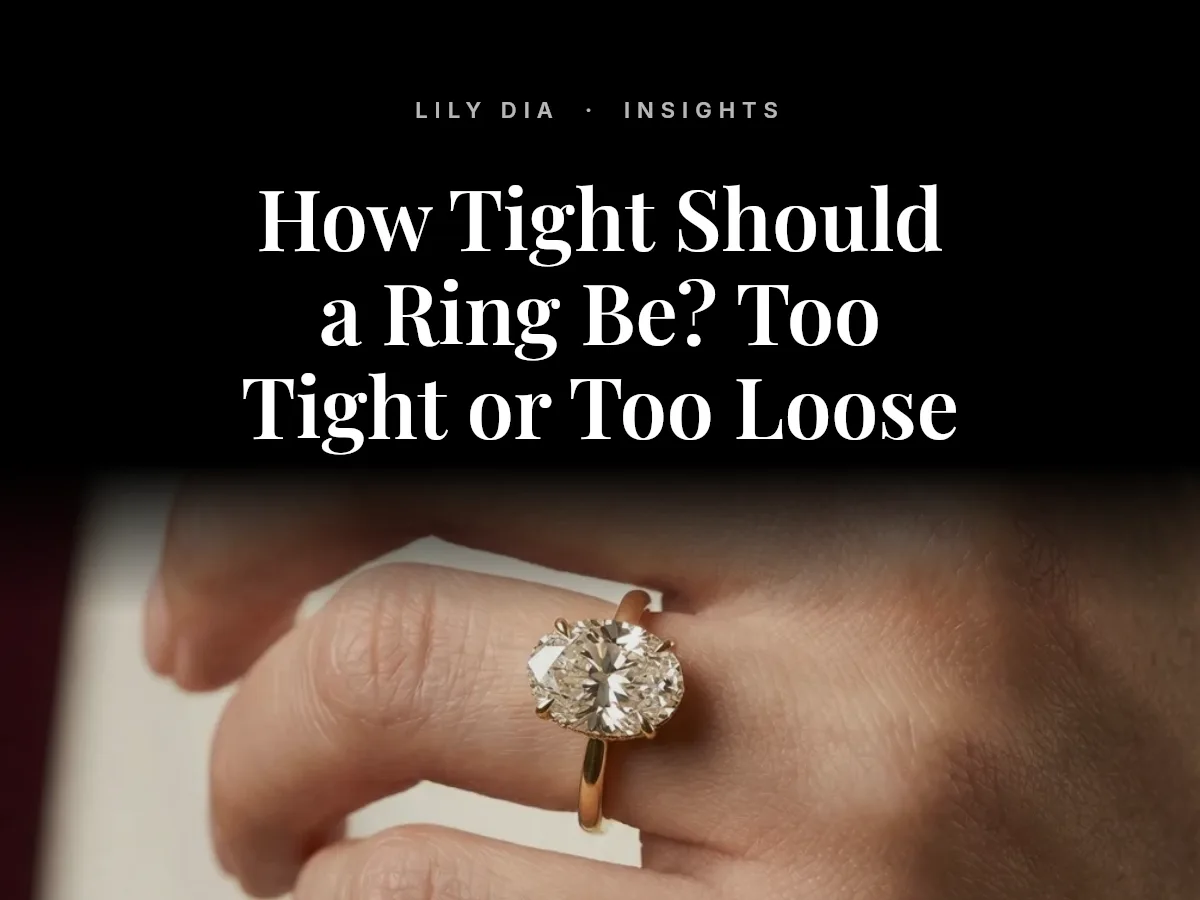
Hand wearing an oval diamond solitaire engagement ring below the title "How Tight Should a Ring Be? Too Tight or Too Loose", by Lily Dia Jewellery

How Tight Should a Ring Be? Too Tight or Too Loose

Slightly loose is better than slightly tight. A well-fitted ring slides over the knuckle with light resistance, sits snugly at the base of the finger, and takes a gentle wiggle to come off. If you are between sizes, size up. Resizing larger is harder than resizing smaller.
Browse all

92 articles
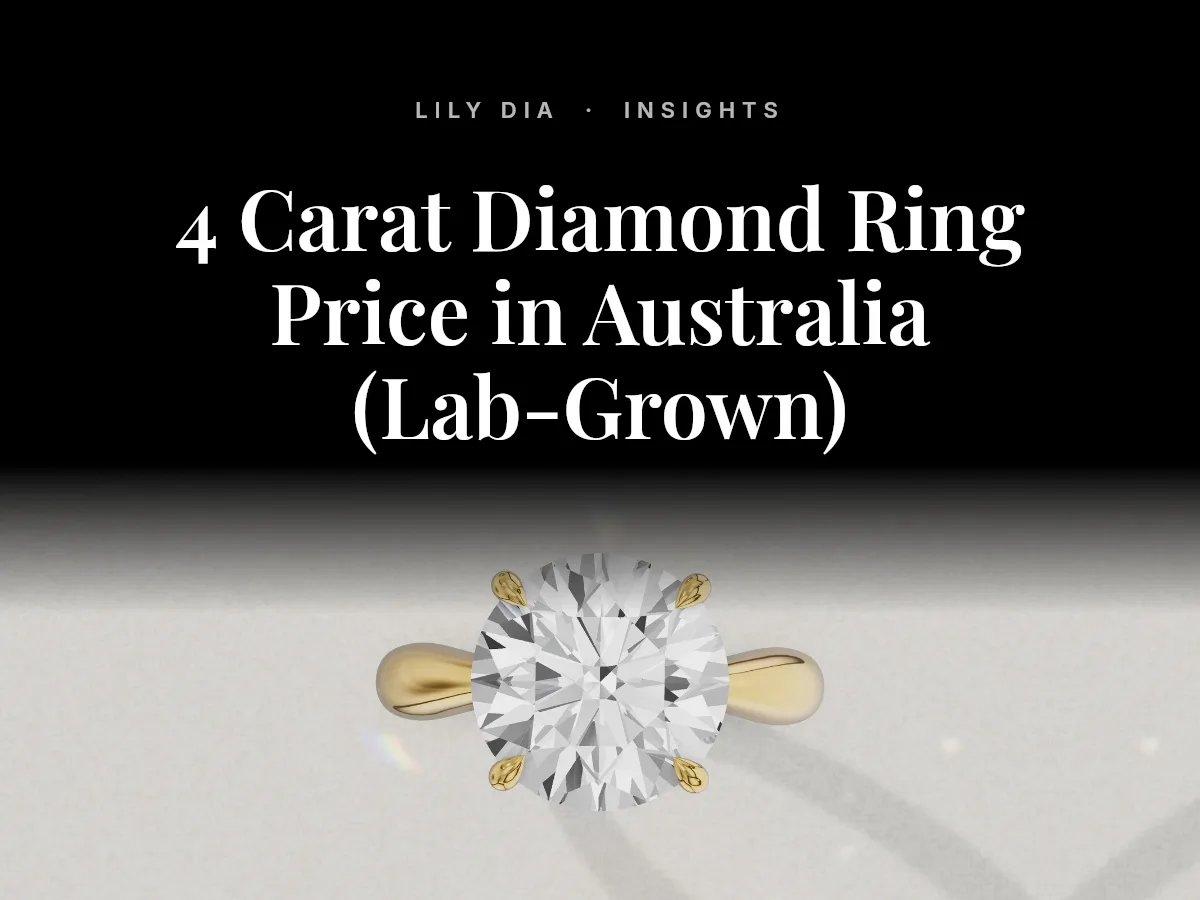
3D render of our tapered solitaire engagement ring with a 4 carat round diamond in yellow gold below the title "4 Carat Diamond Ring Price in Australia (Lab-Grown)", by Lily Dia Jewellery

4 Carat Diamond Ring Price in Australia (Lab-Grown)

Our complete 4 carat lab-grown diamond rings cost $7,950 to $10,400 in 18k gold and $8,000 to $10,550 in platinum, with a 4.00 to 4.09ct E to F VVS1 diamond and an IGI report. Prices by shape, 4.5 carat prices, sizes in mm and loose stone prices, checked 26 November 2026.

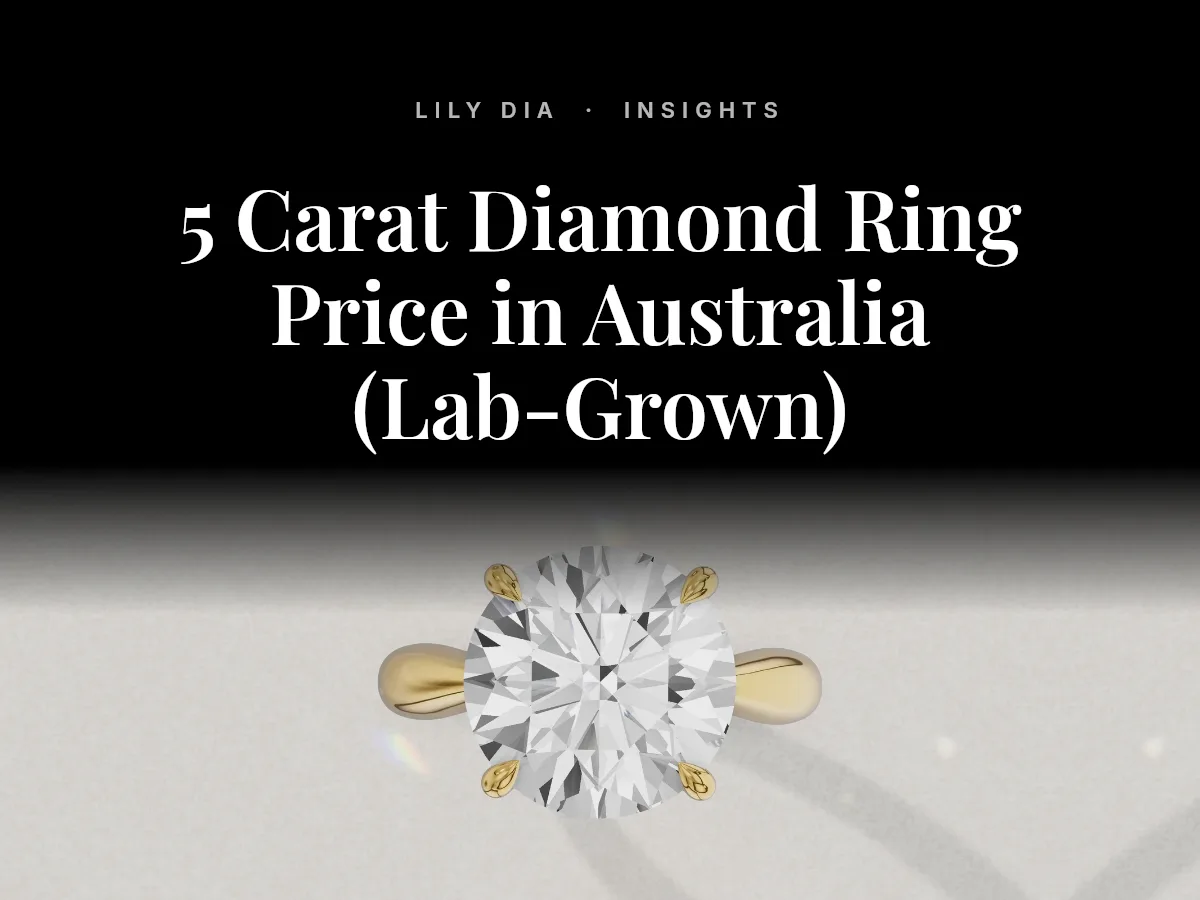
3D render of our tapered solitaire engagement ring with a 5 carat round diamond in yellow gold below the title "5 Carat Diamond Ring Price in Australia (Lab-Grown)", by Lily Dia Jewellery

5 Carat Diamond Ring Price in Australia (Lab-Grown)

Our complete 5 carat lab-grown diamond rings cost $8,400 to $11,050 in 18k gold and $8,450 to $11,200 in platinum, with a 5.00 to 5.09ct E to F VVS1 diamond and an IGI report. Prices by shape beside 4 and 4.5 carats, sizes in mm and loose stone prices, checked 26 November 2026.

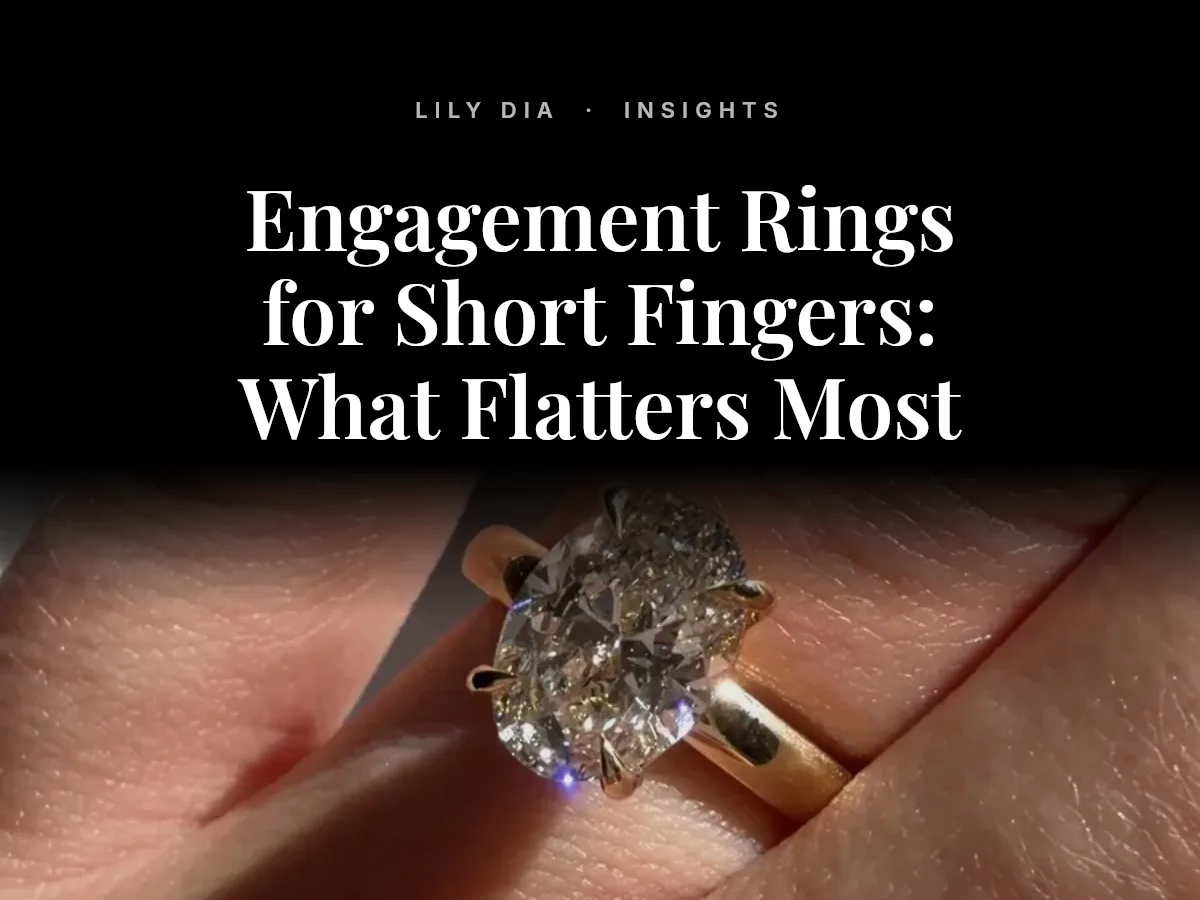
Our oval solitaire engagement ring in yellow gold, set along the finger in sunlight below the title "Engagement Rings for Short Fingers: What Flatters Most", by Lily Dia Jewellery

Engagement Rings for Short Fingers: What Flatters Most

Elongated shapes worn along the finger (oval, pear, marquise, emerald) flatter short fingers the most, and oval is the one to pick if you want a single answer. A 1.8mm or 2mm band leaves more of the finger showing. Very wide bands and settings that spread across the finger are the ones to skip.

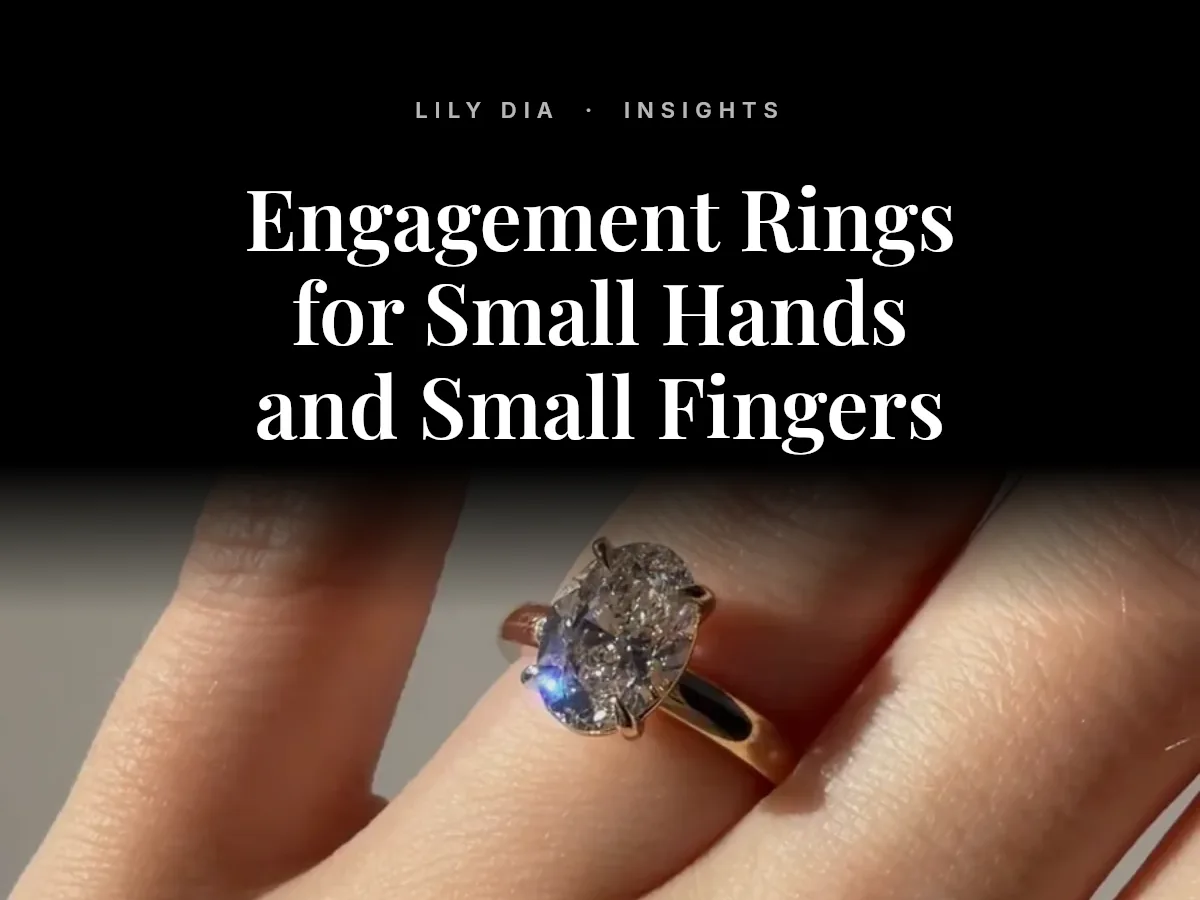
Our oval solitaire engagement ring in yellow gold on a hand in sunlight, with a blue flash in the stone below the title "Engagement Rings for Small Hands and Small Fingers", by Lily Dia Jewellery

Engagement Rings for Small Hands and Small Fingers

On a small hand any diamond looks bigger, because the same stone covers more of a narrower finger. Oval is the best shape for small hands, on a 1.8mm or 2mm band. A 1.5 carat round on a US 4 finger covers about what a 2 carat covers on an average one, and no carat is too big if you love it.

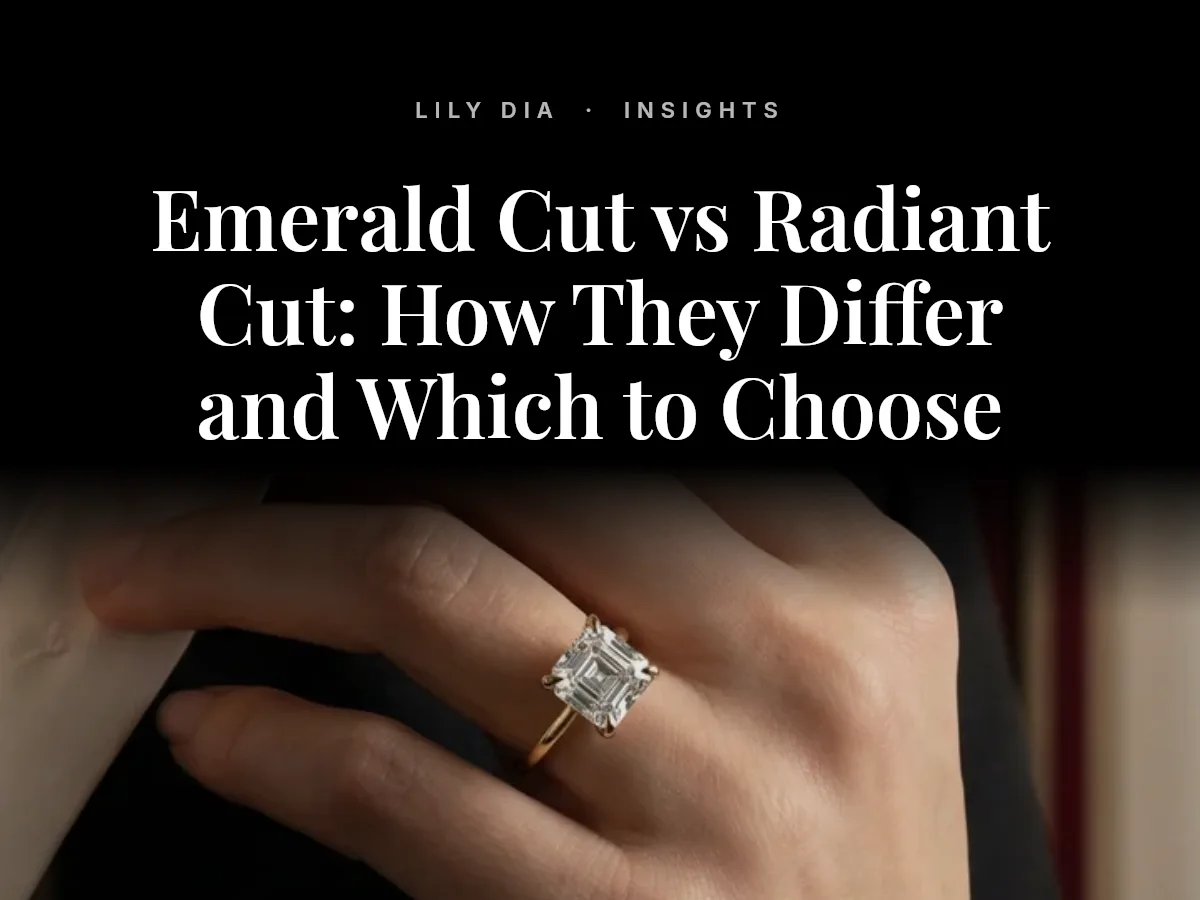
Emerald cut diamond solitaire engagement ring on a hand below the title "Emerald Cut vs Radiant Cut: How They Differ and Which to Choose", by Lily Dia Jewellery

Emerald Cut vs Radiant Cut: How They Differ and Which to Choose

Both are rectangles with clipped corners, and the facets are what set them apart. An emerald cut has long step facets that give broad, slow flashes, while a radiant has brilliant facets that sparkle much like an oval or round. In the lab-grown diamonds we source, the radiant costs a little more at the same weight and measures a touch larger.

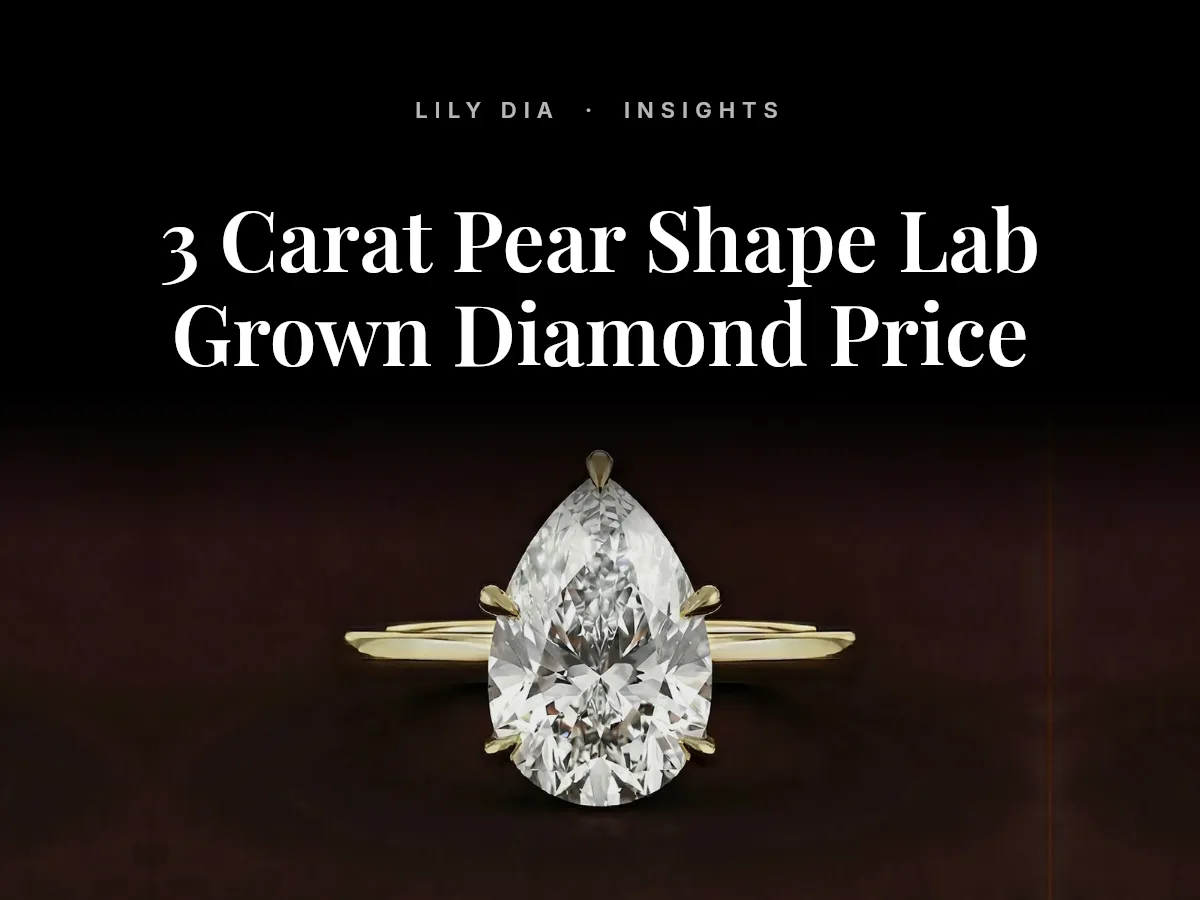
Pear shaped lab-grown diamond solitaire engagement ring in yellow gold below the title "3 Carat Pear Shape Lab Grown Diamond Price", by Lily Dia Jewellery

3 Carat Pear Shape Lab Grown Diamond Price

A 3 carat pear shaped lab-grown diamond costs about $2,810 to $7,740 loose in Australia, and a complete 3 carat pear engagement ring costs $8,750 to $9,700. Why top clarity doubles the price, from our live feed, checked 17 September 2026.

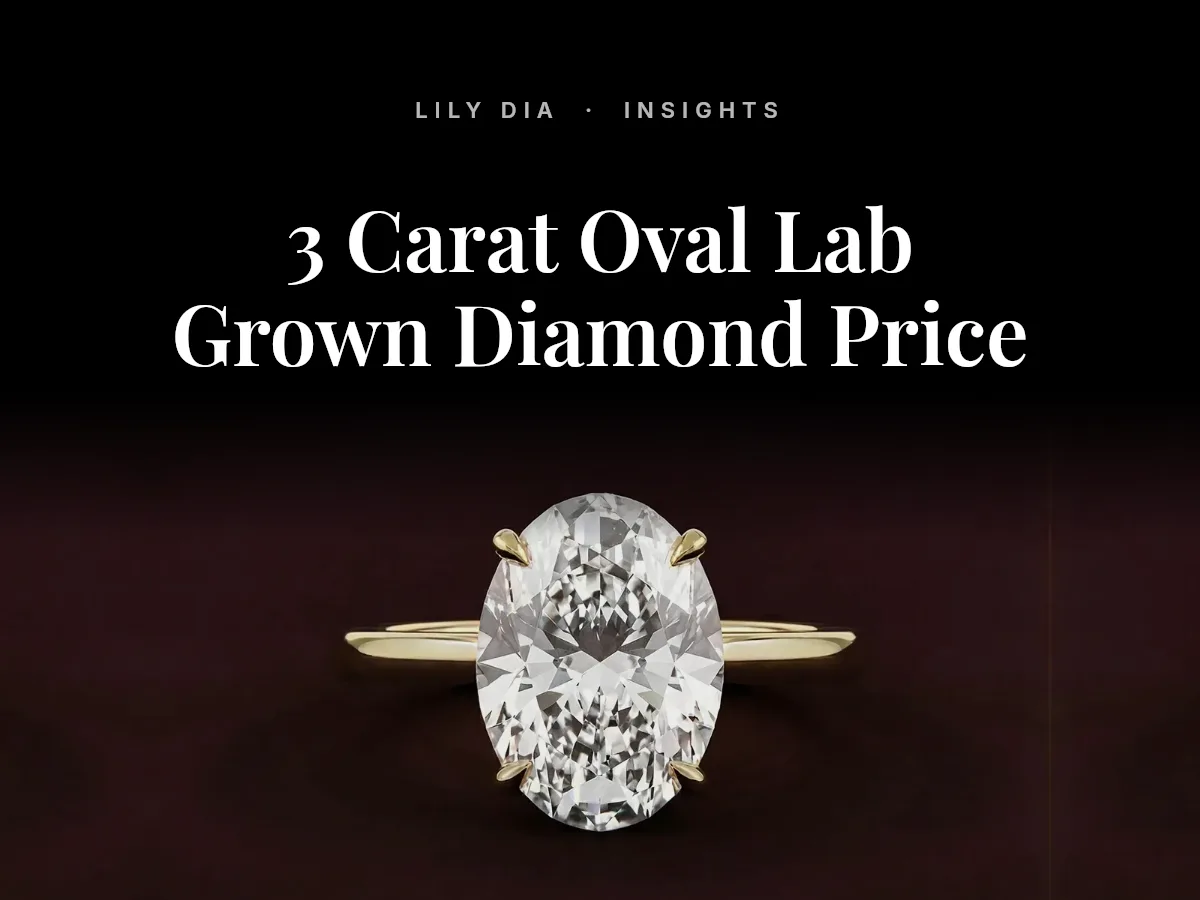
Oval lab-grown diamond solitaire engagement ring in yellow gold below the title "3 Carat Oval Lab Grown Diamond Price", by Lily Dia Jewellery

3 Carat Oval Lab Grown Diamond Price

A 3 carat oval lab-grown diamond costs about $2,830 to $6,440 loose in Australia, and a complete 3 carat oval engagement ring costs $6,900 to $8,050. Prices by carat and clarity from our live feed, checked 17 September 2026.

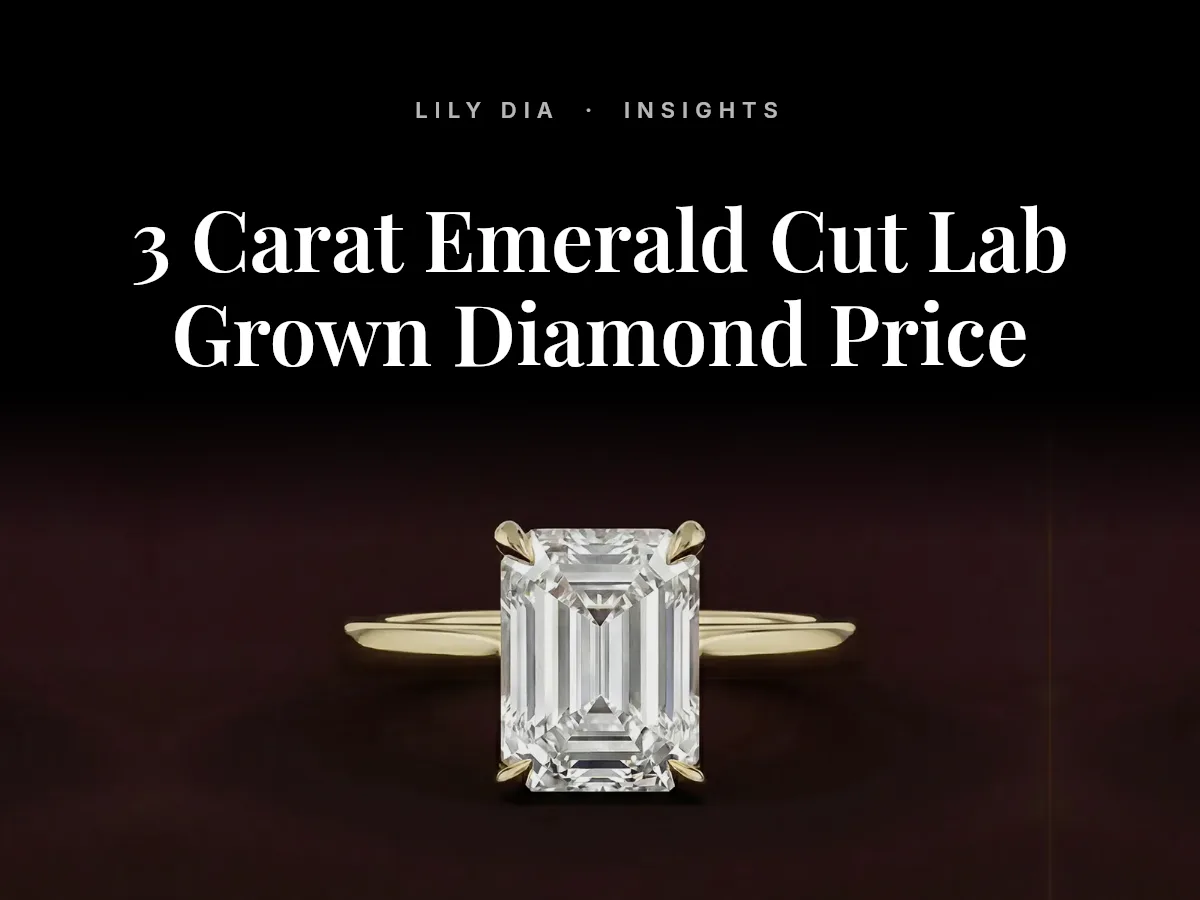
Emerald cut lab-grown diamond solitaire engagement ring in yellow gold below the title "3 Carat Emerald Cut Lab Grown Diamond Price", by Lily Dia Jewellery

3 Carat Emerald Cut Lab Grown Diamond Price

A 3 carat emerald cut lab-grown diamond costs about $2,510 to $5,550 loose in Australia, and a complete 3 carat emerald cut engagement ring costs $6,900 to $8,050. Prices by carat and clarity from our live feed, checked 17 September 2026.

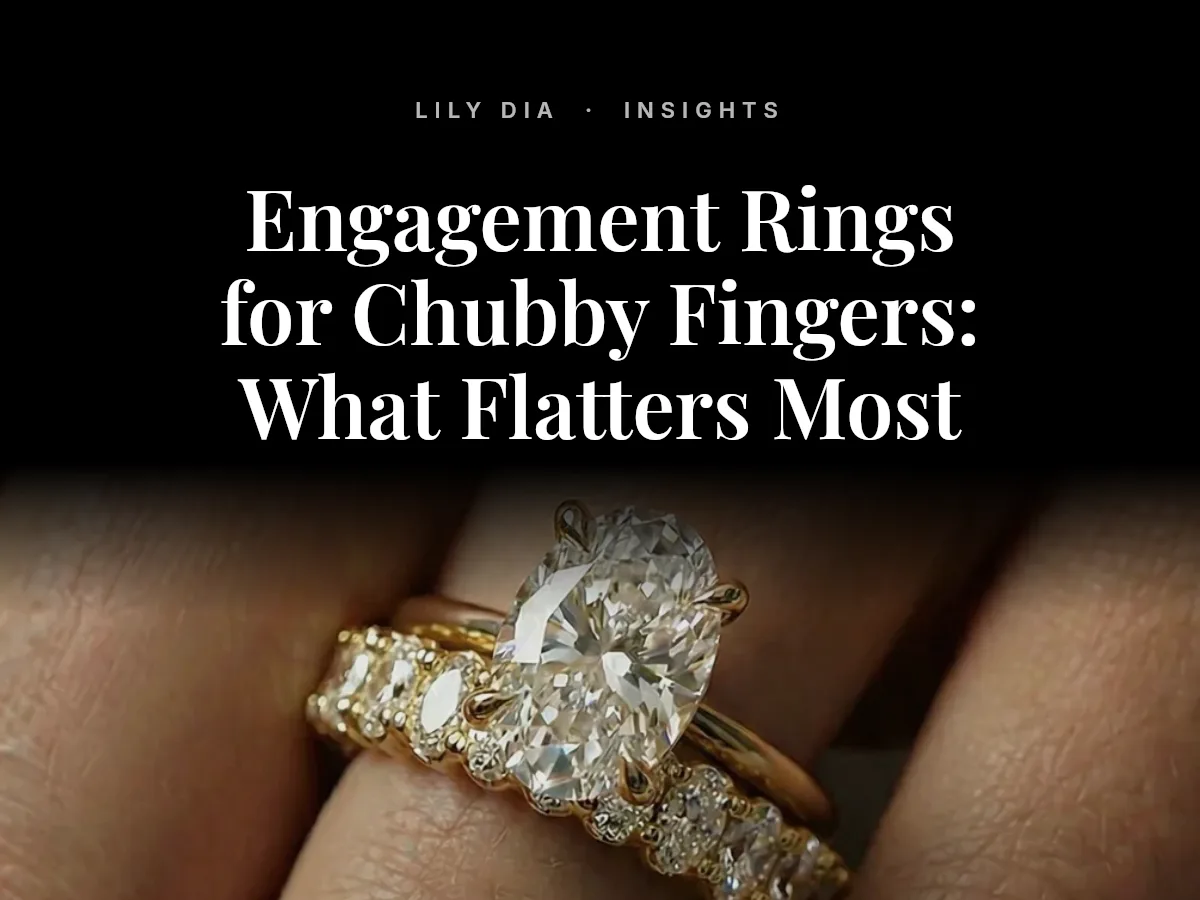
Oval diamond engagement ring with an eternity band on a hand below the title "Engagement Rings for Chubby Fingers: What Flatters Most", by Lily Dia Jewellery

Engagement Rings for Chubby Fingers: What Flatters Most

Chubby fingers carry substantial engagement rings well, and elongated shapes (oval, emerald, pear, marquise) flatter the most. A 2.5mm or 3mm band and a halo or three-stone setting keep the ring in proportion. Very thin bands and small solitaires are the ones to skip.

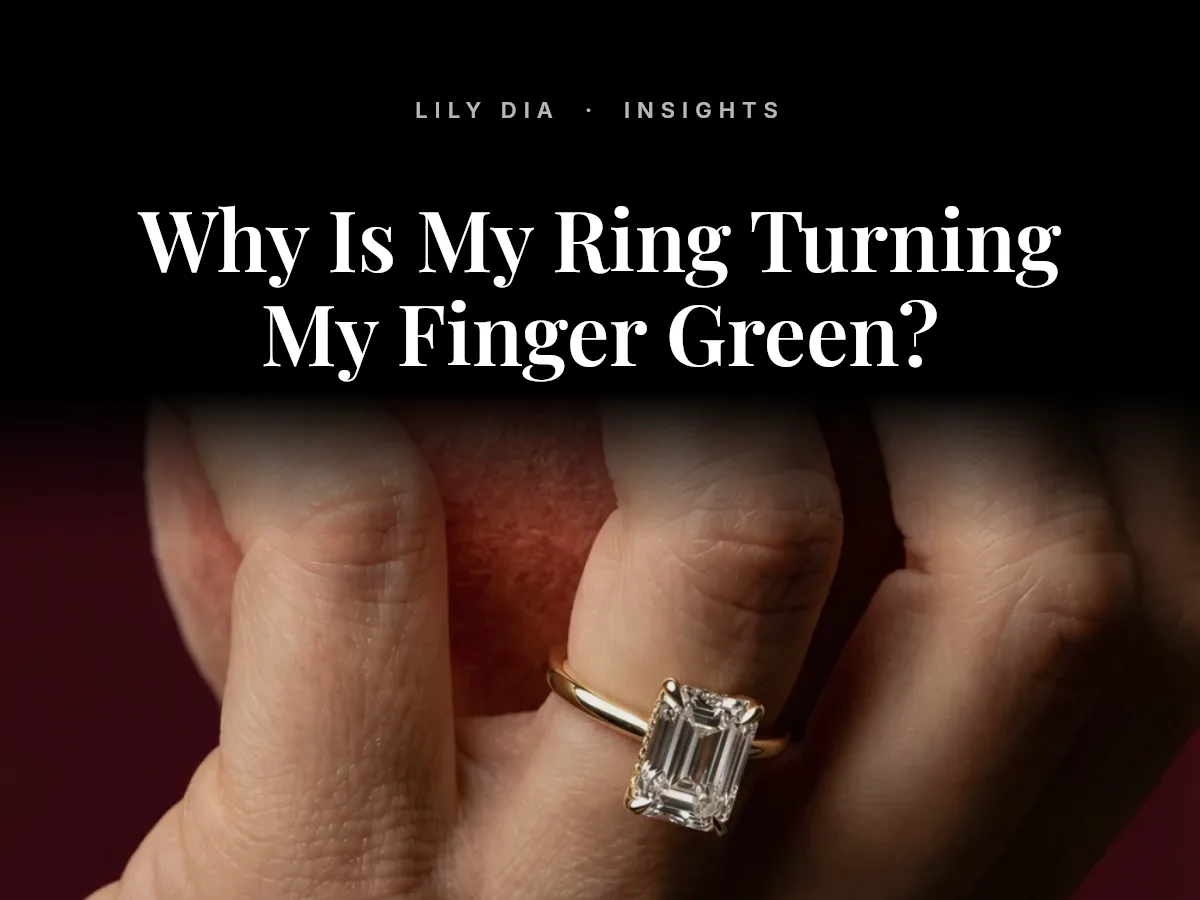
Hand wearing an emerald cut diamond ring holding a peach below the title "Why Is My Ring Turning My Finger Green?", by Lily Dia Jewellery

Why Is My Ring Turning My Finger Green?

A green mark under a ring usually comes from copper in the metal reacting with moisture, skin products or household chemicals. It is a surface stain, but itching, swelling or a persistent rash can point to contact dermatitis.

Man's hand wearing a plain gold wedding band below the title "Who Buys the Man's Wedding Ring?", by Lily Dia Jewellery

Who Buys the Man's Wedding Ring?

Traditionally, each partner buys the other person's wedding ring. Many couples now choose and pay for both bands together, split the total or treat the rings as part of the shared wedding budget.

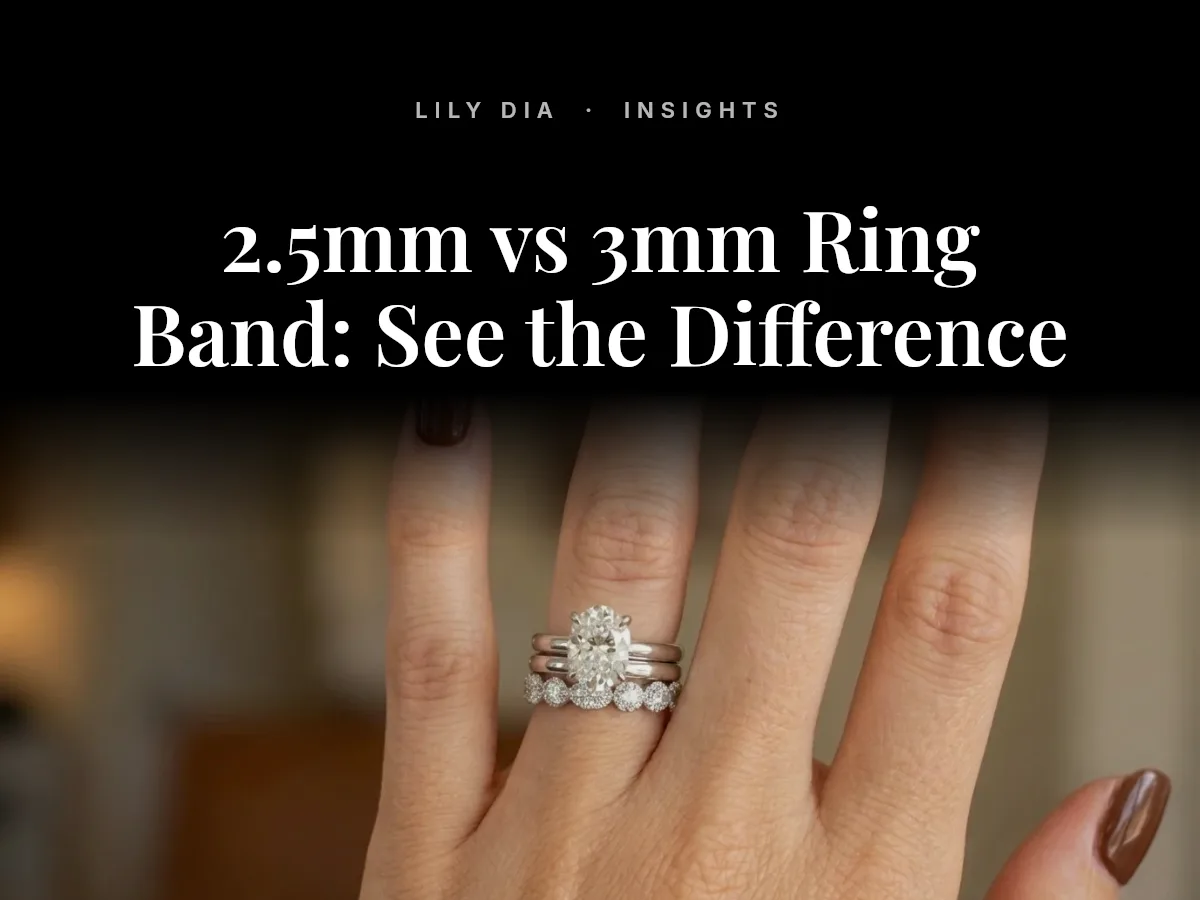
Solitaire engagement ring stacked with wedding bands on a hand below the title "2.5mm vs 3mm Ring Band: See the Difference", by Lily Dia Jewellery

2.5mm vs 3mm Ring Band: See the Difference

A 2.5mm band reads structured and still lets the stone lead; a 3mm band becomes part of the statement. The 0.5mm gap is one of the most visible width steps in ring design. Here is how each wears, stacks and resizes, and which one suits an engagement ring versus a standalone wedding band.

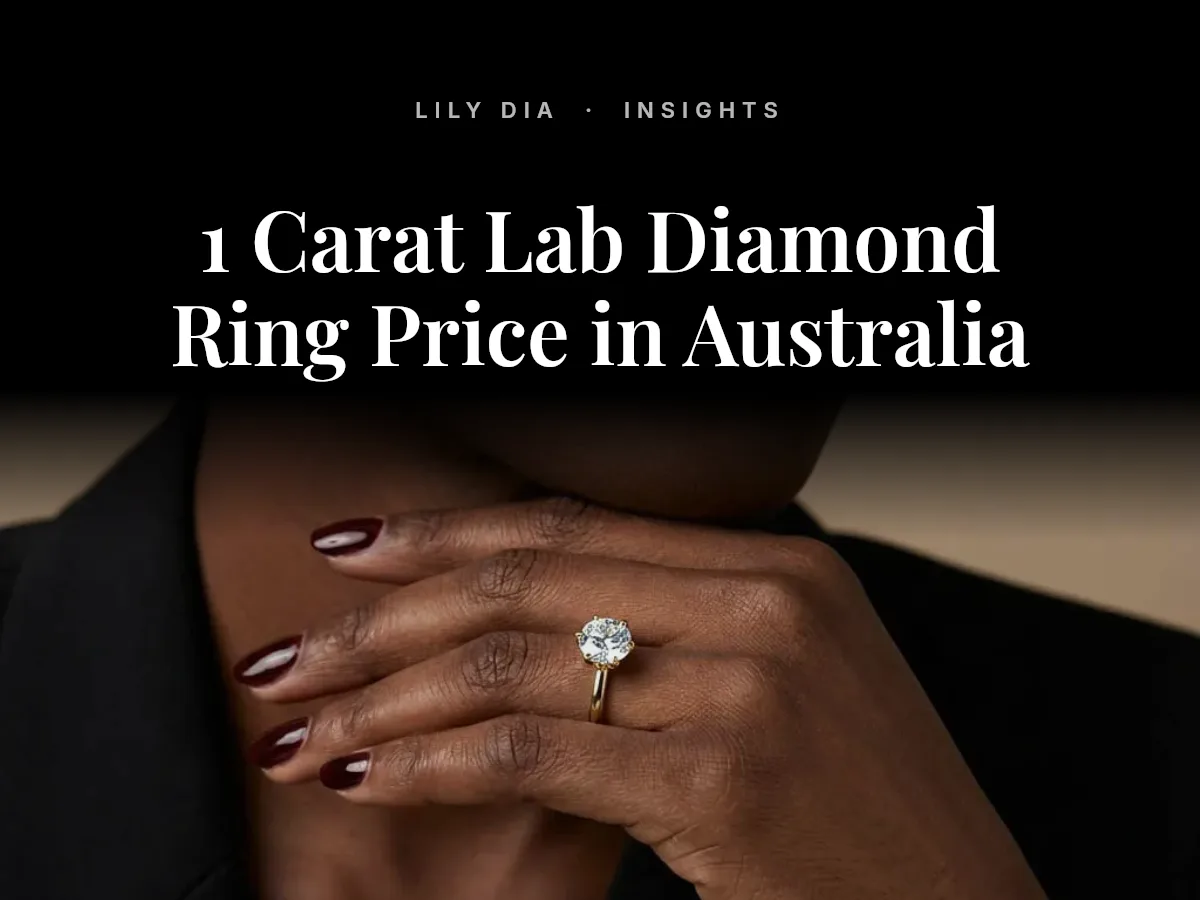
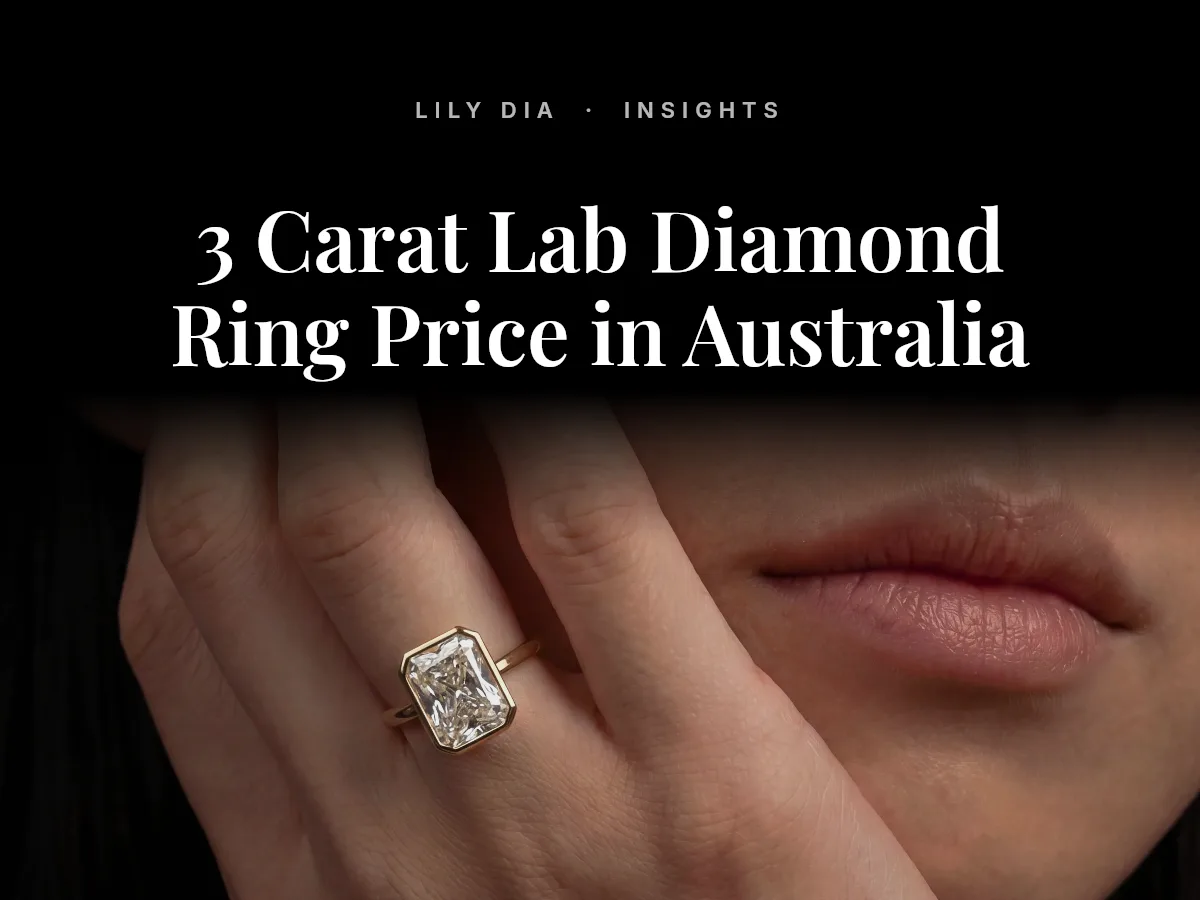
Model wearing a radiant cut lab-grown diamond engagement ring in a bezel setting below the title "3 Carat Lab Diamond Ring Price in Australia", by Lily Dia Jewellery

3 Carat Lab Diamond Ring Price in Australia

A complete 3 carat lab-grown diamond engagement ring costs roughly $4,700 to $9,000 at Australian jewellers, and a high-grade loose 3ct stone about $3,300 to $7,100. Like-for-like, loose, mined and overseas 3ct prices are compared below, with the full specification behind each one.

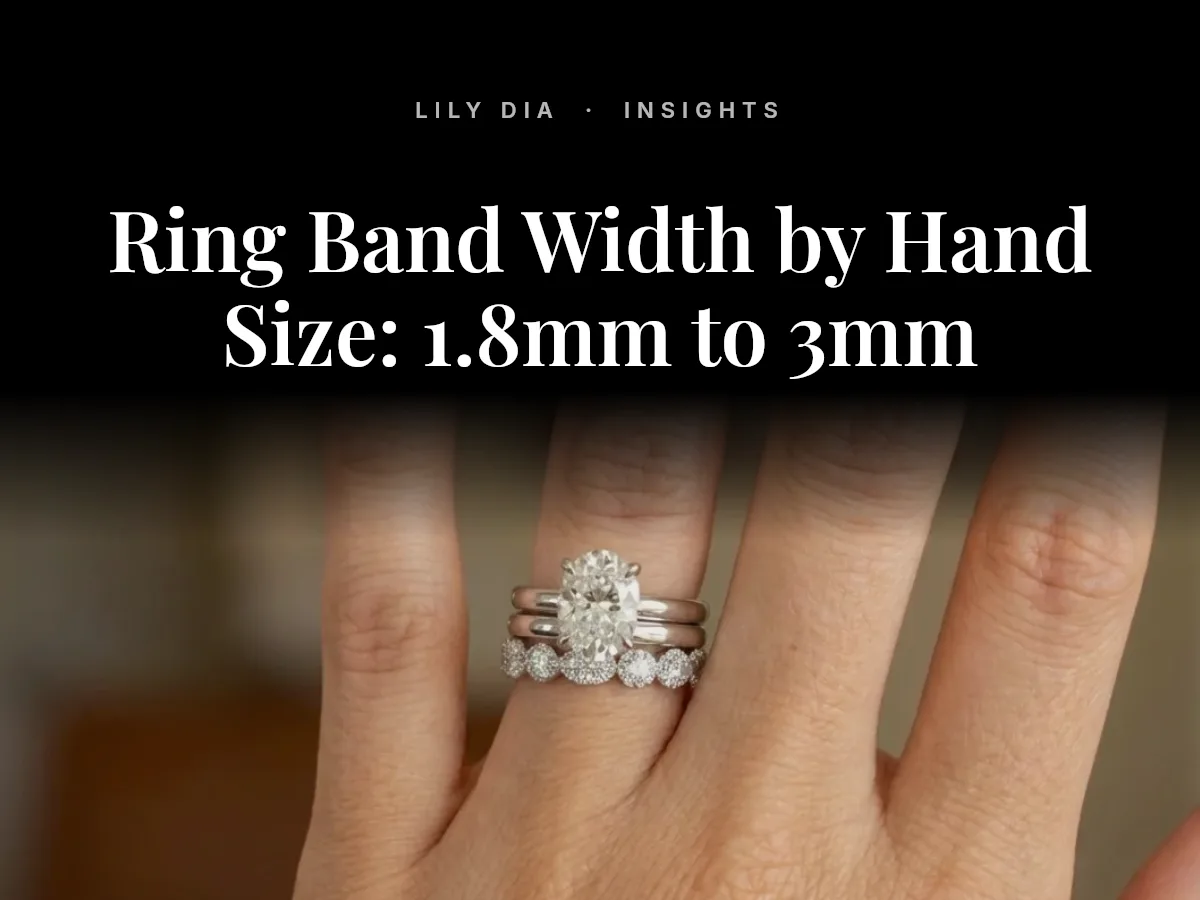
Oval solitaire engagement ring stacked with bands on a hand below the title "Ring Band Width by Hand Size: 1.8mm to 3mm", by Lily Dia Jewellery

Ring Band Width by Hand Size: 1.8mm to 3mm

Smaller AU ring sizes usually carry 1.8mm to 2mm best, average sizes 2mm to 2.5mm, and larger sizes 2.5mm to 3mm, then finger length, hand breadth, stone size and the wedding band you plan all shift the answer. Here is the full matrix, plus a printable width strip so you can check on your own hand.

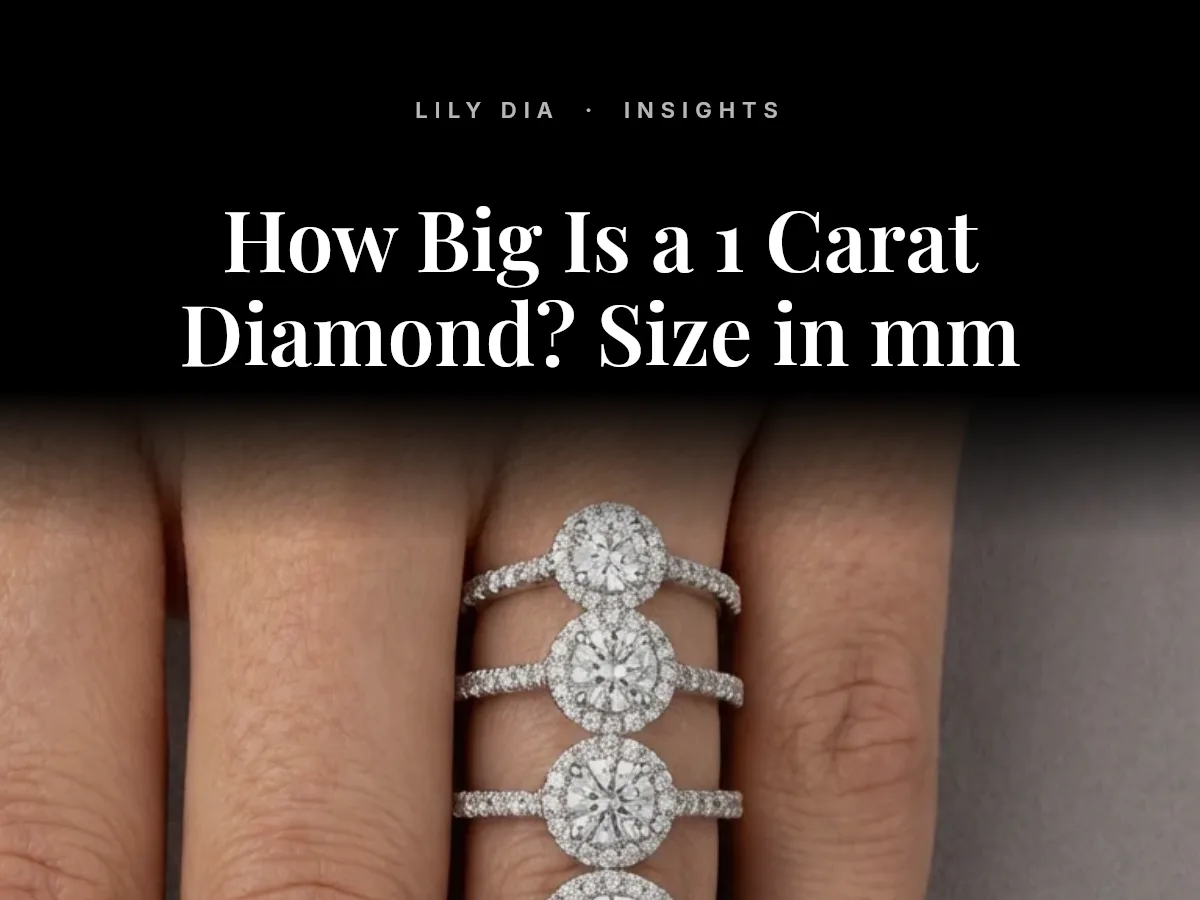
Round halo engagement rings in four sizes on one hand below the title "How Big Is a 1 Carat Diamond? Size in mm", by Lily Dia Jewellery

How Big Is a 1 Carat Diamond? Size in mm

A 1 carat round diamond measures about 6.5mm across, and the same weight in an oval stretches to about 8.3mm long. That is right on the worldwide average for engagement rings. Here is the size in mm for every shape, how 1 carat compares with 2 carats at one scale, and what it costs in AUD.

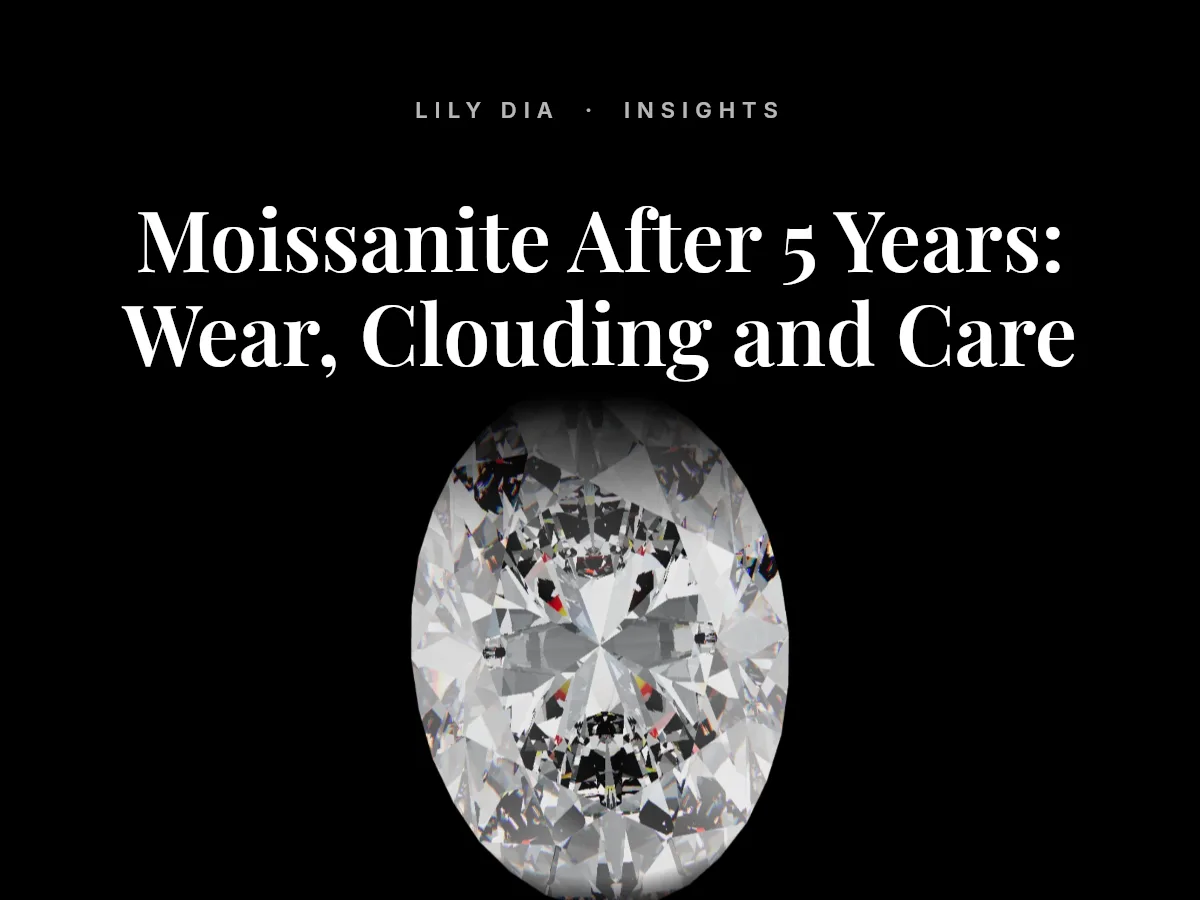
Oval moissanite seen from above below the title "Moissanite After 5 Years: Wear, Clouding and Care", by Lily Dia Jewellery

Moissanite After 5 Years: Wear, Clouding and Care

After five years of daily wear, the moissanite itself is unchanged: silicon carbide does not cloud, yellow or soften with age. What does change is everything around it, the metal, the prongs, the rhodium, and the film of skin oil that dulls sparkle until it is cleaned. This is a material and maintenance guide, not a review of one ring.

Round diamond solitaire engagement ring showing its claws below the title "Engagement Ring Prong Mistakes to Avoid", by Lily Dia Jewellery

Engagement Ring Prong Mistakes to Avoid

Snagging, uneven prongs, prongs too clunky for the stone, and prongs too thin to hold it. Four prong problems worth catching the day your ring arrives, plus what is normal wear versus what is a defect that needs fixing.

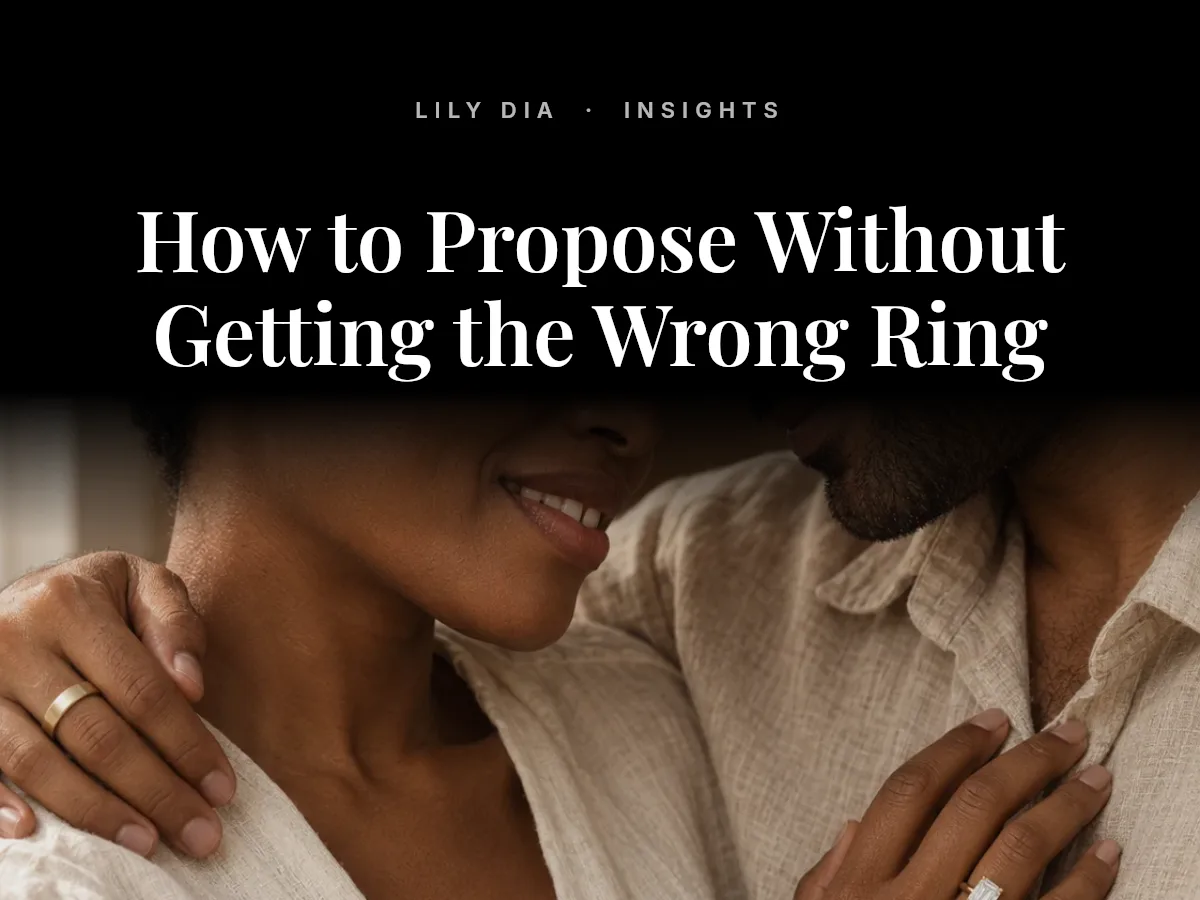
Couple embracing, her hand wearing a diamond engagement ring below the title "How to Propose Without Getting the Wrong Ring", by Lily Dia Jewellery

How to Propose Without Getting the Wrong Ring

Use a placeholder ring. Propose with a temporary ring (cubic zirconia in sterling silver works for photos), then choose the real one together after the yes. Roughly seven in ten women say they would not trust their partner to pick the final ring alone. Here is how the placeholder approach works.

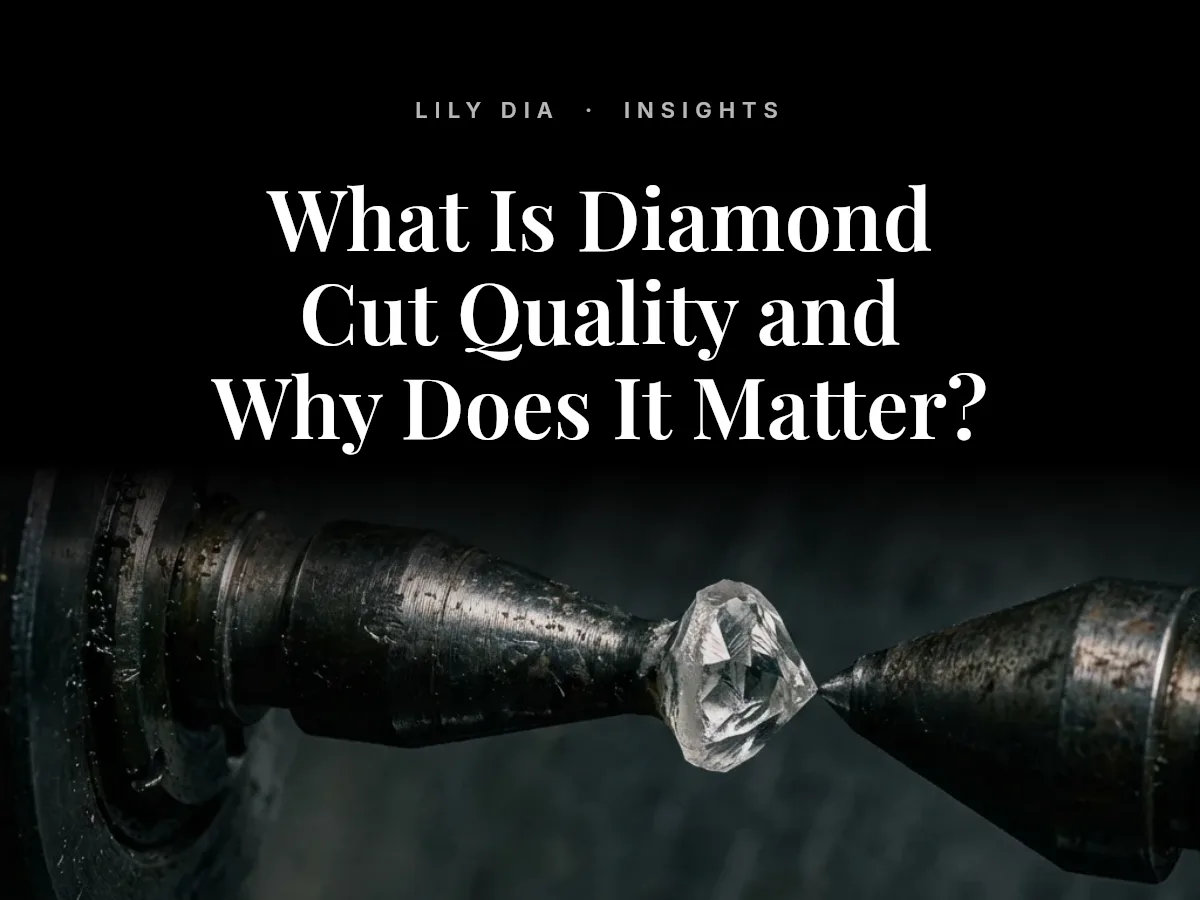
Diamond being polished on a cutting wheel below the title "What Is Diamond Cut Quality and Why Does It Matter?", by Lily Dia Jewellery

What Is Diamond Cut Quality and Why Does It Matter?

Cut is not the shape of a diamond, it is the proportions: how the angles, depth, and symmetry let light enter the stone, bounce around, and return to your eye as sparkle. A poorly cut diamond looks dull and dead even at a high clarity or colour grade. Cut is the single most important of the 4Cs for how the stone actually looks.

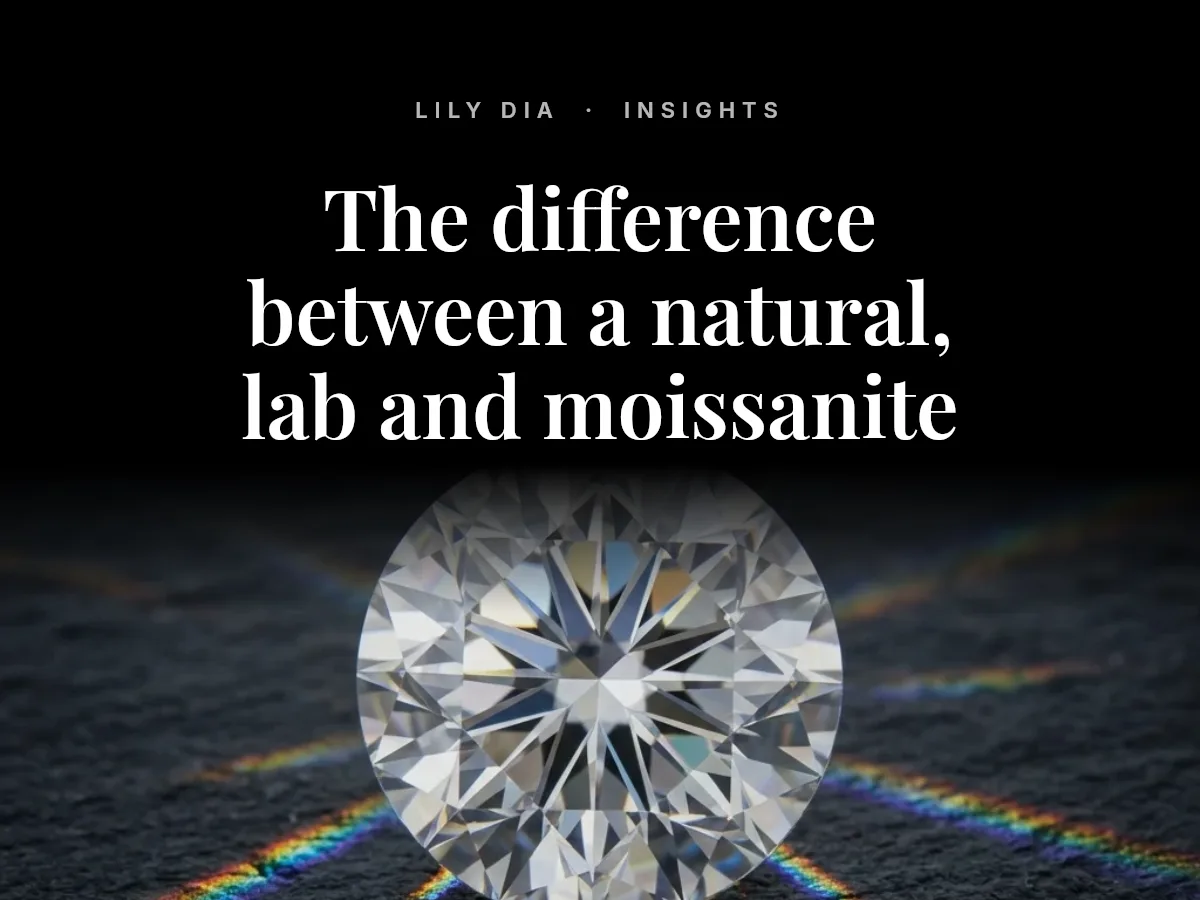
Round brilliant moissanite throwing rainbow fire below the title "The difference between a natural, lab and moissanite", by Lily Dia Jewellery

The difference between a natural, lab and moissanite

Natural diamond, lab-grown diamond, and moissanite are the three stones you will actually choose between for an engagement ring. Natural and lab-grown are chemically the same material (carbon). Moissanite is a different gemstone (silicon carbide) that costs roughly 10 to 20 percent of either diamond. Here is the AUD breakdown and how each one wears.

Hand wearing an oval diamond solitaire engagement ring below the title "How Tight Should a Ring Be? Too Tight or Too Loose", by Lily Dia Jewellery

How Tight Should a Ring Be? Too Tight or Too Loose

Slightly loose is better than slightly tight. A well-fitted ring slides over the knuckle with light resistance, sits snugly at the base of the finger, and takes a gentle wiggle to come off. If you are between sizes, size up. Resizing larger is harder than resizing smaller.

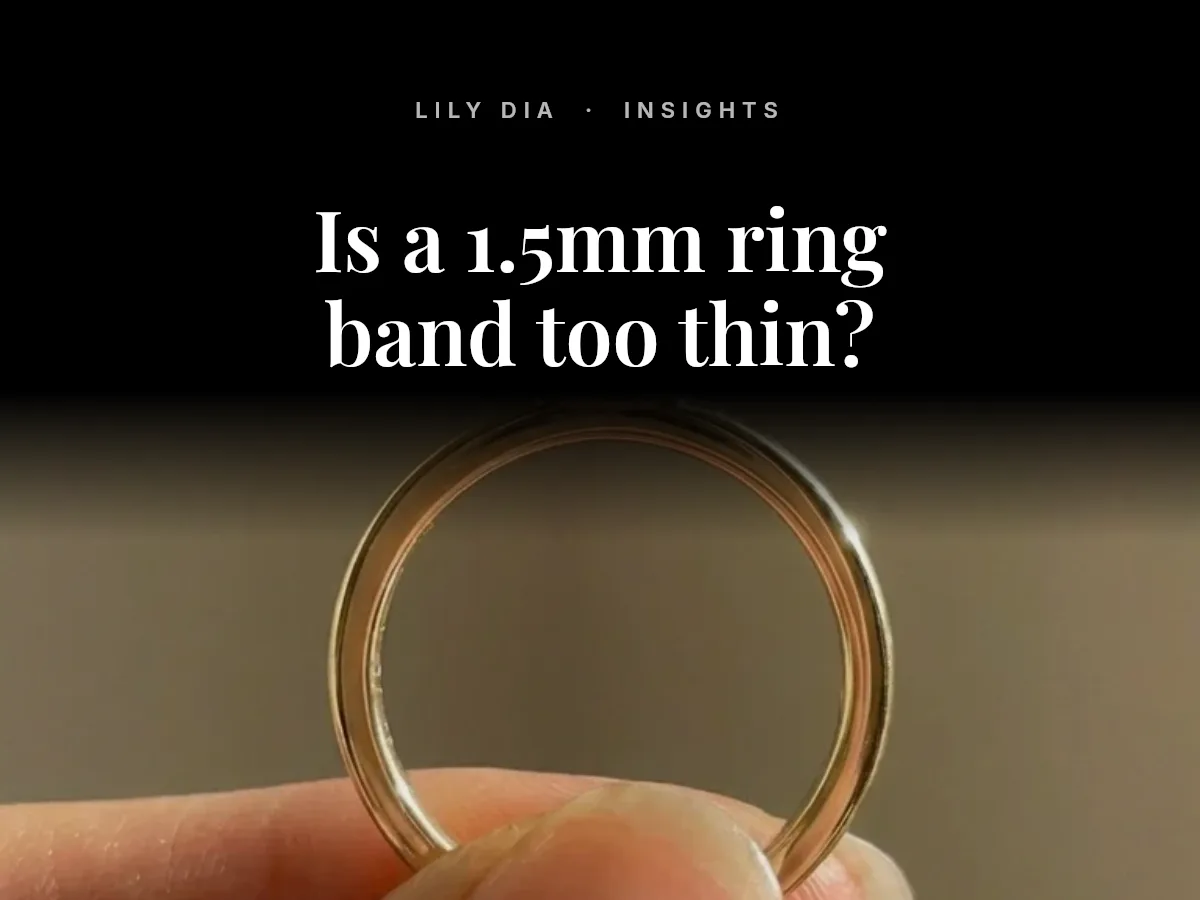
Thin band round diamond engagement ring held side on below the title "Is a 1.5mm ring band too thin?", by Lily Dia Jewellery

Is a 1.5mm ring band too thin?

Yes, 1.5mm is too thin for a daily-wear engagement ring in gold. It bends with normal wear and re-shanking becomes a matter of when, not if. 1.8mm is the safe floor, 2mm is the comfortable choice, 2mm and wider is the minimum for pave.

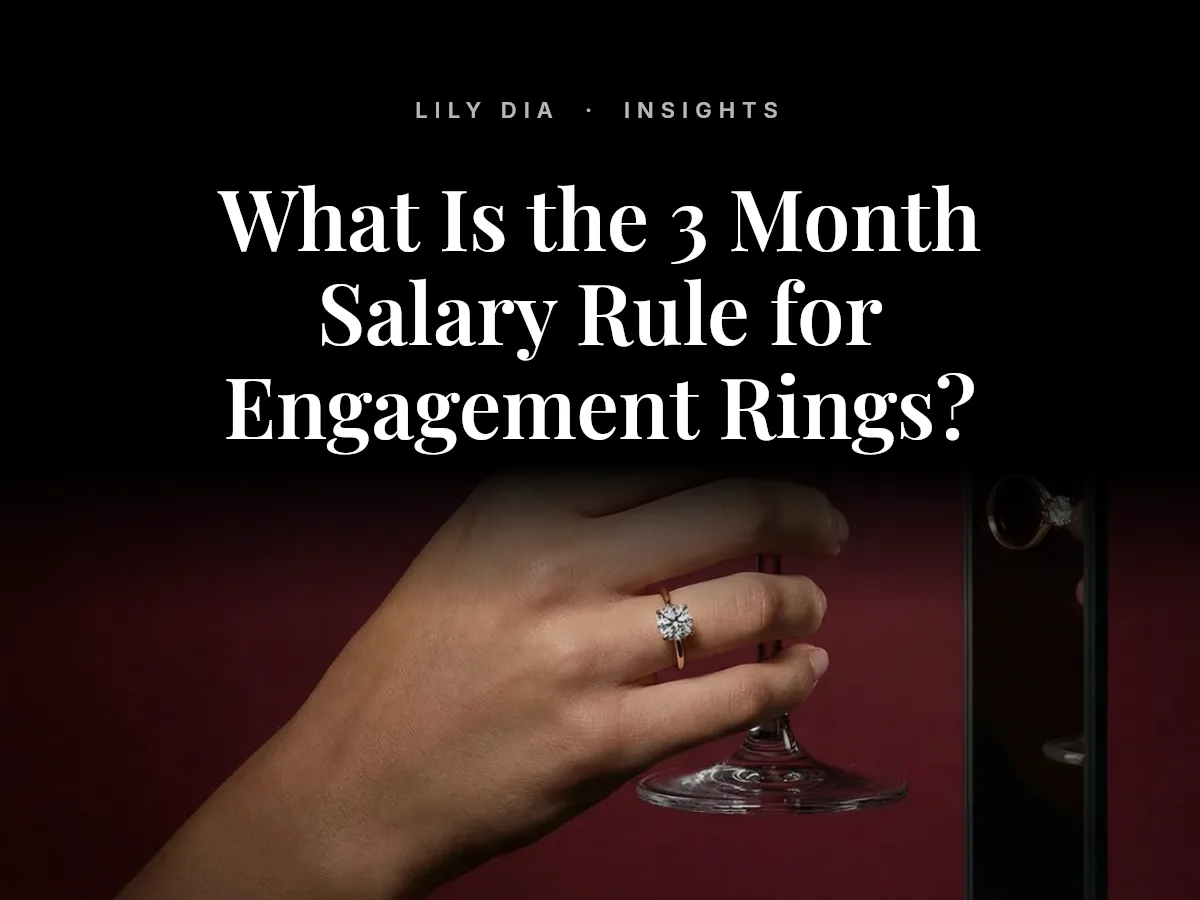
Round diamond solitaire on a hand holding a coupe glass below the title "What Is the 3 Month Salary Rule for Engagement Rings?", by Lily Dia Jewellery

What Is the 3 Month Salary Rule for Engagement Rings?

Ignore it. The 3 month salary rule came from De Beers advertising, not tradition. On average Australian full-time earnings it would mean about $27,000, while couples spent an average of $6,842 on an engagement ring in the 2026 Easy Weddings survey, about a quarter of that.

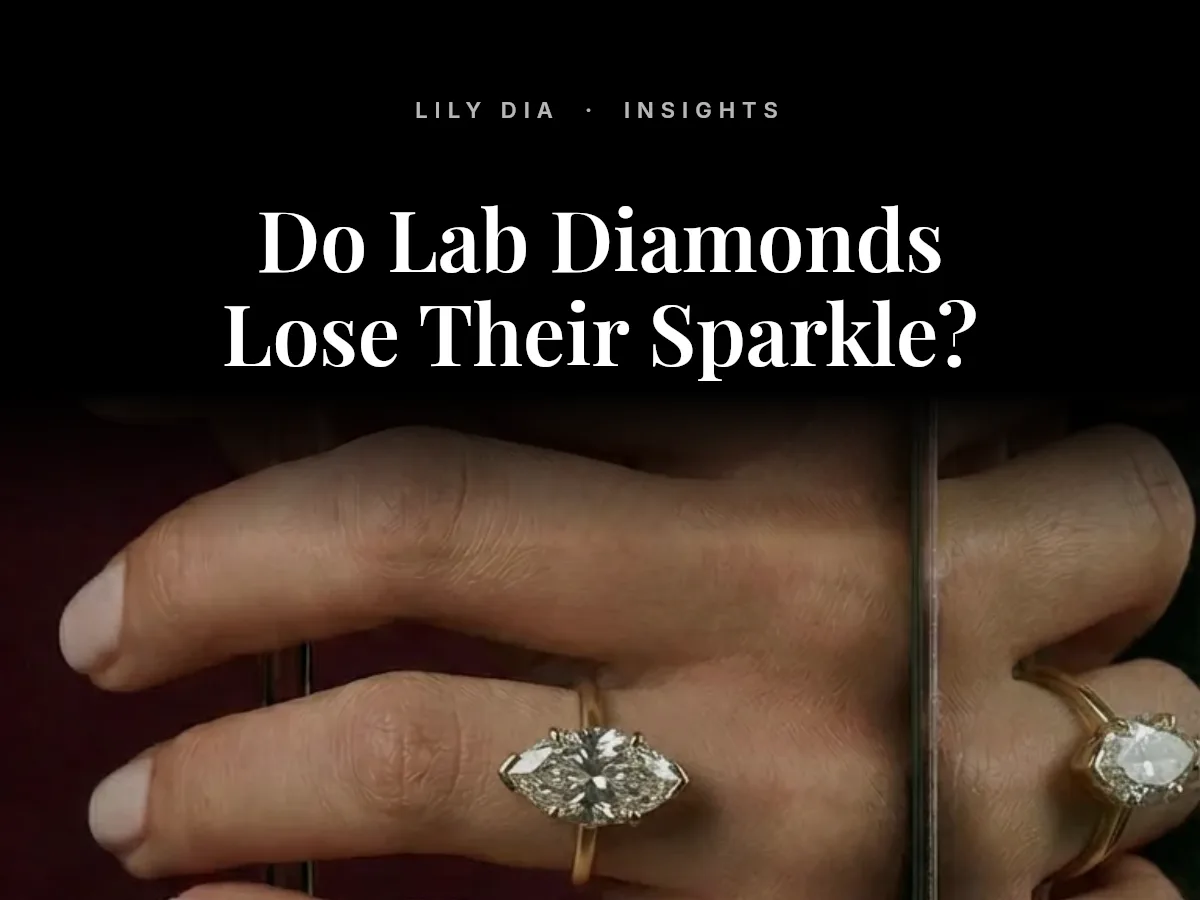
Marquise diamond solitaire on a hand holding a champagne glass below the title "Do Lab Diamonds Lose Their Sparkle?", by Lily Dia Jewellery

Do Lab Diamonds Lose Their Sparkle?

No. Lab-grown diamonds do not lose their sparkle, their shine, or their brilliance over time. They are the same material as a mined diamond and just as hard. When a lab diamond looks dull, the cause is a film of skin oil, soap, and lotion sitting on the stone, which cleans off in fifteen minutes.

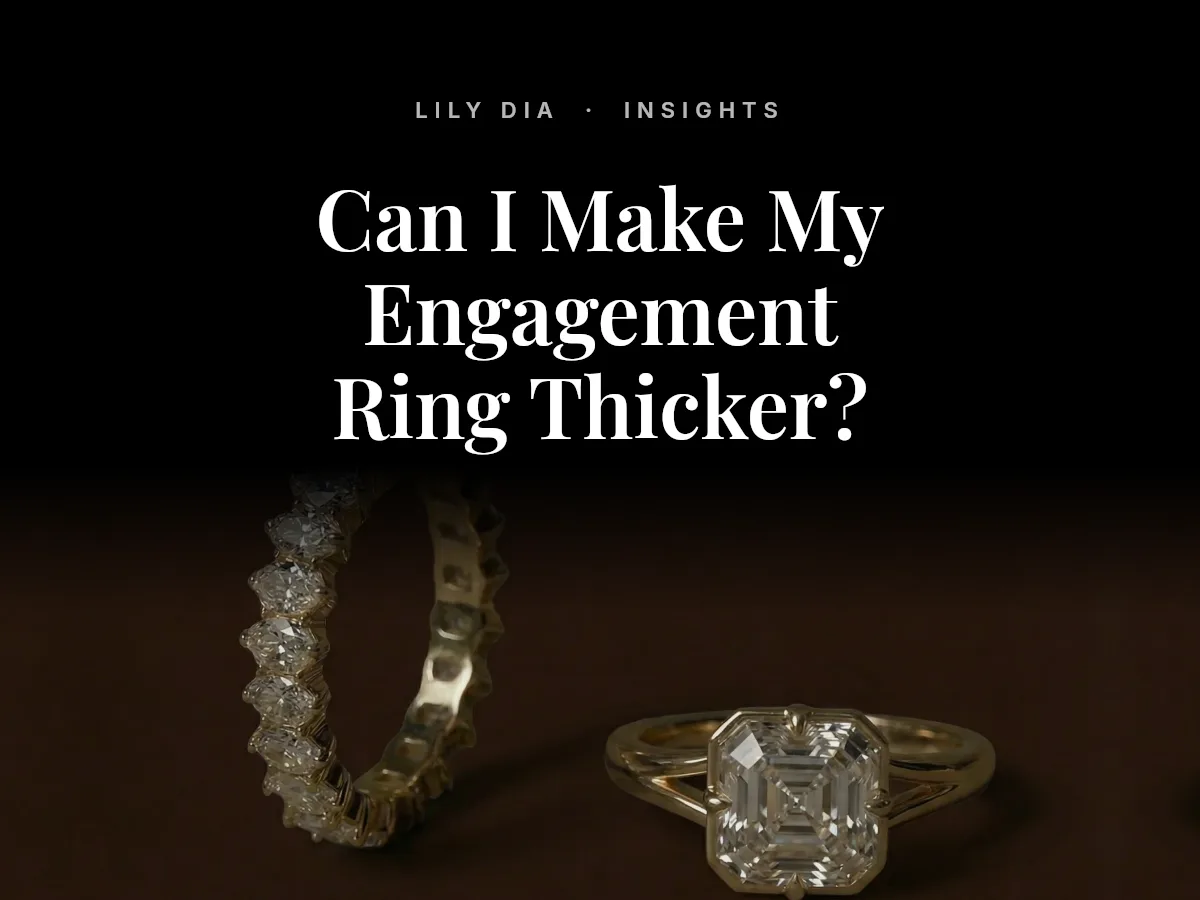
Diamond engagement ring and eternity band in yellow gold below the title "Can I Make My Engagement Ring Thicker?", by Lily Dia Jewellery

Can I Make My Engagement Ring Thicker?

Yes. A jeweller re-shanks the ring, which means replacing part or all of the band with thicker metal. Half-shank is cheaper, full shank gives even thickness right around. Expect $300 to $1,200 AUD depending on metal and complexity.

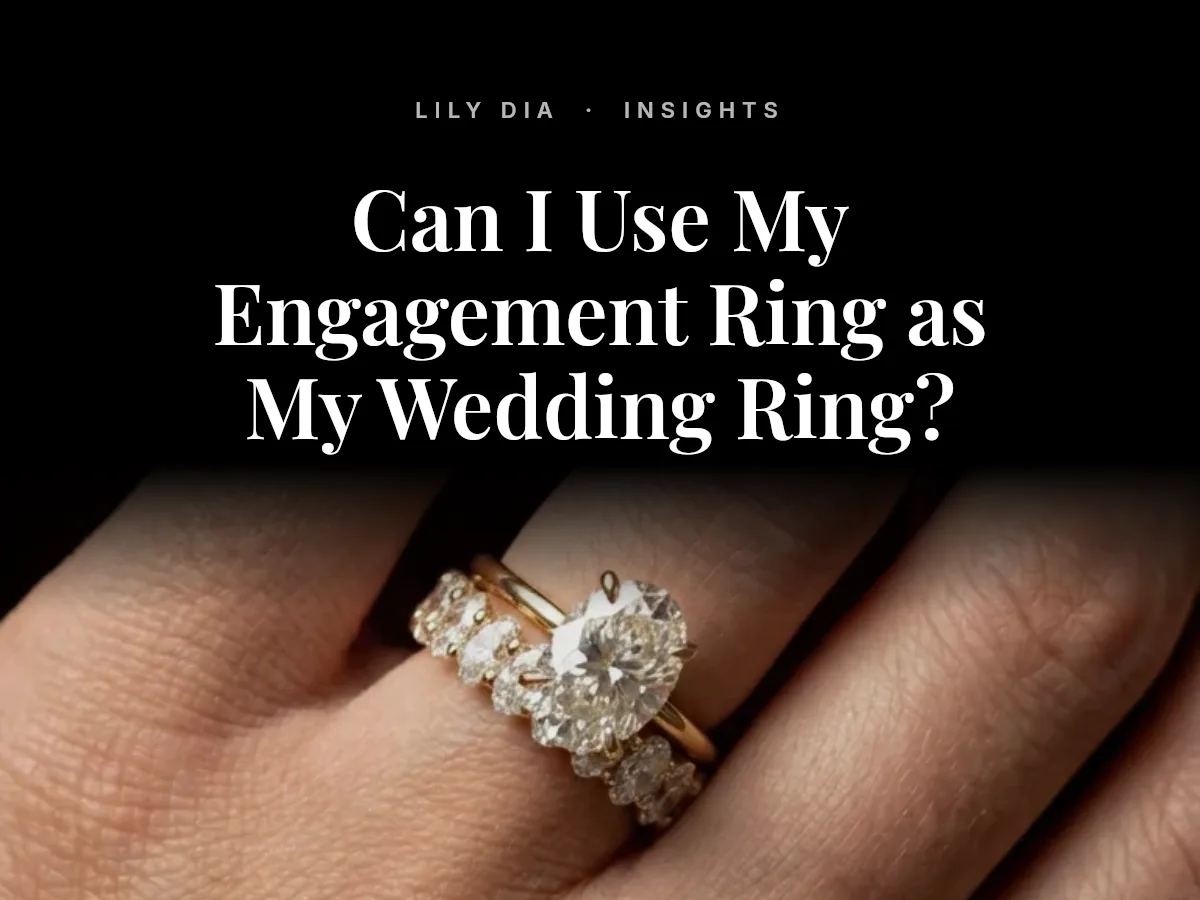
Solitaire engagement ring worn with a curved wedding band below the title "Can I Use My Engagement Ring as My Wedding Ring?", by Lily Dia Jewellery

Can I Use My Engagement Ring as My Wedding Ring?

Yes. You can use your engagement ring as your wedding ring, and many couples do. The two-ring tradition was popularised by jewellers in the twentieth century; before that a single ring was the norm. It works best when the engagement ring is designed to stand alone (lower profile, wider band, secure setting).

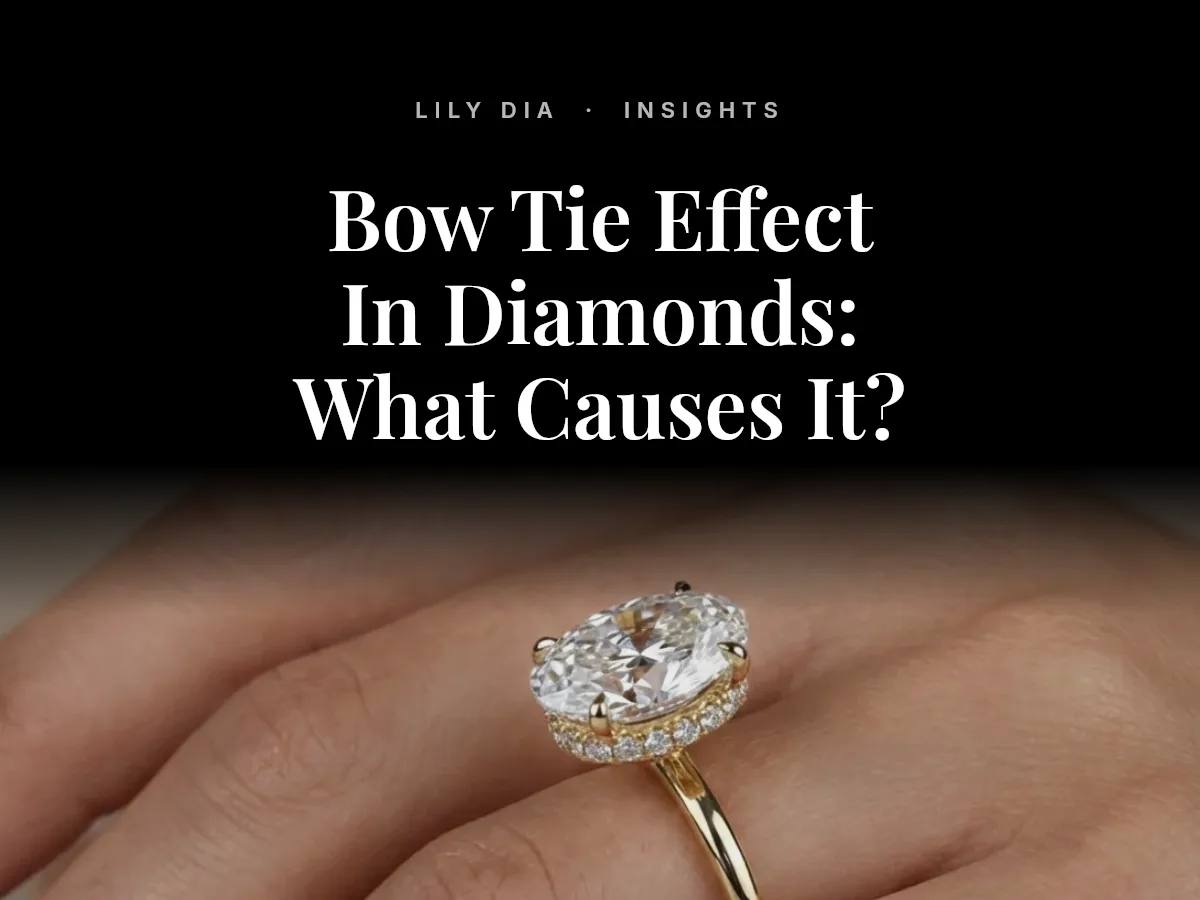
Oval diamond hidden halo engagement ring on a hand below the title "Bow Tie Effect In Diamonds: What Causes It?", by Lily Dia Jewellery

Bow Tie Effect In Diamonds: What Causes It?

The bow tie is a dark shadow shaped like a bow tie across the middle of elongated diamond shapes (oval, pear, marquise). It happens because of how light leaks through poorly aligned pavilion facets. Every oval has at least a subtle one. Whether it ruins the stone depends on how severe it is.

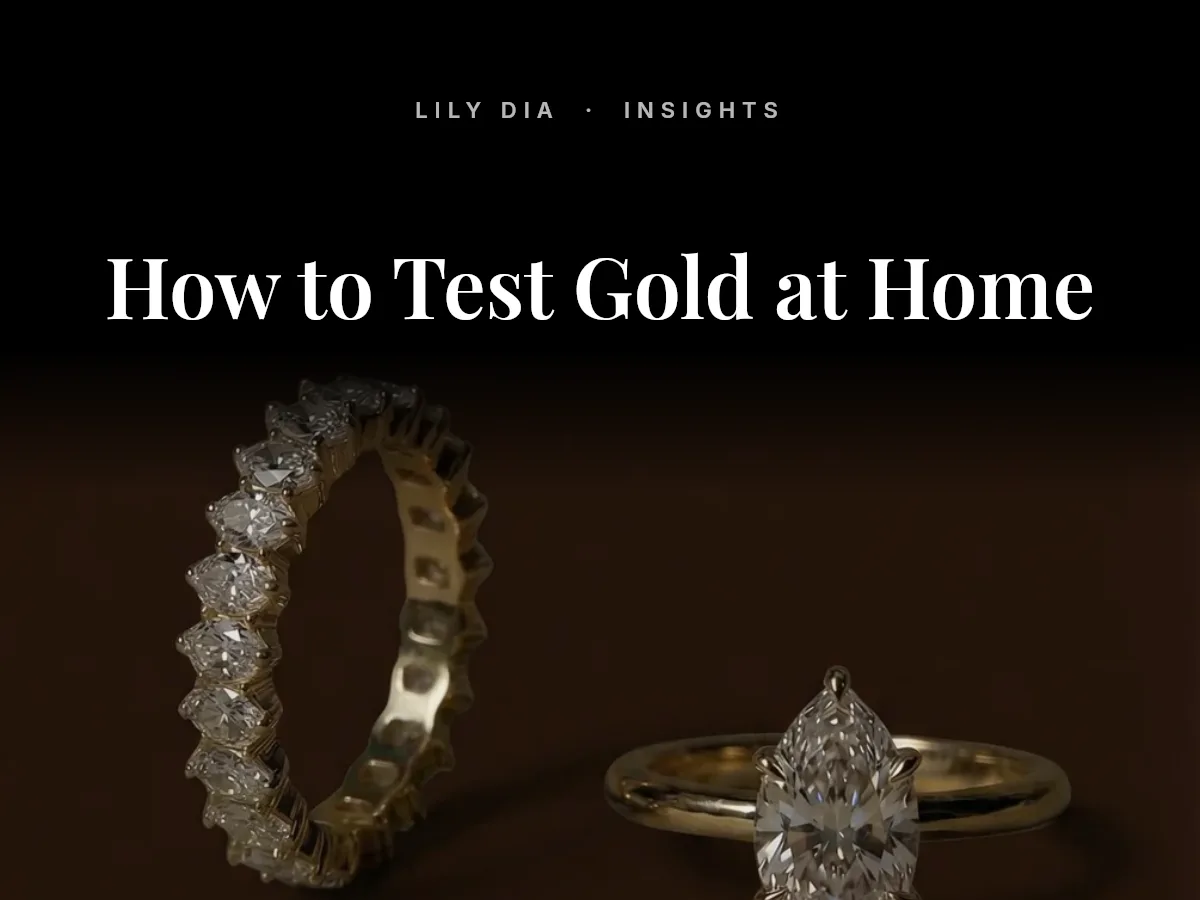
Yellow gold marquise engagement ring and band on a dark background below the title "How to Test Gold at Home", by Lily Dia Jewellery

How to Test Gold at Home

The fastest at-home gold tests are the hallmark check and the magnet test, which together rule out most fakes. An acid testing kit or electronic tester gives you a precise karat reading. Vinegar, bleach, and skin-discolouration tests don't reliably tell you anything.

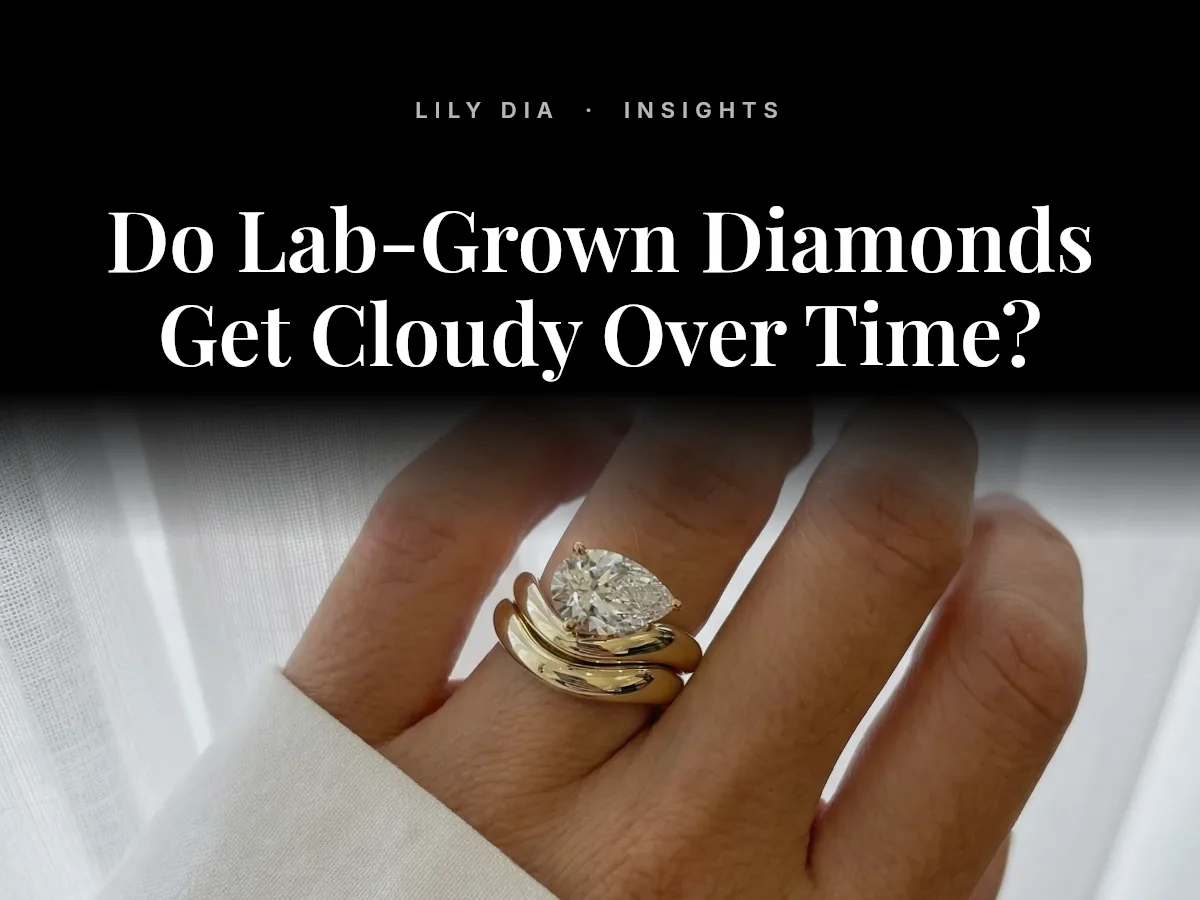
Hand wearing a diamond engagement ring in window light below the title "Do Lab-Grown Diamonds Get Cloudy Over Time?", by Lily Dia Jewellery

Do Lab-Grown Diamonds Get Cloudy Over Time?

No. Lab-grown diamonds don't get cloudy with age; the crystal is inert carbon and cannot haze from the inside. The myth comes from cubic zirconia, which really does cloud up. Any haze you can see is soap, hand cream and skin oils sitting on the surface, and it cleans off in fifteen minutes.

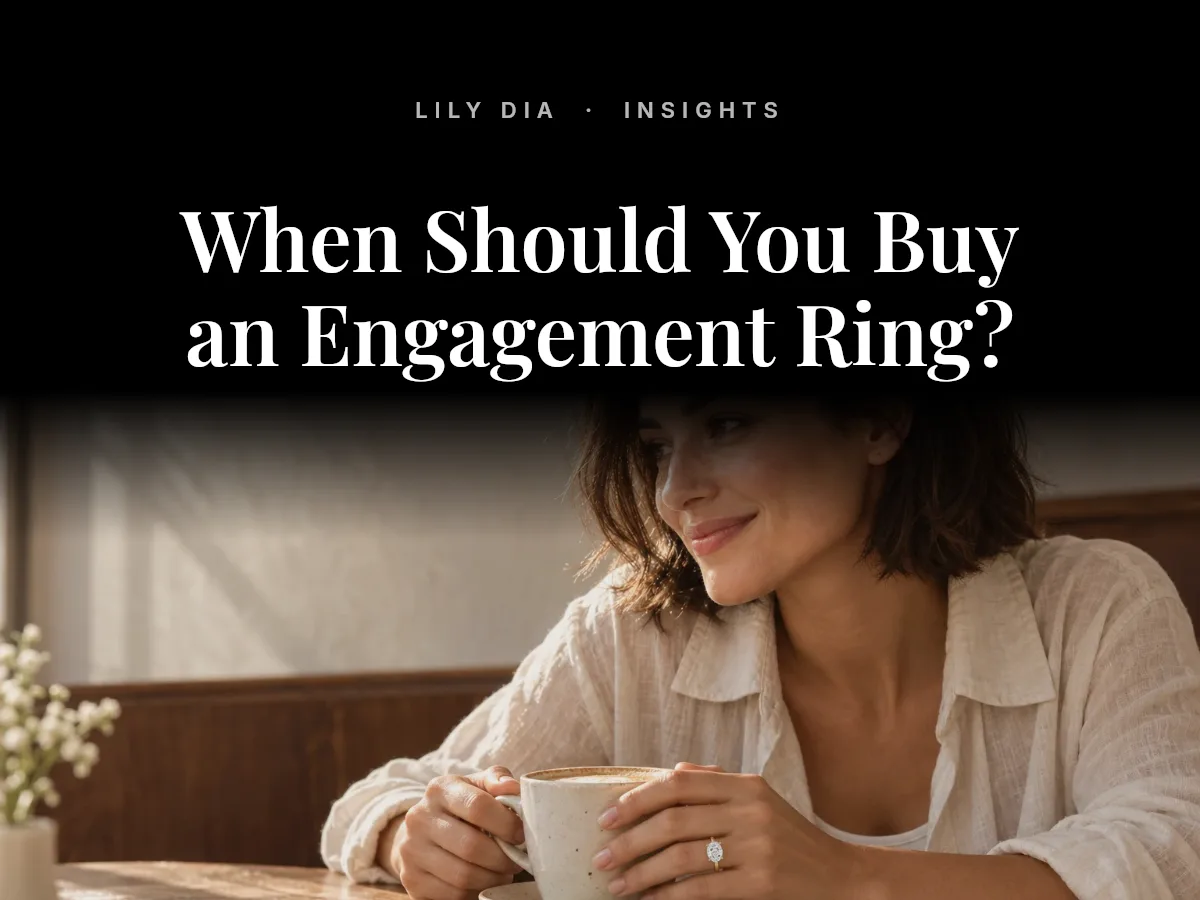
Woman at a café table wearing a diamond engagement ring below the title "When Should You Buy an Engagement Ring?", by Lily Dia Jewellery

When Should You Buy an Engagement Ring?

Give yourself 6 to 8 weeks for a made-to-order ring and 8 to 12 weeks for full custom. In-stock pieces can be ready in a week if you're up against a date. Here's how to work backwards from your proposal and when prices actually move during the year.

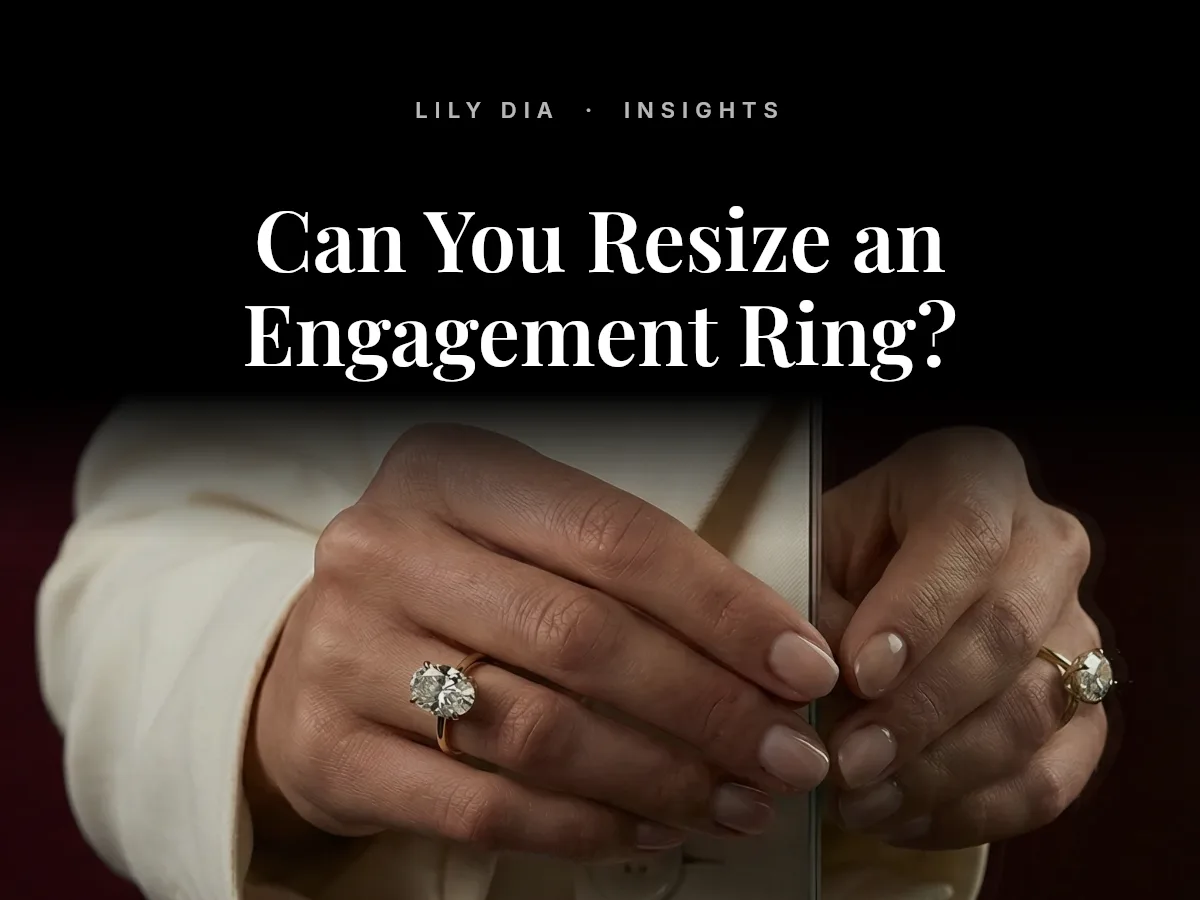
Hand wearing a round diamond solitaire engagement ring below the title "Can You Resize an Engagement Ring?", by Lily Dia Jewellery

Can You Resize an Engagement Ring?

Most engagement rings can be resized two to three Australian sizes up or down without trouble. Eternity bands, tension settings, and titanium can't. Here's what each kind of resize costs in Australia, how long it takes, and when replacement makes more sense.

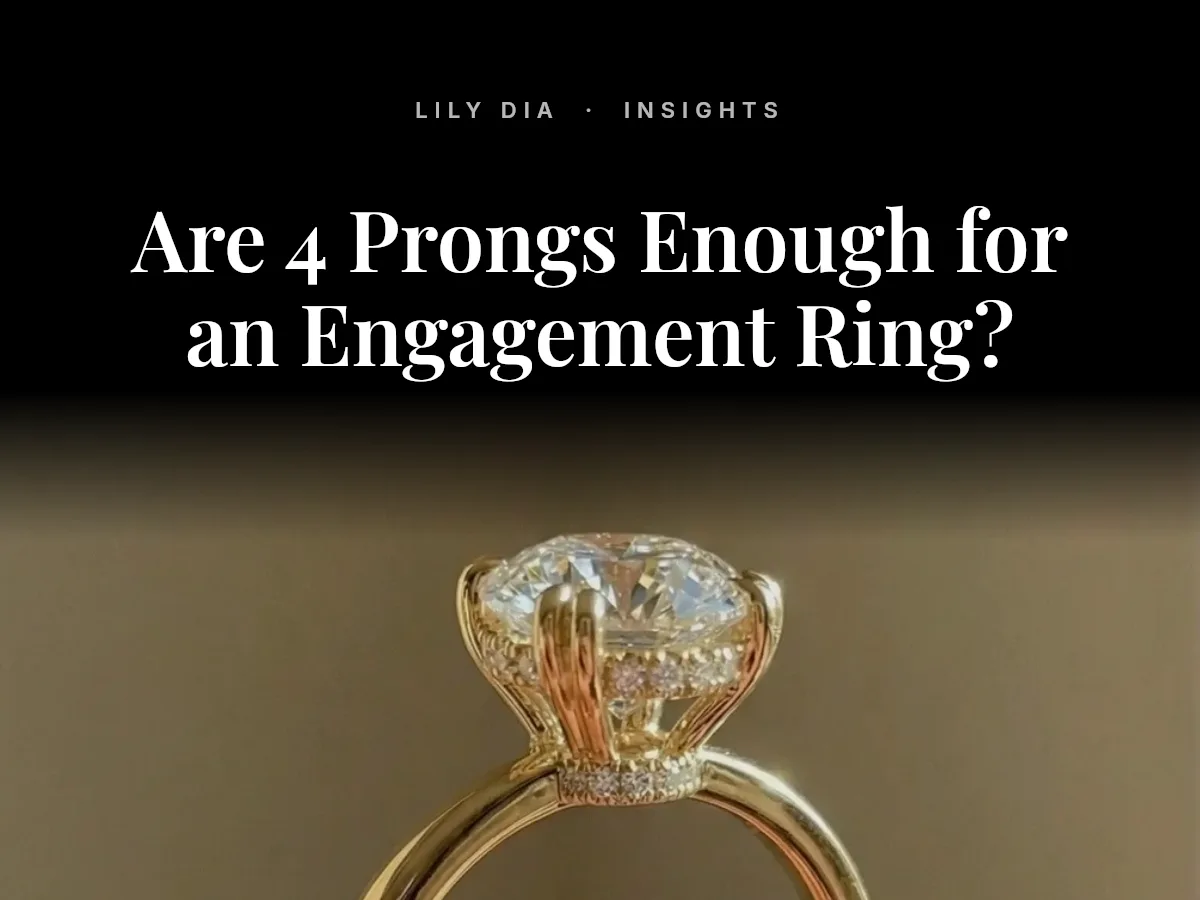
Round diamond engagement ring held to show its claws below the title "Four vs Six Prong Engagement Ring Setting", by Lily Dia Jewellery

Four vs Six Prong Engagement Ring Setting

Six prongs are slightly more secure; four prongs let in more light and read more modern. For most stones under 2 carats either is safe with annual checks. Here's how to choose based on stone size, shape, and how you actually live.

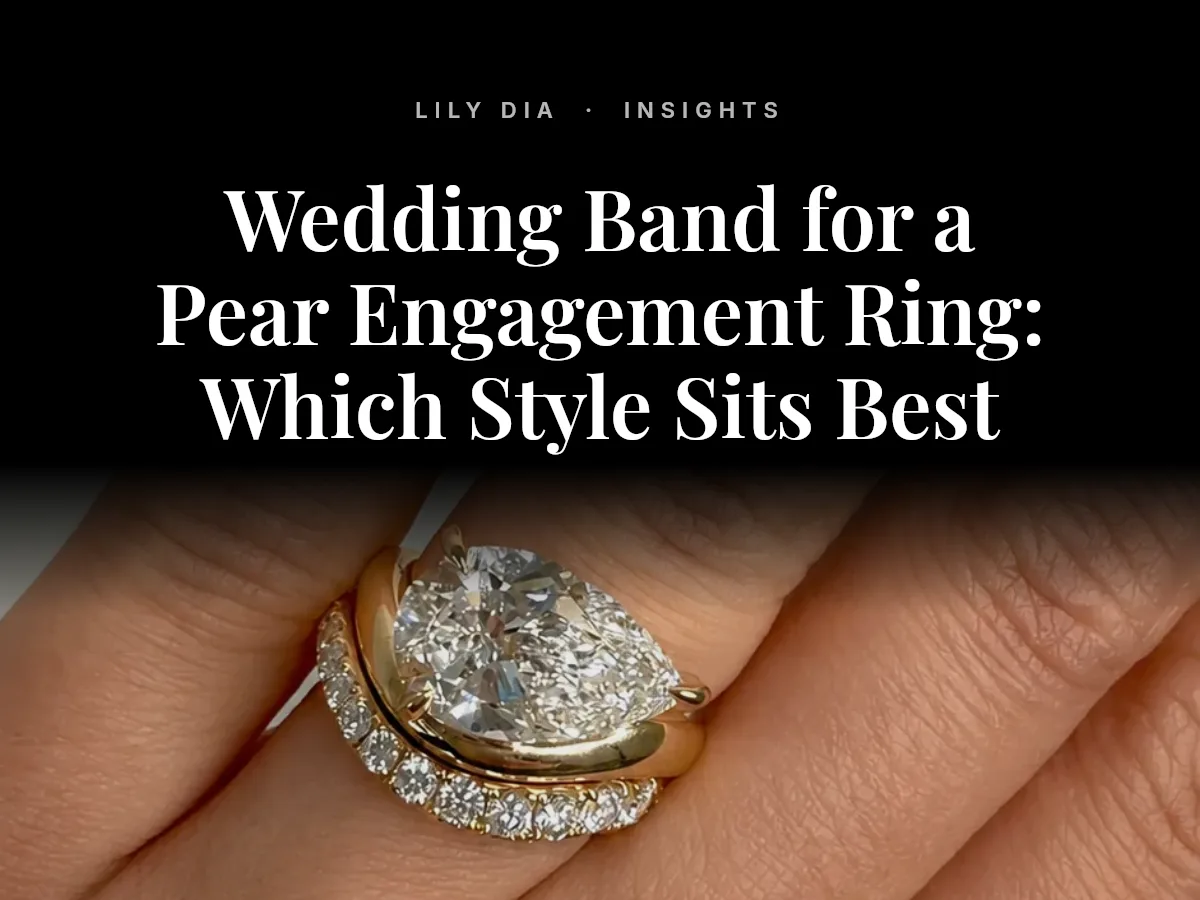
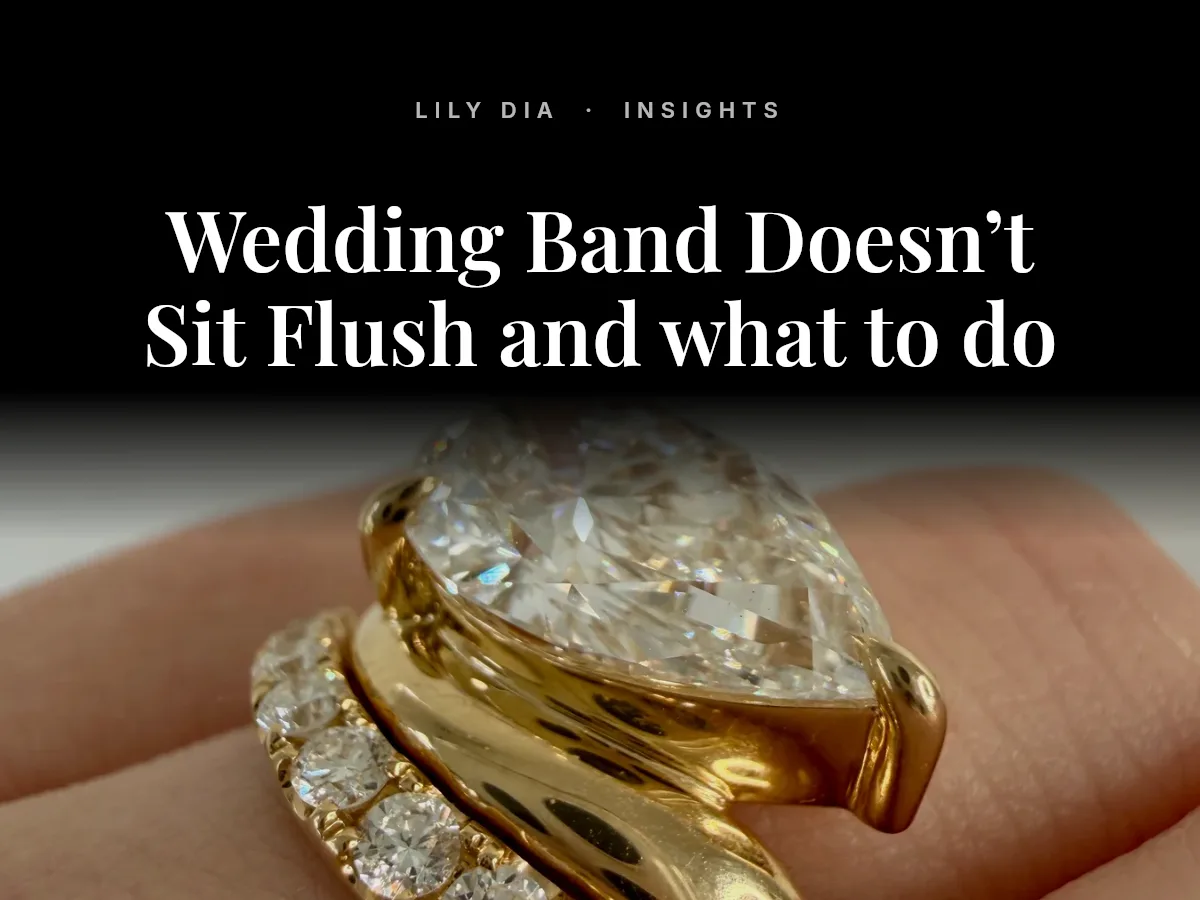
Pear engagement ring with curved wedding bands on a hand below the title "Wedding Band Doesn't Sit Flush and what to do", by Lily Dia Jewellery

Wedding Band Doesn't Sit Flush and what to do

If your wedding band sits with a gap against your engagement ring, it's almost always the setting profile, not a defect. Here's what causes it, which fixes actually work (contour bands, spacers, soldering), and what each one costs in Australia.

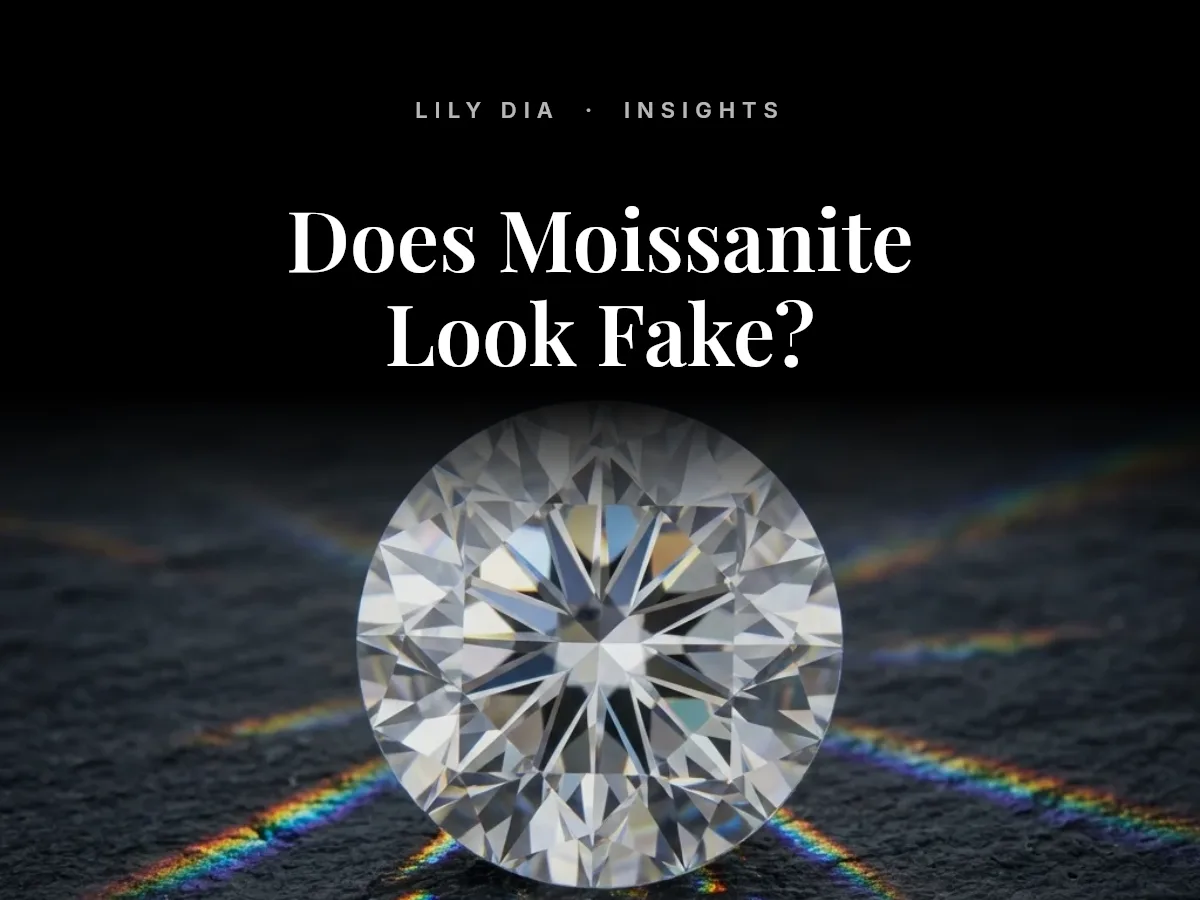
Round brilliant moissanite throwing rainbow fire below the title "Does Moissanite Look Fake?", by Lily Dia Jewellery

Does Moissanite Look Fake?

No, not if it's a D VVS1 stone, cut well, and set in solid gold. The moissanite that looks fake online is almost always a low-grade stone in a plated setting. Here's how to tell, what to avoid, and what to say if someone asks.

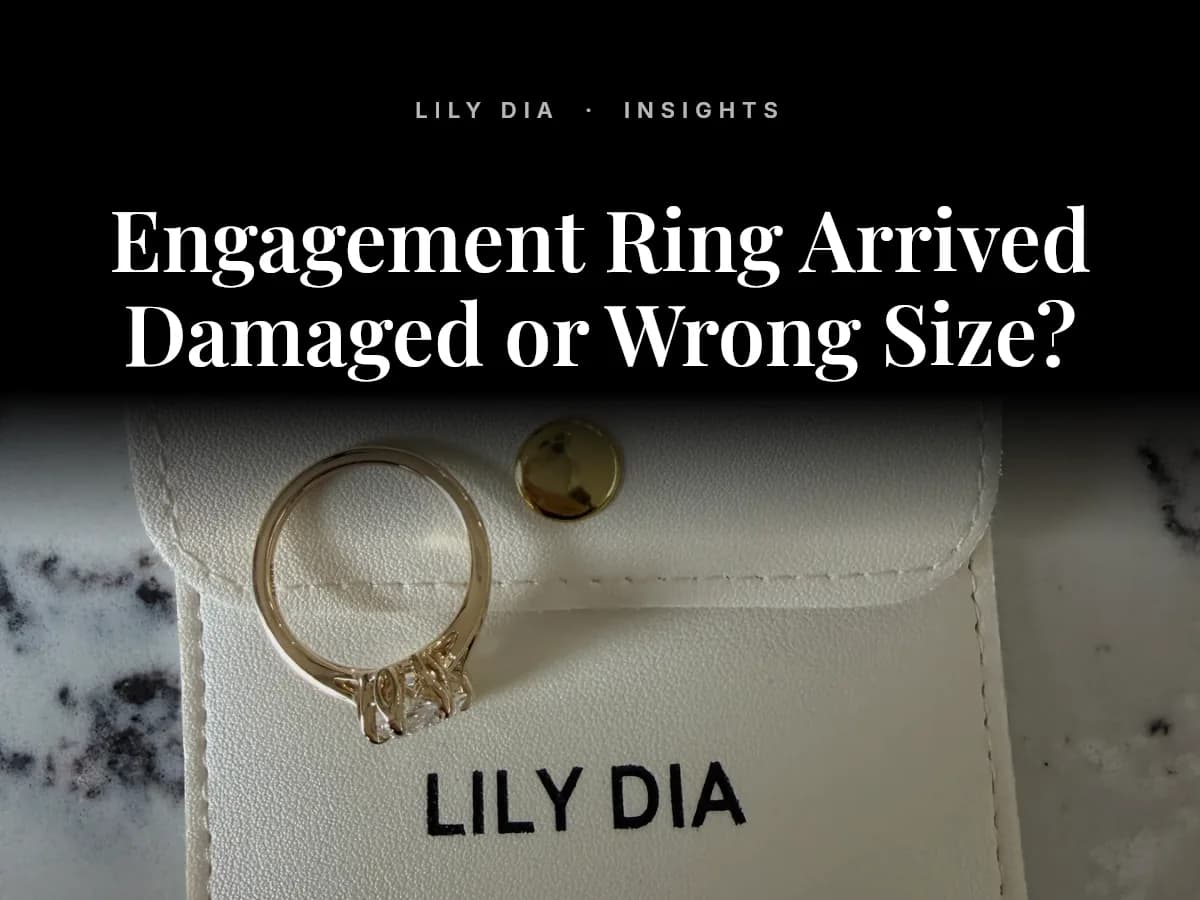
Lily Dia ring pouch with an engagement ring and wedding band below the title "Engagement Ring Arrived Damaged or Wrong Size?", by Lily Dia Jewellery

Engagement Ring Arrived Damaged or Wrong Size?

If your engagement ring turned up damaged, the wrong size, or with a loose stone, Australian Consumer Law puts you in a stronger position than most sellers will admit. Here's what to document, what to say, and what each fix usually costs.

Education Guides

Longer reads on diamonds, gemstones, ring design and care, written to help you choose well and look after what you buy.