


What is the most durable engagement ring setting?
A low-profile bezel is the most durable setting on the market. The diamond is surrounded by a continuous rim of metal that protects the girdle from chipping, holds the stone with no prongs to bend or wear, and sits flush enough that it does not catch on clothing, door frames, or gym equipment. Bezels are the standard recommendation for trades, healthcare workers, parents of young kids, and anyone hard on jewellery, and you can see the full range in our bezel engagement rings.
After bezel, the next most durable settings are:
- Basket setting, where horizontal bands of metal connect the prongs underneath the stone. The basket distributes load across the whole structure rather than into individual prongs.
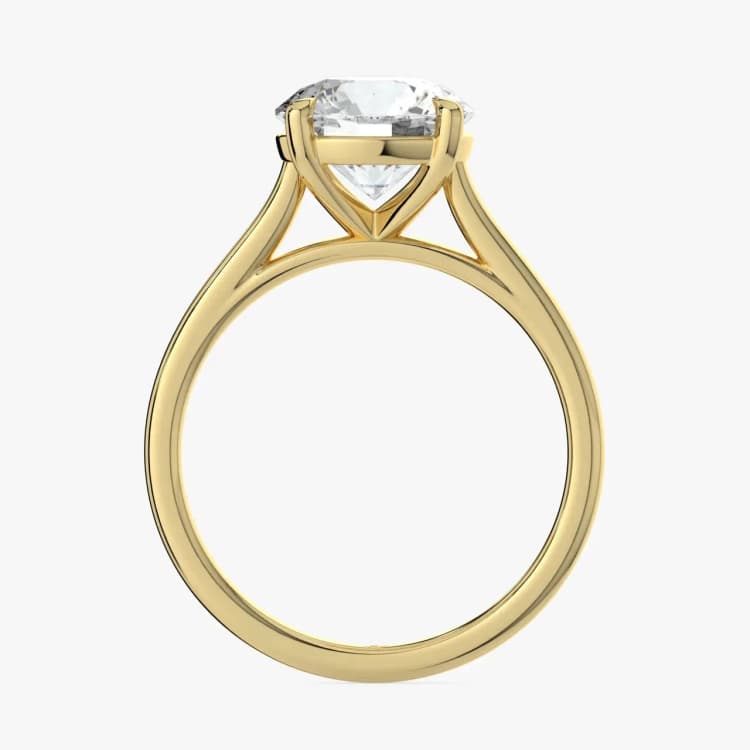
- Cathedral setting, where arches rise from the band to support the setting head. The arches add structural backbone to the ring above the band line.
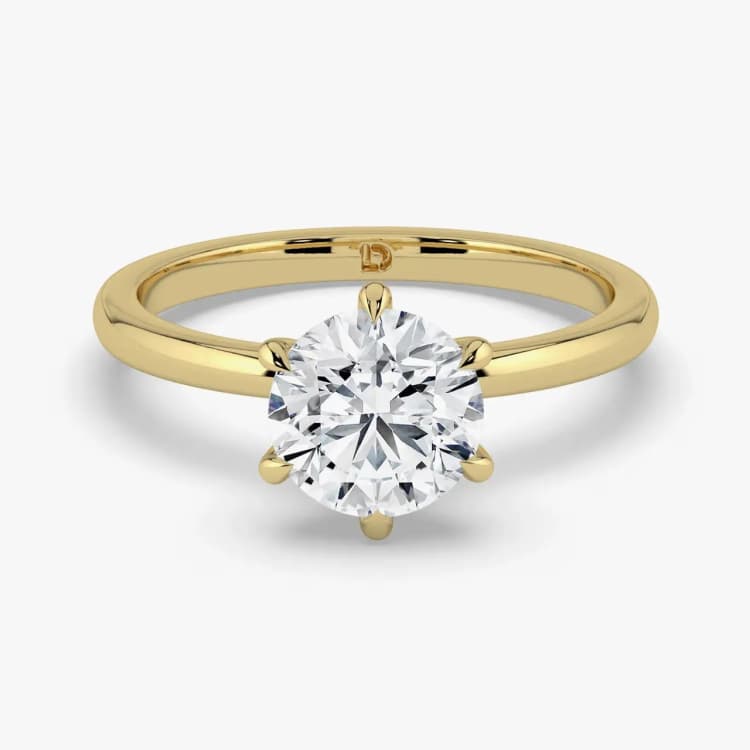
- Low-profile six-prong solitaire, which keeps the stone close to the finger and spreads the holding pressure across more contact points.
What is least durable: very tall cathedral or basket settings, four-prong solitaires with delicate claw prongs, and any setting with stones on the lower half of the band where the wear is worst.
What setting protects a diamond best?
A bezel, by a large margin. The rim around the stone protects the girdle and the upper pavilion of the diamond from direct impact. Even a hard knock on the corner of a bench top gets absorbed by the metal of the bezel rather than transferring straight to the diamond. Bezels also do not snag, do not catch on clothing, and have no prongs to bend.
For pointed shapes (pear, marquise, princess), V-prongs at the corners protect the most chip-prone parts of the stone. A V-prong wraps around the tip of the stone rather than gripping it from the side, which is critical because pointed tips are the weakest part of those shapes structurally.
For round and oval stones in a more traditional setting, a six-prong basket gives you most of the security of a bezel while keeping the open look. The prongs are stabilised by the basket underneath, so one prong cannot loosen independently the way it can in a free-standing four-prong head.
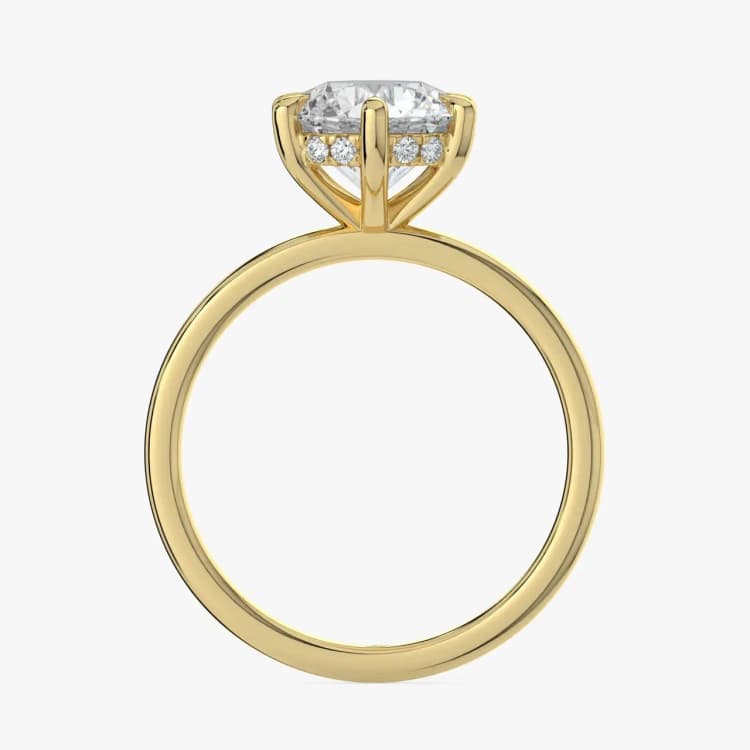
Are basket settings stronger than prong settings?
Yes. A basket setting is a kind of prong setting, but with the prongs tied together by horizontal bands of metal beneath the stone. That cross-bracing stops the prongs from flexing independently, which is the most common cause of a prong loosening or losing its grip on the stone over time.
A standard four-prong solitaire holds the stone with four free-standing claws that flex on their own. A basket version of the same setting holds the stone with four prongs that are connected at the base by a small frame, which spreads any load across the whole basket. Functionally, the basket-stiffened version holds up to impact noticeably better, especially on larger stones where the force on individual prongs is highest.
A cathedral setting takes a different approach: instead of strengthening the prongs themselves, it adds two arches from the band up to the setting head. The arches carry some of the structural load of the centre stone and protect the head from impact at the sides. Cathedral and basket both work; they solve the same problem from different angles.
Are six prongs more durable than four?
Yes, marginally. Six prongs distribute the holding pressure of the stone across six contact points instead of four. Each prong carries about a third less load, which means each prong wears at a slower rate. Six prongs also give you redundancy: if one prong is bent or damaged, you still have five working, where with four prongs you are down to three.
The size at which six prongs become worth the trade-off:
- Under 1 carat: four prongs is structurally fine and visually cleaner
- 1 to 1.5 carats: either works, taste decides
- 1.5 to 2 carats: six prongs gets the edge for security
- Over 2 carats: six prongs by default, partly for security and partly because the stone is large enough to balance the extra metal visually
The cosmetic trade-off is small. Six prongs cover marginally more of the stone's edge, which dims the side light entry by a tiny amount. For most rings, the security gain outweighs it. We covered this in more depth in our are 4 prongs enough for an engagement ring guide.
Why platinum prongs are more durable than gold prongs
Platinum and gold wear differently. Gold abrades, which means it slowly disappears as the metal rubs against bench tops, door frames, and clothing. Platinum displaces, which means it moves and dents but stays in place. The total volume of metal stays the same.
In practice, that means a 0.8mm gold prong that wears down to 0.5mm over ten years is a gold prong with 60% of its original metal left. A platinum prong over the same period might look bent or scratched but will have lost almost no material. The grip on the stone stays strong for longer.
This is why an increasingly common design choice is platinum prongs on a gold band. The setting head (basket and prongs) is made in platinum for the wear advantage. The band is gold (yellow, white, or rose) for the colour and the cost. The two-tone look is intentional and increasingly popular, especially for buyers who want gold but want the durability platinum offers at the critical contact points.
The downside is cost. Platinum is more expensive than gold per gram and more labour-intensive at the bench. Expect a platinum-headed gold ring to cost roughly $200 to $500 AUD more than the same ring fully in gold, depending on the head size.
How thick should an engagement ring band be for durability?
A 2mm band in 14k or 18k gold is the right floor for daily wear, and 2.5mm adds a further margin. Below 1.8mm in any gold karat, the band will start to thin from contact and bend more easily. Platinum gives you a slightly thinner safe minimum (around 1.6mm) because the metal is denser and resists bending better.
A quick reference by metal:
- 9k gold: minimum 2mm for daily wear, 2.5mm safer
- 14k or 18k gold: 1.8mm is the floor, 2mm is the comfortable choice
- Platinum: 1.6mm is workable, 1.8mm is the comfortable choice
- White gold: add rhodium re-plating to your maintenance plan every 2 to 3 years
If the engagement ring is a solitaire with a heavier centre stone (1.5 carats or more), step the band up by 0.2 to 0.3mm. A heavier stone needs a heavier base to balance the structural load and the visual proportions.
What kind of engagement ring is best for an active lifestyle?
For trades, healthcare workers, gym regulars, gardeners, parents of small children, or anyone who works with their hands daily, the priorities are:
- A bezel setting as the first choice, because it protects the stone, has no prongs to bend, and does not snag
- A low-profile setting (under about 4mm tall above the band) if you want prongs, so the stone sits closer to the finger and away from impact
- A solid 2.5mm or wider band in 14k gold or platinum
- Round, oval, or cushion shape rather than pointed shapes (pear, marquise, princess), which chip more easily at the tips
- A moissanite or lab-grown diamond rather than a softer gemstone (sapphires, emeralds, and morganites are pretty but scratch more easily)
The single biggest preventable cause of damage on a daily-wear ring is wearing it at the gym while lifting weights. Bare-handed grip on a barbell, kettlebell, or dumbbell bar puts more force on prongs than any other normal activity. Even a perfect setting will deform under that load. Take the ring off for lifting.
What care extends the life of any engagement ring?
Design choices set the ceiling. Ongoing care decides how close you get to it. Three habits that genuinely matter:
- A yearly prong and setting check at any reputable jeweller, almost always free in store. Catches worn prongs at the re-tip stage instead of the lost-stone stage.
- A fortnightly clean in warm soapy water with a soft toothbrush, focused on the cup of the setting underneath the stone where buildup is heaviest.
- Taking the ring off before the gym, lotion or sunscreen application, heavy cleaning with chemicals, and any task involving rough materials.
We have a more detailed care walkthrough in our engagement ring care and maintenance guide, which covers everything from cleaning to insurance to professional inspections.
The summary
Three design choices do most of the durability work:
- A bezel, basket, or cathedral setting rather than a free-standing four-prong head
- Six prongs instead of four on any stone above 1.5 carats
- Platinum prongs on a gold band, or a fully platinum head and band, to slow prong wear
None of them change how the ring looks in any way most people would notice from above. They sit underneath, doing the structural work while the diamond does the visual work.
Watch us walk through this with examples in our durable engagement ring breakdown on TikTok.
View our low profile engagement rings, which all open with the stone set low, or our bezel engagement rings for designs built for daily wear.
Thanks for reading,
Jared and Brie
Designed by us in Melbourne, made to order
Lily Dia is a small studio, so every ring is drawn, set and finished for the person wearing it. If this article helped, the collection shows how these choices look on real rings, and you can ask us anything before you decide.
View low profile engagement ringsOr ask us a question first