


Are 4 prong rings safe?
Yes, for stones under about 2 carats, with a yearly prong check. A well-made four-prong setting holds the diamond securely for decades of daily wear, and most solitaire engagement rings sold worldwide use exactly this setup. The thing that actually causes lost stones is not the count, it is worn prongs that nobody checked.
The maths people imagine, where losing one prong out of four leaves you with three and losing one out of six leaves you with five, assumes prongs fail one at a time and the rest stay perfect. In practice prongs wear evenly across a ring, so by the time one is dangerous all four (or all six) are due for re-tipping. Getting them checked once a year catches that wear long before any prong actually fails.
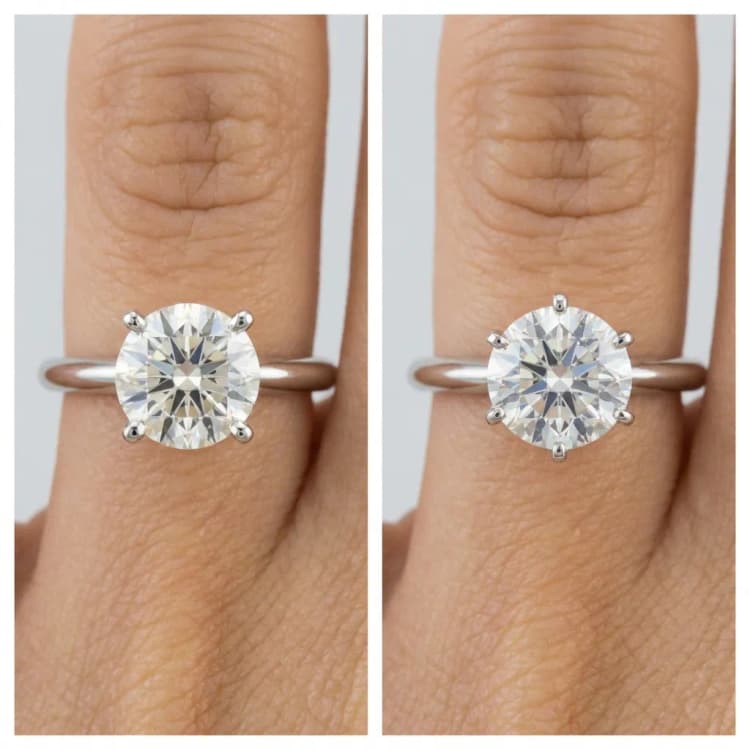
Is a 4 prong setting secure for everyday wear?
Yes for most daily wear, with two honest caveats. The first is the annual prong inspection, which is free at most jewellers and takes ten minutes. The second is the kind of life your hands have. If you cook constantly, garden without gloves, climb, lift weights with bare hands, or work with tools, a more durable engagement ring design may matter more than the exact prong count. Even then, the ring is still safe, you just maintain it more often.
The failure pattern for a daily-wear four-prong ring is consistent. Prongs slowly wear thin against door frames, bench tops, gym equipment and steering wheels. Around the five to ten year mark they need re-tipping. A jeweller can see the wear long before you can.
Is 4 prongs enough for an oval?
Four prongs is enough for an oval up to about 1.5 carats, with a small asterisk. Above 1.5 carats, six prongs is the standard call for ovals, and it is the standard call for a reason.
The vulnerable spots on an oval are the two pointed tips of the long axis. A four-prong oval typically holds the stone at the four sides (roughly north, south, east and west), which leaves the tips of the long axis lightly supported. A six-prong oval adds prongs at those two tips, which is exactly where the stone is most likely to chip if it takes a knock.
On a smaller oval (under 1 carat) four prongs is structurally fine and visually cleaner, since six prongs on a small oval starts to crowd the stone. From 1 carat to 1.5 carats either works. Past 1.5 carats, the extra security at the tips is worth the slightly less open look. There is a fuller treatment of this in our 4 prong vs 6 prong engagement ring comparison.
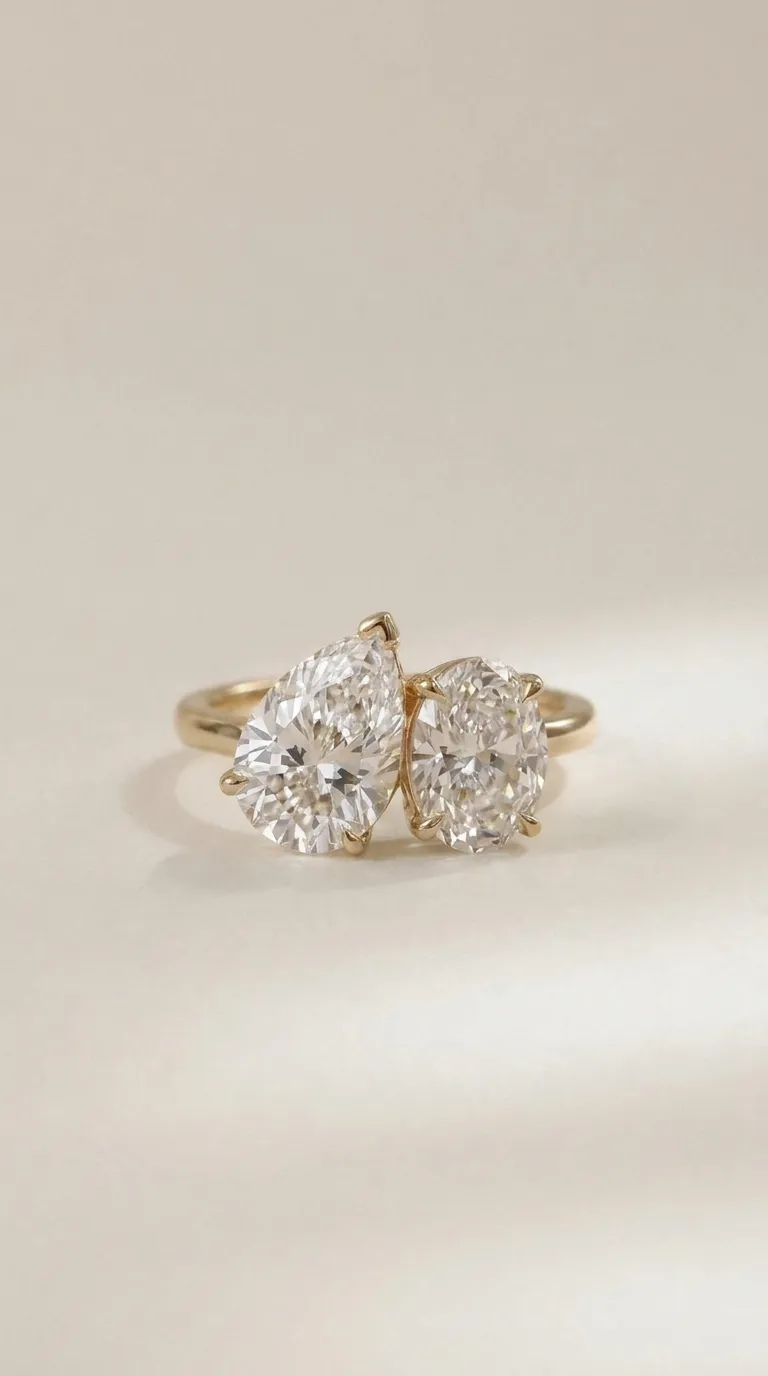
Do 4 prongs hold a diamond as well as 6?
Four prongs hold the diamond well enough for any stone you would reasonably set in four. Six prongs hold marginally better, mostly because they distribute the holding force across more contact points and add redundancy you will probably never need.
Where the difference actually matters is on larger and heavier stones. A 3 carat diamond puts roughly twice the load on each prong of a four-prong setting compared with the same stone in a six-prong. Over years of daily wear that extra load shows up as faster prong wear. Six prongs spread the load out, which is why the rule of thumb above 2 carats is six prongs by default.
For a stone under 2 carats, the holding power of four versus six is not the thing that decides between them. Looks usually are, and the quickest way to compare is to look at both prong counts on the same design across our engagement rings.
What is a support bar in a 4 prong setting?
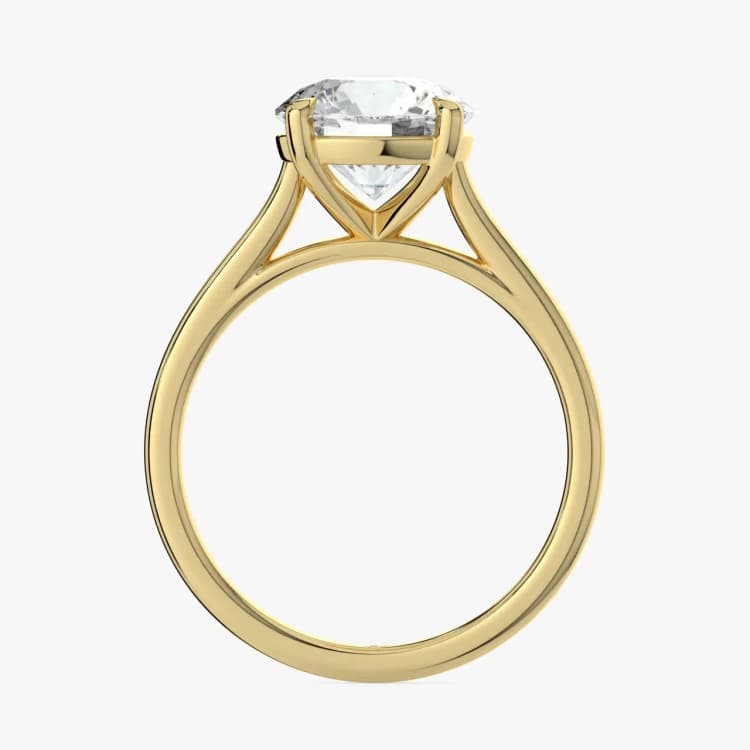
A support bar is a small piece of metal that bridges two of the prongs underneath the stone, sitting below the girdle so it is hidden from above. It adds structural stiffness to the setting and shares load across the prongs it connects to.
Not every four-prong setting needs one. On a stone under 1.5 carats with normal wear, a standard four-prong basket is plenty. Where a support bar is worth asking about is on larger stones, on knife-edge or claw-style prongs that are deliberately delicate, and on settings where the basket sits unusually high.
If you love the look of four prongs but want a small extra margin of structural security, asking the jeweller for a support bar is a clean way to get it without changing the visible design.
When are 4 prongs not enough?
Four cases where six prongs is the more sensible call:
- Stones over 2 carats. The load on each prong scales with stone weight, and at 2 carats the maths starts to favour spreading that load across six contact points instead of four.
- Ovals, pears and marquises over 1.5 carats. The long-axis tips need their own prongs.
- Very active hands. Trades, manual work, gym, daily cooking, gardening. Four prongs still works, but you will be back for re-tipping sooner and the security buffer of a sixth prong is worth having.
- Delicate or claw-style prongs. If the prongs themselves are deliberately thin and pointed for a particular look, six of them gives the setting back the structural margin that a chunkier four-prong already has.
None of these mean four prongs is unsafe. They mean the cost-benefit tips toward six.
How often should I get a 4 prong setting checked?
Once a year for normal daily wear, every six months if your hands are hard on the ring. Both checks are usually free in store and take ten minutes. Prong wear is gradual and predictable, so an inspection catches the problem at the re-tip stage ($30 to $80 per prong in AUD) rather than the lost-stone stage.
The signs to bring it in sooner, regardless of how recently it was checked:
- The stone moves when you press the side of it with a fingernail
- A faint click or rattle when you tap the ring against your fingernail
- A prong that looks bent outwards, flattened on top, or worn to a thin spike
- One prong visibly shorter than the others
- The stone sitting crooked compared with the band
If you are trying to tell normal wear from a real problem, the engagement ring prong mistakes guide shows what snagging, bent prongs and overly thin claws look like.
So, are 4 prongs enough?
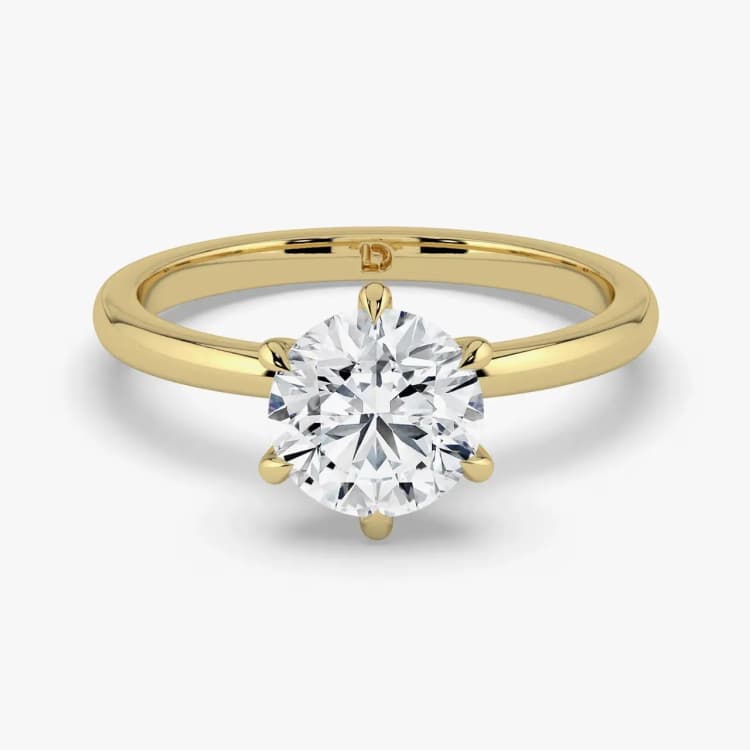
For most engagement rings, yes. Four prongs is enough for round and cushion stones up to 2 carats, for ovals up to 1.5 carats, and for normal daily wear with a yearly check. It looks cleaner, shows more of the stone, and is what most people end up choosing for good reason.
Six prongs is the more sensible pick if your stone is larger than those thresholds, if your daily wear is unusually rough on jewellery, or if the prongs themselves are deliberately delicate. Either way, the prong count matters less than getting the ring inspected regularly. That single habit is what actually keeps stones in their settings.
View our full collection of lab-grown diamond engagement rings for both four and six-prong settings across every shape.
Thanks for reading,
Jared and Brie
Designed by us in Melbourne, made to order
Lily Dia is a small studio, so every ring is drawn, set and finished for the person wearing it. If this article helped, the collection shows how these choices look on real rings, and you can ask us anything before you decide.
View lab-grown diamond ringsOr ask us a question first