
How to Look After an Engagement Ring

By Jared James · Last updated 28 October 2026
Quick answer
Take it off for the gym, swimming, gardening and housework, have the claws checked every six months or at least once a year, and send us a photo if anything looks wrong. Diamond and moissanite are hard enough for everyday wear; the claws and the metal are what need looking after. Cleaning has its own guide, and this page covers everything else that keeps the stone in the ring.
When should you take your engagement ring off?
For the gym, swimming, gardening, housework and sleep, and before creams, sunscreen or perfume. Most wear on a ring comes from everyday knocks and grit.
- The gym. Gripping weights and bars presses on the claws and can bend the band out of round.
- Swimming. Cold water shrinks your fingers, so a ring slips off more easily in a pool or the sea.
- Gardening and housework. Soil and grit scratch the metal, and cleaning products leave a film on the stone.
- Sleep. A claw can catch on bedding or hair, and a high setting takes knocks it doesn’t need.
- Creams and perfume. They build up under the stone and dull it, so put the ring on last.
When you take it off, hold it by the band rather than the stone, because pulling on the stone works the claws loose over time. Keep it in the same place every time. Cold weather is worth a thought too: GIA notes that fingers shrink in the cold, so a ring can slide around.
For cleaning, see our five-step engagement ring cleaning guide.
Can you wear an engagement ring every day?
Yes. Diamond is 10 on the Mohs scale and moissanite 9.25, so the stone stands up to everyday wear, though a hard knock can still chip it, and gold and platinum settings are made to be worn daily. The parts that need watching are the claws that hold the stone and the metal of the band, which slowly wear with use.
How often should the claws be checked?
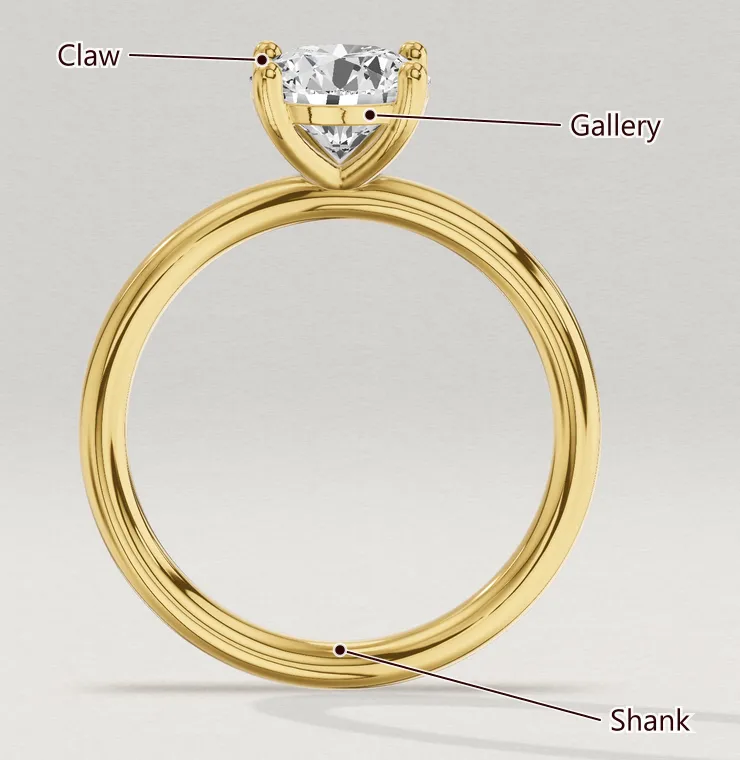
Every six months, as GIA suggests, or at least once a year on your anniversary, and straight away after a hard knock or if the ring starts to catch.
Which rings need it most. Fine claws, high settings, and pavé or halo bands, where small stones sit in tiny beads of metal. Our settings come with 3, 4, 5 or 6 claws, with eagle, round, compass or double eagle tips. Six claws keep the stone held if one wears, and a low setting or a bezel catches less and takes fewer knocks.
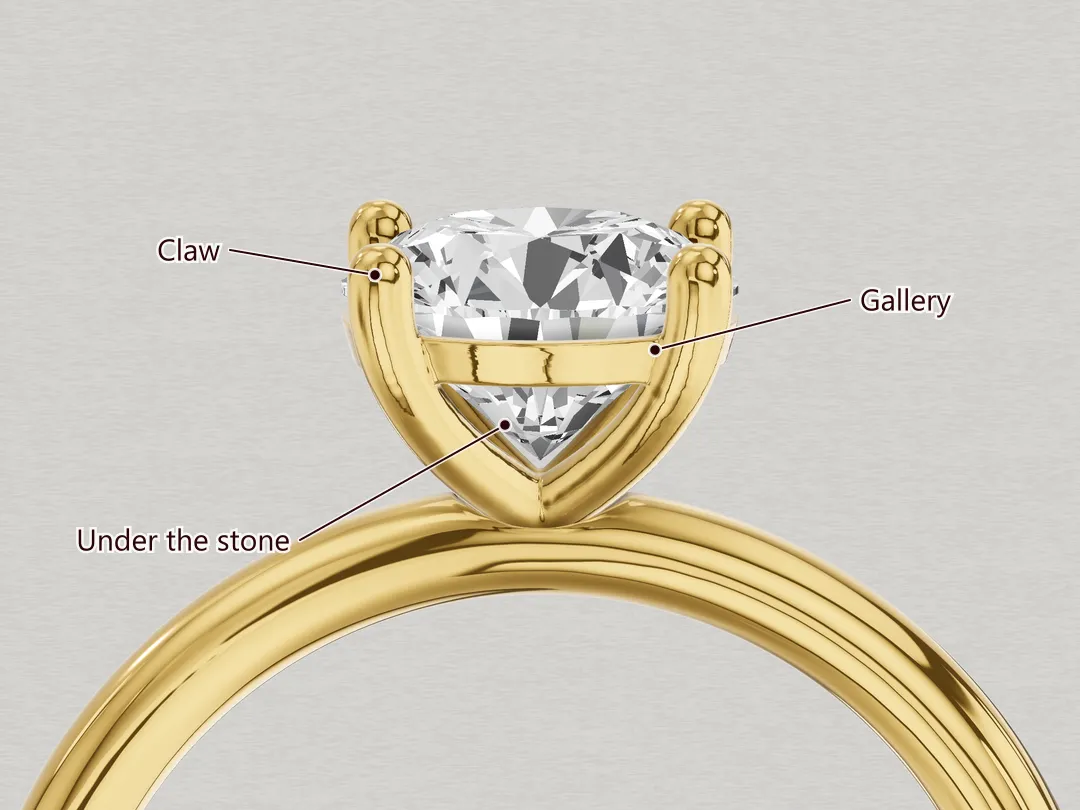
What to look for at home. Hold the ring by the band and tap the stone gently with a fingernail: it should not move or click. A claw that snags on clothing or hair has lifted or worn, and a claw tip that looks flat or thin has worn down. If you notice any of these, stop wearing the ring and send us a photo.
What happens to each metal over time?
Every metal we use wears a little with daily wear, and each one can be brought back. We make rings in 14k and 18k gold in three colours, and in 950 platinum.
| Metal | What you’ll notice | What brings it back |
|---|---|---|
| 14k and 18k yellow or rose gold | Fine scratches that soften the shine, and over many years a band that thins where it rubs. 14k is the harder of the two. | A jeweller can polish it. Polishing takes off a fine layer of metal, so do it only when the ring needs it. |
| 14k and 18k white gold | Ours is nickel-free and rhodium plated. The plating wears first where the band rubs, and the gold’s slightly warmer tone starts to show. | A jeweller can replate it to bring back the bright white. How soon depends on how hard the ring is worn. |
| Platinum 950 | A soft, satin patina from fine scratches. There is no plating, so it never needs replating. | Leave the patina, or have a jeweller polish it back to a mirror finish. |
To clean the band itself, follow the gold and platinum steps in the cleaning guide. Choosing between the two white metals? Our platinum vs white gold guide compares their upkeep and price.
What if something looks wrong?
Stop wearing the ring and send us a photo. We have no showroom, so a photo is the first step: we will tell you whether it needs a check and, if it does, how to post it to us safely. Please contact us before sending anything so we can give you return instructions and packaging advice.
If we find a manufacturing defect, we cover the postage both ways and the repair. If the problem is wear or accidental damage, we quote any assessment, postage or repair cost before you agree to anything.
What does our warranty cover, and what needs insurance?
Our lifetime manufacturing warranty covers defects in how the ring was made, for as long as the original buyer owns it: a setting loose from faulty construction, a flawed finish from production, or a stone or setting problem present when it arrived. It sits on top of your rights under Australian Consumer Law.
It does not cover normal wear (scratches, dents, plating wear, claws worn by daily use), accidental damage, a stone lost through wear, or loss and theft. That is what insurance is for, and our engagement ring insurance guide compares the ways to insure it in Australia. The full terms are on our delivery and warranty page.
How should you store it?
On its own, in a soft-lined box or pouch, so the stone doesn’t scratch your other jewellery and nothing knocks the claws. Our guide to travelling with an engagement ring covers keeping it safe away from home.
Frequently asked questions
- Can you wear an engagement ring every day?
- Yes. Diamond is 10 on the Mohs scale and moissanite 9.25, so both are hard enough for daily wear, and gold and platinum settings are made for it. Take it off for the gym, swimming, gardening and housework, and have the claws checked regularly.
- Should you take your ring off to sleep?
- It is better to. A claw can catch on bedding or hair overnight, and a high setting takes knocks it does not need. Keep it in the same place every night so it does not go missing.
- Can you shower or swim with an engagement ring?
- Showering in it won’t hurt the ring, but soap and shampoo leave a film that dulls the stone, so it looks better if you take it off. Take it off to swim: cold water shrinks your fingers, and a ring slips off more easily in a pool or the sea.
- How often should the claws be checked?
- GIA suggests every six months, or at least once a year on your anniversary, and straight away after a hard knock. Rings with fine claws, a high setting or a pavé band need it most.
- How long does white gold plating last?
- It depends on how hard the ring is worn. The rhodium wears first where the band rubs, and as it thins the gold’s slightly warmer tone shows through. A jeweller can replate it to bring back the bright white finish.
- Does platinum need polishing?
- Only when you want the bright mirror finish back. Platinum develops a soft patina from fine scratches that many people prefer to a polished finish. A jeweller can return the ring to a high polish at any time.
- Is damage covered by the warranty?
- Manufacturing defects are, for as long as the original buyer owns the ring, and if a defect is confirmed we cover the repair and the postage both ways. Wear, accidental damage and loss are not covered, which is what insurance is for.