

Can I make my engagement ring thicker?
Yes. A jeweller thickens an engagement ring by re-shanking it, which means cutting out part or all of the existing band and replacing it with new metal of the thickness you want. The setting, the stone, and the upper portion of the band that surrounds the head stay as they are. The work takes two to four weeks and costs roughly $300 to $1,200 AUD depending on how much of the band is replaced, the metal, and whether the ring has stones in the shank that need to be reset.
This is real reconstruction. It is not an adjustment. The band that gets cut away is gone, and the new metal is soldered in. A skilled jeweller hides the seams on the inside or palm side, so the finished ring looks like one continuous piece.
Can you add gold to a ring to make it thicker?
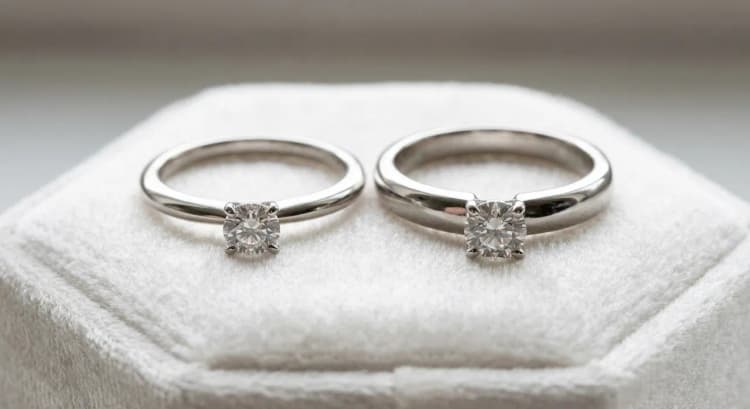
Yes, and this is the more common version of the question. Adding gold is a kind of re-shank where the jeweller solders new gold onto the existing band, usually on the bottom (palm side) where the band has worn thin. The added metal builds the band up to a new thickness without replacing the entire shank.
A few things worth knowing if you go this route:
- The added gold has to match your existing metal exactly in karat and colour. Adding 14k to an 18k band leaves visible colour and wear differences within a couple of years.
- The seam where new gold meets old has to be cleaned up to be invisible. Good benches finish it so the join cannot be seen. Cheap work leaves a faint line.
- A jeweller will often suggest adding gold on the bottom half only and leaving the top of the band original, since the top half rarely thins as fast.
If your current band has worn from 2mm down to 1.4mm and you want it back at 2mm, adding gold is the right call. If you want to go from 1.5mm to 3mm all the way around, a full re-shank is the cleaner solution.
Can you make a ring band thicker without replacing it?
Only by adding metal to the existing band, which is the gold-addition route above. There is no way to thicken the band without either adding material or replacing what is there. A jeweller cannot stretch or expand a finished band, since the metal has already been worked to its final shape.
The only non-reshanking alternative is a temporary one: a ring guard, which is a small metal sleeve that wraps around the existing band to bulk it up. Guards are visible at the join, they shift during wear, and they are usually only used to fix sizing rather than thickness. Most people who try them remove them within a year.
How does re-shanking work?
A jeweller cuts the existing band at the bottom or sides, removes the section being replaced, and solders in a new piece of metal at the thickness you want. There are two common variations:
- Half-shank re-shank. Only the bottom portion of the band (the half that sits against the palm) is replaced. The top half, including the metal around the setting, stays original. Cheaper, faster, and the most common type because the bottom is where bands wear thinnest.
- Full-shank re-shank. The entire band, from one side of the setting around to the other, is rebuilt. Gives you even thickness all the way around. More expensive because there is more metal and more bench time involved.
The setting and the stone stay where they are. The jeweller works around them, which is why the bottom of the band is the easier place to do the work. Turnaround is usually two to four weeks for a jeweller with a busy bench.
How much does it cost to re-shank a ring in Australia?
Rough 2026 AUD bands for re-shanking work:
- Half-shank in 9k or 14k gold: $300 to $500
- Half-shank in 18k gold or platinum: $500 to $800
- Full-shank in 9k or 14k gold: $500 to $850
- Full-shank in 18k or platinum: $800 to $1,200
- Re-shanking a pave or eternity band with stones to reset: add $200 to $600 on top
Metal price drives a big chunk of the bill. Platinum is denser and more expensive per gram than gold, and white gold needs rhodium re-plating after the work is done. Bigger ring sizes need more metal, so a size O re-shank costs more than a size H even with everything else equal.
Get a written quote that covers the metal, the bench labour, the re-plating (if applicable), and any stone resetting. Verbal estimates almost always grow.
How thick should an engagement ring band be?
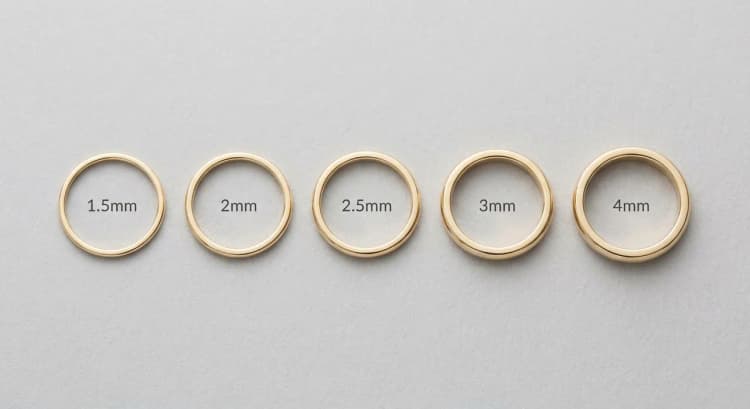
For daily wear, somewhere between 1.8mm and 2.5mm is the sensible range, and our engagement ring band width guide shows how each width reads on the hand. Below 1.6mm bends and wears thin within a few years on hands that use them, which is why a 1.5mm ring band is usually too fine for daily wear in gold. Above 3mm starts to feel chunky on smaller fingers and crowds neat detail like pave or milgrain.
Some rough numbers for context:
- 1.2mm to 1.5mm: delicate. Looks lovely on smaller hands but will need re-shanking inside a decade.
- 1.6mm to 1.9mm: a common "thin but durable" range. Holds up well with normal wear.
- 2.0mm to 2.5mm: the sweet spot for most rings. Comfortable, durable, suits stacking.
- 2.6mm to 3.5mm: chunkier, more substantial feel. Matches well with wide wedding bands.
- Over 3.5mm: statement territory. Heavier on the hand.
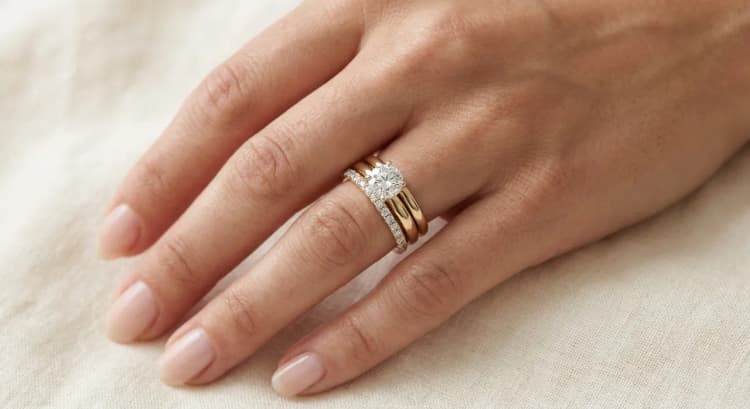
If you are matching the engagement ring to wedding bands, pick a thickness that matches the bands within roughly 0.3mm. Mismatched thickness reads as awkward stacking, even when the metals match.
Thickness versus profile, what is the difference?
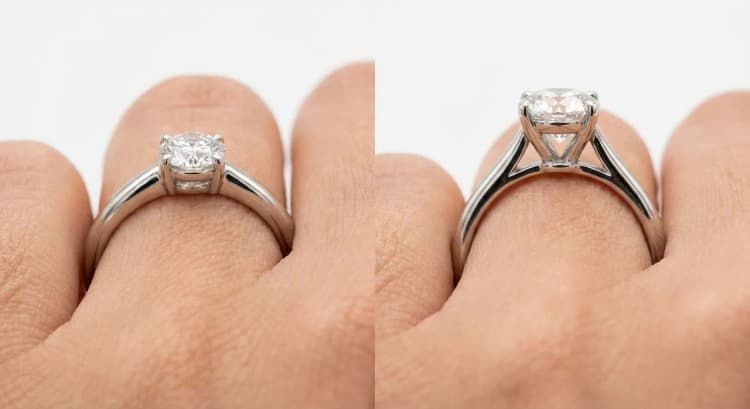
Thickness is the band width measured from one side of your finger to the other, looking at your hand from above. Profile (sometimes called height) is how far the band rises from the surface of your finger when you look at it side-on.
People often want both at once. A higher profile lifts the setting away from the surface, which keeps the stone clear of bench tops and steering wheels and also closes the gap when stacking next to a wedding band. A thicker band gives you the structural strength.
The trade-off with profile is snagging. A very high setting catches on clothing, hair, and gym equipment. If your hands are hands-on, a slightly lower profile is usually worth it even if it means a small visible gap between rings.
What can and cannot be made thicker?
Easy to re-shank:
- Plain gold or platinum bands
- Solitaires with no stones in the band
- Cathedral or basket-set rings with empty shoulders
Harder to re-shank, possible but more involved:
- Pave bands with small accent diamonds. The jeweller works around the stones or removes and resets them, which adds time and cost.
- Bands with detailed milgrain, engraving, or filigree on the bottom half. The new metal has to match the pattern.
- Two-tone or mixed-metal bands. Matching two metals across a seam is harder than matching one.
Difficult or worth a second opinion:
- Eternity bands with stones all the way around. There is no plain section to cut. The fix is usually a new band with the stones transferred.
- Vintage or antique rings, especially anything pre-1950. Re-shanking can damage historical value. Get an opinion from a jeweller who specialises in antique pieces before committing.
- Heavily worn or damaged bands. Repair the wear first, then assess whether thickening is still useful.
Will re-shanking change how the ring feels?
Yes, in a small but real way. The ring will feel heavier, sit more snugly, and spin less on the finger. People who go from a 1.5mm band to a 2.2mm band almost always say it feels more like jewellery and less like wire.
It does also change the ring sizing slightly. A thicker band fills more of the finger circumference, which means your final size after the re-shank might need to be a quarter-size larger than your old measurement to feel the same. A good jeweller will check sizing with a test band at the new thickness before they cut your ring.
What to ask the jeweller before saying yes
A few questions worth asking before you hand the ring over:
- What is the final thickness in mm, and can I try a sample band at that thickness first?
- Half-shank or full-shank, and why for my ring specifically?
- Where will the seams be, and will they be visible on the outside of the band?
- What is the metal match (karat and colour), and will the new section wear at the same rate?
- What is the written quote, including stone resetting, polishing, and rhodium plating if applicable?
- What is the turnaround, and what is the warranty if a join fails inside the first year?
Photographs of the ring before any work begins are standard practice. If the jeweller does not offer them, ask.
When not to re-shank
Skip the re-shank if any of these apply:
- The ring already has a damaged setting or loose stone. Fix that first.
- Your finger size is currently unstable (pregnancy, recent significant weight change). Wait until it settles.
- You are likely to upgrade to a different ring inside the next year or two. Spend the money on a new engagement ring instead.
- The ring has serious sentimental value in its exact current form (a family heirloom, for example). Wear it as it is and consider a separate everyday ring.
For most rings that are thinning from years of wear, or that always felt too delicate to begin with, re-shanking is a clean, durable fix and the ring comes back stronger than new. If you are redesigning rather than repairing, our guide to making an engagement ring more durable covers the setting and metal choices to think about at the same time.
Browse our thick band engagement rings, which all open on a 3mm band, if you are weighing a full new ring against a re-shank.
Thanks for reading,
Jared and Brie
Designed by us in Melbourne, made to order
Lily Dia is a small studio, so every ring is drawn, set and finished for the person wearing it. If this article helped, the collection shows how these choices look on real rings, and you can ask us anything before you decide.
View thick band engagement ringsOr ask us a question first