
What is the best engagement ring for large fingers?
A ring with enough visual weight to sit in proportion: an elongated stone at 1.5 carats or more, a band of roughly 2.3mm to 3mm, and a setting that adds presence, like a halo, three-stone or pave design. Larger fingers are an asset here, because they carry substantial rings that would overwhelm a slim hand. The only real mistake we see is over-correcting into something delicate, where a small stone on a thin band ends up looking smaller than it is against the width of the finger.
The proportion logic is simple. A stone reads as large or small relative to the finger it sits on, not in absolute millimetres. A 1 carat round is about 6.5mm across, which covers most of a slim finger but sits with visible band on either side of it on a wider one. The same stone, same money, reads differently on different hands. So the levers for wider fingers are stone size, stone shape, band width and setting style, in that order, and you can work through all four across our bespoke engagement rings.
What ring shape looks best on large fingers?
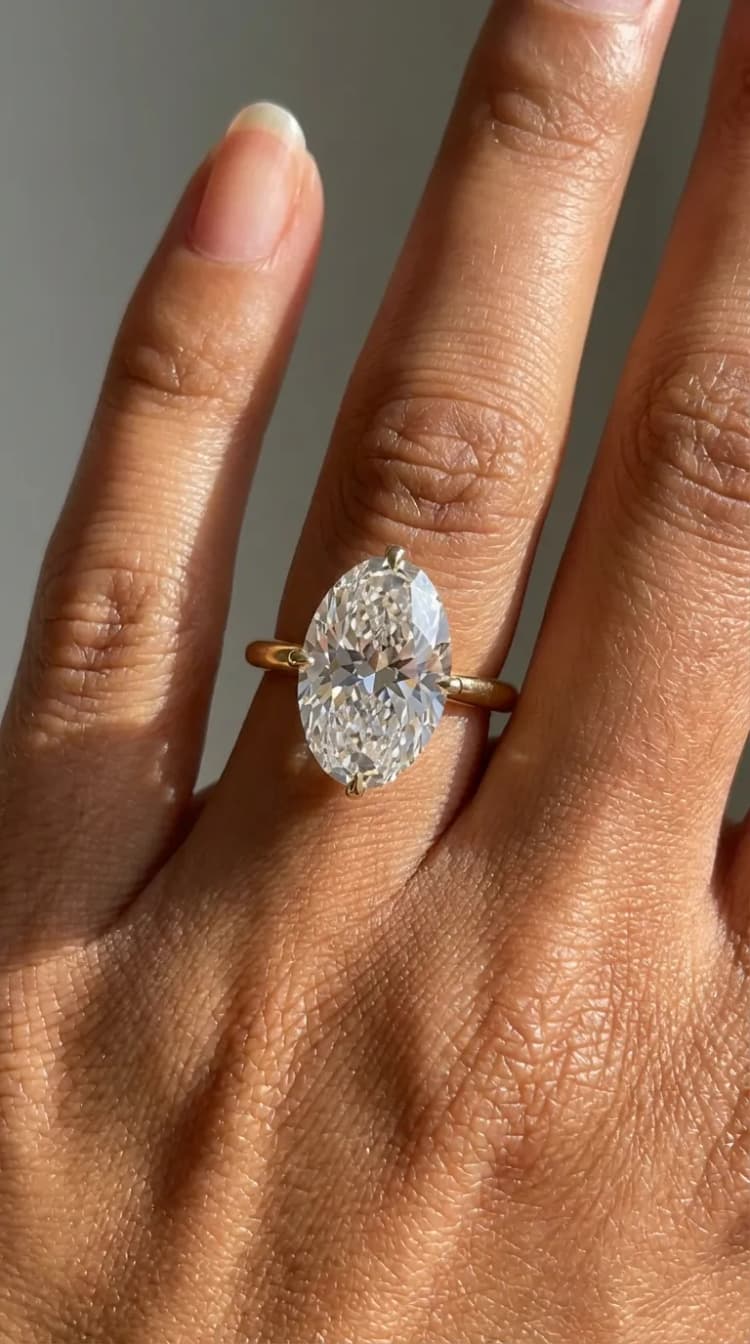
Elongated shapes: oval, emerald, pear, marquise and elongated cushion. They do two jobs at once. The length of the stone draws the eye along the finger, which visually slims and lengthens it, and their face-up area runs larger than a round of the same carat, so the stone holds its own against a wider finger.
In rough order of how often they get chosen:
- Oval. The default recommendation. Elongates the finger, spreads large for its carat weight, and suits nearly every setting style. A 1.40 to 1.50 length-to-width ratio is the sweet spot; our oval buying guide covers the details.
- Emerald. Clean, rectangular, architectural. The long step-cut lines read especially well on a wider finger.
- Pear. The point adds direction and length. Worn point-out towards the fingertip, it visibly lengthens the finger.
- Marquise. The most elongating shape there is, and wider fingers carry its drama without it looking stretched.
- Elongated cushion or radiant. The soft or brilliant-faceted alternatives when an emerald cut feels too austere.
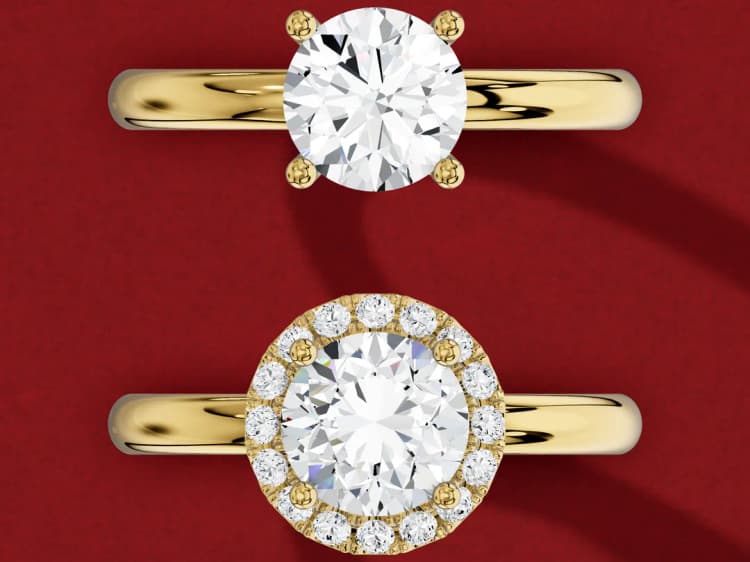
Round and square shapes are not wrong, they just need size. A round brilliant on a wider finger looks best at 1.5 carats and above; under about 1 carat it starts to look smaller than its price. Adding a halo is the standard fix, because it extends the visual footprint of the stone by 1.5 to 2mm on every side.
What band width should I choose for a wider finger?
2.3mm to 3mm is the range we recommend most often, and above 3mm works as a deliberate statement. A wider band sits in proportion to the finger, wears more comfortably across a broader base, and gives the centre stone a foundation that matches its size. The very thin bands popular on social media (1.5mm to 1.8mm) are the single most common regret we hear from wider-fingered clients, both visually and practically, since a thin band on a larger ring size has more circumference to flex and bends more easily.
We built a full width-by-hand-size table in engagement ring band width by hand size, but the short version: finger width up around 19 to 22mm carries 2.3mm to 3mm effortlessly, and pairing the eventual wedding band within 0.3mm of the engagement ring keeps the stack proportional.
What is the best engagement ring for fat or chubby fingers?
The same principles, and it is worth saying plainly because this is how a lot of people actually search: elongated stone, 2.3mm or wider band, halo or three-stone setting, and a stone at 1.5 carats or up if the budget allows. Nothing about a fuller finger needs "hiding". The goal is proportion, not camouflage, and a well-proportioned ring on a fuller finger looks every bit as intentional as it does on a slim one.
Two extra notes that matter more on fuller fingers:
- Knuckles often size the ring. If the knuckle is noticeably wider than the base of the finger, the ring must fit over the knuckle and will then sit slightly loose below it. A wider band reduces spinning, and our guide to how tight a ring should be covers the fit test we use.
- Low-set stones wear better. A tall cathedral setting on a busy hand catches on things. A lower basket or bezel profile keeps the ring practical for daily wear.
What settings add presence without adding cost?
Halo, three-stone and pave settings all extend the ring's visual footprint for far less than the equivalent jump in centre-stone carat:
- Halo. Adds roughly 1.5 to 2mm of sparkle around the centre stone, making a 1 carat read closer to 1.5. The single most cost-effective upgrade for a wider finger.
- Three-stone. Side stones widen the head of the ring across the finger, which balances width with width. Elongated centre with tapered sides is the classic proportion.
- Pave band. Diamonds down the shoulders carry the eye along the finger and make the whole ring read more substantial. Pave pairs well with every shape above.
- Bezel. A metal rim adds visual mass to the stone, protects it, and suits a wider band beautifully.
What should I avoid on large fingers?
Three combinations consistently disappoint:
- Small stone, thin band. A 0.5 carat solitaire on a 1.6mm band is a lovely ring on a slim hand and a vanishing one on a wide hand. If the budget caps the stone size, spend the difference on a halo or a wider pave band instead.
- Tiny accent details. Single small side stones or very fine milgrain can read as fussy against a broader finger. Fewer, more substantial details work better.
- Dainty stacking sets. Two or three 1.3mm bands stacked together sit uneasily on a wider finger. One 2.5mm to 3mm band with real presence beats three threads.
None of these are rules about what anyone is allowed to wear. They are proportions we see work at the bench, and the pattern is consistent: wider fingers look best in rings with confidence.
The simple framework
Choose an elongated shape at the largest carat the budget supports, put it on a 2.3mm to 3mm band, and add a halo or side stones if the centre stone is under about 1.5 carats. Fit the ring to the knuckle and let a wider band handle any spin. That combination sits in proportion on a larger finger every time, and it is the exact mirror of the advice we give for long, skinny fingers, where the risk runs the other way.
View our thick band engagement rings, which all open on a 3mm band, or the wider lab-grown diamond range to compare shapes on real designs, made to order in Melbourne.
Thanks for reading,
Jared and Brie
Designed by us in Melbourne, made to order
Lily Dia is a small studio, so every ring is drawn, set and finished for the person wearing it. If this article helped, the collection shows how these choices look on real rings, and you can ask us anything before you decide.
View thick band engagement ringsOr ask us a question first