

Do lab-grown diamonds get cloudy over time?
No. Lab-grown diamonds don't get cloudy as they age, because the crystal itself is pure crystallised carbon (the same material as a natural diamond) and it's chemically inert, non-porous, and the hardest substance on the Mohs scale. If your lab-grown diamond looks cloudy, the cause is almost always a film of soap, skin oil, hand cream, or hard-water residue sitting on the outside of the stone. A short soak in warm soapy water clears it.
The myth has a real source, it just isn't diamonds. Cubic zirconia and some older simulants genuinely do turn hazy over a few years, because they're softer and slightly porous, and "lab-grown" often gets filed in the same mental drawer as "not a real diamond". A lab-grown diamond is a real diamond, and it ages like one.
Why does my lab-grown diamond look cloudy?
Surface buildup. A diamond reflects light through its top facets, so anything coating those facets (even a microscopic layer of grease) scatters the light and dulls the sparkle. The build-up is usually a mix of:
- Skin oils and sweat transferred from your finger every time you put the ring on.
- Hand cream, sunscreen, and moisturiser that wraps around the prongs and underneath the stone.
- Soap residue from washing dishes, washing hands, or showering with the ring on.
- Hard-water mineral deposits in cities with hard water (Adelaide is the standout in Australia).
- Hairspray, perfume, makeup, and household cleaners that leave a sticky film.
Most of this collects in the cup underneath the stone, which sits closest to your skin and is the hardest spot to keep clean. That's why a ring can look brilliant from the side and dull straight on.
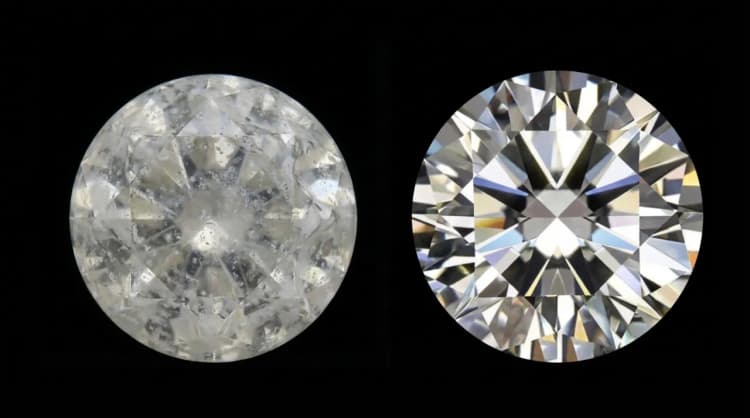
What causes a cloudy or dull lab-grown diamond?
Surface buildup is the cause around 95% of the time. The other 5% comes down to the stone itself rather than wear and tear:
- A milky or hazy inclusion that was always there. A small number of lab-grown diamonds (especially older CVD-grown stones with low colour grades) have a faint milky cast from internal cloud inclusions or strain patterns. This shows up from day one and doesn't get worse, so if your ring still looks the way it did when you bought it, you can rule this out.
- Poor cut. A badly-cut diamond leaks light out the bottom and back of the stone instead of bouncing it up at your eye, which reads as dull even when the stone is spotless. Cut is fixed at the time the diamond is shaped and doesn't change with time.
- A loose or damaged setting. A bent or shifted prong changes the angle light enters the stone, and the sparkle drops. Worth getting a jeweller to check once a year.
Nothing about how lab-grown diamonds are made makes them more prone to clouding than a mined diamond. Both behave the same way because they're the same material.
How do you clear up a cloudy diamond?
A warm soapy soak and a soft brush, and this works on lab-grown, mined and moissanite stones alike. The fix takes about fifteen minutes:
- Fill a small bowl with warm (not hot) water and a couple of drops of plain dishwashing liquid. Skip soaps with moisturisers or "ultra-care" additives, they leave a film of their own.
- Drop the ring in and leave it for ten minutes. The warm water loosens the buildup.
- Use a soft-bristle toothbrush to gently work around the prongs, the base of the setting, and underneath the stone. The cup underneath the diamond is where most of the gunk hides.
- Rinse under clean running water and pat dry with a lint-free cloth (microfibre is ideal, paper towels can catch on prongs).
For stubborn residue, a jeweller's ultrasonic cleaner clears the rest in a minute or two, and a professional clean once a year is a useful habit either way. If a soak and a brush don't restore the sparkle, the cause is something other than surface buildup (see the section above) and a check by a jeweller is the next step.
Can a lab-grown diamond turn permanently cloudy?
In practical terms, no. A diamond's crystal lattice is so tightly bonded that nothing in normal life (hot water, chlorine, hand sanitiser, sunscreen, salt water, gym sweat) can chemically alter it. The stone doesn't oxidise, doesn't absorb anything, and doesn't change colour from UV exposure.
The exceptions are rare and extreme:
- A direct hit hard enough to chip or crack a facet scatters light around the damage, which reads as a cloudy patch.
- Extended exposure to very high heat (above 800°C) can damage the surface, which only matters if a ring goes through a house fire or sits in an open flame.
- Surface scratching is possible but rare, since only another diamond is hard enough to scratch the table. Long-term wear can produce a very mild surface dulling that re-polishes off easily at a jeweller.
None of these count as the diamond going cloudy by itself. They're physical damage from rare events, not aging or chemistry. A cloudy-looking lab-grown diamond after a year of wear is dirty, almost without exception. For the bigger question of whether the stone itself has any lifespan at all, see how long do lab-grown diamonds last.
Do lab-grown diamonds get cloudy like cubic zirconia?
No. Cubic zirconia goes permanently cloudy because it's softer (8 to 8.5 on the Mohs scale) and slightly porous, so it absorbs oils, sunscreen, and water over time and gets progressively hazy from the inside. That haze can't be cleaned off because it's inside the stone.
Lab-grown diamonds sit at 10 on the Mohs scale, they're completely non-porous, and they're chemically identical to natural diamonds. Anything sitting on a lab-grown diamond is on the outside and comes off. The same applies to moissanite, which sits at 9.25 on the Mohs scale and behaves the same way in everyday wear; moissanite and lab-grown diamonds are the two stones we set across our engagement rings.
How to keep a lab-grown diamond from going cloudy
The big lever is keeping product off the stone in the first place:
- Put the ring on last when getting ready. After moisturiser, sunscreen, perfume, makeup, and hairspray. Each of those leaves a film on the stone if you put the ring on first.
- Take it off for hand cream. This is the single biggest contributor in most cases. Cream gets pushed up under the stone every time and is hard to rinse out.
- Take it off for dishes and showers if you can. Or accept that you'll need to clean it more often.
- Rinse and dry after the pool, the beach, or the gym. Chlorine, salt water, and sweat all leave residue.
- Clean it once a fortnight. A quick soak keeps you ahead of the buildup so the ring never reaches the noticeably dull stage.
- Get an annual check with your jeweller. They'll clean it professionally and tighten any prongs that have shifted.
The rings that look brilliant ten years in are the ones whose owners clean them regularly. The rings that look "dull and cloudy" are almost always the ones that haven't been cleaned in six months and have a layer of moisturiser baked into the setting. For a fuller cleaning rundown, how to clean your engagement ring walks through the routine in more detail.
Do lab-grown and natural diamonds behave the same way?
Yes. Lab-grown and natural diamonds are the same material (pure carbon in the diamond crystal structure) with the same hardness, the same chemical inertness, and the same optical properties. Both behave identically when it comes to wear, scratching, cleaning, and surface buildup. Any care advice for a natural diamond applies to a lab-grown stone, and vice versa.
For the full breakdown on how the three stone types compare, the difference between a natural, lab and moissanite walks through it.
If you'd like a professional clean on a ring we made for you, contact us and we'll book you in. And if this article settled the durability question for you, our lab-grown diamond engagement rings are where to start looking.
Thanks for reading,
Jared & Brie
Designed by us in Melbourne, made to order
Lily Dia is a small studio, so every ring is drawn, set and finished for the person wearing it. If this article helped, the collection shows how these choices look on real rings, and you can ask us anything before you decide.
View lab-grown diamond ringsOr ask us a question first