

Yellow gold vs white gold: the short answer
Yellow gold is better if you want a warm colour that stays consistent and avoids regular replating. White gold is better if you want a bright, cool metal around a colourless diamond and accept occasional rhodium maintenance. At the same karat, both contain the same proportion of pure gold. Their alloy metals and surface finish create the difference.
Neither colour is automatically stronger. A 14k ring generally resists dents and scratches better than an 18k ring of the same design because it contains more alloy, whether it is yellow or white.
What is the difference between yellow gold and white gold?
Yellow gold mixes pure gold with metals such as silver and copper while keeping the natural warm colour. White gold mixes gold with pale alloy metals, then is usually plated in rhodium to create a bright white finish.
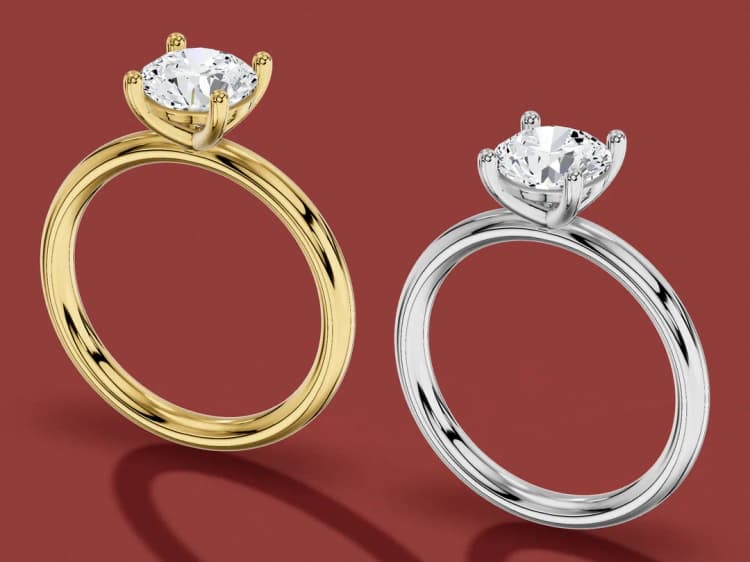
The gold content comes from the karat. An 18k yellow gold ring and an 18k white gold ring are both 75 per cent pure gold. Colour does not tell you purity, and white gold is not a cheaper imitation of platinum.
Which colour suits a diamond?
White gold creates a cool frame around a colourless or near-colourless diamond. It can also make warmth in a lower colour grade more obvious because of the contrast.
Yellow gold reflects warm colour through the side of a diamond. That can make a slightly warm stone look more at home in the setting, particularly when the prongs are yellow too. If you want a yellow gold band without warm reflection at the centre, choose white gold or platinum prongs with a yellow gold band.
Skin tone can help you narrow the choice, but it is not a rule. Compare both metals beside the jewellery you already wear and in daylight. The colour you keep reaching for is usually the right one.
Is yellow gold or white gold more durable?
Karat, band thickness and setting construction matter more than colour. Both 14k and 18k gold work for daily-wear engagement rings when the band and prongs have enough metal.
White gold alloys can feel slightly harder than an equivalent yellow alloy, but the rhodium coating is a surface layer and it wears. Yellow gold shows scratches directly in the metal and develops a softer patina. Both can be polished and repaired by a jeweller.
If maximum prong wear is the deciding issue, compare platinum and white gold. Platinum behaves differently from either gold alloy and does not need rhodium plating.
Does white gold need more maintenance?
Usually. Rhodium gives white gold its crisp white surface, and friction gradually wears that layer away. The warmer grey-yellow alloy underneath then becomes visible, often first at the underside of the band and along edges. This is normal wear, not damage. The white gold yellowing guide explains replating and how to tell plating wear from dirt.
Yellow gold needs cleaning and occasional polishing but no colour-restoring surface coat. For someone who wants the lowest-maintenance gold colour, yellow gold has the simpler care routine.
Which is better for sensitive skin?
Ask what is in the alloy. Some white gold contains nickel, a common contact allergen, while other white gold uses palladium. Yellow and rose gold can contain copper. A reputable jeweller should tell you the alloy or confirm whether a white gold ring is nickel-free.
Platinum can be worth considering when metal sensitivity is a central concern, but the exact alloy and any known allergy still matter.
Can an engagement ring use both colours?
Yes. A yellow gold band with white gold or platinum prongs is a common two-tone construction. The pale setting keeps the centre stone visually cool while the band gives you the warm colour on the hand.
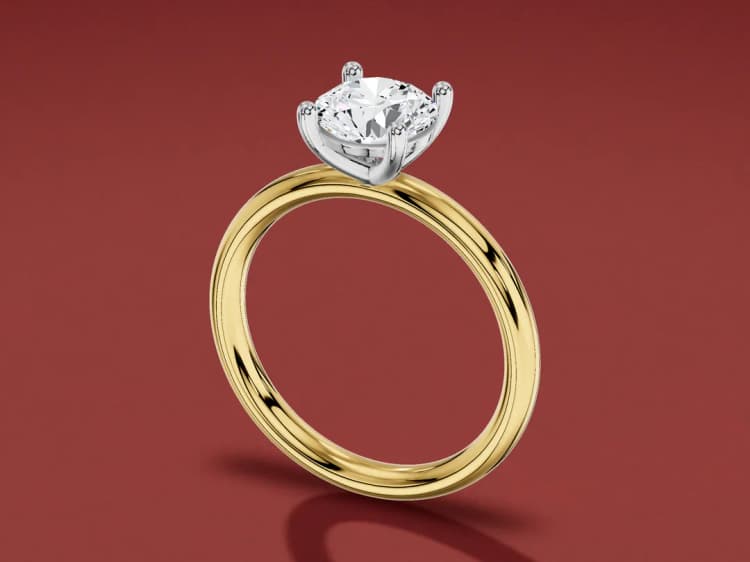
For a ring or wedding stack that deliberately combines several metals, use the mixed metal rings guide. It owns the styling and stacking question, while this page stays focused on choosing one main gold colour.
Compare engagement rings in both metals using the same stone shape and setting, or start from the lab-grown diamond collection if the stone is already decided. Keeping the design constant makes the colour decision much easier.
Designed by us in Melbourne, made to order
Lily Dia is a small studio, so every ring is drawn, set and finished for the person wearing it. If this article helped, the collection shows how these choices look on real rings, and you can ask us anything before you decide.
View lab-grown diamond ringsOr ask us a question first