
In June 2025 the Gemological Institute of America (GIA) announced it was changing the way it grades lab-grown diamonds, and the new system went live on October 1, 2025. The detailed 4Cs report most buyers are used to, with specific colour and clarity grades, is no longer issued for lab-grown stones. In its place is a much shorter rating: Premium, Standard, or no grade at all.
That's the headline. Below is what the change actually covers, why GIA made it, and what to look for if you're shopping for a lab-grown diamond now.
What changed with GIA lab-grown diamond grading
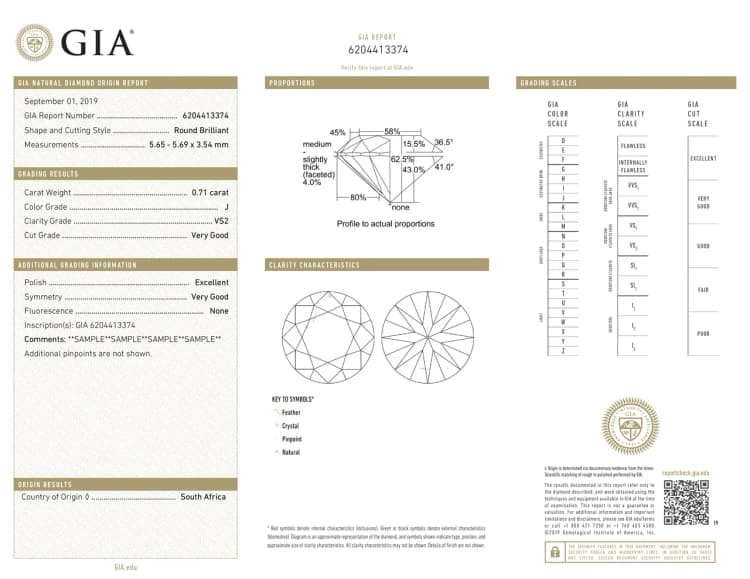
Before October 1, 2025, a GIA report for a lab-grown diamond looked almost identical to a report for a natural one. You got a colour grade (D, E, F and so on), a clarity grade (VVS1, VS2, etc), polish and symmetry grades, a cut grade for round brilliants, and the carat weight. After October 1, all of that detail is rolled up into a single Premium or Standard designation, and stones that don't meet the Standard bar are returned with no grade at all.
Reports issued before the cutoff are still valid. If you bought a GIA-graded lab-grown diamond in, say, 2023, the colour and clarity letters on your report don't change and your stone hasn't been re-classified. The new system only applies to lab-grown diamonds submitted from October 2025 onwards.
Why GIA dropped the 4Cs for lab-grown diamonds
The official reason is that lab-grown diamonds are too uniform for the old system to add useful information. According to Tom Moses, GIA's Chief Laboratory Officer, "More than 95% of laboratory-grown diamonds fall into a very narrow range of colour and clarity, so it's no longer relevant to use the nomenclature created for natural diamonds."
That tracks with the way lab-grown diamonds are made. HPHT and CVD growth happens in controlled chambers, and the output clusters tightly inside D to H colour and VS1 or better clarity. When 95% of stones sit in roughly the same band, a five-letter colour grade and a six-tier clarity grade stop separating one stone from another in any meaningful way.
The economics also stopped working. Lab-grown diamond prices have dropped sharply over the last few years, and a detailed GIA report on a small lab-grown stone often cost more than the stone itself was worth. A broader, cheaper assessment fits the way the market actually prices these diamonds now.
The change also draws a clearer line between natural and lab-grown reports, which the natural diamond industry has been pushing for since lab-grown went mainstream.
Does GIA still grade lab-grown diamonds?
Yes, just not in the old way. You can still submit a lab-grown diamond to GIA, and you'll get back either a Premium rating, a Standard rating, or your stone with no grade and a $5 fee. We keep a short evergreen answer to are lab-grown diamonds GIA certified up to date as the system settles.
What you can't get any more is a GIA report with specific colour, clarity, polish and symmetry letters on it for a lab-grown stone. If you want that level of detail in writing, you'll need IGI, GCAL or HRD Antwerp, all of which still grade lab-grown diamonds on the full 4Cs.
Are GIA-certified lab-grown diamonds worth more?
In theory, a Premium GIA tag on a lab-grown diamond signals top-of-band quality across the board, which sounds like it should command a price premium. In practice the lab-grown market mostly runs on IGI reports, and most retailers and wholesalers price stones from those reports day to day. GIA grades fewer than 5% of lab-grown diamonds globally.
Resale value of lab-grown diamonds, GIA or otherwise, sits at roughly zero to maybe 30% of retail. The certifying lab doesn't move that number much. What does matter is that whichever lab you choose, the report comes from a recognised one with consistent grading and a verifiable inscription on the stone.
What this means if you're buying a lab-grown diamond now
For shoppers, not a lot actually changes. A few things worth keeping in mind:
- If you want specific colour and clarity grades in writing, look for IGI, GCAL or HRD Antwerp reports. They still issue full 4Cs grading on lab-grown stones, and they cost less than GIA does.
- If a stone has a GIA Premium or Standard rating, ask which 4Cs it would have hit under the old system. Any reputable jeweller can tell you, because the underlying grading still happens internally even if the printed report only shows the tier.
- The inscription is the part that actually protects you. Every graded stone, regardless of lab, gets a unique number laser-inscribed on the girdle. That's the link between the paper and the diamond.
- Cut quality matters more than the certification tier. A well-cut Standard stone will out-sparkle a poorly cut Premium one every time, and cut is the single biggest lever on how a diamond actually looks on the finger.
For most people shopping lab-grown engagement rings in Australia, the report will be IGI anyway. The GIA change matters at the industry level, but it doesn't change the day-to-day experience much for everyday buyers.
Best lab-grown diamond certification beyond GIA
If you want a detailed grading report and GIA isn't issuing them for lab-grown stones any more, three labs are worth knowing:
IGI (International Gemological Institute) is the dominant lab for lab-grown diamond grading worldwide. Full 4Cs report, specific colour and clarity grades, consistent polish and symmetry assessment, and broad retail acceptance. Most lab-grown diamonds you'll see on engagement ring sites in Australia carry an IGI report.
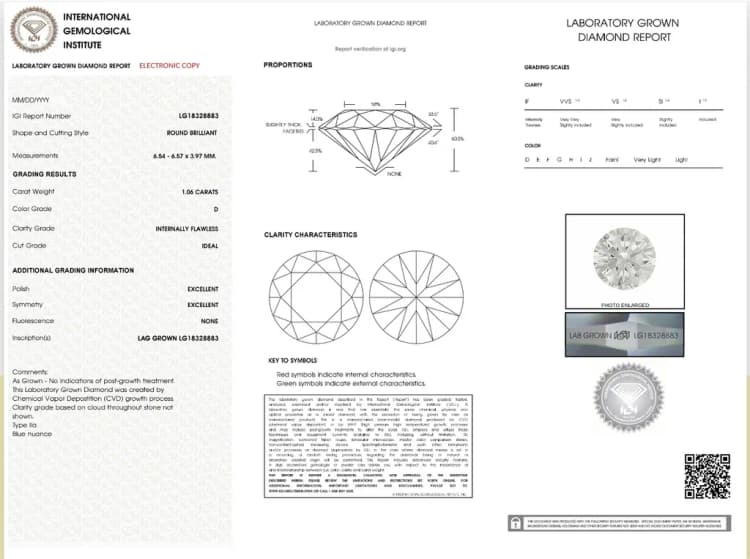
GCAL (Gem Certification & Assurance Lab) runs a more thorough audit-style report and is well regarded for grading consistency. Less common in volume retail but worth looking for on higher-end stones.
HRD Antwerp is the main European lab. Full 4Cs grading on lab-grown diamonds, used widely across the European market.
For a fuller breakdown of how these labs compare, see our diamond certification guide.
The bigger picture is that lab-grown diamond grading is settling into its own conventions, separate from natural diamond grading, and the GIA change is one of the first big steps in that direction. The fundamentals stay the same: buy from a jeweller who can show you the stone and the paper that goes with it, and prioritise cut quality over everything else.
Looking for a lab-grown diamond engagement ring? Browse our lab-grown diamond engagement rings to see how the stones look in real settings.
Thanks for reading,
Jared & Brie
Designed by us in Melbourne, made to order
Lily Dia is a small studio, so every ring is drawn, set and finished for the person wearing it. If this article helped, the collection shows how these choices look on real rings, and you can ask us anything before you decide.
View lab-grown diamond ringsOr ask us a question first