

Yes, you can use your engagement ring as your wedding ring
No rule says you need both, and plenty of couples wear just the engagement ring for the rest of their married life. The two-ring tradition is more modern than people realise. Jewellers popularised it across the twentieth century, but a single ring was the norm long before that, and it's quietly coming back.
For some couples it's a practical call. For others, the engagement ring is the ring, and nothing else needs to sit beside it.
Engagement ring vs wedding ring: what's the difference?
The difference is mostly about timing.
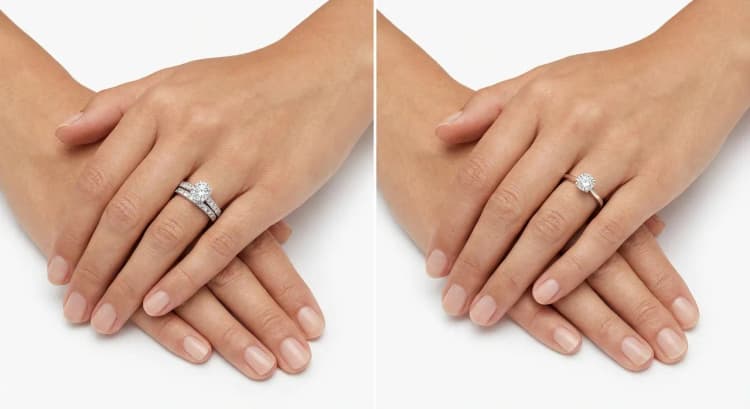
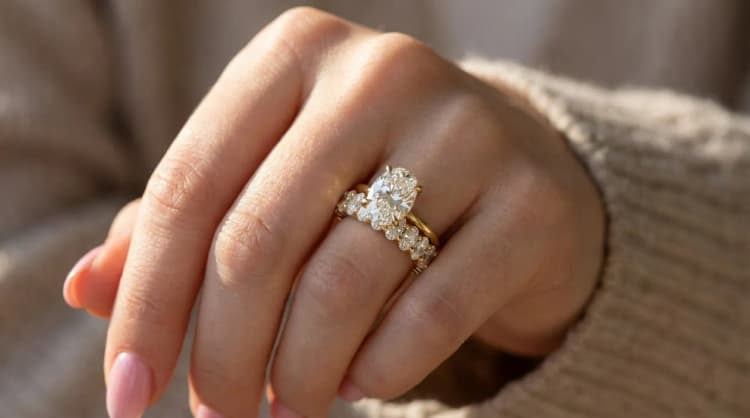
An engagement ring is given at the proposal and usually carries the centre stone. A wedding ring, or wedding band (the words are used interchangeably), is exchanged at the ceremony and traditionally sits below the engagement ring, against the finger. Wedding bands are often plainer than engagement rings, though plenty are set with a row of small stones.
In practice the line blurs. An eternity band reads as a wedding ring to most people, but it can also be the centre piece on its own. A solitaire engagement ring with a wider band can do everything a wedding ring does. And on the finger, with a coat or a cuff in the way, no one outside the wedding industry can tell which is which.
The question keeps coming up because Google and jewellery shops have spent decades treating engagement and wedding rings as two products you buy together. They don't have to be. You can wear one ring forever, add a band later, or have a jeweller solder the two into a single piece. None of those choices change the marriage.
Why some couples wear just the engagement ring
A few reasons we hear:
- You've already spent on the engagement ring. Wedding bands cost less, but every extra spend is a choice, and many couples prefer to put the difference toward the honeymoon or the first home.
- Two rings feel bulky together. If you work with your hands, type all day, or just don't love the feel of stacked metal, one ring is a noticeable relief.
- The engagement ring is designed to stand alone. Sculptural solitaires and three-stone designs often look best uninterrupted, and a fitted band can cut their proportions in half.
- Sensory sensitivity. Friction, weight, and the extra finger coverage from two bands are surprisingly tiring for some people. One ring solves it.
When does one ring work well, and when does it struggle?
If you're planning to wear your engagement ring on its own for decades, the design itself matters more than it would in a stacked pair. A few things to look at before you commit:
- Setting style. Tall four-prong solitaires catch on hair, fabric and door handles. They hold up fine with a wedding band beside them, but on their own they take more daily punishment. Lower-profile prongs, bezel settings and partial bezels wear much better solo.
- Band width. A 1.5 to 2.5mm band has the presence and structural rigidity for daily wear. Thinner than that and the band can bend over time, especially in softer metals like 18k yellow gold or platinum.
- Profile height. A lower-set stone sits closer to the finger, takes fewer knocks, and feels more comfortable under gloves or gym wear.
If your ring is a high-set, fine-band solitaire, you can absolutely still wear it alone. You'll just want to take it off for the gym, the garden, and anything else that involves real impact.
What happens at the ceremony if you only have one ring?
If you're already wearing the engagement ring on the day, what gets exchanged at the altar? A few options that all work:
- Take it off before the ceremony and have your partner place it back on during the vows. The moment still lands.
- Exchange something else. A simple band you wear just for the day, a necklace, a watch. The symbolism is in the giving, and the object can be anything.
- Skip the physical exchange. The vows are the moment. No celebrant we know of has ever objected.
Practical alternatives if you can't decide
Between "one ring forever" and "buy a second one now" there are some good middle paths:
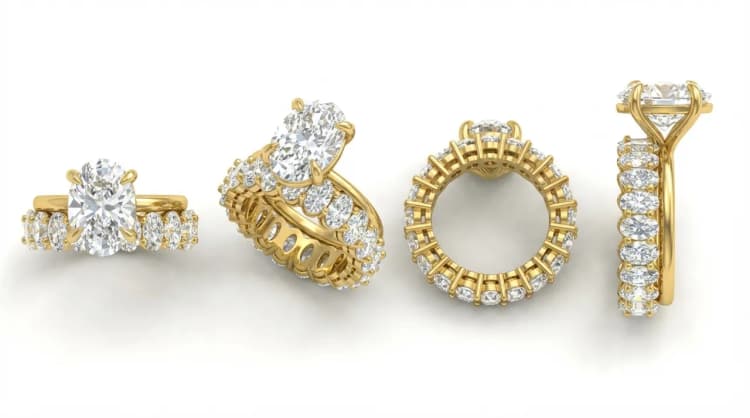
- Solder the two rings. Once the wedding band arrives, a jeweller can fuse it to the engagement ring so they sit as a single piece. This eliminates the gap, stops them spinning apart, and is far more comfortable than two loose bands.
- Wear the engagement ring on a chain. Useful if your work makes daily ring wear impractical. You still have both pieces, just used differently.
- Add a silicone band for active days. Cheap, safe, and lets you leave the real ring at home for the gym or a long walk.
- Choose an eternity band as your wedding ring. Stones running the full circumference give the visual weight of an engagement ring while still functioning as a band.
Designing an engagement ring meant to stand alone
If you already know you'll only wear one ring, build the design around that from the start. The choices we tend to recommend in a custom design brief:
- A lower profile. The stone sits closer to the finger, takes fewer impacts, and ages better.
- A band 2mm or wider for structural rigidity over decades of daily wear.
- A comfort-fit interior that rounds gently against the finger. The difference is small at first try-on, but very real after twelve hours.
- Restraint on fine detailing. Milgrain, filigree and Pave work are beautiful, but they need maintenance. If this ring is doing the work of two for the rest of your life, a simpler design ages more gracefully.
What jewellers tell you about wearing one ring
Most jewellers will say an engagement ring needs a wedding band beside it for support. Part of that is true, and part of it is a second sale.
It's true for high-set solitaires with fine bands, where a fitted band genuinely steadies the head and shields it from impact. It's much less true for bezel settings, three-stone rings, and lower-profile designs, which already distribute force well on their own.
Ask your jeweller specifically about your ring rather than rings in general. If the answer is a generic warning instead of a real assessment of your design, get a second opinion.
You can always add a wedding band later
There's no deadline on this. If you love your engagement ring and want to wear it alone, do that. If you change your mind in a year or ten, a wedding band can be added any time, and we've made plenty of them for clients who wanted to mark an anniversary rather than the wedding day itself.
Tradition is genuinely optional here. The commitment is the part that matters.
View our collection of engagement rings, including lab-grown diamond designs made to wear beautifully on their own.
Thanks for reading,
Jared & Brie
Designed by us in Melbourne, made to order
Lily Dia is a small studio, so every ring is drawn, set and finished for the person wearing it. If this article helped, the collection shows how these choices look on real rings, and you can ask us anything before you decide.
View lab-grown diamond ringsOr ask us a question first