4 min read
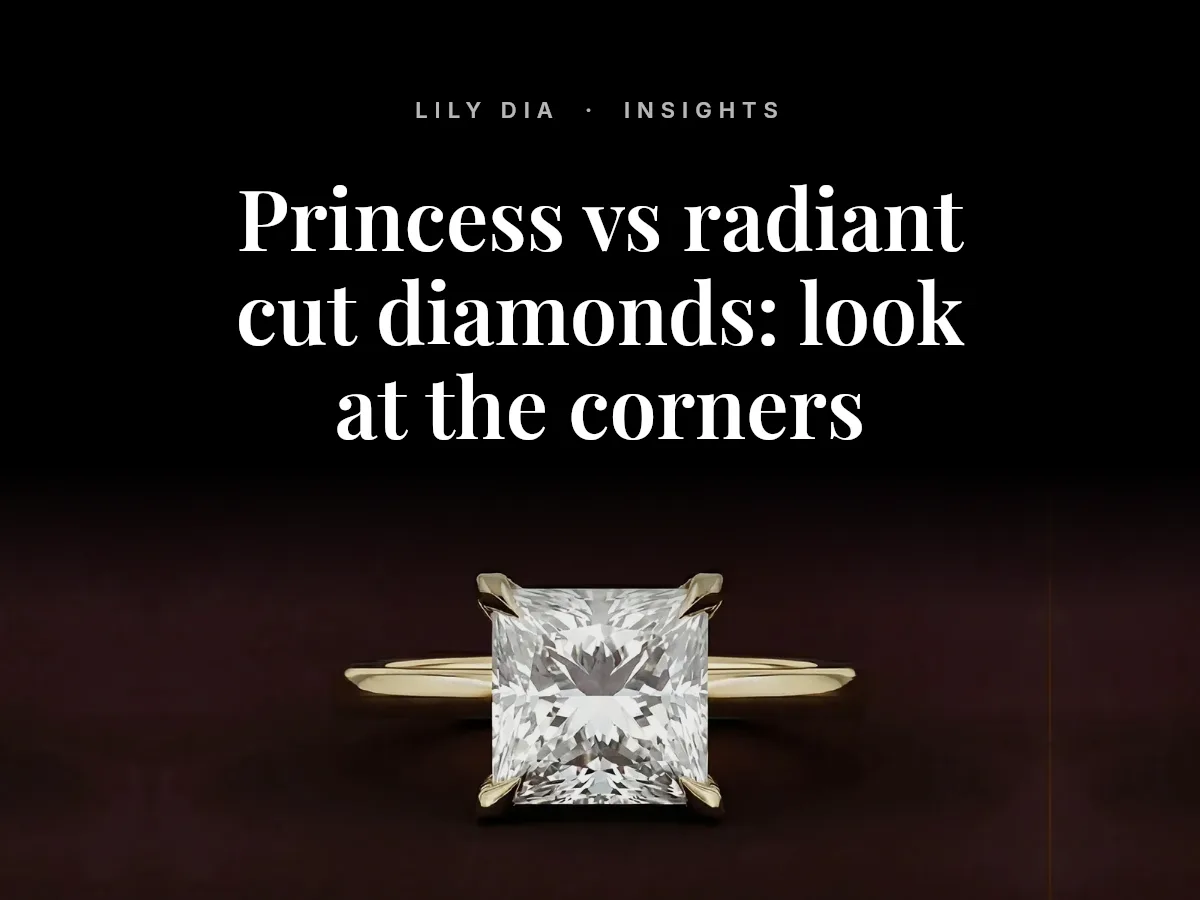
Princess vs radiant cut diamonds: look at the corners
See pointed and cropped corners up close, then separate the diamond’s outline from its proportions and setting.

Exploring diamonds & gemstones through our expert insights and perspectives.
22 insights found
See pointed and cropped corners up close, then separate the diamond’s outline from its proportions and setting.
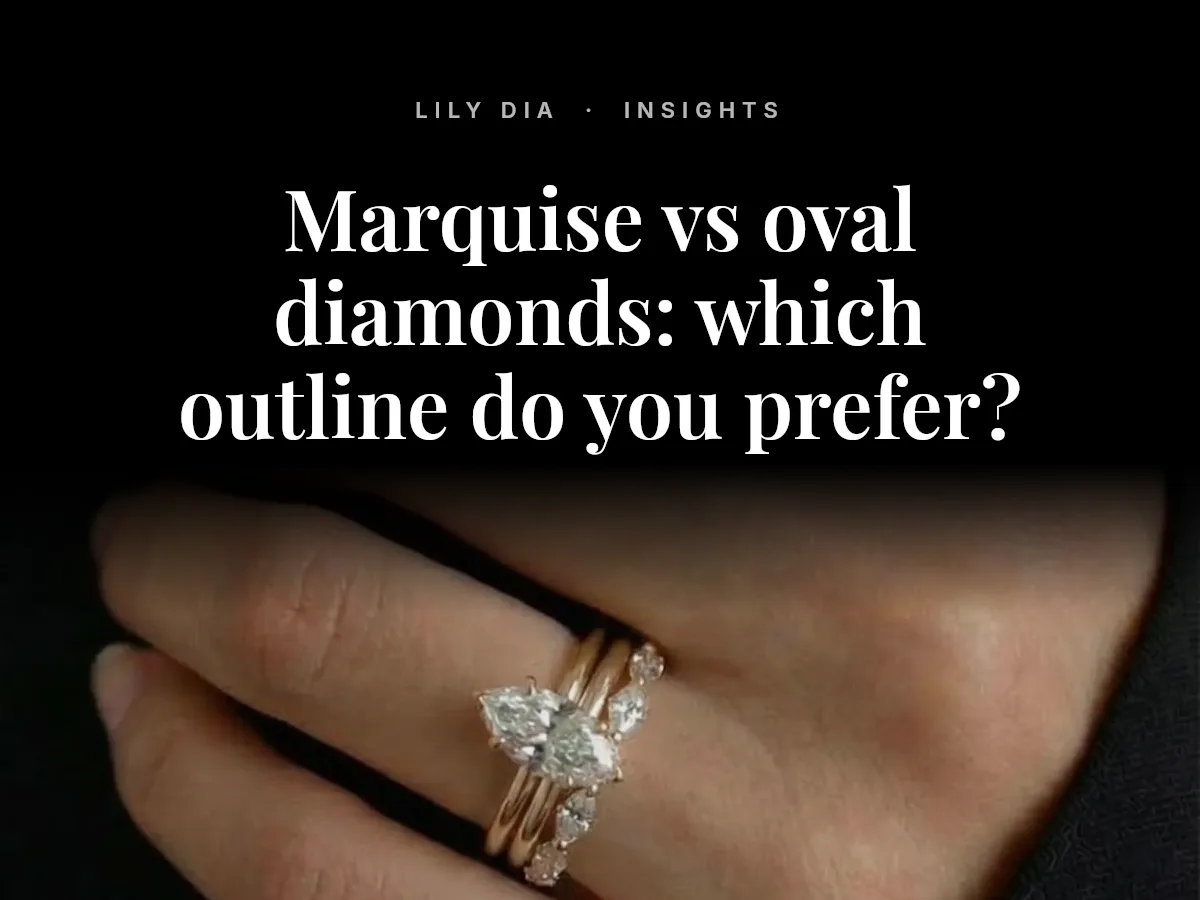
Compare rounded and pointed ends, separate length from width, and build a shortlist around the actual diamonds you like.
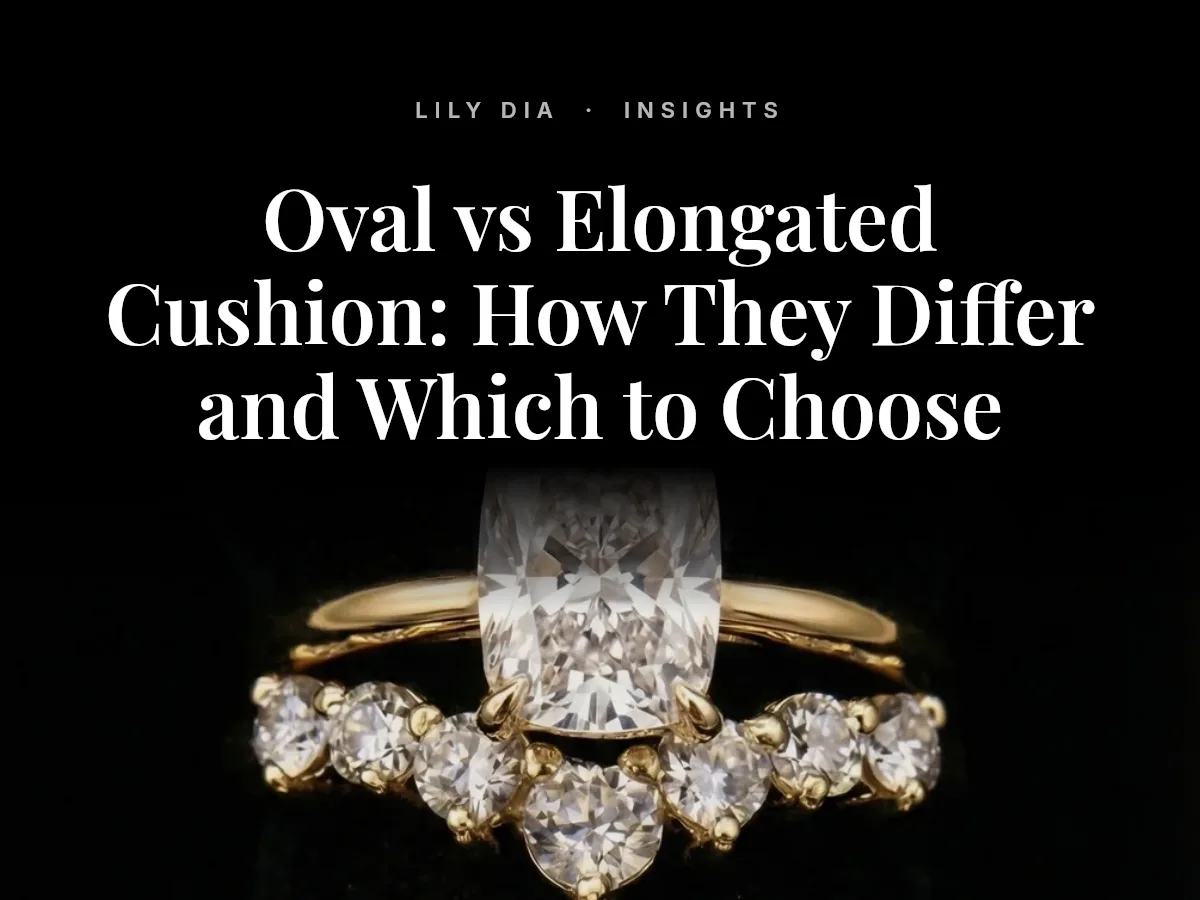
An oval is a smooth curve from end to end, while an elongated cushion is a soft rectangle with rounded corners. At the same carat weight the oval measures about 1.5 mm longer, and in the lab-grown diamonds we source it costs less at every size from 1 to 3 carats.
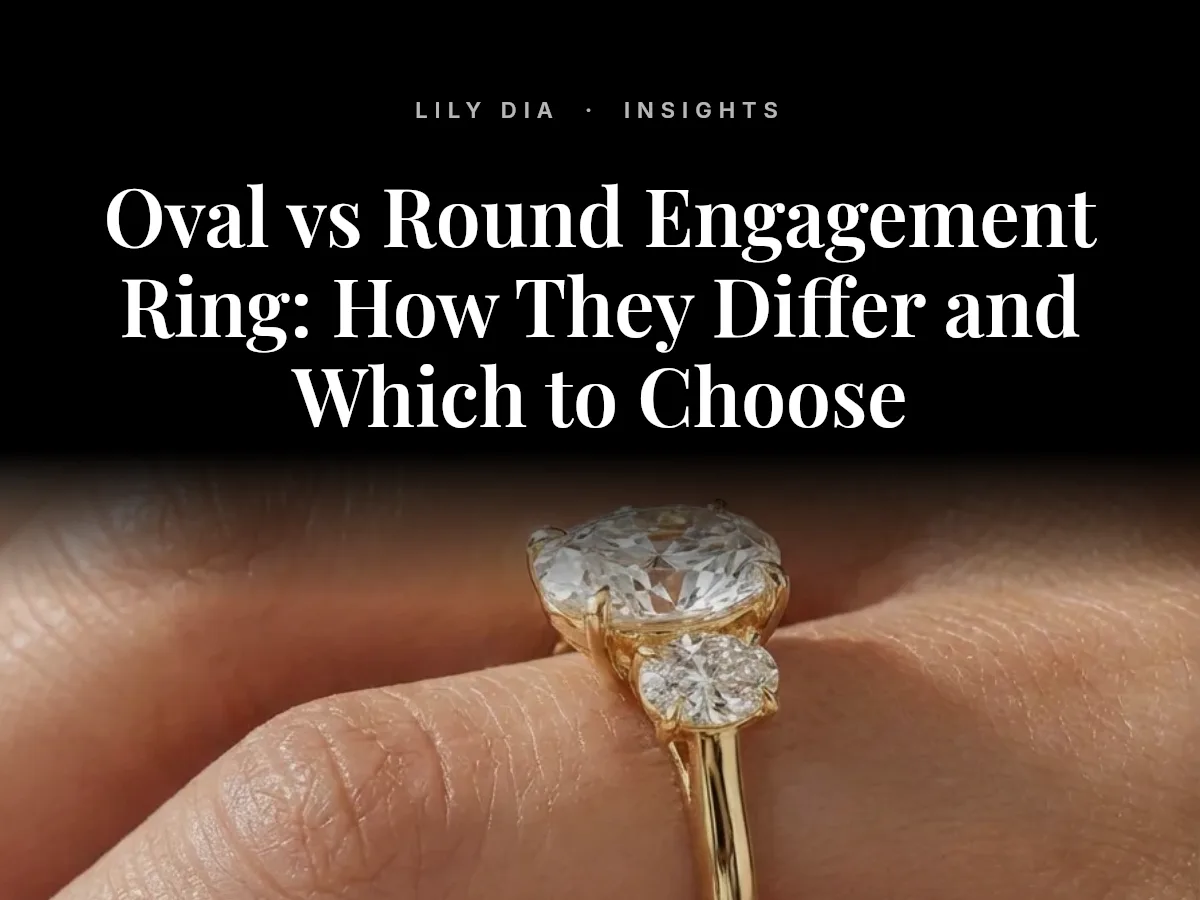
At the same carat weight an oval covers about a tenth more of the finger than a round, and a round sparkles a little more evenly. In the lab-grown diamonds we source, the two are within a few hundred dollars of each other at every size from 1 to 3 carats.
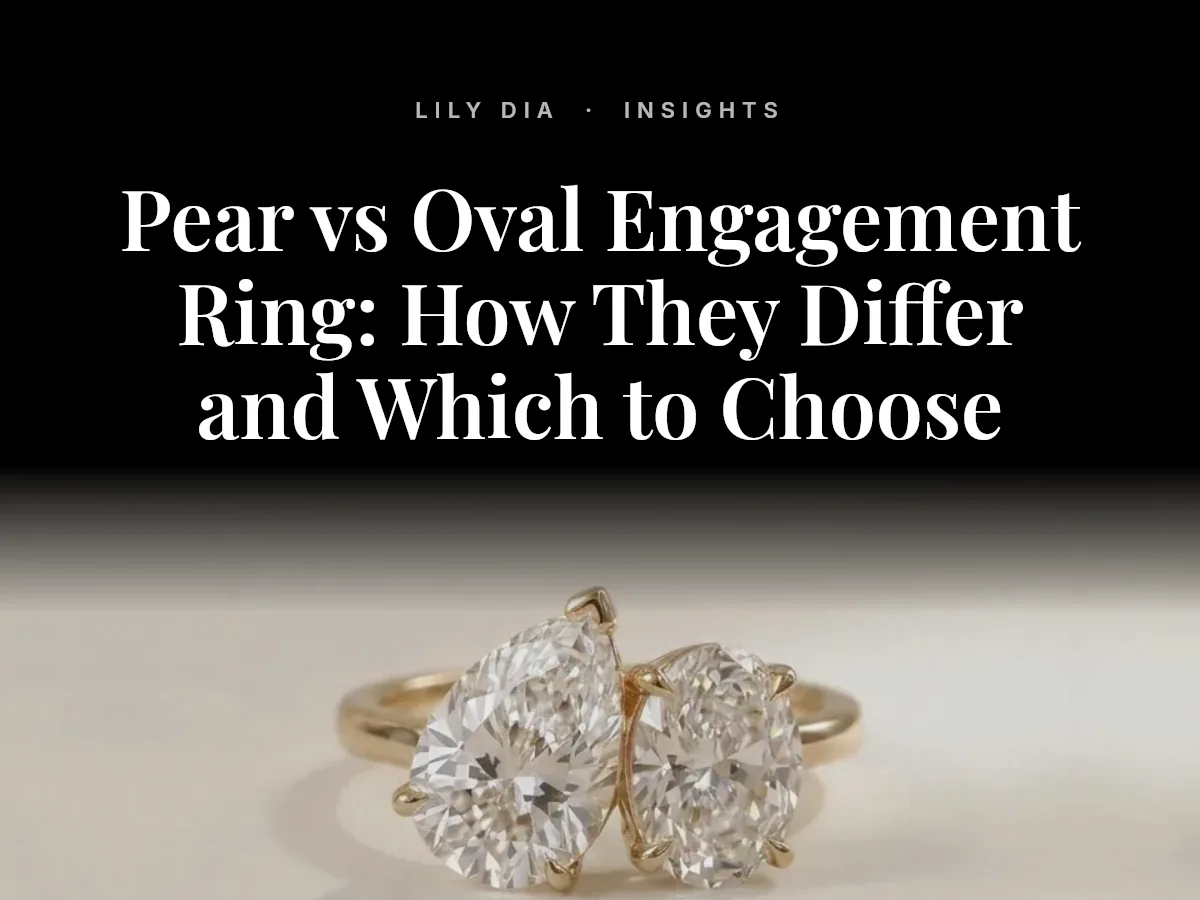
An oval is rounded at both ends and a pear comes to a point at one, and at the same carat weight the pear measures about a millimetre longer. In the lab-grown diamonds we source, the pear costs a little less at 1 carat and a little more at 2 and 3 carats.
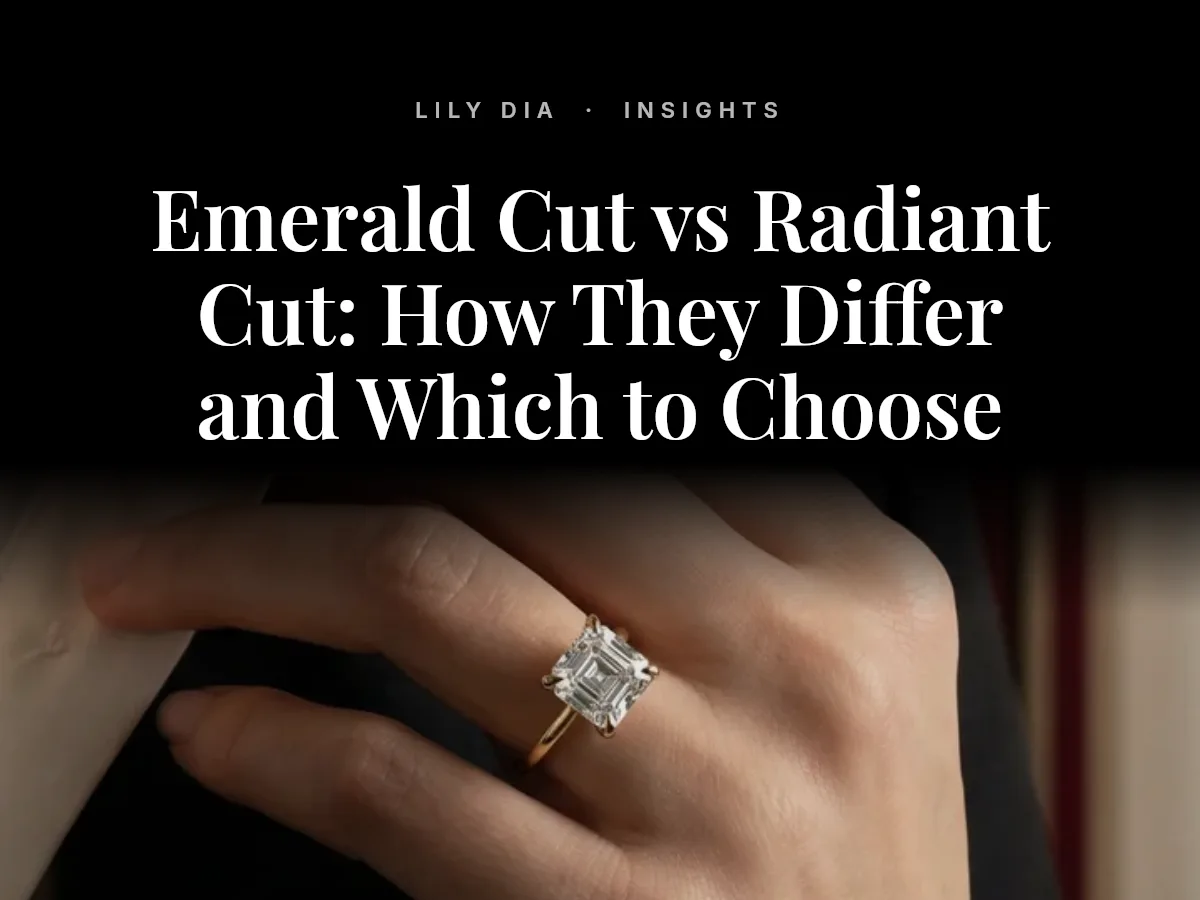
Both are rectangles with clipped corners, and the facets are what set them apart. An emerald cut has long step facets that give broad, slow flashes, while a radiant has brilliant facets that sparkle much like an oval or round. In the lab-grown diamonds we source, the radiant costs a little more at the same weight and measures a touch larger.
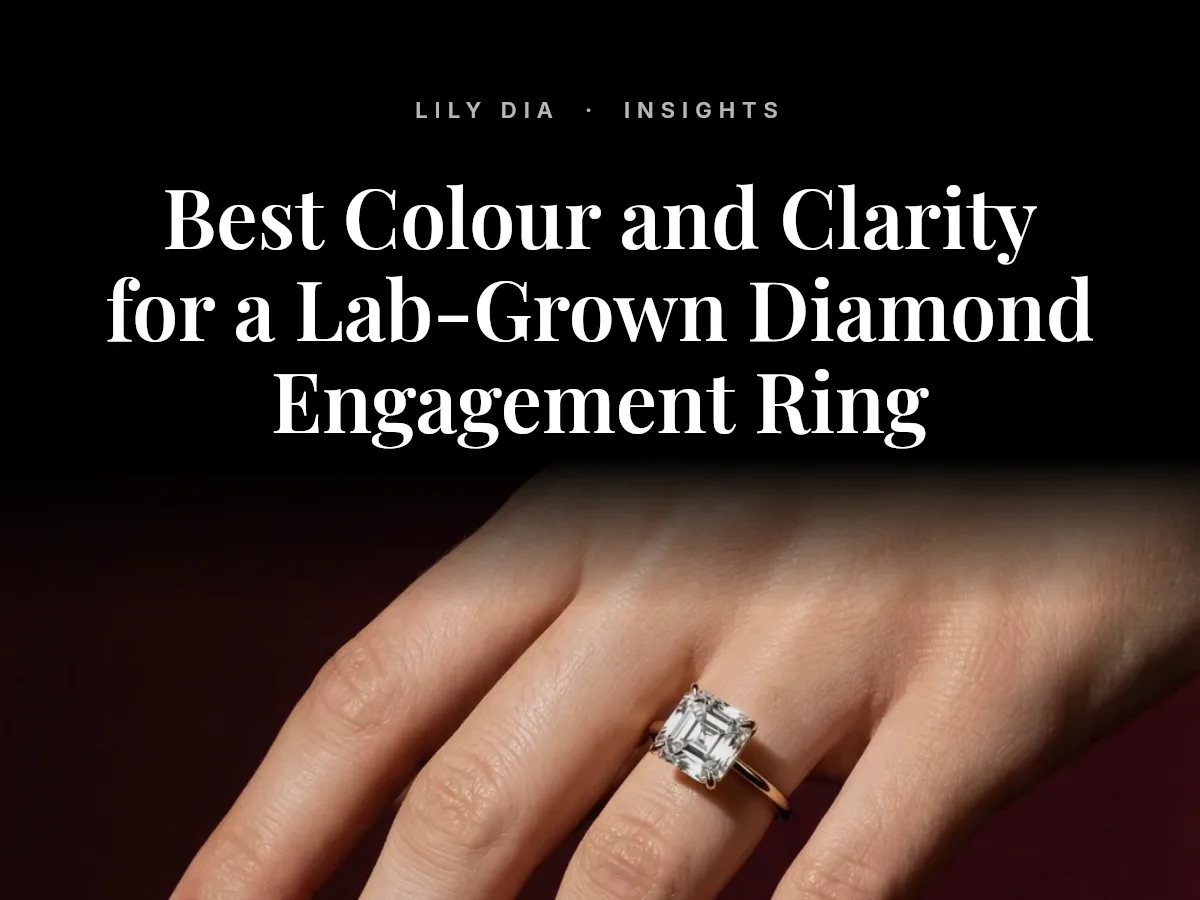
D to F colour chosen on price, with VVS2 clarity, is the best value for most lab-grown engagement rings. Prices by colour and clarity at 1, 2 and 3 carats from 5,265 live stones, checked 17 September 2026.
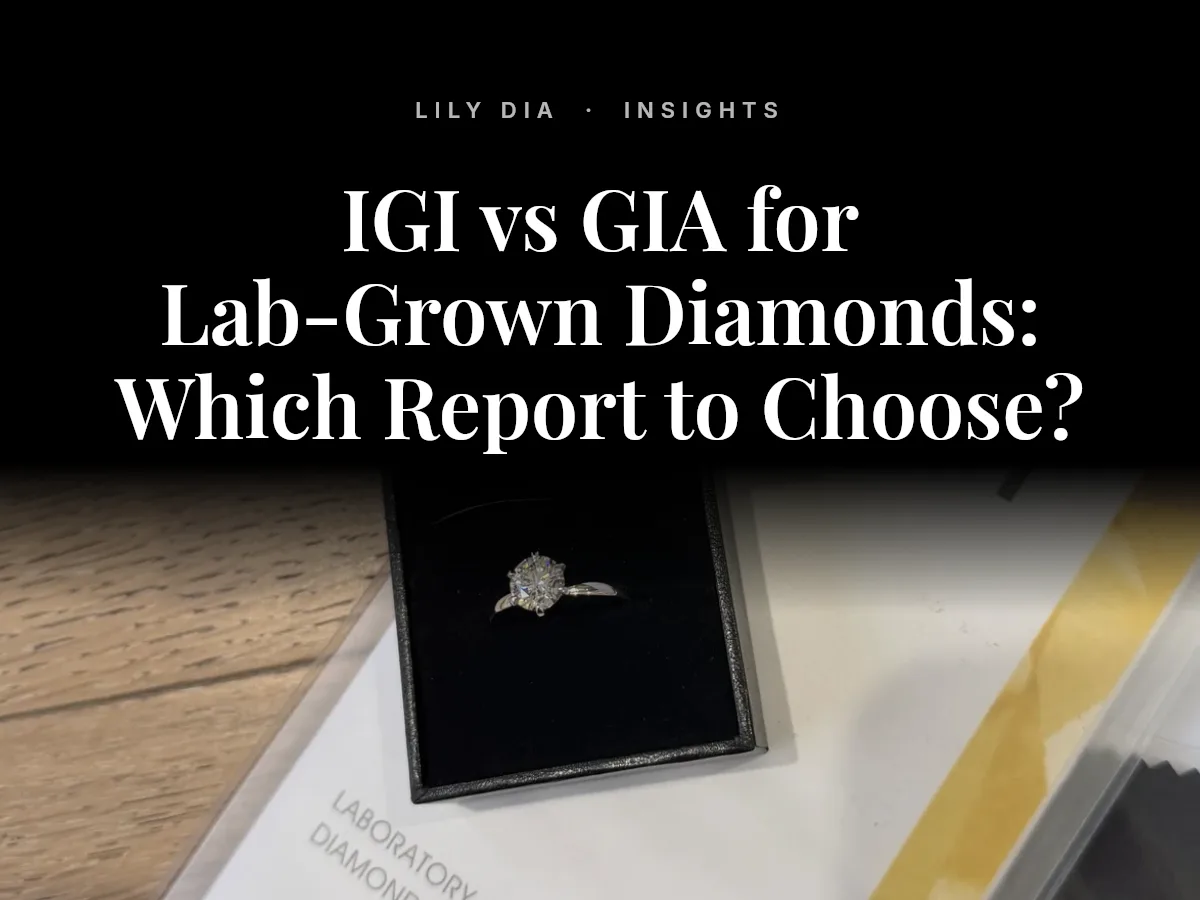
For colourless-to-near-colourless lab-grown diamonds, compare what each report records. Since October 2025, GIA’s eligible-stone Quality Assessment uses Premium or Standard; its coloured lab-grown report services are separate. IGI reports can provide individual colour and clarity grades.
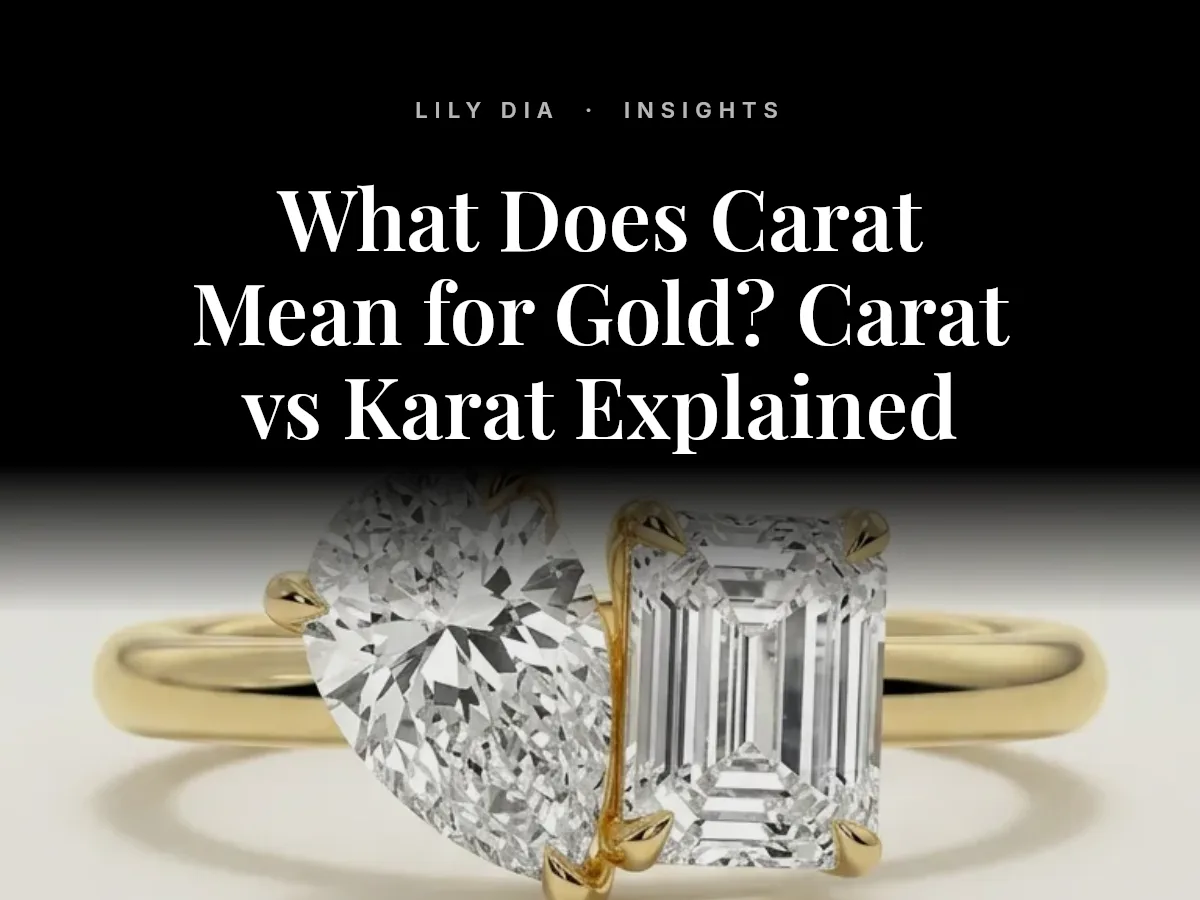
Gold carat measures purity in 24 parts, while diamond carat measures weight. Understand 9ct, 14k, 18ct and 24ct, what makes gold yellow, white or rose, and how solid gold differs from plated.
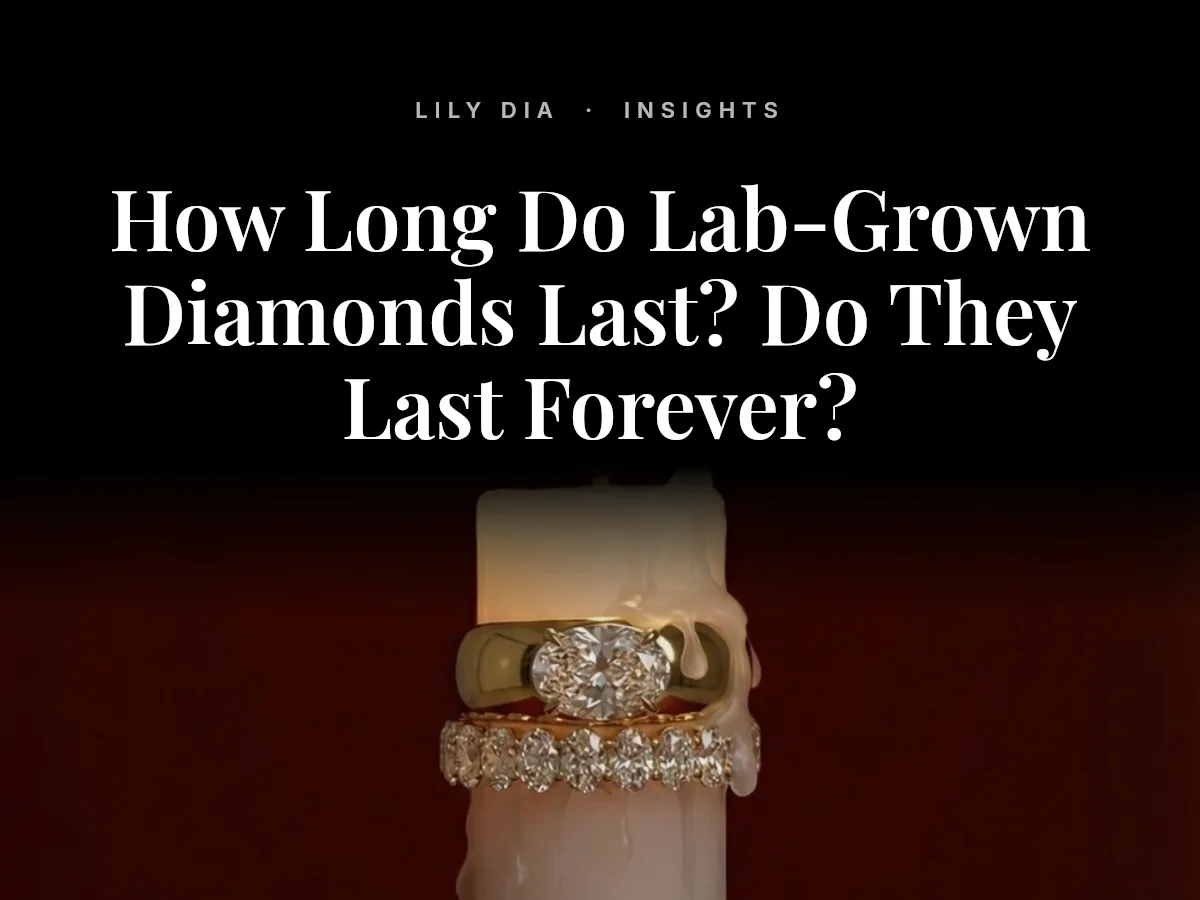
A lab-grown diamond lasts forever in every sense that matters. It is pure crystallised carbon, rated 10 on the Mohs hardness scale, and nothing in a human lifetime of wear degrades it. What has a lifespan is the ring around it: prong tips, rhodium plating and the band all need maintenance the stone never will.
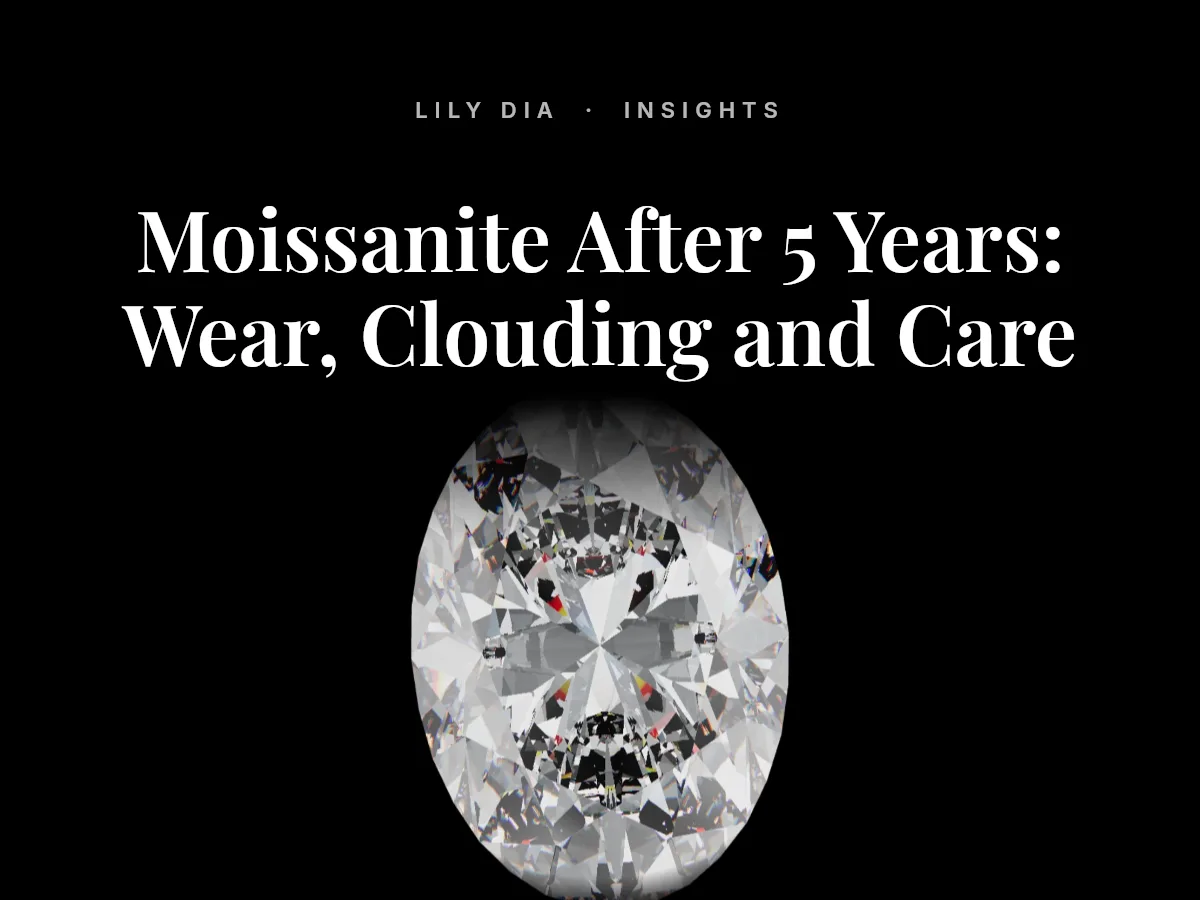
After five years of daily wear, the moissanite itself is unchanged: silicon carbide does not cloud, yellow or soften with age. What does change is everything around it, the metal, the prongs, the rhodium, and the film of skin oil that dulls sparkle until it is cleaned. This is a material and maintenance guide, not a review of one ring.
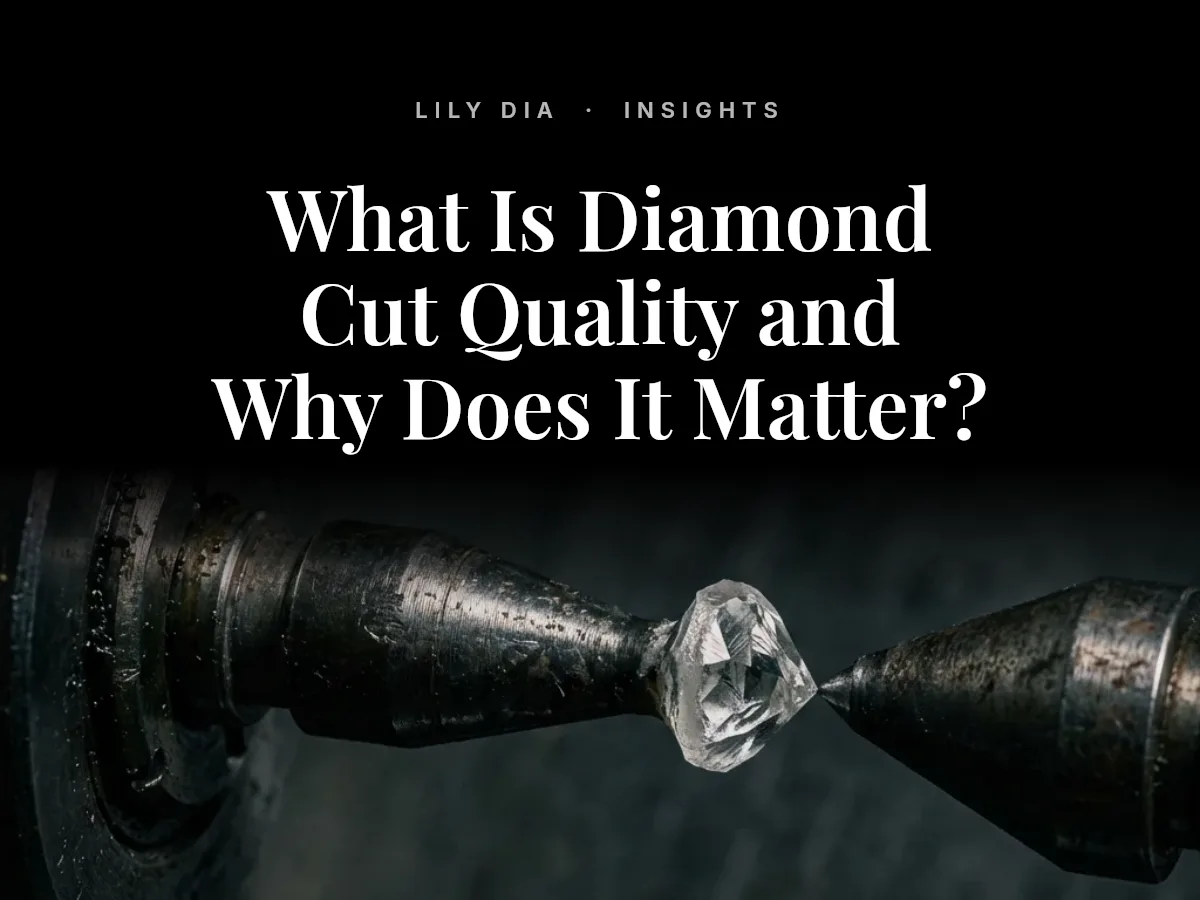
Cut is not the shape of a diamond, it is the proportions: how the angles, depth, and symmetry let light enter the stone, bounce around, and return to your eye as sparkle. A poorly cut diamond looks dull and dead even at a high clarity or colour grade. Cut is the single most important of the 4Cs for how the stone actually looks.
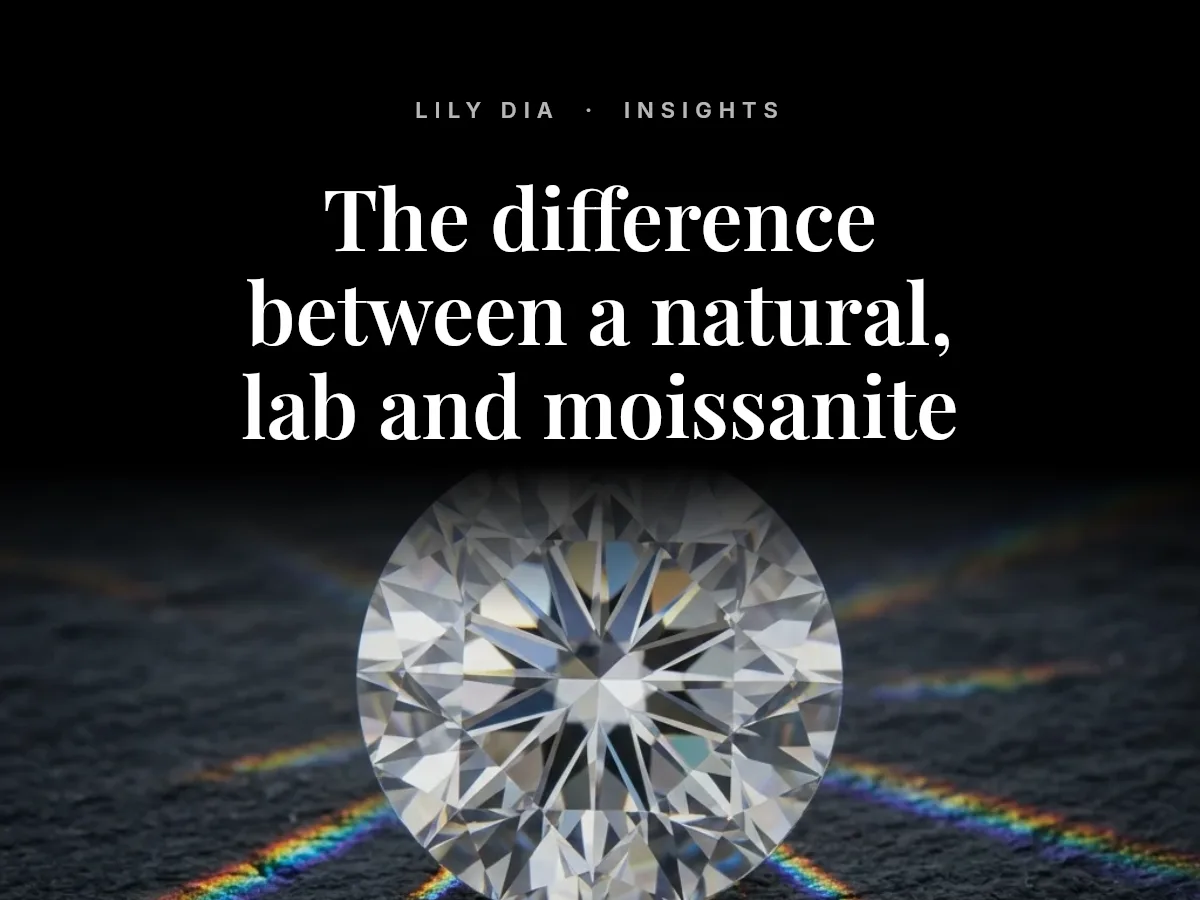
Natural diamond, lab-grown diamond, and moissanite are the three stones you will actually choose between for an engagement ring. Natural and lab-grown are chemically the same material (carbon). Moissanite is a different gemstone (silicon carbide) that costs roughly 10 to 20 percent of either diamond. Here is the AUD breakdown and how each one wears.
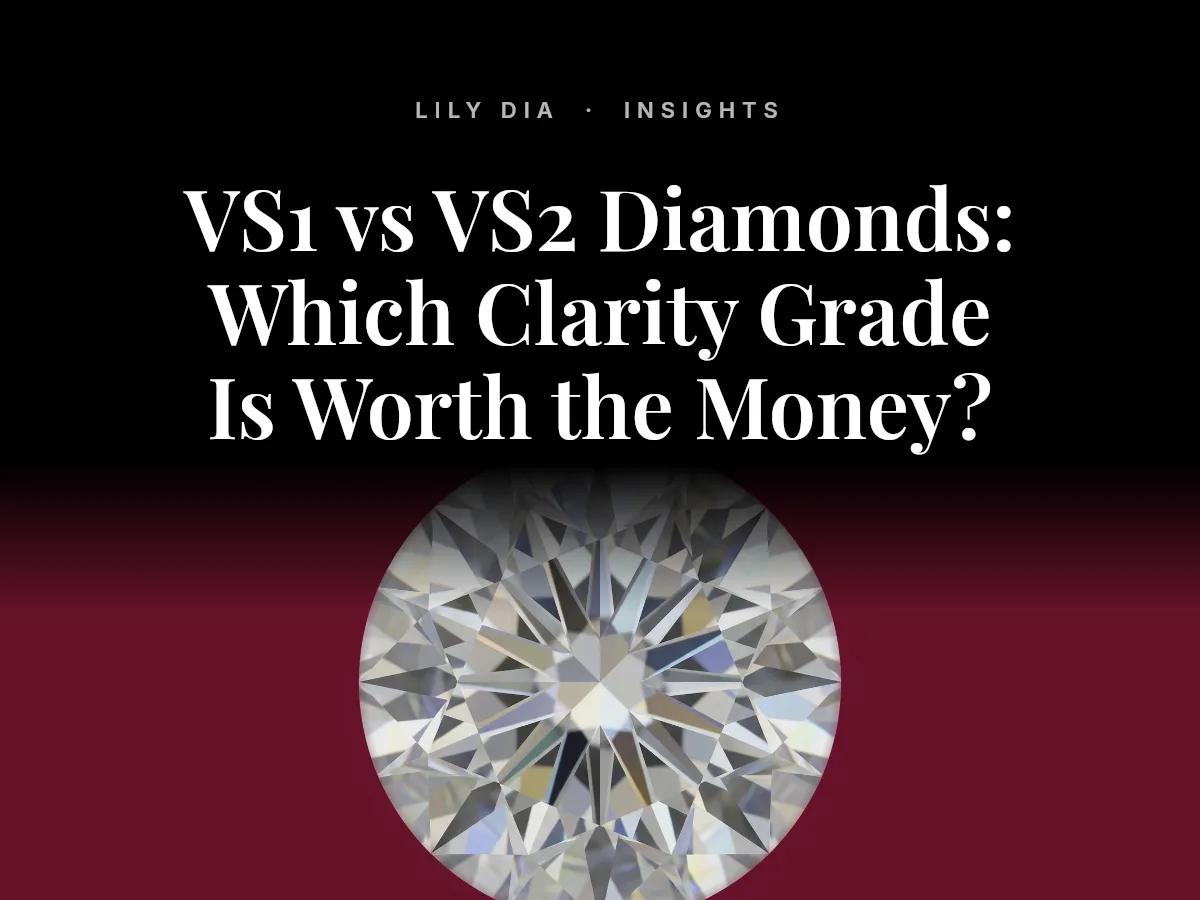
For a lab-grown diamond, VS1: on our stones the step up in clarity costs little, so every diamond we sell is VS1 or better. For a mined diamond, VS2 is usually the better value on a brilliant cut under 2 carats, and VS1 the floor for step cuts and larger stones.
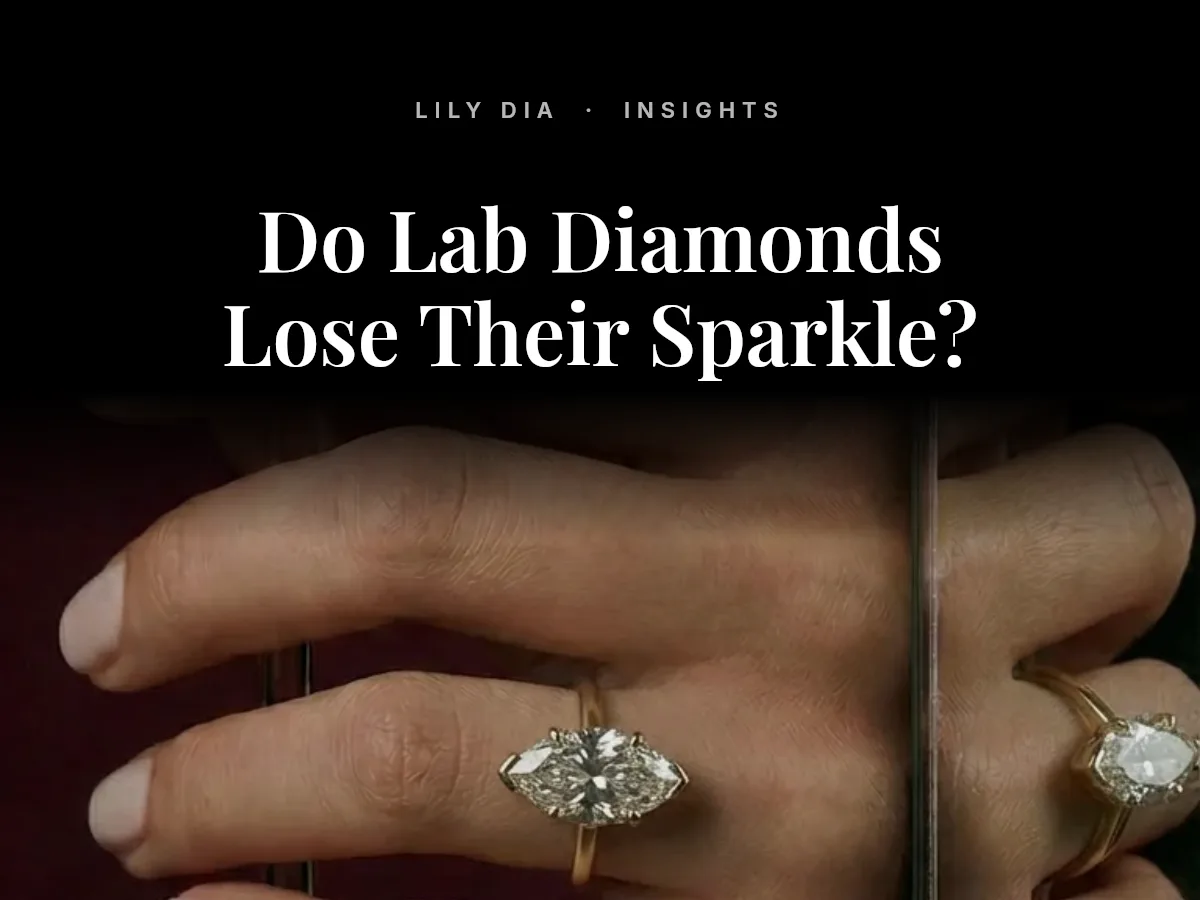
No. Lab-grown diamonds do not lose their sparkle, their shine, or their brilliance over time. They are the same material as a mined diamond and just as hard. When a lab diamond looks dull, the cause is a film of skin oil, soap, and lotion sitting on the stone, which cleans off in fifteen minutes.
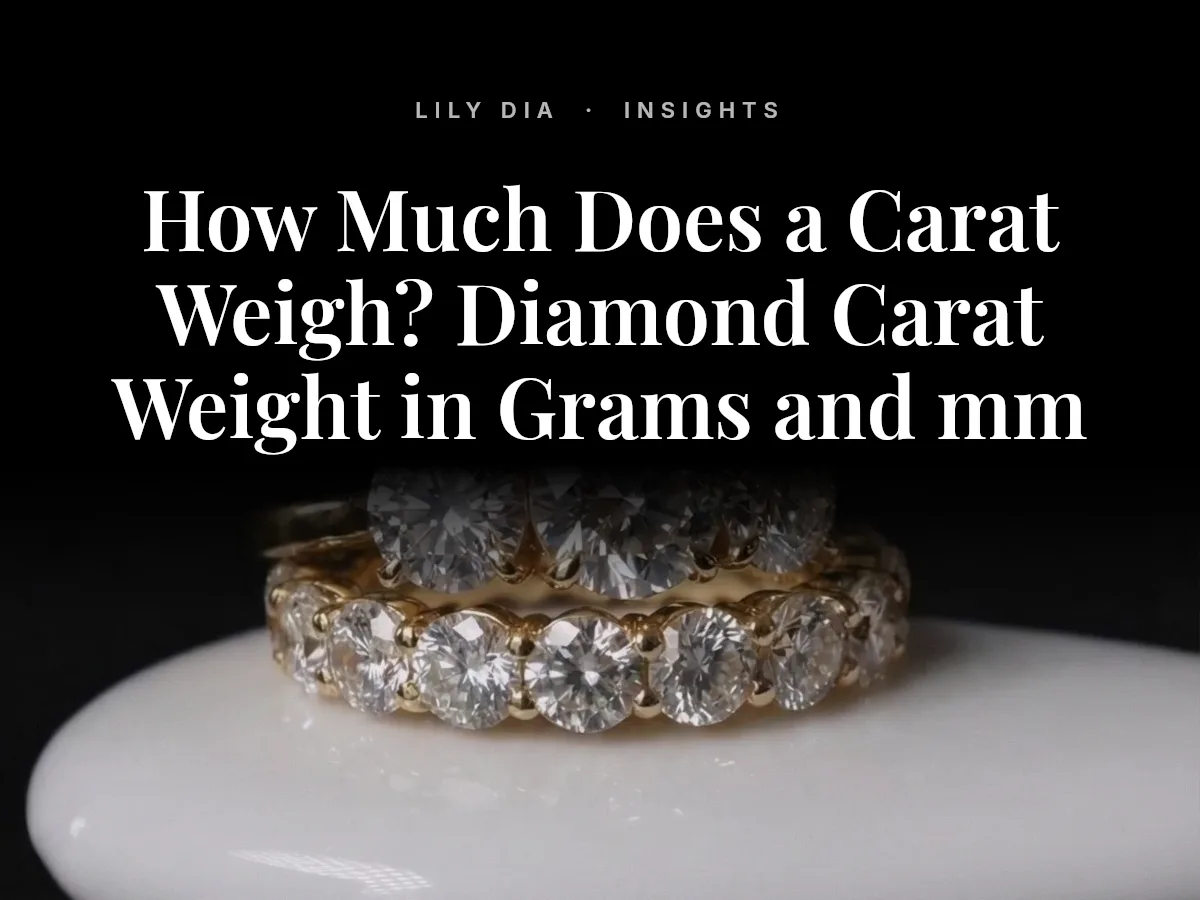
Carat is a unit of weight (1 carat = 0.2 grams), not size. A 1 carat round diamond measures about 6.5mm across; the same weight in an oval stretches to about 8mm. Shape, cut depth, and density all change how big a stone looks for a given carat. Here is what carat weight actually buys.
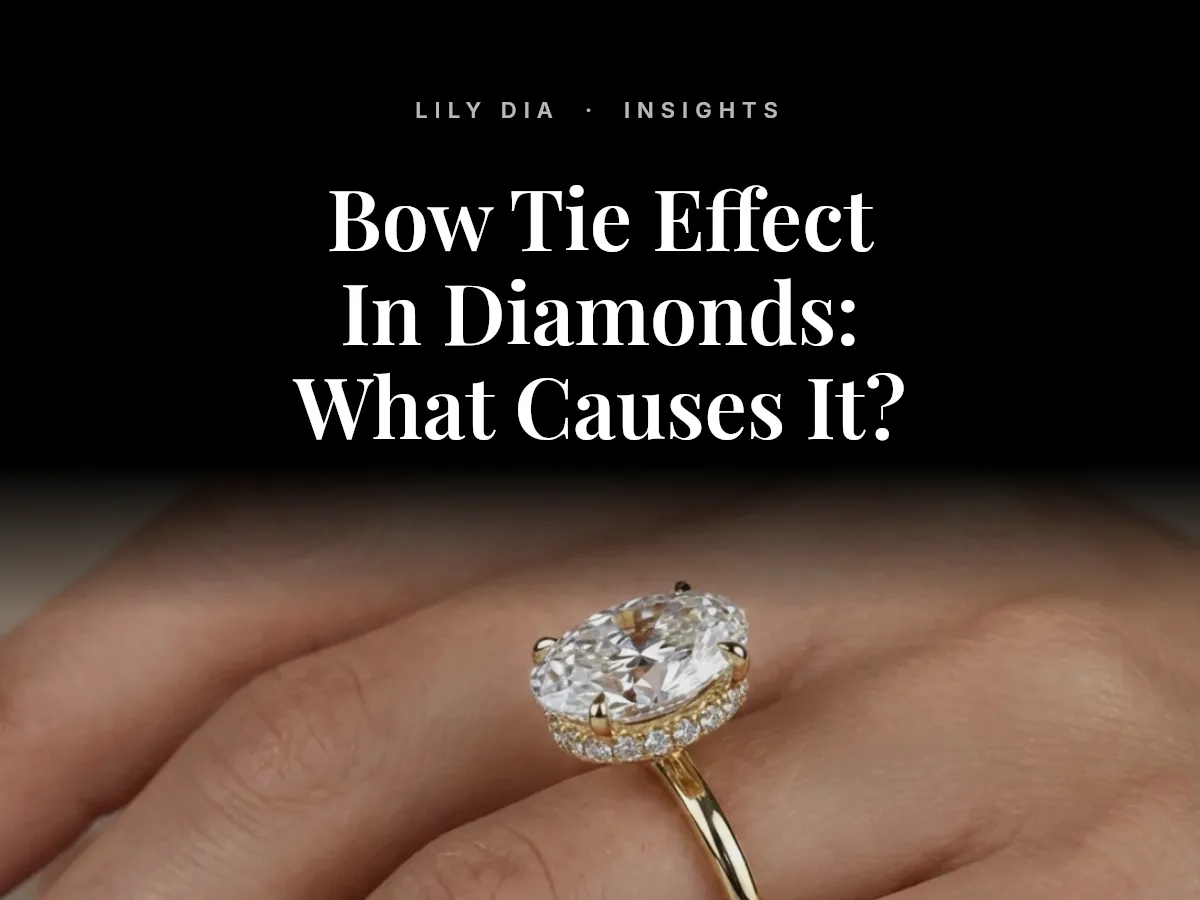
The bow tie is a dark shadow shaped like a bow tie across the middle of elongated diamond shapes (oval, pear, marquise). It happens because of how light leaks through poorly aligned pavilion facets. Every oval has at least a subtle one. Whether it ruins the stone depends on how severe it is.
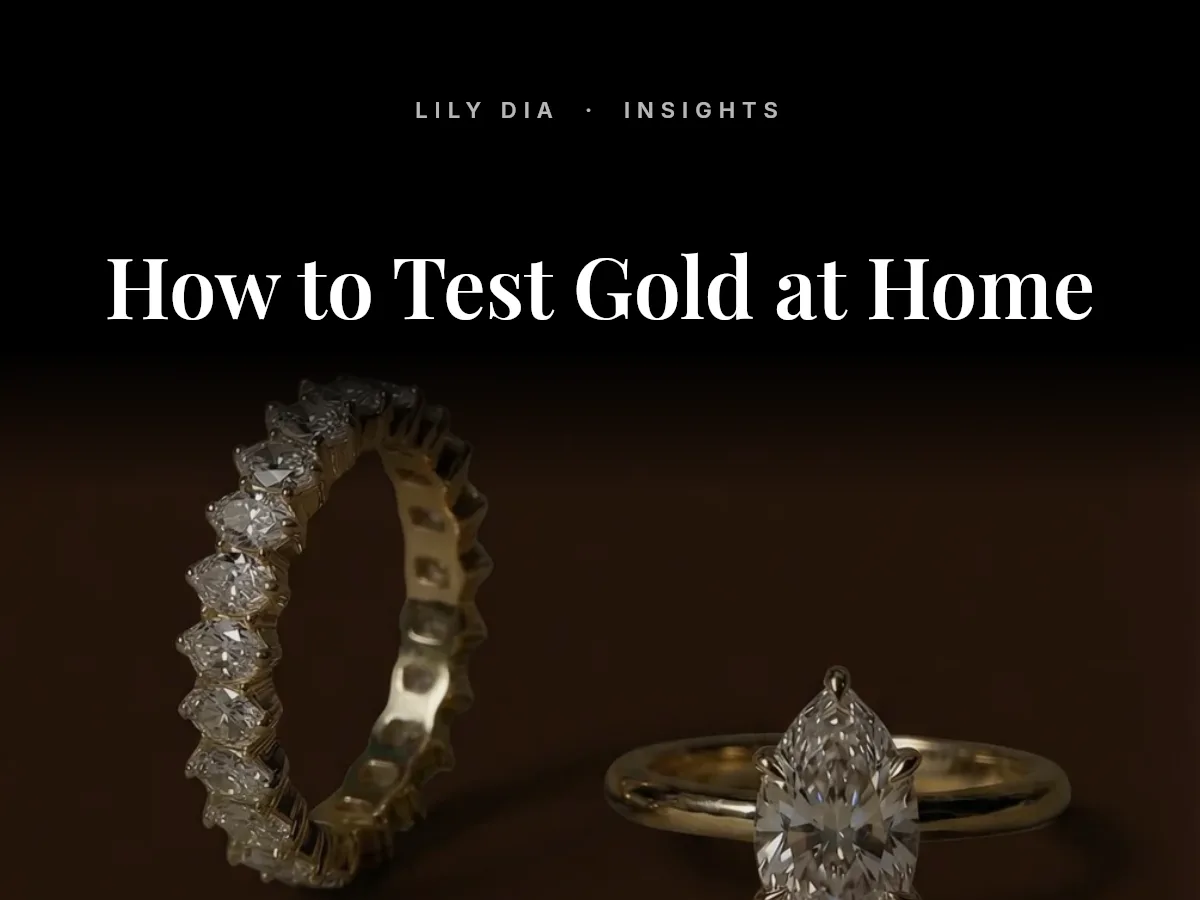
The fastest at-home gold tests are the hallmark check and the magnet test, which together rule out most fakes. An acid testing kit or electronic tester gives you a precise karat reading. Vinegar, bleach, and skin-discolouration tests don't reliably tell you anything.
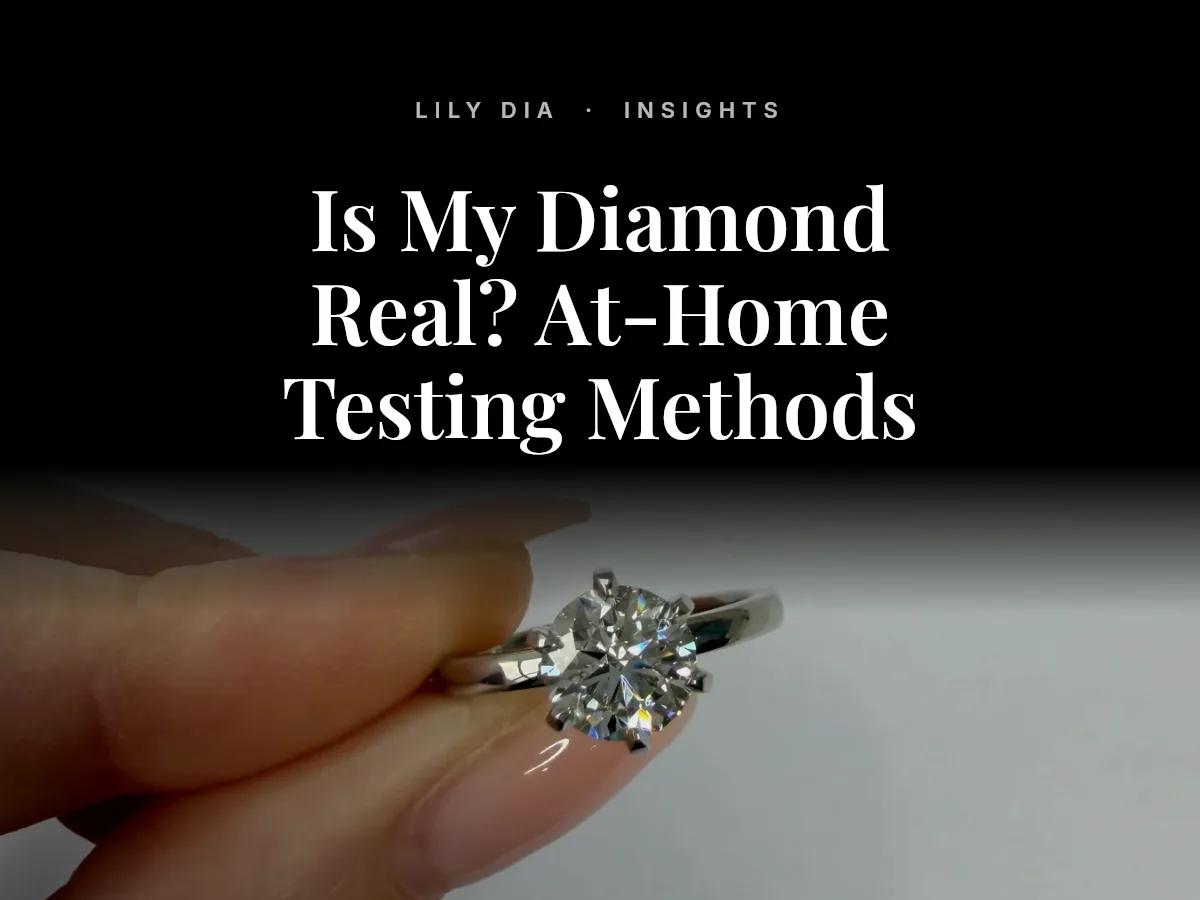
The most reliable at-home diamond test is a dual thermal-and-electrical tester pen. The popular fog, water, and newspaper tests give you a partial answer, and none of the home methods can tell a lab-grown diamond from a natural one.
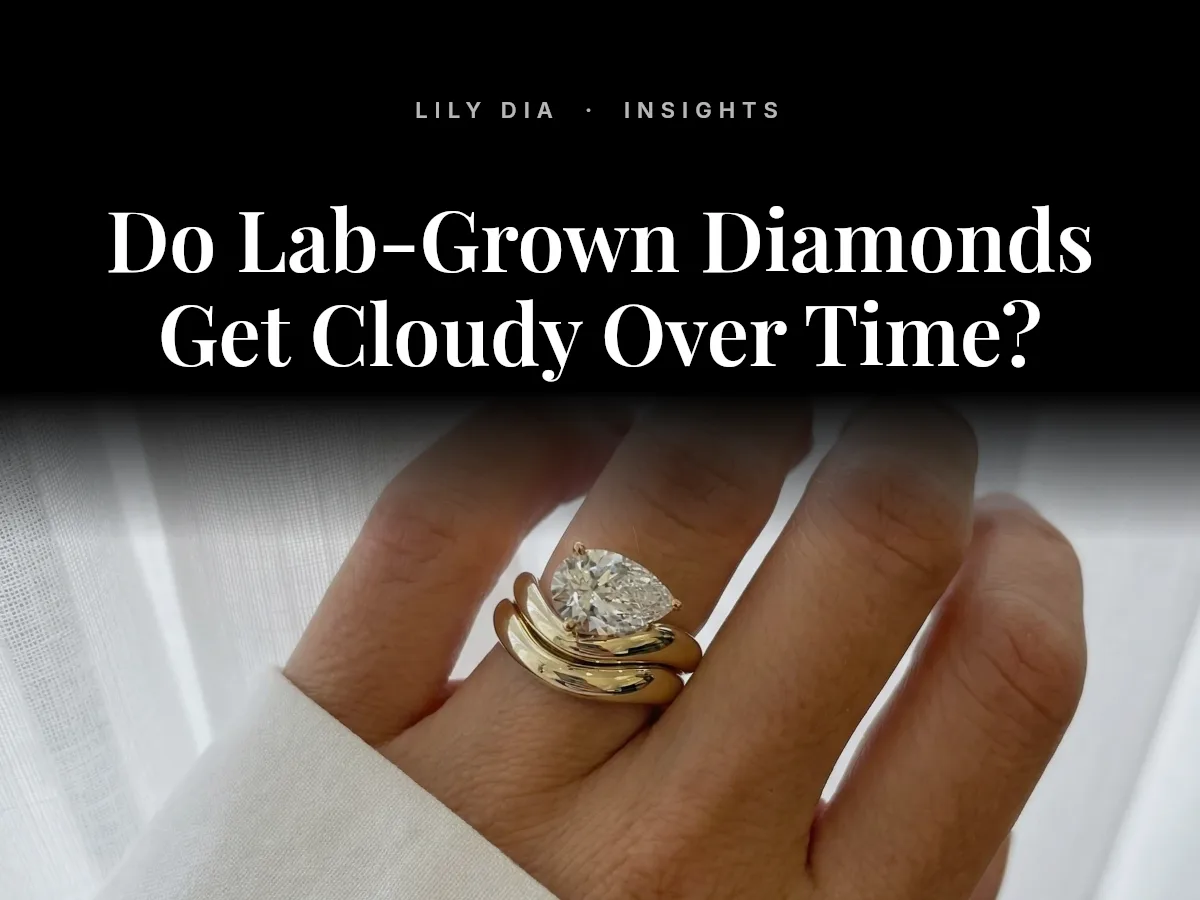
No. Lab-grown diamonds don't get cloudy with age; the crystal is inert carbon and cannot haze from the inside. The myth comes from cubic zirconia, which really does cloud up. Any haze you can see is soap, hand cream and skin oils sitting on the surface, and it cleans off in fifteen minutes.
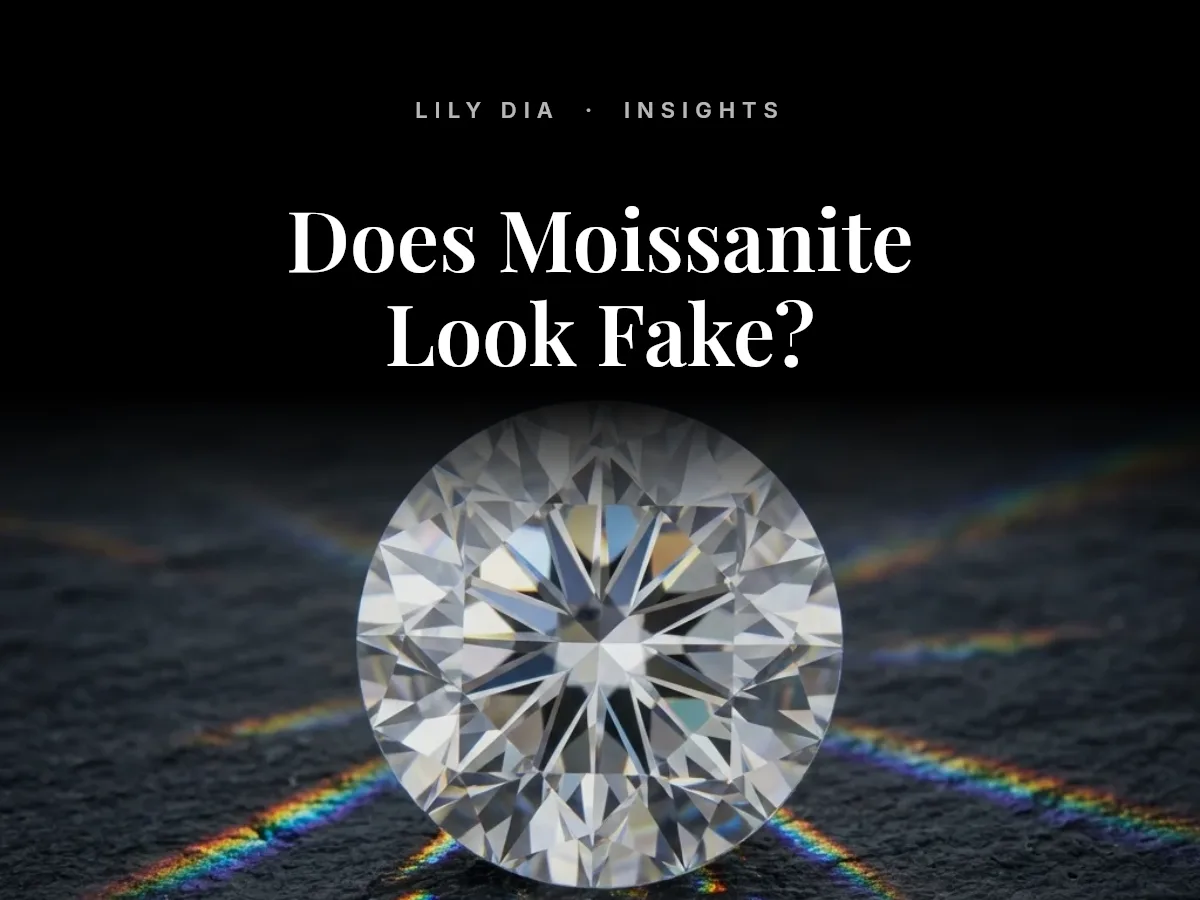
No, not if it's a D VVS1 stone, cut well, and set in solid gold. The moissanite that looks fake online is almost always a low-grade stone in a plated setting. Here's how to tell, what to avoid, and what to say if someone asks.
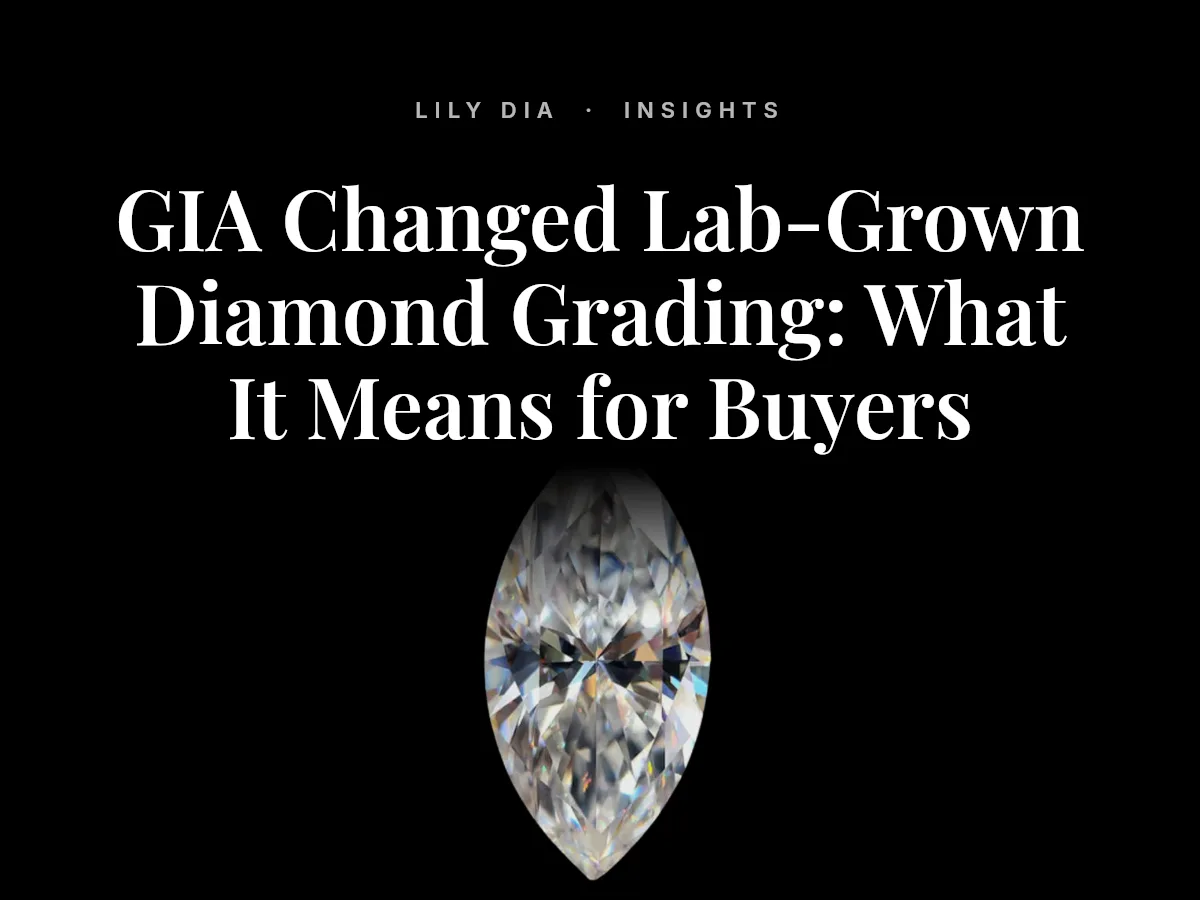
GIA stopped grading lab-grown diamonds on the 4Cs scale in October 2025. They now use a simpler Premium or Standard rating, with stones below the threshold returned ungraded. Here's what changed, why, and whether it affects what you should buy.
Discover insights across all areas of fine jewellery, from design trends to technical innovations and sustainability practices.