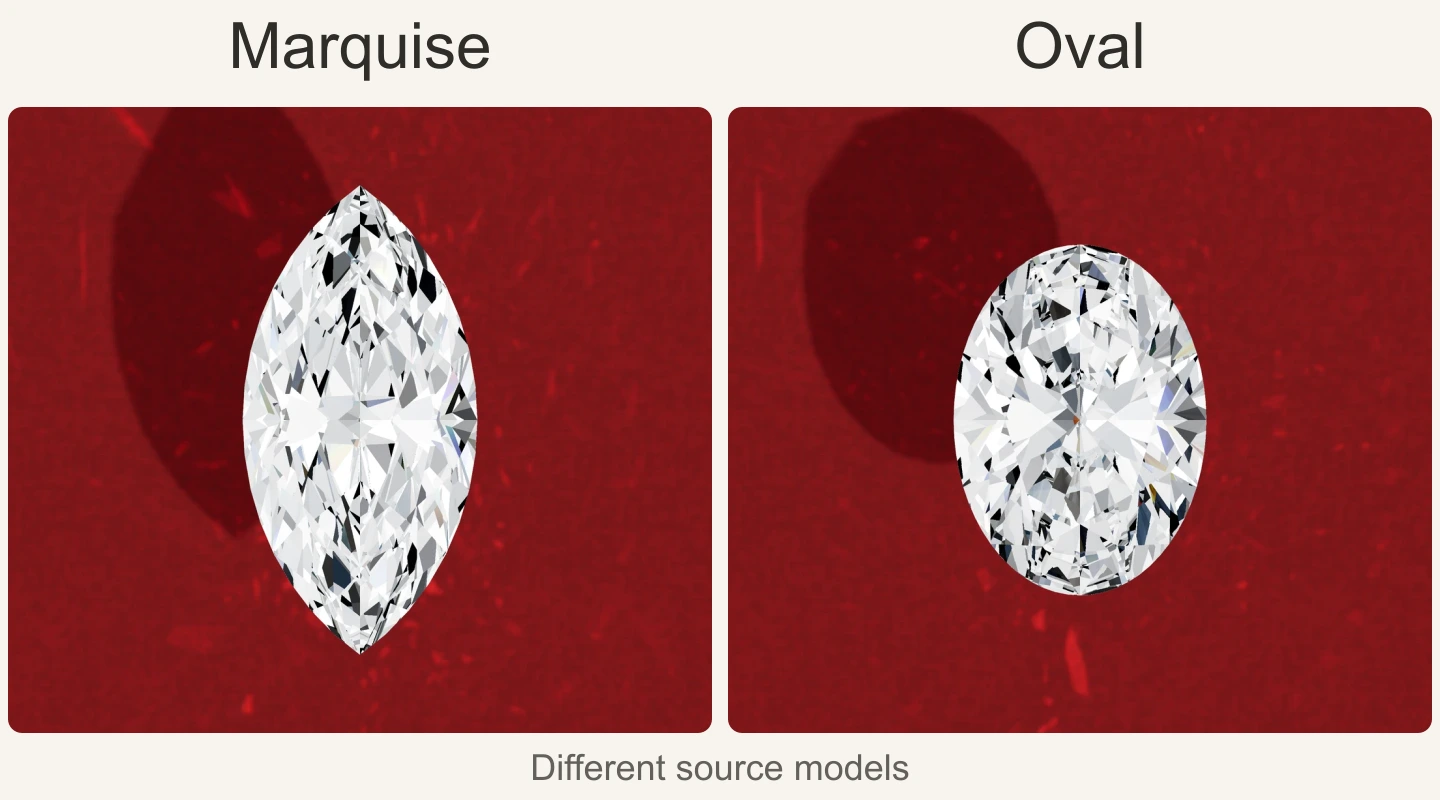

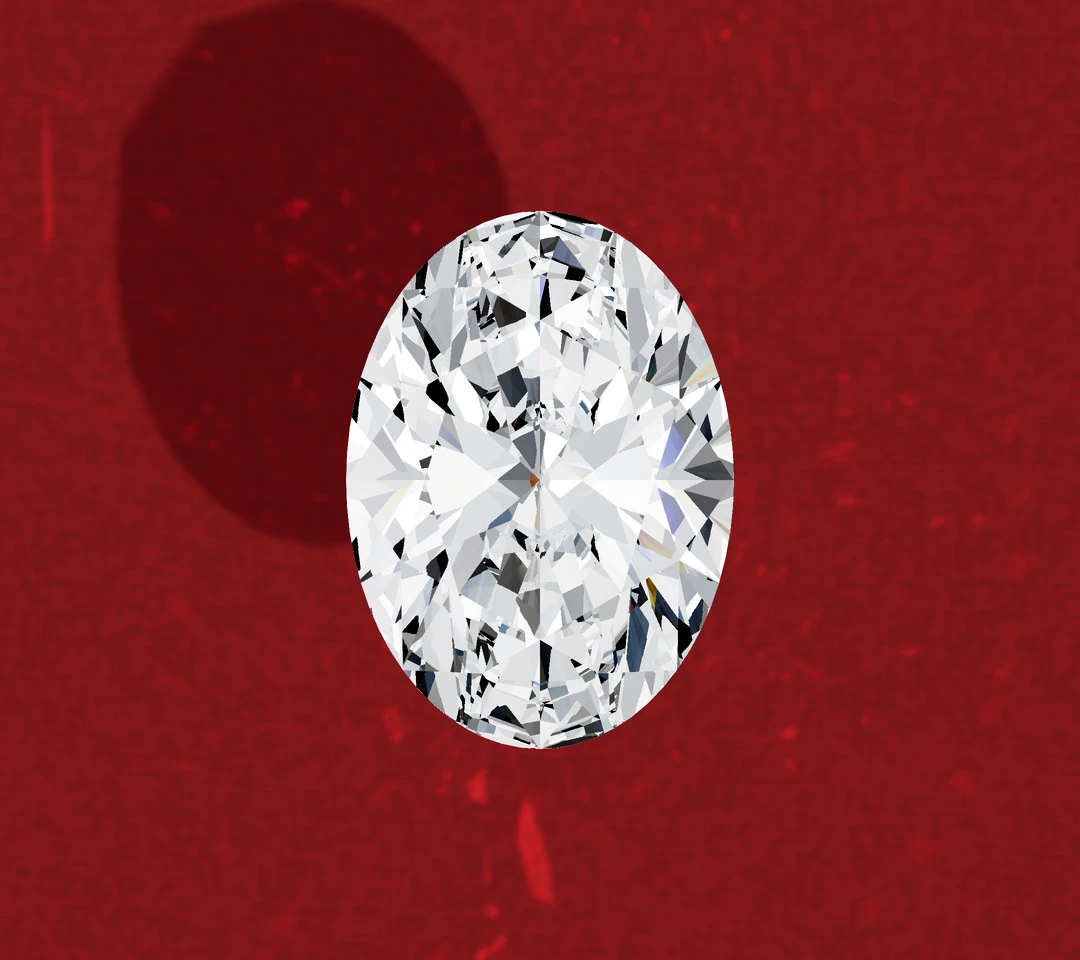
An oval diamond has rounded ends. A marquise has two points. If you are choosing between them, start with that outline, then compare the measurements and video of the actual stones you are considering.
Choose an oval if you prefer a continuous curve around the centre stone. Choose a marquise if the two tapered ends are the detail you keep coming back to. You can make either choice without deciding that one shape is universally bigger, brighter or better on a particular hand.
Look at the ends, then the sides
The points are the quickest way to recognise a marquise, but look along the whole outline. Follow each curved side from the widest part towards an end. For the oval, notice how the shoulders turn into the rounded ends. For the marquise, notice how the sides taper into the points.
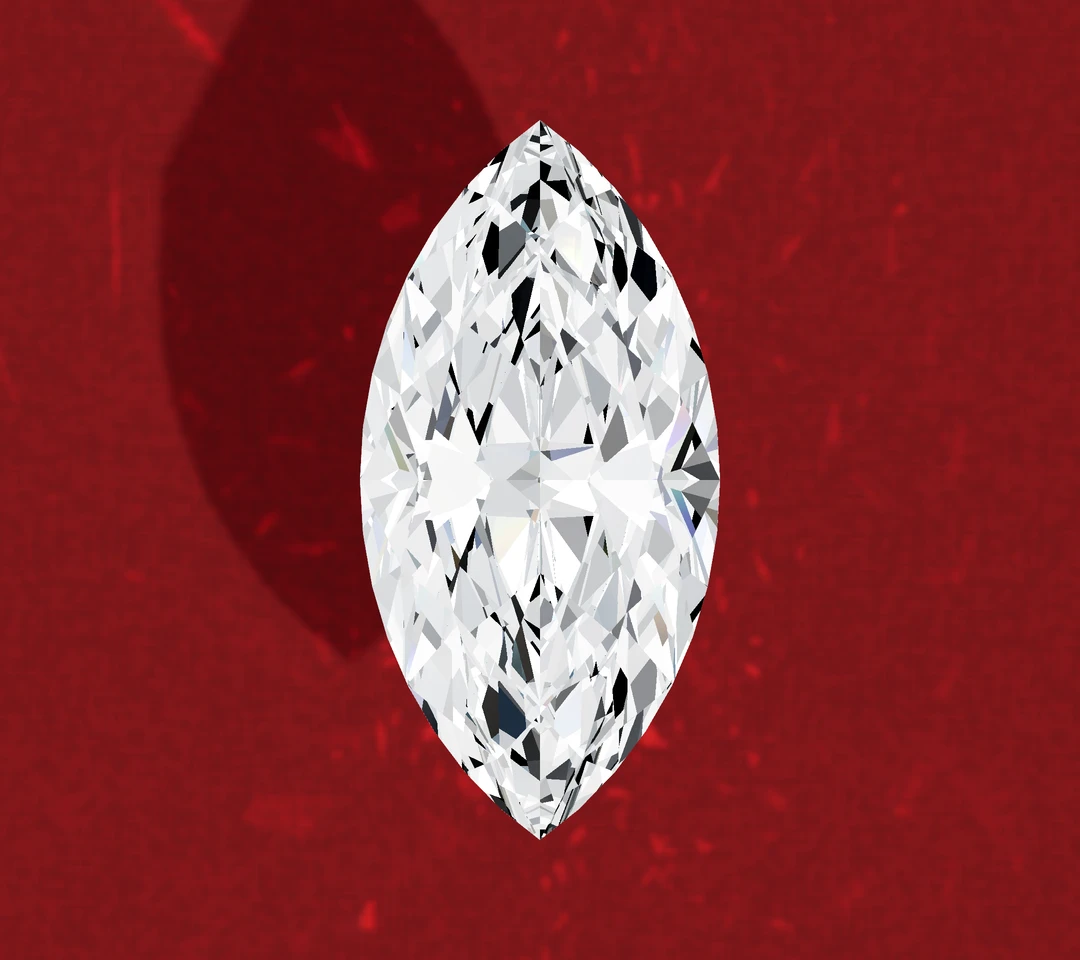
Length (end to end)
Width (across the middle)
Length (end to end)
Width (across the middle)
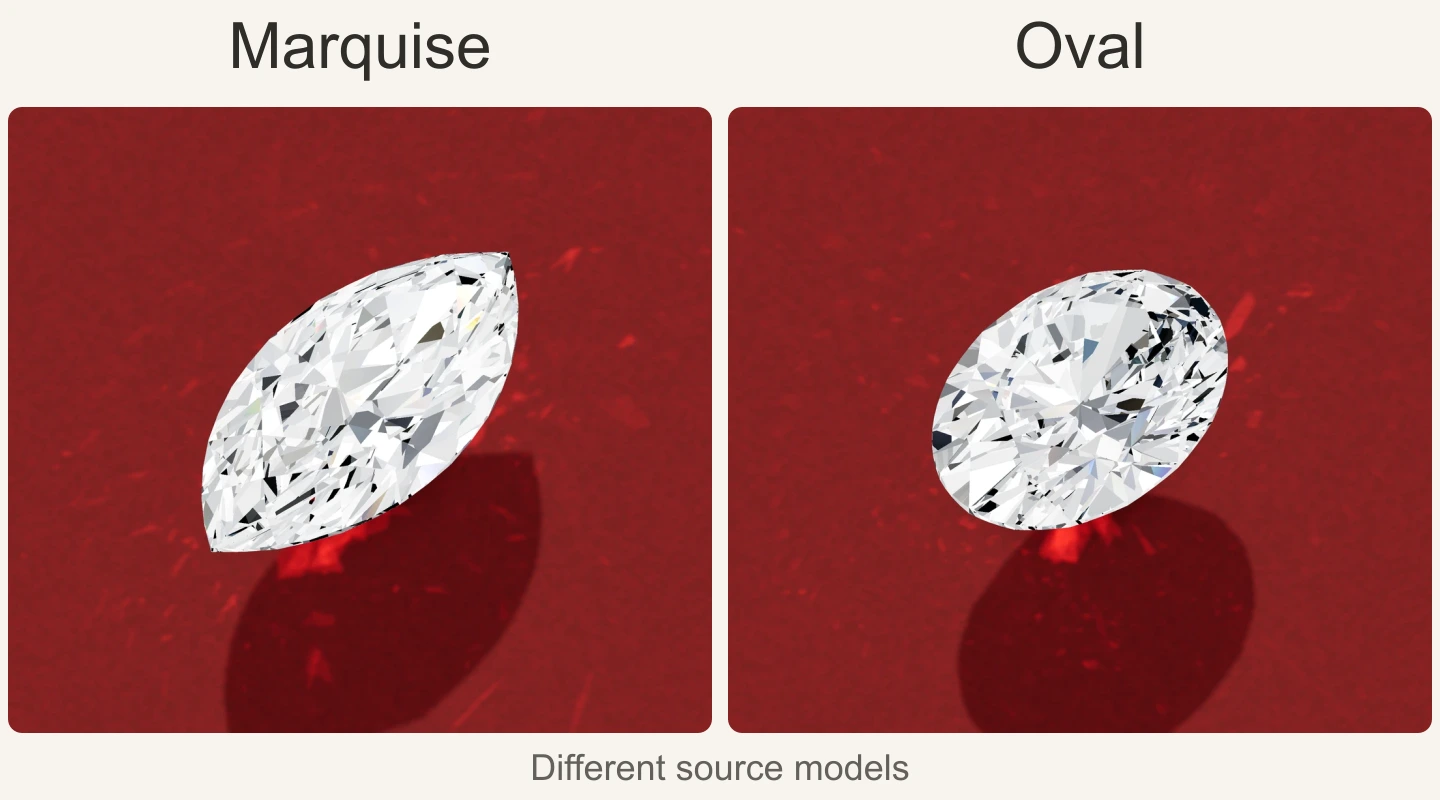
View the outlines at full size or see the isolated stones from an angle.
That gives you a more useful description than saying you like an "elongated diamond". You might prefer a fuller middle with a gradual taper, or a narrower outline with more pronounced ends.
Compare the left and right halves in a straight-on view. An angled photograph can make one side appear shorter, so ask for a face-up image before deciding that an outline is uneven.
Compare length and width separately
If one diamond looks bigger in a photograph, ask what you are noticing: extra length, extra width, or a closer camera.
Write down the length and width in millimetres for each shortlisted stone. GIA explains carat as a measurement of weight, so matching carat labels alone does not give you matching dimensions.
Try these two questions:
- How much length do I want along the ring?
- How much width do I want through the middle?
Keep both answers. Choosing the longest stone can mean accepting a narrower middle than you wanted. Choosing the widest can change the long, tapered look that attracted you in the first place.
When reviewing photographs, request a consistent scale or a clearly stated measurement. Two separate product images may each fill their frame, even when the stones have different dimensions.
Use ratio to describe your preference
Length-to-width ratio is the length divided by the width. For example, a hypothetical stone measuring 10mm by 5mm has a ratio of 2.00. One measuring 9mm by 6mm has a ratio of 1.50. These are arithmetic examples, not recommended sizes.
Ratio is helpful shorthand, but it does not describe every curve. GIA's research on oval, pear and marquise diamonds identifies outline differences beyond ratio, including shoulder fullness and the shape of the taper towards a point.
Save a face-up image alongside the ratio when you find a stone you like. "This ratio, with these rounded shoulders" or "this taper towards the tips" gives the jeweller something specific to work with. A number on its own leaves part of your preference unstated.
Ask about both marquise tips
A marquise introduces two points into the design. Ask how the proposed setting covers each one, and request a close-up of both ends.
GIA's marquise guide describes V-prongs that wrap around the tips and bezel options that cover the edge. The useful question is how the setting is made for your particular stone. A style name or a total prong count is not a complete answer.
An oval has no pointed ends, but you should still review the setting around the whole stone. Once you have chosen the outline, look at the proposed ring from above and from the side so you can discuss the visible metal and overall height separately.
Review each diamond in motion
Both oval and marquise diamonds can show a bow-tie pattern across the centre. GIA's research describes variation in that pattern and how it changes as a diamond moves. Choosing one shape over the other does not settle whether you will like a particular stone.
For an online shortlist, ask for video of each exact diamond, with the stone slowly tilted rather than shown only in one flattering still. If the clips use very different lighting or magnification, ask for a more comparable view.
Watch the centre and the ends, then replay the full stone at a normal viewing size. Note what you like and what distracts you. Our bow-tie guide explains the pattern in more detail.
A shortlist you can send to your jeweller
For each candidate, keep these details together:
- The stone reference and grading report
- Length, width and depth in millimetres
- A straight-on photograph and the length-to-width ratio
- Video of that exact diamond
- The feature you prefer: rounded ends, taper, middle width or overall length
- For a marquise, the proposed detail at each tip
You do not have to settle every part of the ring at once. Narrow the outline first, compare actual stones next, then review the design around the one you prefer.
For more detail on each shape, read our marquise guide and oval guide. You can also browse marquise engagement rings and oval engagement rings, or send Lily Dia your shortlist to discuss the design online.
Designed by us in Melbourne, made to order
Lily Dia is a small studio, so every ring is drawn, set and finished for the person wearing it. If this article helped, the collection shows how these choices look on real rings, and you can ask us anything before you decide.
Browse engagement ringsOr ask us a question first