

Do lab diamonds lose their sparkle?
No. A lab-grown diamond does not lose its sparkle as it ages, because the stone itself is pure crystallised carbon, chemically identical to a mined diamond, and rated 10 on the Mohs hardness scale (the hardest natural substance known). Nothing in normal wear scratches it, etches it, fades it, or changes the way it returns light. A lab diamond cut in 2026 will sparkle exactly the same way in 2076 and beyond, provided it stays clean.
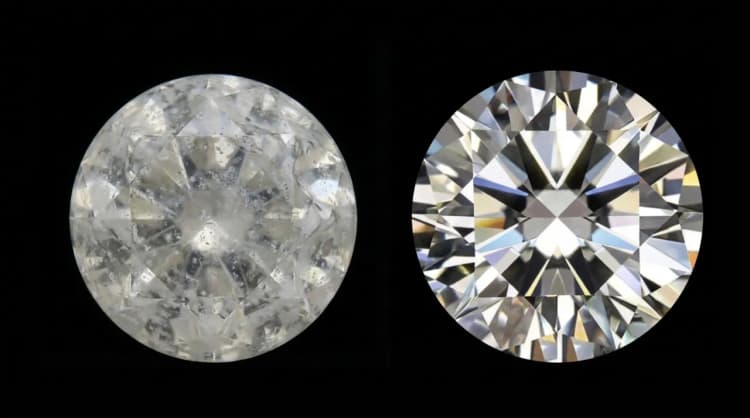
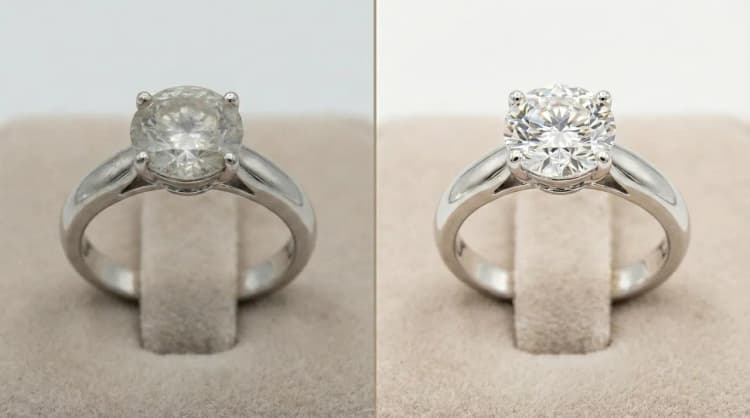
When a lab diamond does look duller than it did the day you bought it, the cause is almost always a thin film of skin oils, hand cream, soap, and hard-water residue sitting on the outside of the stone, especially in the cup of the setting underneath it. That film blocks light from entering the diamond and from bouncing back out. The diamond has not changed at all. It just needs a clean.
Do lab diamonds lose their sparkle over time?
No, the stone itself does not change with time. A lab-grown diamond is structurally identical to a mined diamond, and mined diamonds are billions of years old and still sparkle, so the carbon-crystal lattice that makes a diamond sparkle is about as permanent as anything on earth gets. Heat does not degrade it at normal room temperatures, sunlight does not affect it, and oxygen and water do nothing to it.
What changes over time is the environment around the stone. Two or three years of daily wear without cleaning will leave any diamond looking dull because of skin-oil and lotion buildup on the underside, and ten years of wear will also bring some prong wear that needs attention. Neither has anything to do with the diamond itself.
Do lab-grown diamonds lose their brilliance or shine?
Brilliance and shine are the same property in different words, and the answer is the same for both: no, not from any kind of internal change. A diamond's brilliance comes from how light enters the top of the stone, bounces off the angled facets at the bottom, and reflects back out through the top. That optical behaviour is determined by the cut of the diamond and the refractive index of the crystal (2.42), neither of which changes over the life of the stone.
What can reduce visible brilliance is anything that blocks light at the surface. Fingerprints. Sunscreen residue. A faint film of lotion. A coat of soap scum from the dishwasher. None of these damage the diamond, and all of them rinse off with warm water and a small drop of dish soap.
Do lab diamonds sparkle less than natural diamonds?
No. A lab-grown diamond cut to the same proportions as a mined diamond returns light identically, because they are the same material with the same optical properties. Side by side, even a trained gemmologist cannot tell them apart by sparkle alone. The grading instruments used to certify a diamond's cut grade (the thing that actually determines sparkle) give the same scores to a lab-grown stone and a mined stone of the same shape and proportions.
The reason this question comes up so often is that the diamond industry spent decades positioning mined stones as a different category. Optically and chemically they are the same. The single difference is origin: a lab diamond grew in a chamber over a few weeks, a mined diamond grew in the earth over a billion years. Both produce the same sparkle, which is why our engagement rings use lab-grown diamonds and moissanite rather than mined stones.
Do lab diamonds lose their colour or get cloudy?
No on both. Lab-grown diamonds do not yellow, fade, or develop a cloudy appearance over time. The crystal is non-porous and chemically stable, so nothing soaks into it and nothing leaches out. If a lab diamond looks cloudy, the cloudiness is a film on the surface, not a change inside the stone. We covered the cloudy version of this question in do lab-grown diamonds get cloudy over time and the diagnosis is identical: clean the ring and the brilliance comes straight back.
The single exception, and it is rare, is a lab diamond with significant internal inclusions that already affected clarity at purchase. Those inclusions do not get worse over time. They were there from day one and a reputable jeweller would have shown them to you up front.
Why does my lab diamond look dull?
Buildup, almost always. A diamond reflects light through the top facets, so any film coating those facets (or coating the pavilion underneath) scatters incoming light instead of letting it enter cleanly. The common culprits:
- Hand cream, sunscreen, and moisturiser that wrap around the prongs and pool under the stone
- Skin oils and sweat transferred from your finger every time you put the ring on
- Soap residue from dishwashing or hand-washing with the ring on
- Hard-water minerals, particularly in cities with hard water (Adelaide is the standout in Australia)
- Hairspray, perfume, and household cleaners that leave a sticky film
Most of this collects in the cup underneath the stone, where it is hardest to see and hardest to reach. That is why a ring can look brilliant from the side but flat when you look straight down at it.
How do I get the sparkle back?
Warm water, a drop of dish soap, fifteen minutes, and a soft toothbrush. For broader material-specific cleaning advice, use our jewellery care and maintenance guide.
The full process:
- Fill a small bowl with warm (not hot) water and add a drop of mild dish soap.
- Drop the ring in and let it soak for ten to fifteen minutes. The soap softens the film without damaging the metal or the stone.
- Pick up the ring and use a soft-bristle toothbrush to scrub gently around the stone and underneath the setting. Pay attention to the basket beneath the diamond, where most of the buildup hides.
- Rinse under running water (plug the sink first, or hold the ring tightly) and pat dry with a soft cloth.
Done this once a fortnight, a ring stays looking the way it did the day you got it. Done once a month at the absolute minimum, and you will still keep the sparkle for the long run.
A few wear habits that slow the buildup down:
- Take the ring off before applying lotion, sunscreen, or perfume
- Remove it before doing dishes or using household cleaners
- Take it off at the gym (lifting damages prongs more than anything else)
Do lab diamonds keep their sparkle as long as natural diamonds?
Yes, exactly as long. A lab diamond and a mined diamond of the same cut grade return light the same way, scratch at the same rate (which is to say, essentially not at all), and hold their colour the same way (which is to say, permanently). Whatever the lifespan of the sparkle on a mined diamond, it is the same lifespan on the lab-grown version. If it is the lifespan of the stone itself you are wondering about rather than the sparkle, how long do lab-grown diamonds last answers that one in full.
The thing that genuinely shortens the apparent life of any diamond's sparkle is neglect of the ring around it: worn prongs that need re-tipping, a setting that has loosened, or years of grime that has not been cleaned off. None of those are the diamond's fault, and none of them are unique to lab-grown stones.
When should I get the ring professionally cleaned?
Once a year for any daily-wear engagement ring, whether the stone is a lab diamond, a mined diamond, or moissanite. Most jewellers (us included) clean and inspect rings for free in store. The clean takes ten minutes in an ultrasonic bath followed by a steam rinse, and the inspection catches worn prongs or a loose stone long before anything fails.
The sign that you have left it too long between cleans is that the ring looks brighter for two or three days after a wash, then dulls again quickly. That suggests buildup is happening fast and the cup under the stone is not being reached by your home cleans. A professional ultrasonic clears it.
So, do lab diamonds lose their sparkle?
No. The stone itself does not change, will not fade, and will not lose brilliance over any timescale you care about. The only thing that ever stands between a lab diamond and its sparkle is a thin layer of everyday grime, and a fortnightly soak in warm soapy water handles it for the rest of the ring's life.
View our full collection of lab-grown diamond engagement rings for stones that will look the same in fifty years as they do today.
Thanks for reading,
Jared and Brie
Designed by us in Melbourne, made to order
Lily Dia is a small studio, so every ring is drawn, set and finished for the person wearing it. If this article helped, the collection shows how these choices look on real rings, and you can ask us anything before you decide.
View lab-grown diamond ringsOr ask us a question first