


Why does a ring turn your finger green?
A green mark usually forms when copper in a ring reacts with moisture, sweat, soap, lotion or other chemicals on the skin. The reaction creates green copper compounds that transfer to the finger. The stain can happen with copper jewellery, brass, gold alloys that contain copper, or plated rings after the surface layer wears thin.
The mark does not prove that the ring is fake, and it is usually harmless. It does tell you that an alloy metal is reaching the skin.
Does a green finger mean the ring is not real gold?
No. Solid gold jewellery below 24k contains other metals because pure gold is too soft for most rings. Yellow and rose gold commonly include copper, so a real 9k or 14k gold ring can leave a green mark on some people, especially in hot weather or under trapped moisture.
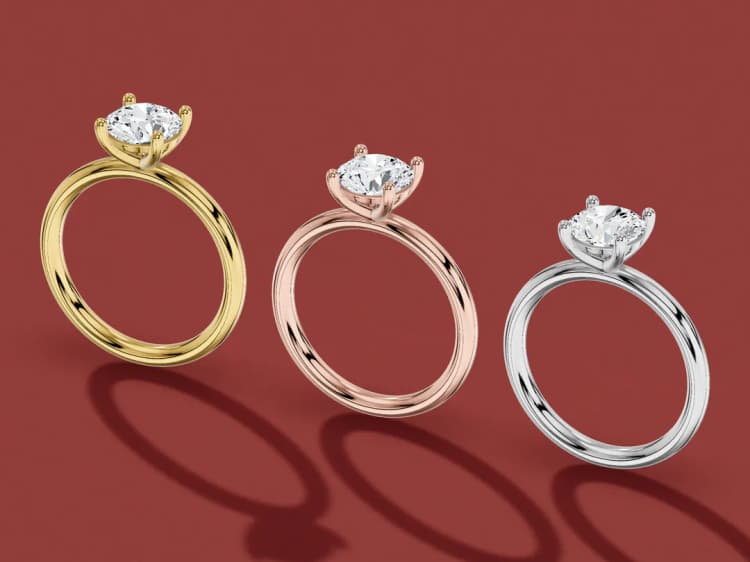
Higher-karat gold contains more pure gold and less alloy, which reduces the chance but does not make every reaction impossible. A hallmark such as 375, 585 or 750 identifies gold purity. It does not list every alloy metal.
Gold-plated rings are more likely to mark the skin once friction exposes the base metal underneath. Replating can restore the barrier, but the coating will wear again with use.
Why does it happen only sometimes?
Heat, sweat and moisture speed up the reaction. Hand cream, sunscreen, soap residue and cleaning products can also change the chemistry under the band. That is why the same ring may leave no mark in winter and a green line during humid weather or exercise.
A tight fit holds moisture against the skin. Clean the ring, let the finger dry fully after washing, and avoid putting the ring over fresh lotion. Those small changes often stop an occasional mark.
How do you stop a ring turning your finger green?
Start by cleaning the inside of the band with warm water, mild dish soap and a soft brush. Rinse and dry it completely. The gold cleaning guide covers the safe method and exceptions for plated or gemstone pieces.
Then:
- remove the ring before swimming, cleaning, showering or applying lotion
- dry your hands and the inside of the band after washing
- have worn plating inspected and renewed by a jeweller
- confirm the hallmark and metal if the seller's description is unclear
- choose a nickel-free or lower-copper alloy if you know which metal causes a reaction
Clear nail polish inside the band is sometimes suggested as a temporary barrier, but it wears unevenly and can trap moisture. A proper plating repair or a different metal is the more reliable fix.
Which rings are least likely to turn your finger green?
Platinum and high-purity gold with a known alloy are less likely to leave a green copper stain. Every ring in our engagement ring collection is made in solid gold or platinum rather than plated metal. Stainless steel and titanium also avoid the common copper reaction when their composition is accurately described.
Metal sensitivity is separate from colour transfer. Nickel can cause an itchy contact rash without a green mark, and copper can leave a green mark without causing an allergy. Ask for the full alloy when sensitivity matters.
When is a green ring mark an allergy?
A flat green stain that washes away and does not itch is usually colour transfer. Stop wearing the ring and seek medical advice if the skin becomes itchy, swollen, painful, blistered or cracked, or if the reaction continues after the ring is removed. Those signs can fit contact dermatitis or another skin problem rather than a simple surface stain.
If you are unsure what the ring contains, start with its hallmark and the checks in how to test gold at home, then ask a jeweller for a metal test before wearing it again.
Designed by us in Melbourne, made to order
Lily Dia is a small studio, so every ring is drawn, set and finished for the person wearing it. If this article helped, the collection shows how these choices look on real rings, and you can ask us anything before you decide.
View lab-grown diamond ringsOr ask us a question first