

2.5mm or 3mm: which band is right?
For an engagement ring shank, 2.5mm; for a standalone wedding band, either, and 3mm more often. That is the short version, and the reason is what each ring has to do. An engagement ring band frames a centre stone, so it can afford to stay slightly quieter than the stone it carries, and 2.5mm is the widest width that still reads as a frame. A standalone band has no stone to defer to, so the metal is the whole design, and the extra presence of 3mm works in its favour.
The 0.5mm difference sounds trivial and is one of the most visible width steps in ring design, a 20% increase in metal across the top of the finger. Both widths photographed together on the same hand:
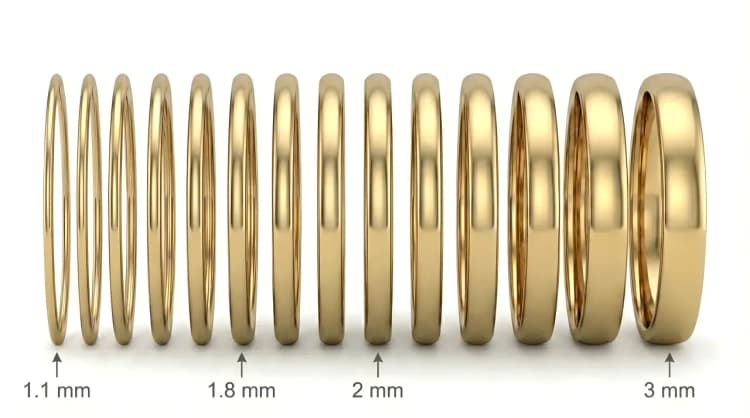
How do 2.5mm and 3mm compare side by side?
| 2.5mm | 3mm | |
|---|---|---|
| Best with stone size | 1.5ct and up; balances a big centre without competing | 2ct and up, or no stone at all |
| Best with hand type | Average to wider fingers; workable on most | Longer or wider fingers; crowds short fingers |
| How it feels | Present but forgettable within a week | Noticeably there, especially between the fingers |
| Resize implication | Standard resize job | More metal to cut and rejoin, and wide bands wear tighter, so size carefully up front |
| Recommended use | Engagement ring shank, structured solitaires, pave with room to breathe | Standalone wedding bands, cigar bands, statement solitaires in yellow gold |
One fitting note that surprises people: a wider band takes up more skin, so it fits more snugly at the same measured size. Many wearers go up a quarter to half a size when moving from a 2mm to a 3mm band. If you are ordering a 3mm ring sight unseen, measure with our ring size chart and mention the width when you confirm the size.
What does each width do to the centre stone?
A 2.5mm band under a 1.5ct or 2ct stone reads deliberate: the band visibly supports the stone and the proportions feel architectural rather than delicate. The same band under a 0.75ct stone starts to shrink the stone, because the eye reads the stone-to-band ratio before it reads absolute size. A useful rule of thumb is that the centre stone should be at least two and a half times the band width to read as the clear lead: roughly 6.5mm of stone (about 1ct in a round) over a 2.5mm band, and about 8mm of stone (2ct and up) over a 3mm band.
At 3mm the band stops being a supporting act. On a solitaire it reads bold and contemporary, and the design works best when that is the point, a chunky yellow gold band with a bezel-set stone, for example, rather than a classic fine solitaire that happens to have a wide shank.
How do they stack with a wedding band?
The cleanest stacks keep the two rings within about 0.3mm of each other, so a 2.5mm engagement ring pairs naturally with a 2.5mm wedding band and comfortably with a 3mm one. A 3mm engagement ring really only balances a 3mm band; anything finer beside it reads like an accessory to the main ring rather than a partner.
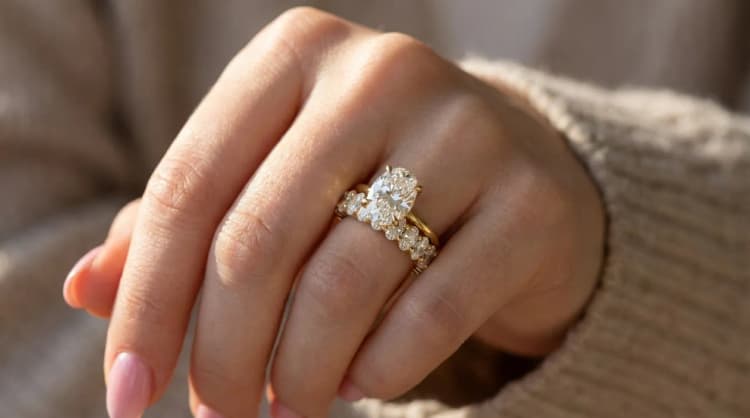
Think about the stack before choosing the engagement ring width, not after. Two 3mm bands side by side is 6mm of metal across the finger, which wears warm and solid but crowds a shorter finger. Two 2.5mm bands is 5mm, which most hands carry easily.
Which is more durable?
Both are comfortably past the width where bending is a concern. Assuming a solid shank of standard profile depth, both a 2.5mm and a 3mm band in 14k or 18k gold or platinum will hold their shape through decades of daily wear, and either width holds pave securely with a full bed of metal around each stone. Durability stops being a deciding factor above about 2.2mm; from there the choice is entirely visual and ergonomic. If you are weighing thinner widths where durability genuinely bites, that trade-off lives in our 1.5mm band guide.
The verdict
Choose 2.5mm when the ring carries a centre stone you want to lead, when you might stack a finer band later, or when you want structure without commitment to a statement. Choose 3mm when the band is the design, when the stone is 2 carats or more and can hold its own, or when you are buying a standalone wedding band that has to look complete by itself. For the full range and the decision framework across every width, go back to the band width guide.
Browse our thick band engagement rings, which open at 3mm and let you choose 2.5mm on any ring, or narrow to the lab-grown diamond collection if the stone is settled. Talk to us about a custom width between the standard steps.
Thanks for reading,
Jared and Brie
Designed by us in Melbourne, made to order
Lily Dia is a small studio, so every ring is drawn, set and finished for the person wearing it. If this article helped, the collection shows how these choices look on real rings, and you can ask us anything before you decide.
View thick band engagement ringsOr ask us a question first