
What is a channel setting?
Last updated 17 October 2026
A channel setting holds a row of gemstones in prepared seats between two continuous metal walls. The walls run along the row, and retaining metal is worked over the stones’ edges. There are no individual retaining claws between the stones. Channel settings are common on wedding bands and engagement-ring shanks. Stone dimensions, wall shape, height and spacing vary with the design, including tapered rows.
From above
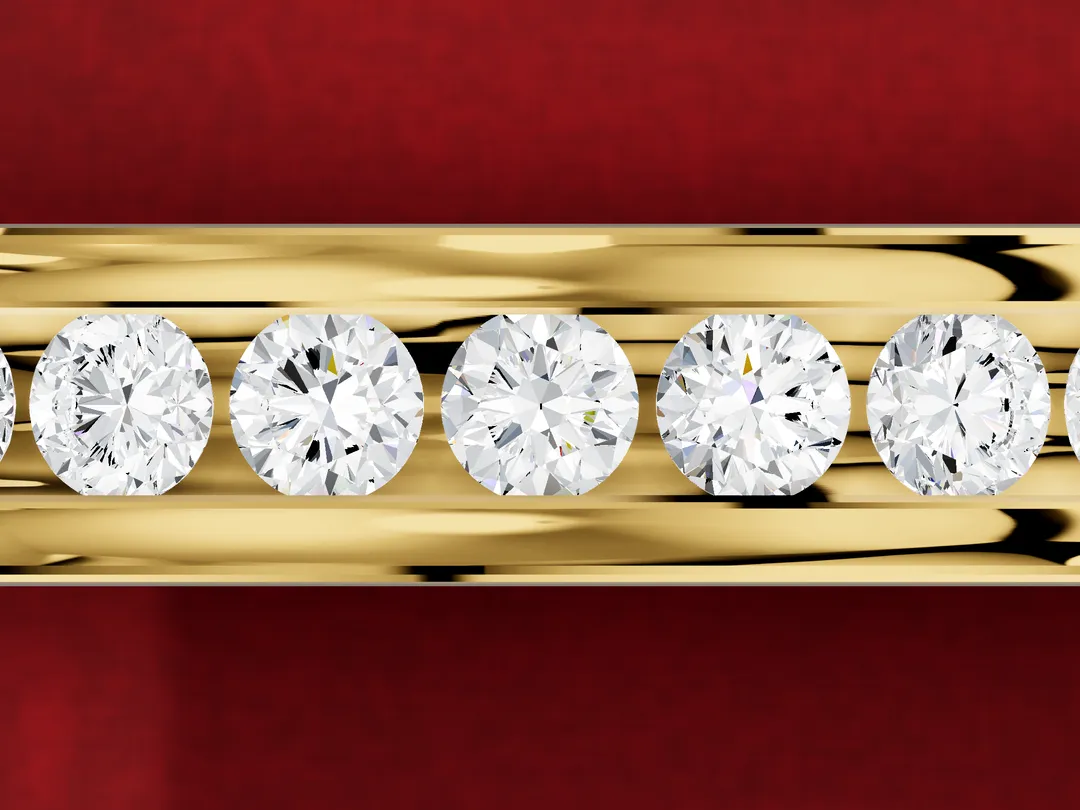
Two metal walls run along the row, with no claws between the stones.
End on
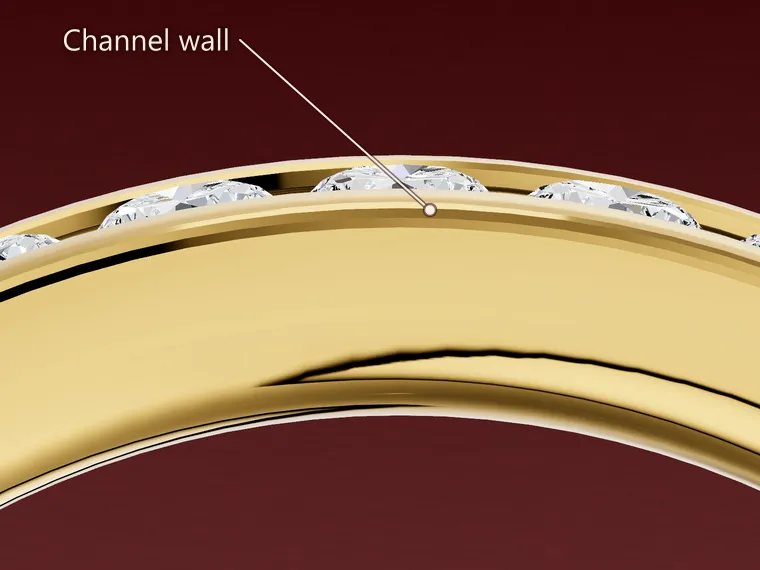
Seen end on, the channel wall rises beside the stones and covers their edges.
Read the walls and the seats together
From above, two walls run along the row of stones. Seen end on, each wall rises beside the stones and covers their edges, and that metal is what holds them. The seat cut below each stone’s edge matters as much as the metal above it, so an open groove alone is not a finished setting.
Compare which way the retaining metal runs
In the channel example, the walls run along the row. In a bar setting, transverse bars sit between the stones and retain their opposing edges. Follow the stone row when comparing these structures, rather than relying on whether a line looks horizontal or vertical in a photograph.
Frequently asked questions
- What are the advantages of a channel setting?
- The continuous metal walls give the row a defined border and cover parts of the stones’ side edges. There are no individual claws between the stones, but comfort, snagging and wedding-band fit still depend on the finished edges, stone height and overall design.
- Can a channel setting be resized?
- Some channel-set rings can be resized, but a jeweller needs to assess the individual piece. Stone coverage, channel construction, metal and condition affect whether and how far an alteration is practical. Discuss resizing before purchase rather than assuming every channel-set ring can be changed.
- How does a channel setting compare to pavé?
- Channel setting holds stones between two continuous metal walls along the row. Pavé uses small beads or prongs around closely set stones. These create different patterns of visible stone and metal; neither description establishes a universal sparkle advantage.