
What is a culet on a diamond?
Last updated 17 October 2026
The culet is the small facet that may be present at the bottom of a diamond’s pavilion. When the pavilion facets meet at a point without this extra facet, a report may describe the culet as None. Larger culet facets are often visible through the table in antique cuts and form part of their characteristic pattern.
Pointed
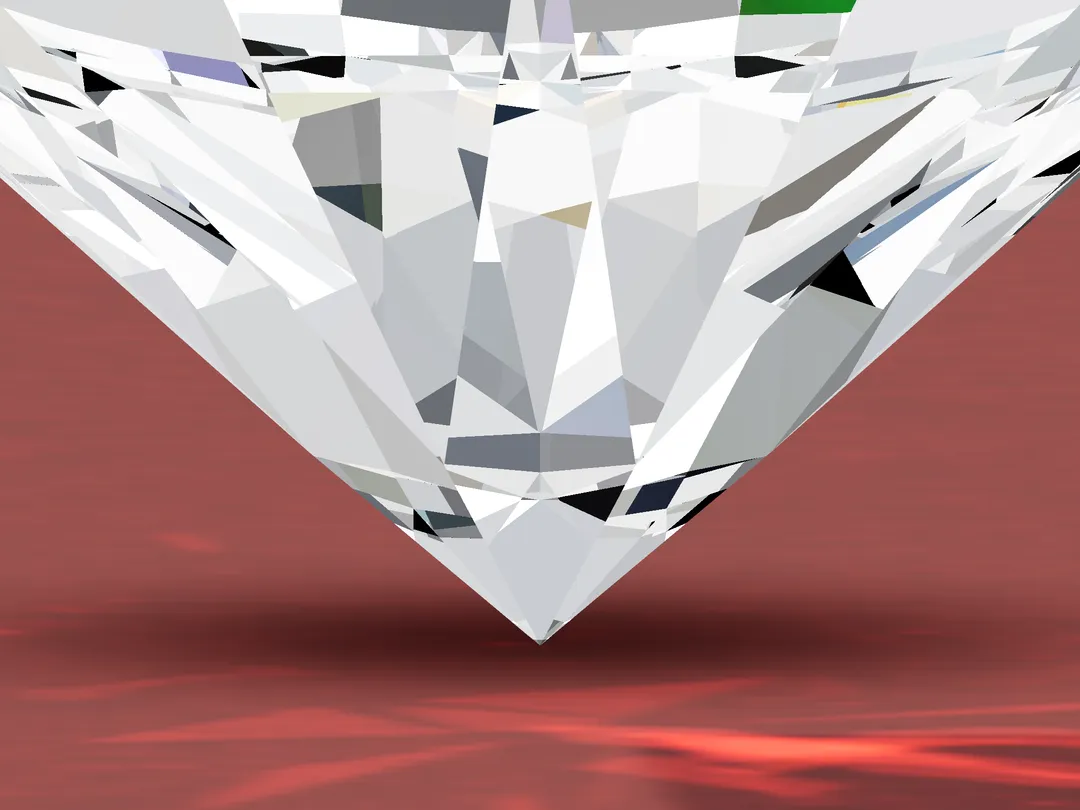
Here the pavilion facets meet at a point, so there is no culet facet.
Culet facet
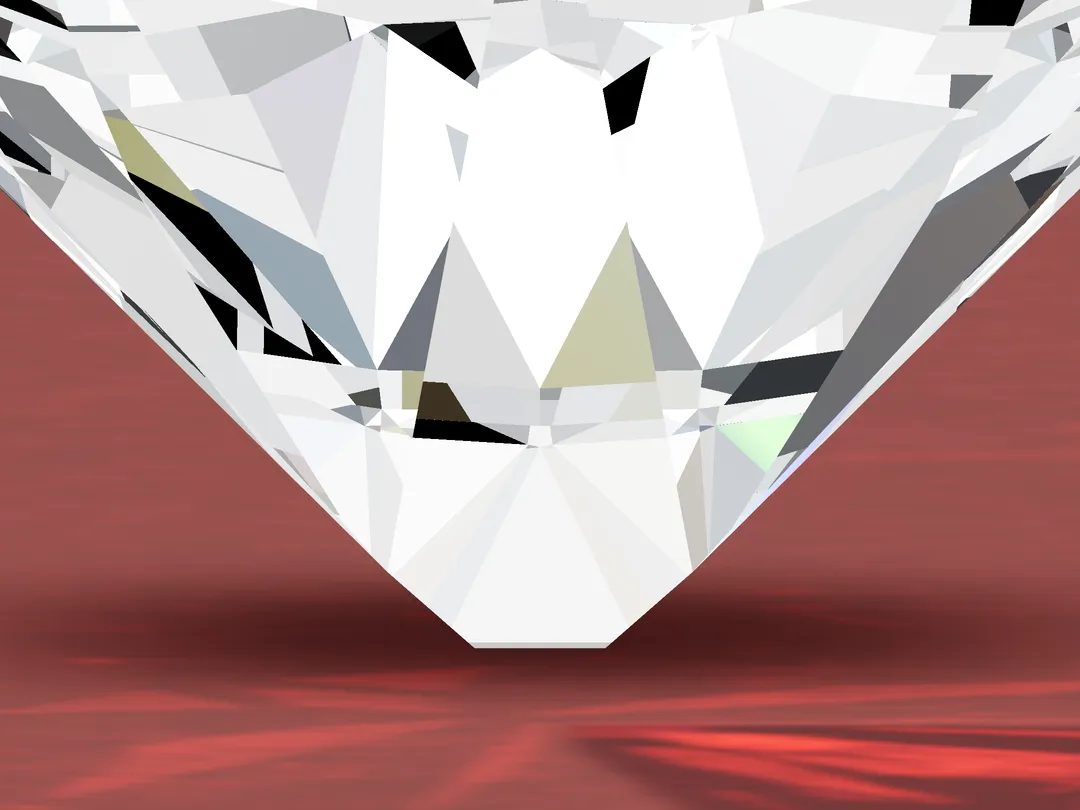
On this old mine cut, a small flat culet facet replaces the point.
A point and a culet facet are different
At a pointed pavilion tip, the facets meet without a separate flat base. A culet facet truncates that tip. In GIA’s round-brilliant terminology, None means there is no culet facet. The enlarged comparison shows that structural distinction, rather than a view of a particular diamond.
Frequently asked questions
- Does the size of the culet affect a diamond's appearance?
- Yes. A culet facet can be visible through the table and influence the central pattern. Its appearance depends on the cut and viewing conditions; it is not always a dark circle. An intentional facet is different from a chip.
- Why do antique diamonds have large culets?
- A culet facet removes the sharp pavilion tip and can help protect it. Visible culet facets are characteristic of many old mine and old European cuts, although their size varies from stone to stone.
- Is a visible culet always damage?
- No. An intentional culet facet is a feature of the cutting design, while a chip is damage. Its visibility and appearance vary with the cut and viewing conditions. Have any suspected damage inspected rather than diagnosing it from a central light or dark spot.