
What is a hallmark on jewellery?
Last updated 17 October 2026
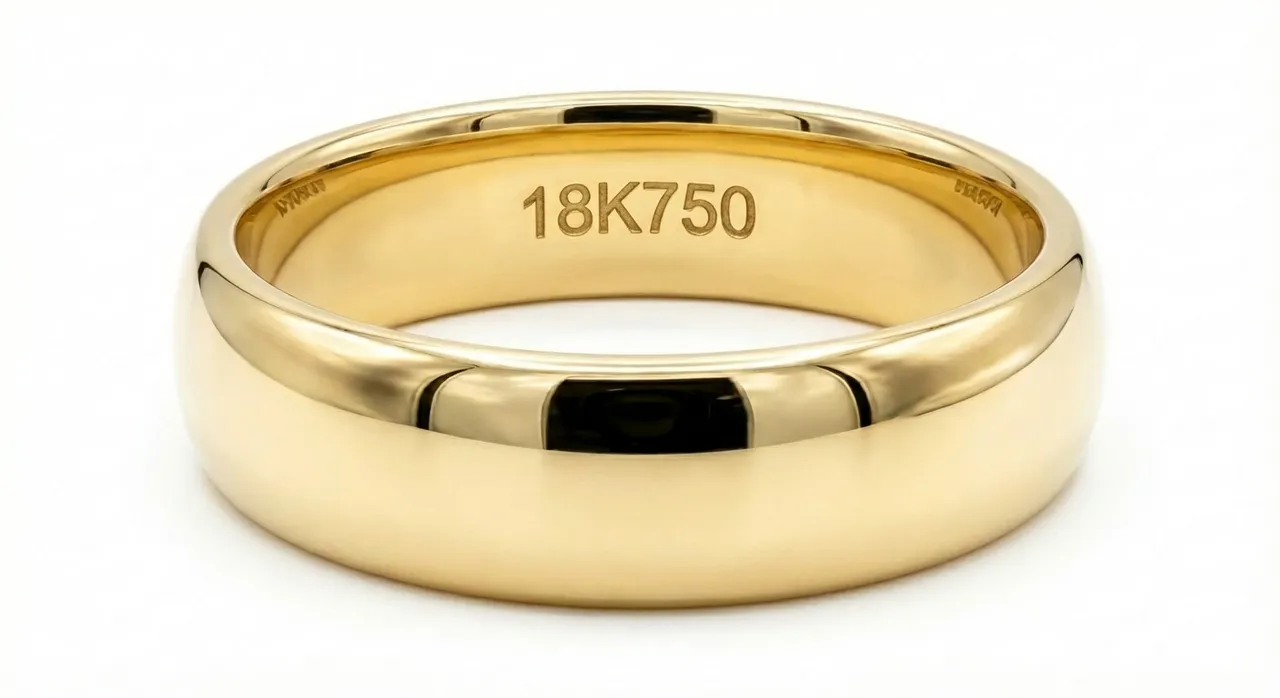
A hallmark is a set of identifying marks used within a recognised precious-metal testing system. In the UK it shows that an assay office has independently tested the metal's fineness. The compulsory marks identify the sponsor, the metal and its fineness, and the assay office; a date letter is optional. A standalone purity stamp such as 925 or 750 states a fineness but does not by itself establish independent testing. Hallmarking requirements vary by country, and UK rules include exemptions for some articles.
Frequently asked questions
- What does a 925 hallmark mean?
- 925 is a fineness mark indicating 925 parts silver per thousand, or 92.5%. On its own, the number is a purity declaration rather than a complete UK hallmark. A complete UK hallmark also includes the sponsor's mark and the assay-office mark, which connect the fineness claim to independent testing.
- Do Australian jewellers have to hallmark their jewellery?
- Australia does not use the UK’s compulsory assay-office hallmarking system. The Gold and Silversmiths Guild of Australia describes local purity responsibility as resting with the manufacturer or importer and operates a voluntary marking scheme for its members. A maker’s or fineness mark is not the same as independent assay; ask what each mark identifies and whether testing has been carried out.
- What are the compulsory components of a UK hallmark?
- A UK hallmark has three compulsory components: the sponsor's mark, the metal and fineness mark, and the assay-office mark. The sponsor is the person or company responsible for submitting the item and is not necessarily its maker. A date letter and traditional fineness symbol may also be included, but they are optional.