
Hidden Halo Setting
Last updated 17 October 2026
A hidden halo is a row of small stones below the centre stone, usually most visible from the side or at an angle. It adds detail within the head while keeping the centre prominent from above. Compare the actual side profile, cleaning access and wedding-band clearance, because hidden halos are made at different heights.
What a hidden halo setting is
A hidden halo is a row of small stones set beneath the centre stone, within or around the head. A face-up halo extends around the centre’s visible outline, while a hidden halo is usually easiest to see from the side or at an angle. Its exact visibility depends on the centre shape, the row’s position and the surrounding metalwork.
Solitaire
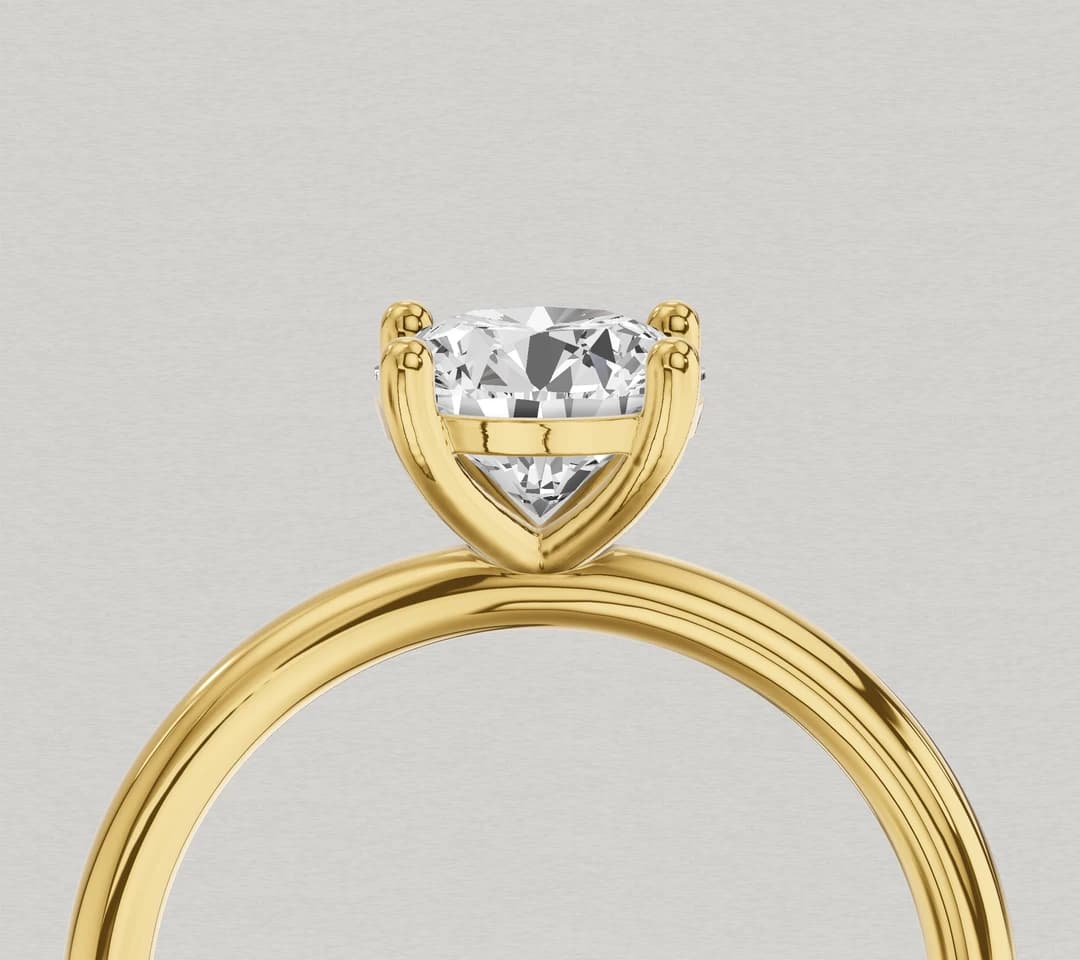
Claws and a rail, with nothing set beneath the stone.
Hidden halo
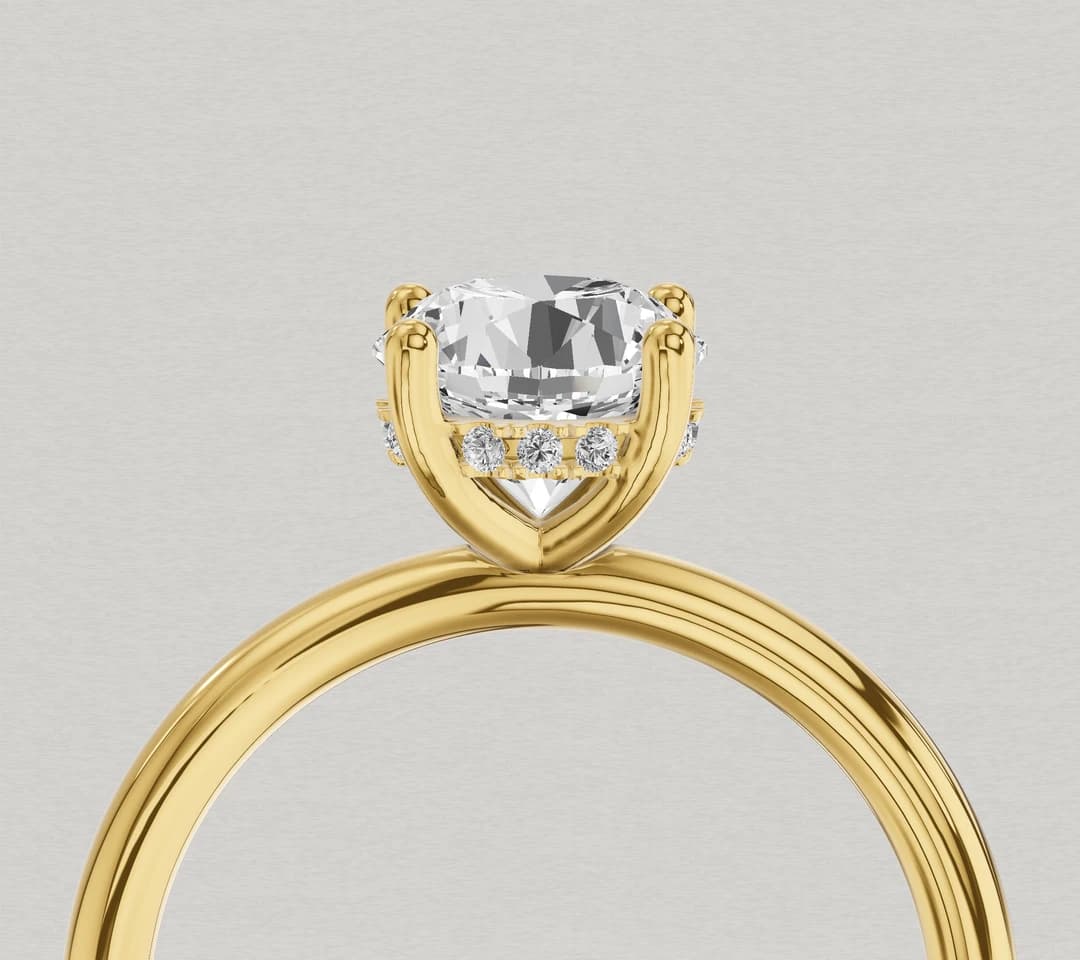
The same head with a row of small stones beneath the centre.
How it works
Small stones are set into a rail or other part of the head below the centre stone, often using small beads or prongs. The centre has its own retaining structure, which should be assessed alongside the accent-stone supports. Halo position, overall height and cleaning access vary between designs; the added stones do not by themselves establish a change in the centre stone’s light performance.
From above
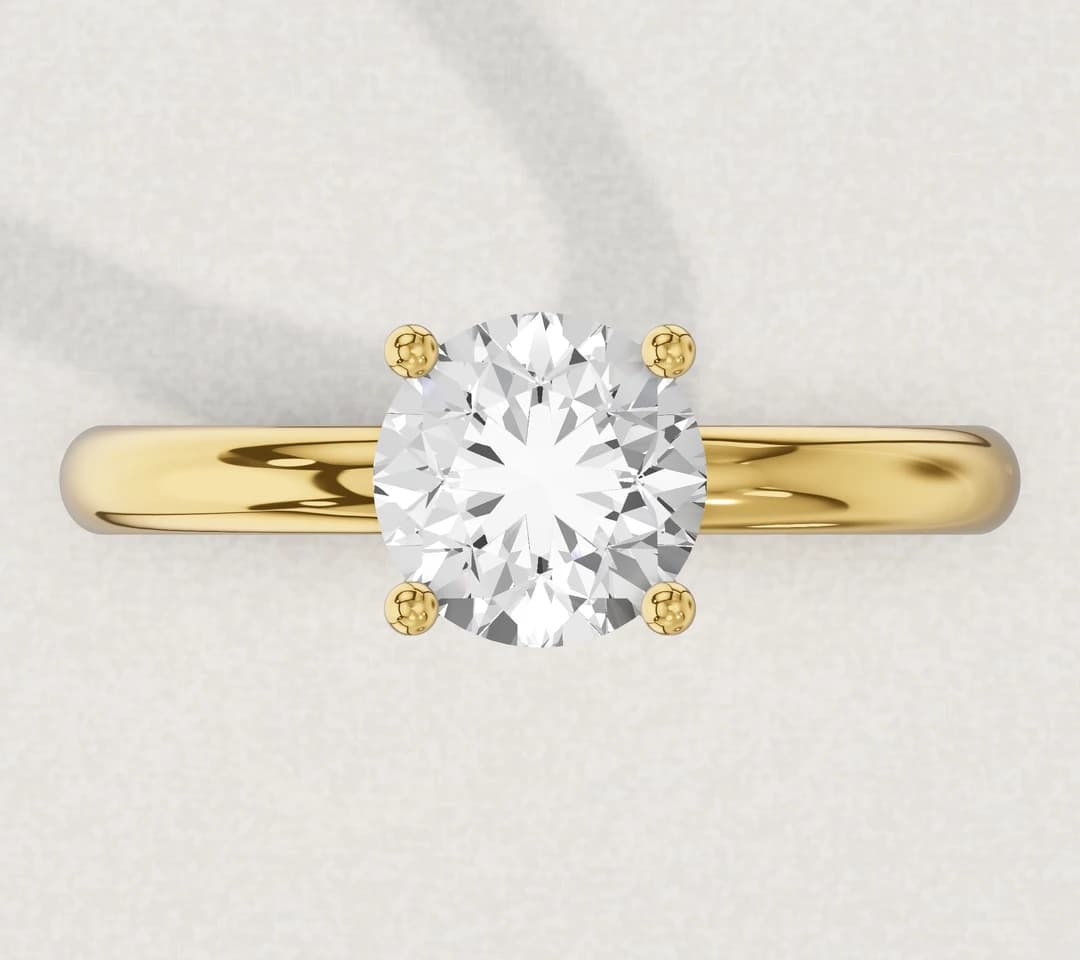
From above, the centre stone covers the row beneath it.
From a low angle
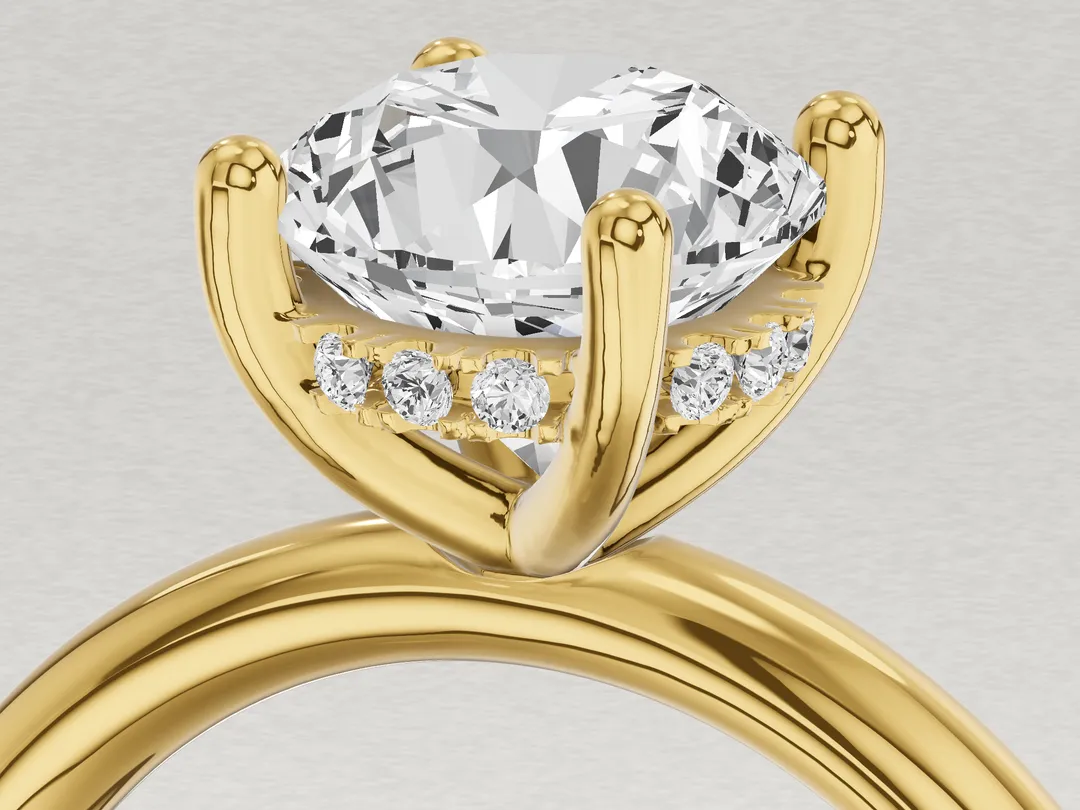
From a low angle, the small stones show in a rail beneath the centre.
Key characteristics
- Security
- The security of the centre stone and the small halo stones depends on their actual supports, fit, workmanship and condition. Stones beneath the centre still need care and inspection.
- Diamond visibility
- Usually most visible from the side or at an angle. Some designs show a glimpse of the accent stones from above, depending on their placement and the centre outline.
- Maintenance
- The small stones and spaces within the head need cleaning and professional checks. Follow care advice for every material in the ring and arrange an assessment if a stone or support appears loose or damaged.
- Compatibility
- Works with every diamond shape. The hidden halo can match the shape of the centre stone or contrast, like a round hidden halo under an oval centre.
Pros and cons
Pros
- Keeps the centre prominent in the face-up view.
- Adds an extra flash of sparkle visible from the side.
- Adds detail beneath the centre stone.
- Can be paired with a wedding band after checking the side-profile clearance.
- Offers an alternative position for accent stones beneath the centre.
Cons
- The head and accent row need enough space for the chosen construction.
- The small diamonds underneath can be difficult to clean thoroughly.
- The accent row contributes less to the face-up outline when it is tucked beneath the centre.
- Some buyers feel the detail is wasted if it is rarely seen.
Best diamond shapes
Hidden halos can be made around round, oval, emerald, radiant, pear and other centres. A row that follows the centre outline gives a different side profile from a contrasting shape below it. Compare the top, side and angled views to see how much of the row is visible and how it sits within the head.
Variations
A shape-matching hidden halo follows the centre outline, while a contrasting row can use a different outline beneath it. A double hidden halo adds a second row. Coloured accent stones change the palette and may need different care. Look at the individual construction, since these names do not specify the row’s height or its distance from a wedding band.
Lifestyle considerations
A hidden halo adds small stone settings and spaces within the head that need cleaning and inspection. Check whether the accent row could rub against a wedding band, and try the actual pair together where possible. Remove the ring for heavy hand work and sport; a tucked-away row is still exposed to wear and impact.
Price considerations
Compare the complete quote, including the centre stone, accent stones, metal and setting labour. A hidden halo may use a different number or size of accents from a face-up halo, but the name alone does not establish which costs less. Ask for the specification of each option before comparing the total.
Other ring settings
- #01
Bezel Setting
A bezel setting holds a stone with a fitted metal rim.
- #02
Pave Setting
Pavé, pronounced pah-vay, uses small stones set close together and held by small beads or prongs of metal.
- #03
Cathedral Setting
A cathedral setting has shoulders that rise from the band towards the centre setting, creating an arched side profile.
- #04
Channel Setting
A channel setting holds a row of stones between two metal walls, without individual claws between the stones.
- #05
Bar Setting
A bar setting holds each stone between metal bars, leaving other sides of the stone more exposed.
Frequently asked questions
- What is a hidden halo on an engagement ring?
- A hidden halo is a row of small stones set below the centre stone, within or around the head. It is usually most visible from the side or at an angle, while the centre remains prominent from above. You may also see it described as a secret or peekaboo halo.
- Why are oval hidden halo engagement rings so popular?
- An oval centre can be paired with a round or oval hidden halo, giving different side-view details. The appeal is a matter of preference. Compare actual profiles and wedding-band clearance rather than assuming every oval hidden halo has the same height or fit.
- What is the difference between a hidden halo and a regular halo?
- A face-up halo surrounds the visible outline of the centre stone when viewed from above. A hidden halo sits below the centre and is usually easiest to see from the side or at an angle. Compare both views: the first changes the face-up outline, while the second adds detail within the head.
- Is a hidden halo engagement ring cheaper than a regular halo?
- It depends on the design, accent stones, metal and labour. Compare current quotes for the complete rings rather than assuming a hidden halo will always cost less.
- Can you wear a straight wedding band with a hidden halo engagement ring?
- Sometimes. A straight band may fit if the head and gallery leave enough clearance, but some designs need a contoured band or an intentional gap. Try the actual rings together, or ask for a side-profile comparison.
- Does a hidden halo setting make the ring sit higher on the finger?
- Not necessarily. Hidden halos are made in different heights. Check the finished profile of the actual ring; the setting name alone does not give a height measurement or prove improved light performance.