Solitaire Engagement Ring

By Jared James · Last updated 17 May 2026
Quick answer
A solitaire engagement ring is a single centre stone on a plain band, with no side stones and no halo, so the stone itself, the prong style and the width of the band are what carry the design. It suits every diamond shape, it pairs easily with most wedding bands, and because there is nothing else to pay for, more of the budget can go into the centre stone.
What a solitaire engagement ring is
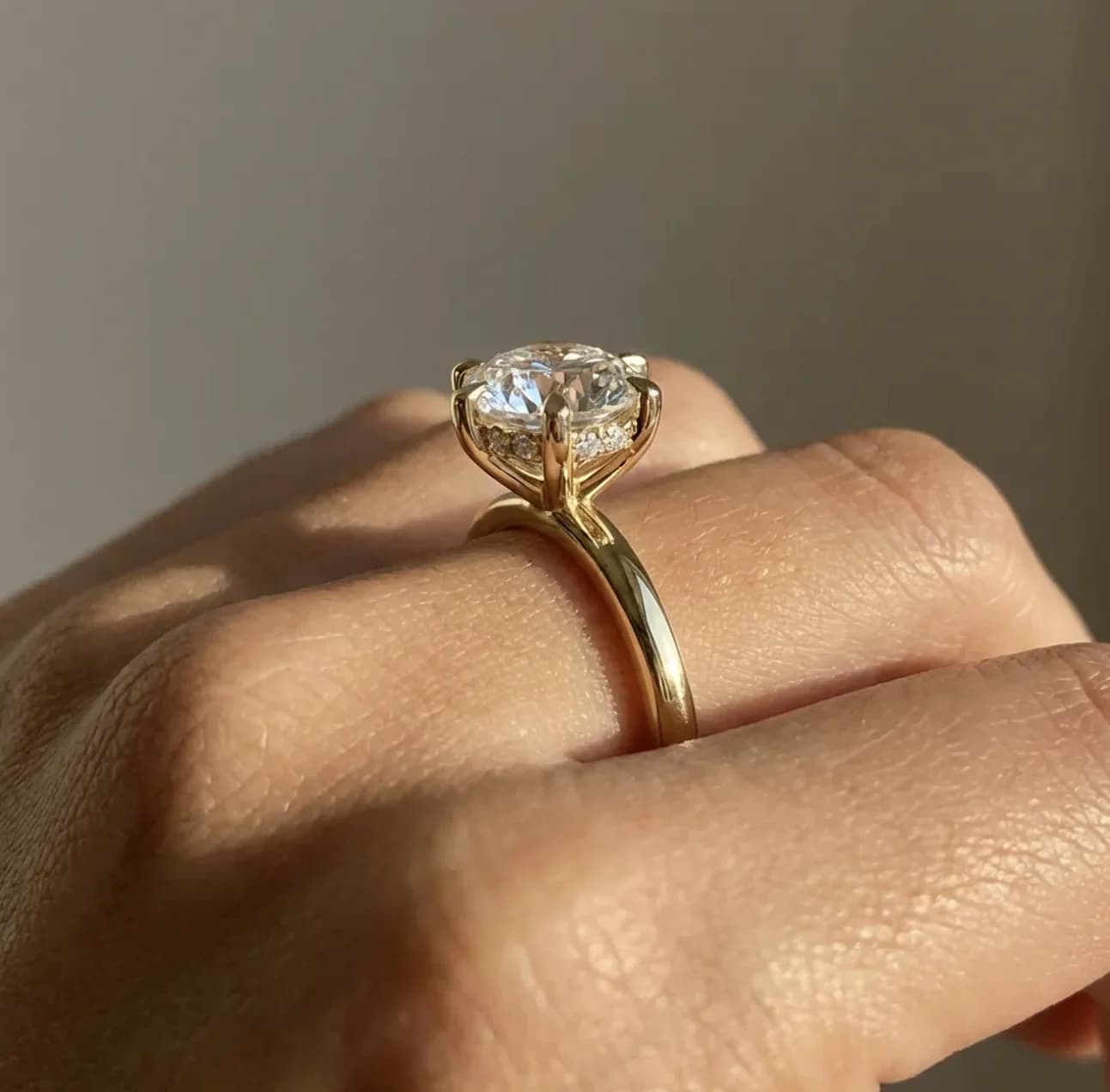
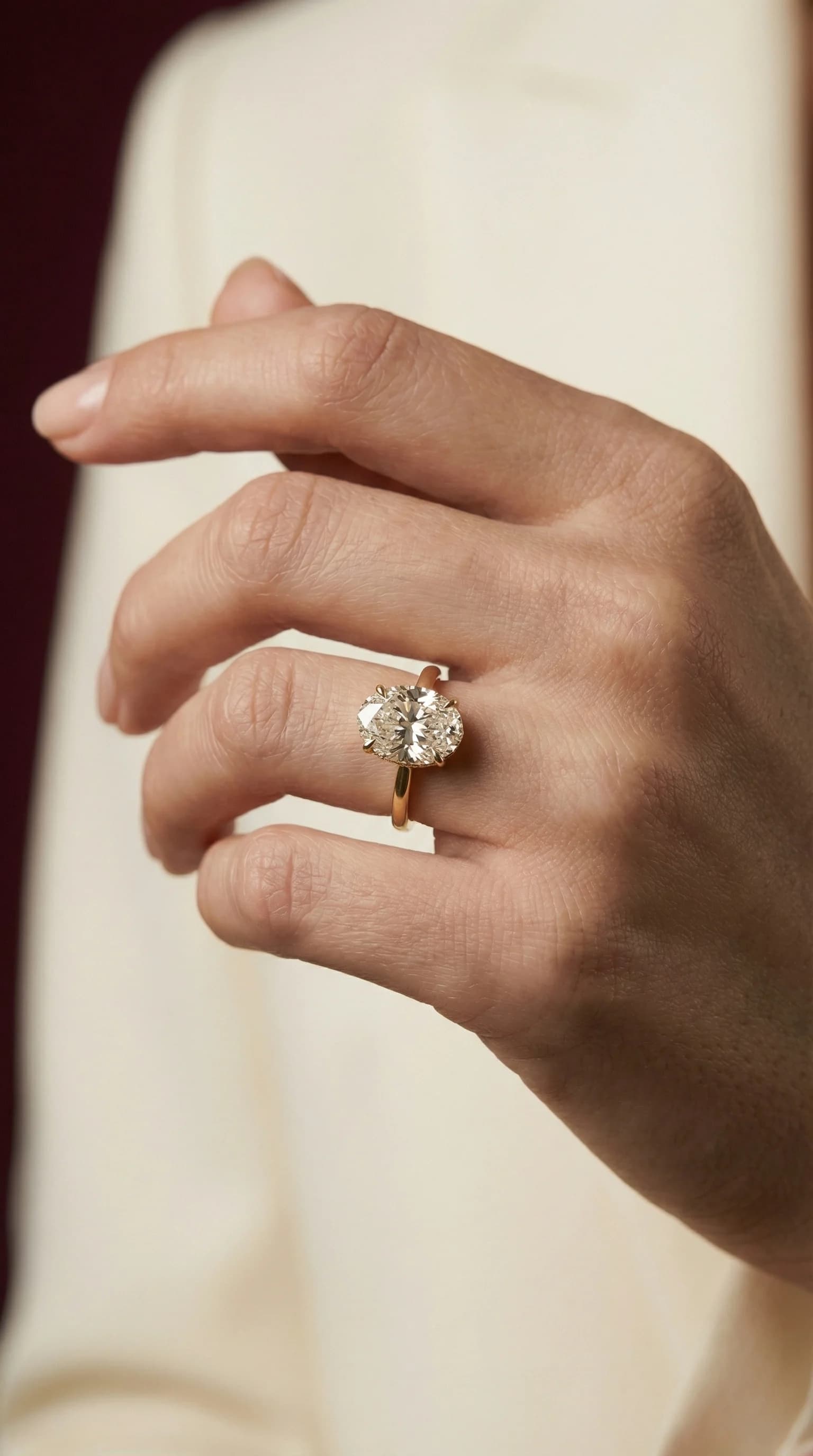
A solitaire engagement ring is built around a single centre stone, with no accent diamonds on the band or around the stone, and the name comes from the French word for alone. Because nothing else competes for attention, the cut, the proportions and the clarity of that one diamond carry the whole design, which means the stone you choose matters more here than it would in a busier setting. A solitaire works with every diamond shape and looks at home in a four-prong, six-prong, bezel or cathedral head.
Key characteristics
- Defining feature
- One centre stone on a plain band, with no surrounding diamonds. The band may be plain, knife-edge or gently tapered.
- Stones
- Every diamond shape works. Round brilliant is the most common, followed by oval, emerald cut and cushion. Lab-grown diamonds and moissanite suit solitaire settings.
- Settings
- Four-prong shows more of the stone, six-prong holds it more securely, bezel wraps the girdle for a modern flush look, and cathedral lifts the stone on arched shoulders.
- Metals
- Works in every metal. Platinum and white gold are most common for the classic look. Yellow gold adds warmth and rose gold reads softer and more contemporary.
Who it suits
A solitaire suits anyone who wants a clean, restrained ring that reads as an engagement ring at a glance. It is a natural choice if the centre stone matters most to you, if you want a design that will stack easily with a wedding or eternity band later, and if you would rather have a ring that holds up well as tastes change.
Pros and cons
Pros
- Puts the centre stone front and centre with nothing competing for attention.
- The simplest style to pair with wedding bands and eternity rings.
- Suits every diamond shape, so the design follows the stone.
- Available across most budgets because the spend goes into the centre stone.
- Low profile choices like bezel solitaires suit hands-on daily wear.
Cons
- A weak cut shows more in a solitaire because there is nothing to distract the eye.
- The simplicity can feel understated for buyers who prefer more sparkle on the band.
- Visual presence depends almost entirely on the size and quality of the centre stone.
Best diamond shapes
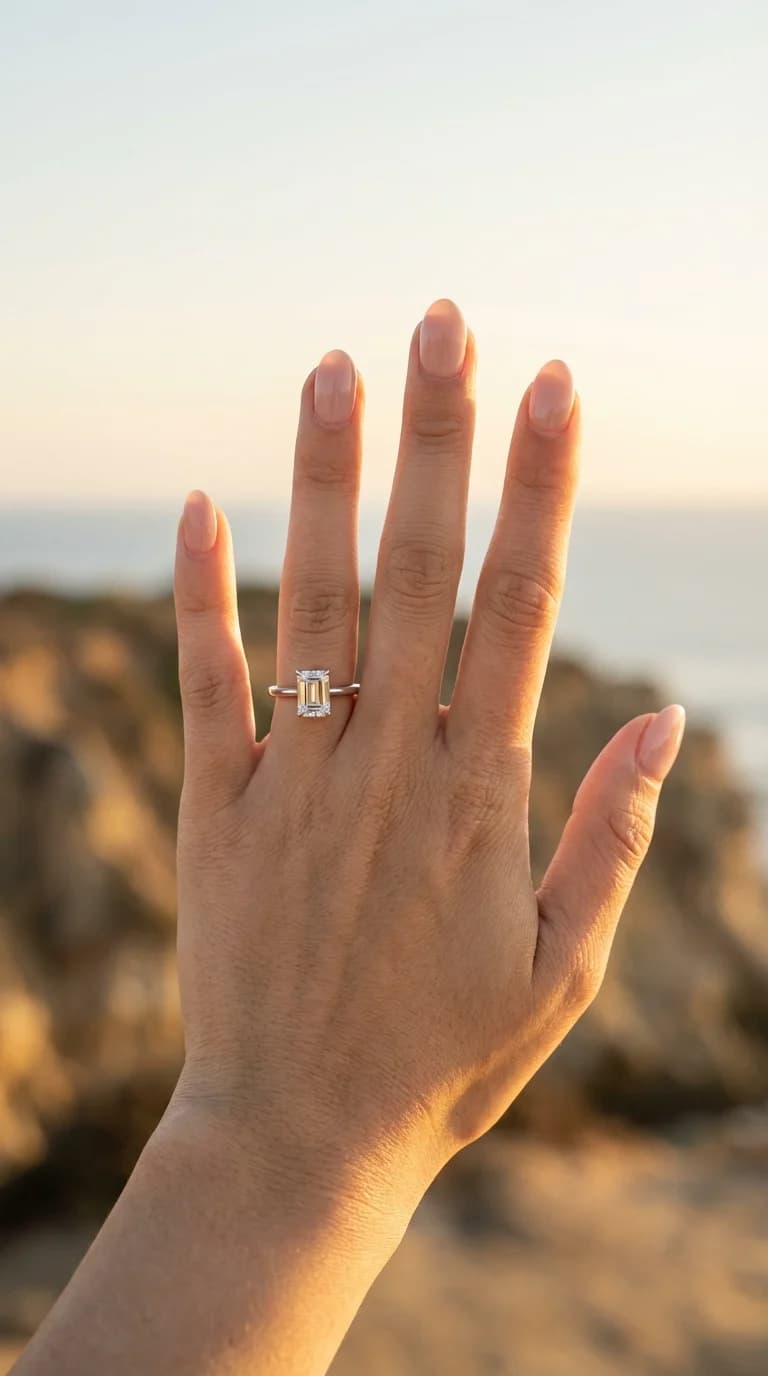
Round brilliant is the most popular and the easiest to compare, since it is the one shape with a formal cut grade. Ovals, cushions and emerald cuts also look at home in a solitaire, and the more elongated shapes have the bonus of lengthening the finger.
Variations
The classic plain band is the most common, but a knife-edge band, a gently tapered band or a twisted band all keep the solitaire look while adding a little detail. A hidden halo of small diamonds tucked under the centre stone adds sparkle from the side without changing the view from above, and a diamond-set gallery is another way to work in detail while keeping the clean solitaire outline.
Styling and wedding bands
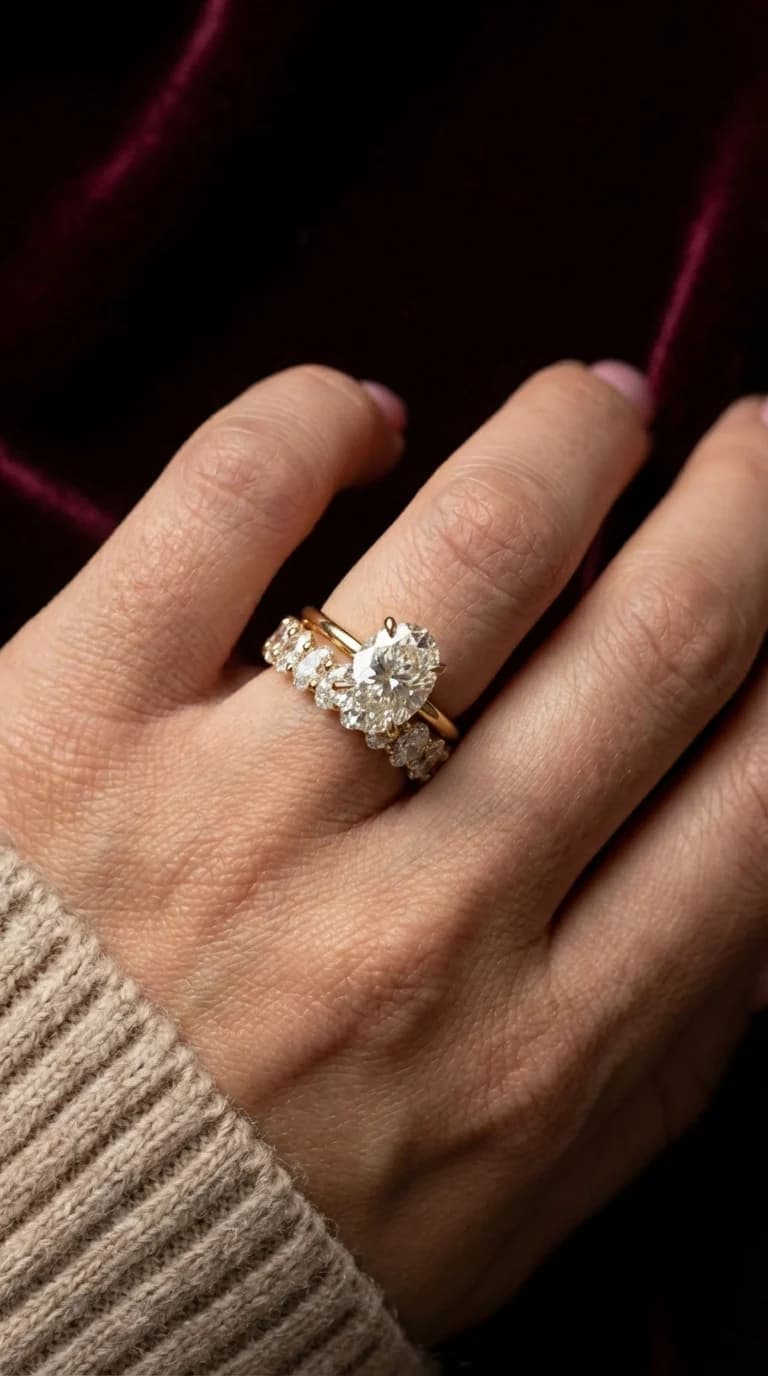
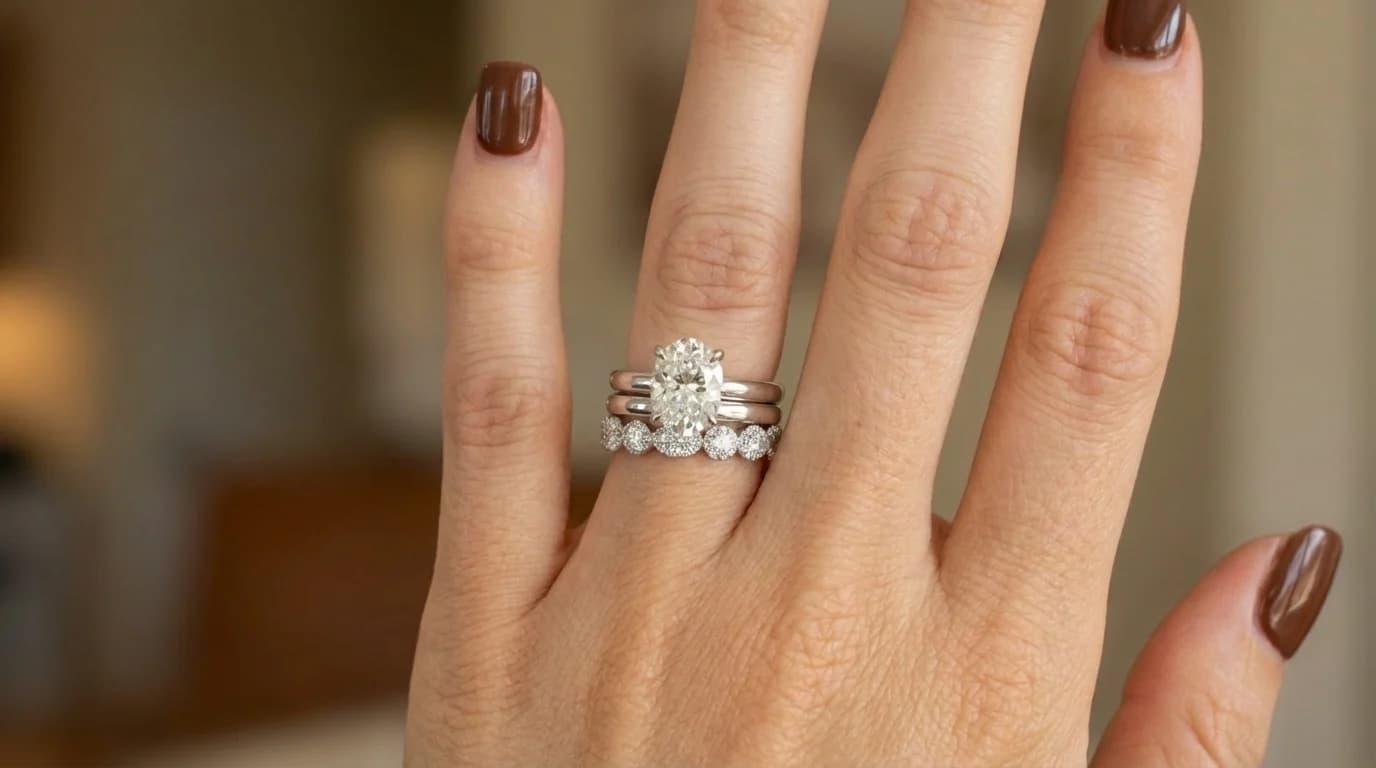
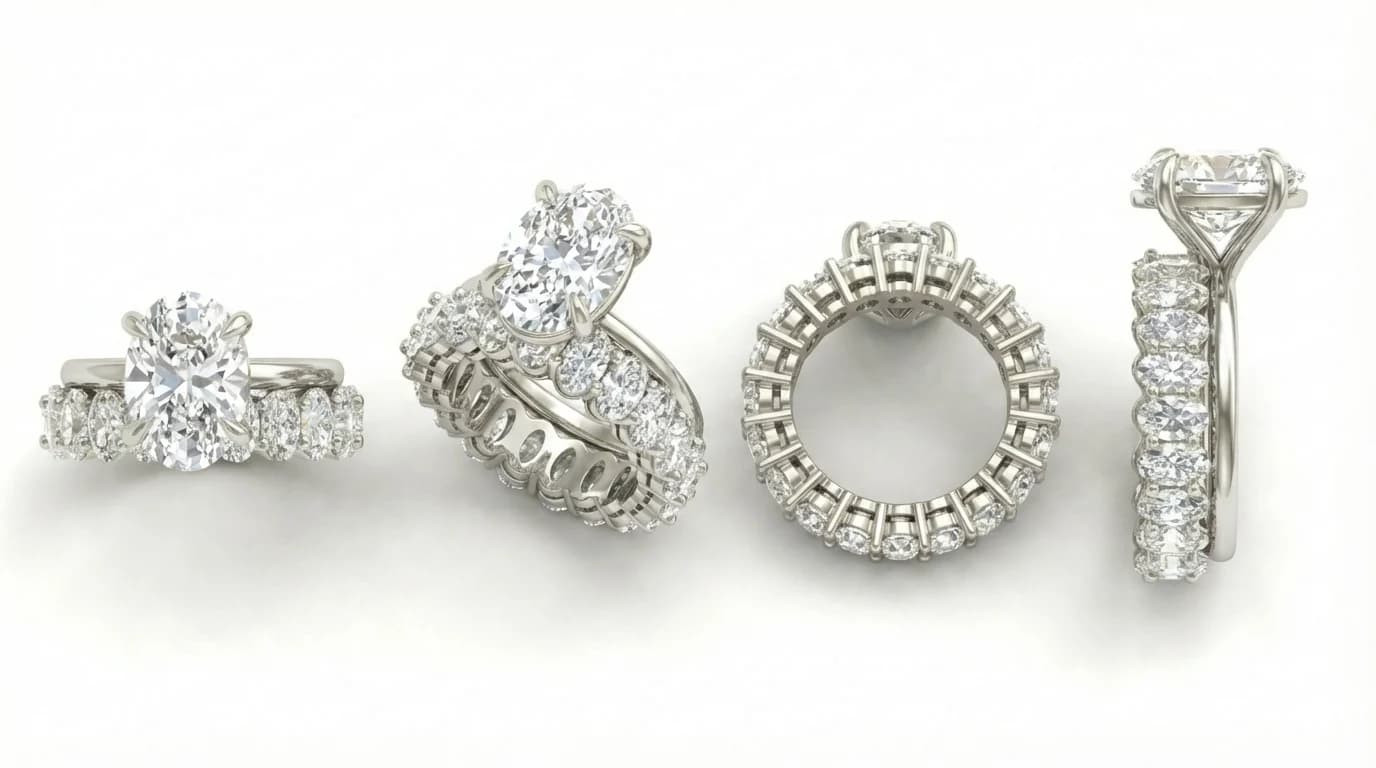
A solitaire stacks neatly. A matching plain band sits flush against it for a classic two-ring look, while a diamond eternity band adds sparkle without changing the outline of the engagement ring, and flanking the solitaire with a band on each side builds a fuller stack. Band width sets the proportion too, so a 1.5 to 2 mm band makes a smaller stone look larger, while a 2.5 mm band balances a larger one.
Price considerations
Almost the whole budget goes into the centre stone, so a solitaire usually buys a larger or better-cut diamond than a busier setting would at the same price. A lab-grown diamond or moissanite stretches the spend further again, which is why many buyers choose a lab-grown solitaire when they want more size for the money. For more on the stone itself, read the lab-grown diamond and 4Cs guides.
A short history
The modern solitaire took shape in 1886, when Tiffany & Co. introduced the six-prong Tiffany Setting that raised the diamond above the band so light could reach it from the sides. Before that, most diamonds sat low in closed-back settings that held the light in and dulled the stone, so lifting the diamond up changed engagement ring design for good. The solitaire has been the most requested style in the world ever since.
Ready to compare
Browse solitaire engagement rings
Compare ready-to-order solitaire rings in lab-grown diamond and moissanite, with different prong styles, metals and band widths.
Browse solitaire engagement ringsOther engagement ring styles
- #01
Toi et Moi Engagement Ring
Toi et moi is French for "you and me": a two stone engagement ring that sets two gemstones side by side on one band, read as a symbol of two people coming together.
- #02
Halo Engagement Ring
A halo engagement ring surrounds the centre stone with a ring of small diamonds, and that frame makes the centre stone read larger, adds sparkle across the top of the ring and changes its side profile.
- #03
Trilogy Ring Meaning: Three Stone Engagement Ring Guide
The three stones of a trilogy ring stand for the past, present and future of a relationship.
- #04
Vintage Engagement Ring
A vintage engagement ring borrows its details from a past design era, usually Victorian, Edwardian, Art Deco or Retro.
- #05
Art Deco Engagement Ring
An Art Deco engagement ring borrows from the bold, geometric design movement of the 1920s and 1930s, and the look leans on symmetry, sharp lines, step-cut centre stones, often emerald or Asscher cut, and baguette accents, usually in platinum or white gold for the cool, structured feel of the era.
Frequently asked questions
- Is a solitaire engagement ring out of style?
- No. The solitaire has been the most requested engagement ring style worldwide for more than a century. It reads as engagement at a glance and works in every era of wedding band styling.
- Should I choose a four-prong or six-prong solitaire?
- Four-prong solitaires show more of the stone and feel more open. Six-prong solitaires hold the diamond more securely and suit slightly larger or softer-cornered stones. Both work for daily wear.
- What band width suits a solitaire?
- A 1.5 to 2 mm band makes a smaller centre stone read larger. A 2.5 mm band balances a larger stone and feels more substantial on the finger. Most LILY DIA solitaires sit in this range.
- Does a solitaire need a wedding band?
- No. A solitaire sits comfortably as a single ring. Most buyers add a wedding band later, and a plain matching band is the easiest pairing.
Still deciding
Talk through the ring with us
Send what you have so far, even if that is only a few images and a budget range, and we will help you compare the options for the style you are leaning towards.
Contact the studio