Diamond Colour Chart

By Jared James · Last updated 21 May 2026
Quick answer
Diamond colour grades run from D to Z for white diamonds. D is colourless, G and H sit in the near-colourless range and usually face up white once a stone is set, while I and J can be a smart choice in yellow or rose gold. Colour matters, but it belongs behind cut quality and the way the setting metal changes what your eye actually sees.
Diamond colour scale
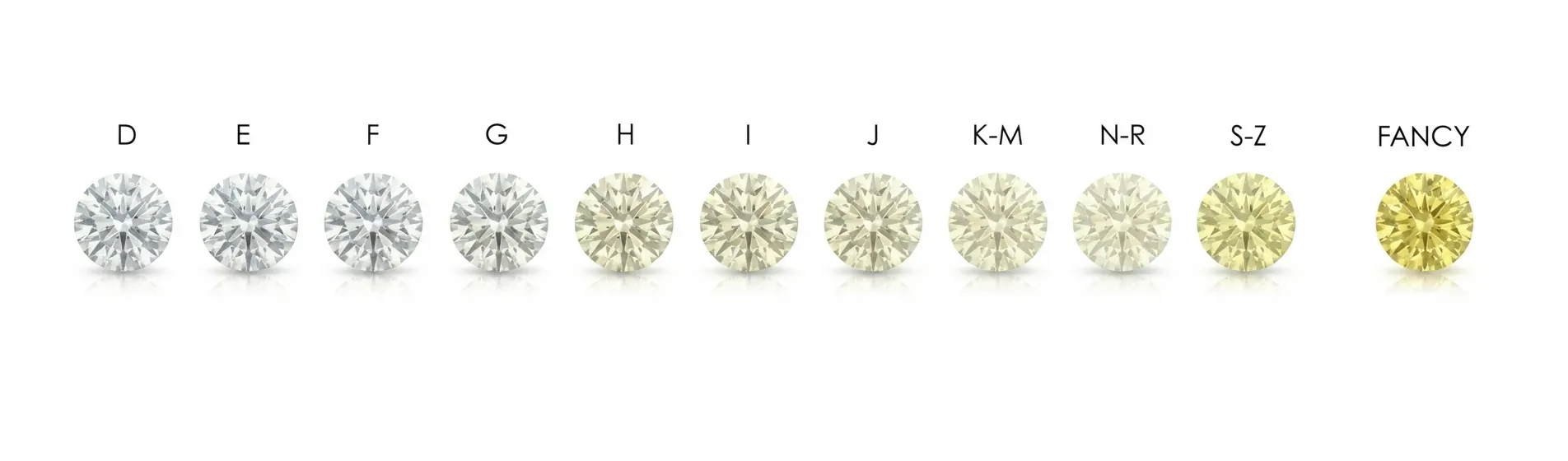
Diamond colour grades from D to Z
| Grade range | Category | What to know |
|---|---|---|
| D, E and F | Colourless | These grades show the least body colour, and they are priced accordingly. They make the most sense when the setting is platinum or white gold, when the diamond is large, or when you simply want the highest colour grade on the report. |
| G, H, I and J | Near-colourless | This is the value range for most engagement rings. G and H face up white in plenty of settings, while I and J can read a little warm yet still look balanced, especially in yellow or rose gold. |
| K to Z | Faint to light colour | These diamonds show a visible yellow or brown warmth. Some buyers choose them on purpose for antique-style rings or warm gold settings, though they are not the place to start if you want a bright white look. |
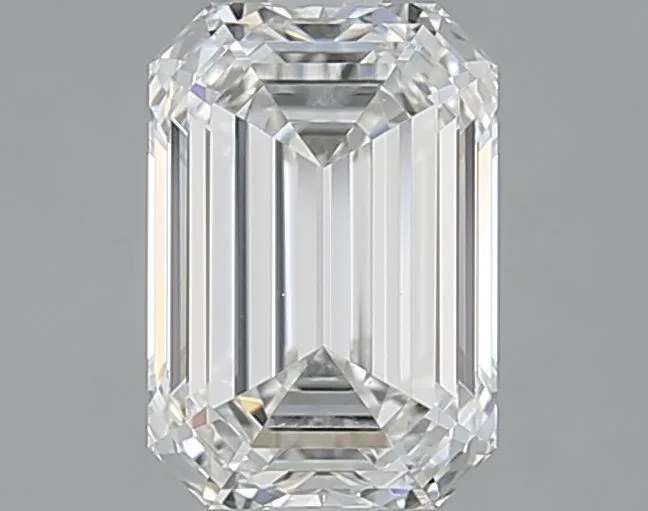
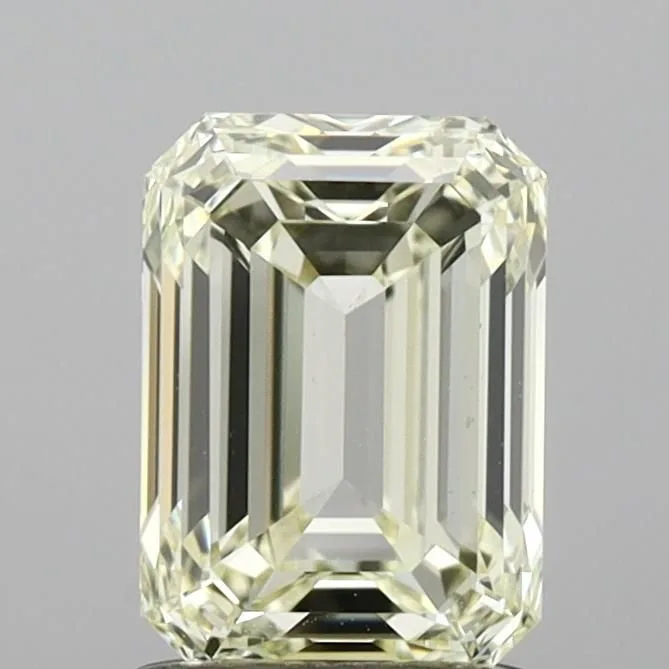
How metal affects diamond colour
White gold and platinum make body colour easier to notice, because the metal sitting around the stone is cool and bright. If you want a crisp white look in either of them, start with G or H and compare the exact stone in normal lighting.
Yellow gold and rose gold reflect warmth back into the diamond, and that can make a near-colourless stone look whiter than its grade would suggest, especially when the band is warm metal and the claws holding the stone are white.
Shape matters too. Round brilliants hide colour well, while emerald cuts, oval cuts and larger stones tend to show warmth more readily, often through the body of the stone and out at the tips.
Best diamond colour to buy
White metal rings
G or H is the safest place to begin. Go higher if the diamond is large, step-cut, or sitting next to very white side stones where any warmth would show.
Yellow or rose gold
H, I or J can work beautifully here, since the setting is already warm. This is often where you can save without changing the look on the hand at all.
Three-stone or halo rings
Match the centre stone and the accent diamonds closely enough that one does not make the other look tinted, because side stones sitting right against the centre make any colour difference easier to spot.
Colour is rarely the only grade you will be comparing, and clarity usually sits right beside it. It is worth reading the diamond clarity chart alongside this page, and the 4Cs of diamonds guide shows how cut, colour, clarity and carat trade off against each other. The GIA, which created the D to Z scale, sets it out in its own diamond colour overview.
Lab-grown diamond colour
Lab-grown diamonds are graded on the same D to Z colour scale as mined diamonds whenever a lab uses the 4Cs, as IGI does. GIA is the exception: since October 2025 its lab-grown reports give a Premium or Standard rating instead of a D to Z grade. Either way, the growth method can sometimes leave a faint undertone, a hint of brown, grey or blue, that is easier to judge in a video than from the report alone.
Because lab-grown diamonds usually cost less than a mined diamond of a similar size and grade, some buyers put the saving towards a higher colour grade. That can be worth doing in platinum or white gold, though a well-cut G or H lab-grown diamond still gives most rings a bright white look.
Ready to compare
Choose colour beside the setting
Browse lab-grown diamond engagement rings and compare colour grades against the metal, shape and ring style you prefer.
View lab-grown ringsFrequently asked questions
- What is the best diamond colour grade for an engagement ring?
- G or H is the safest starting point for most engagement rings because these grades usually face up white while costing less than D, E or F. In yellow or rose gold, I or J can also look balanced.
- Can you see the difference between D and G colour diamonds?
- Loose and face-down under controlled grading light, a trained grader can see the difference. Once set face-up in a ring, most buyers will not see a meaningful difference between D and G without a direct comparison.
- Does diamond colour matter more than cut?
- No. Cut has a stronger effect on sparkle and brightness. A well-cut G or H diamond will usually look livelier than a poorly cut D colour diamond.
- What diamond colour works best with yellow gold?
- Yellow gold reflects warmth into the stone, so you can often choose H, I or J without the diamond looking obviously tinted. The claws matter too, because white metal claws can keep the diamond looking brighter.
- Are lab-grown diamonds graded on the same colour scale?
- Usually. Laboratories such as IGI grade lab-grown diamonds on the same D to Z colour scale as mined diamonds. GIA changed its approach in October 2025 and now gives lab-grown diamonds a Premium or Standard rating instead. Some lab-grown diamonds also show growth-related undertones worth checking in video or in person.
Need help choosing
Send us the diamond shortlist
If you are comparing colour grades, send the reports or videos and we can help you choose the one that will look right in your setting.
Contact the studio