Diamond Clarity Chart: FL to I3 Explained
Last updated 27 October 2026
Quick answer
Clarity grades how few inclusions and blemishes a skilled grader sees in a diamond at 10× magnification, from FL (flawless) down to I3. Every diamond we sell is IGI graded, D to F colour and VS1, VVS2 or VVS1 clarity, grades that look clean to the eye in most set rings, and GIA-graded diamonds are available on request. For a lab-grown diamond we recommend VVS2: at 1 and 2 carats it costs about the same as VS1.
What does each clarity grade mean?
| Category and grades | What the grade describes |
|---|---|
| FlawlessFL | Neither inclusions nor surface blemishes are visible. |
| Internally flawlessIF | No inclusions are visible, but minor surface blemishes are. |
| Very very slightly includedVVS1 and VVS2 | Minute inclusions are very difficult to detect. |
| Very slightly includedVS1 and VS2 | Minor inclusions range from difficult to somewhat easy to detect. |
| Slightly includedSI1 and SI2 | Inclusions are readily noticeable. |
| IncludedI1, I2 and I3 | Obvious inclusions may affect transparency, brilliance or durability. |
FL and IF are separate categories. Within a subdivided category, the lower number indicates the higher clarity grade; it does not count inclusions. See GIA’s clarity scale.
Real diamonds at each grade
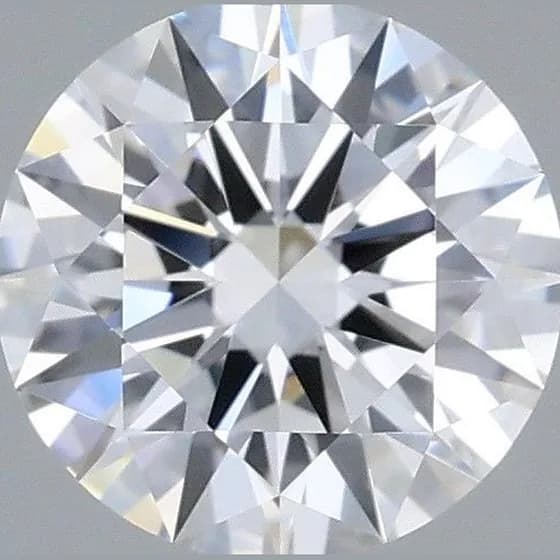
FL0.70ct, D, GIA 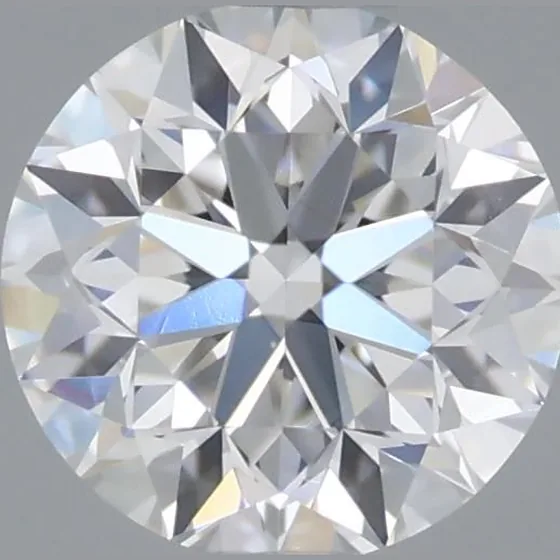
IF0.70ct, H, GIA 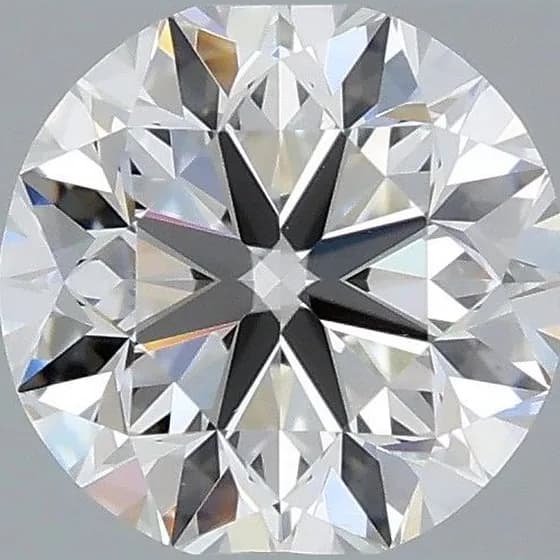
VVS10.70ct, I, GIA 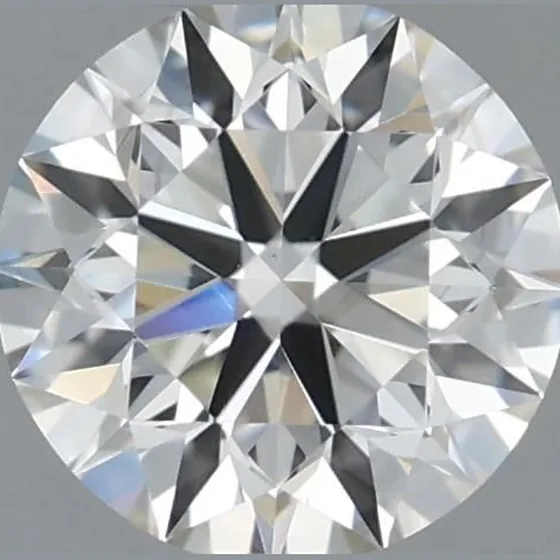
VVS20.70ct, J, GIA 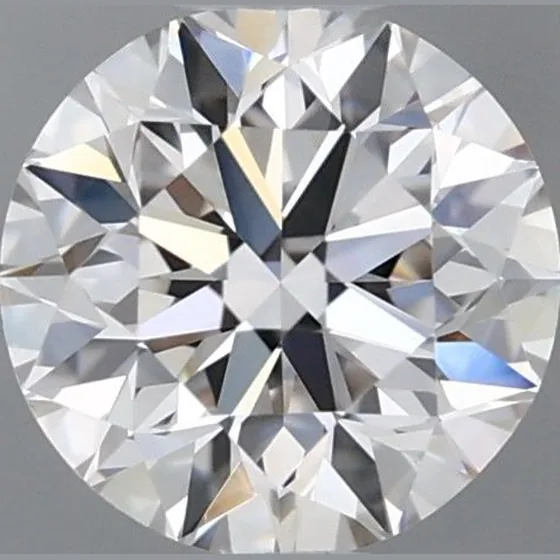
VS10.70ct, I, GIA 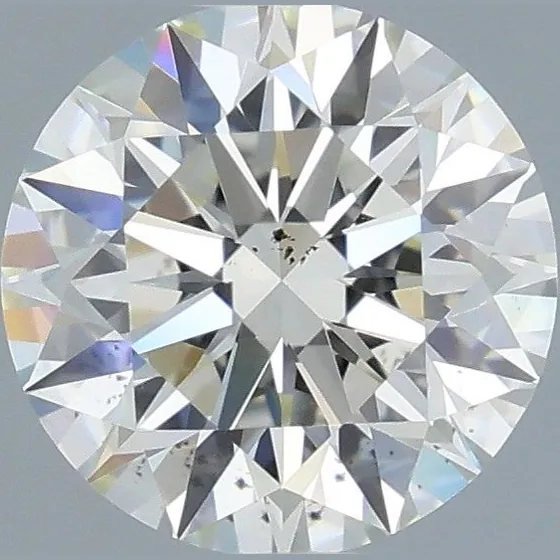
VS20.70ct, I, IGI 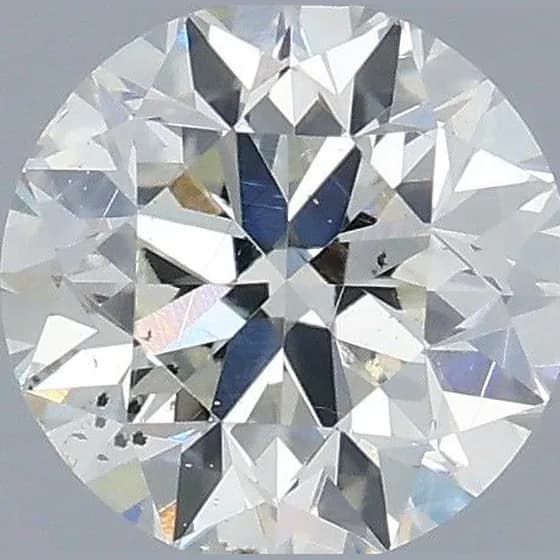
SI10.70ct, G, IGI 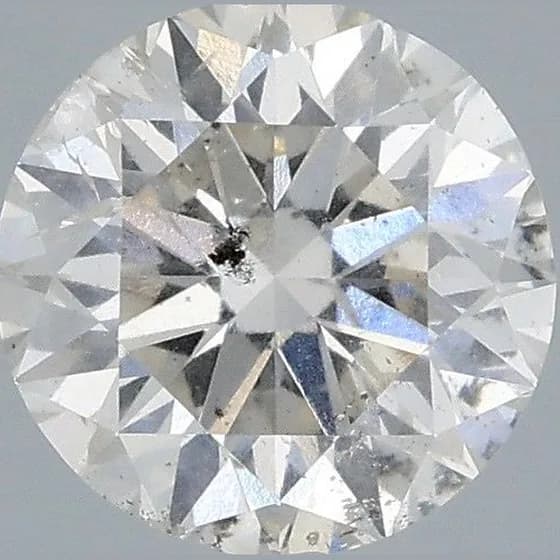
SI20.70ct, I, IGI 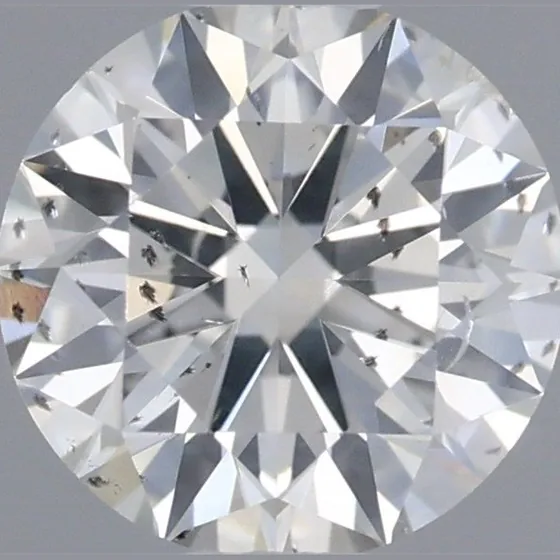
I10.70ct, J, GIA 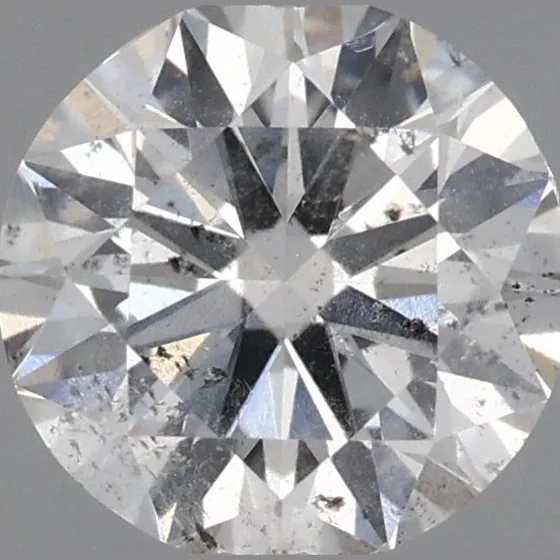
I20.70ct, G, GIA 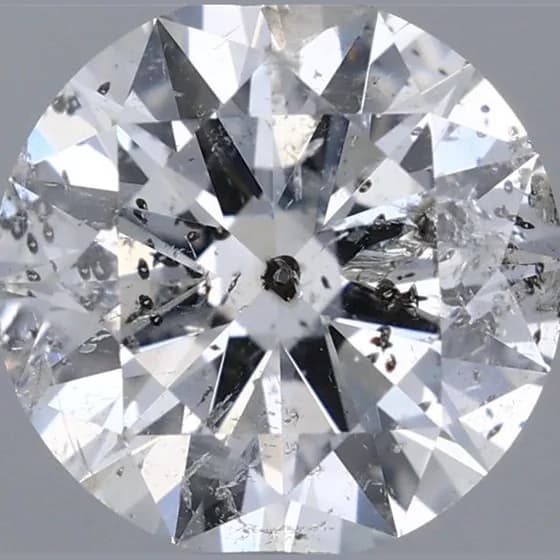
I30.90ct, G, GIA
Natural round diamonds of 0.70 to 0.90 carats, one at each grade, photographed face up under the same studio lighting. The photos are magnified, so inclusions show more clearly here than they would to the eye in a ring. Colour runs from D to J across the set, so compare the inclusions, not the colour.
Inclusions are internal or surface-reaching characteristics; blemishes are confined to the surface. Two diamonds can share a grade without sharing the same pattern of characteristics. Graders consider five factors together:
- Size: how large a feature is.
- Number: how many features, including their reflections, are seen.
- Location: where a feature sits, such as beneath the table or near an edge.
- Relief: how strongly it contrasts with the surrounding diamond.
- Nature: what kind of characteristic it is and its effect on the stone.
A grade cannot be read by counting marks in a picture. GIA explains the five clarity factors and its 10× assessment.
What is the highest clarity grade?
FL, flawless: a skilled grader sees no inclusions or blemishes at 10× magnification. IF, internally flawless, is next, with minor surface blemishes only. To the eye neither looks different from a VVS2 diamond, because VVS inclusions are already very difficult for a grader to find under magnification. We don’t sell FL or IF stones.
What is the best clarity to buy?
For a lab-grown diamond, VVS2. On the diamonds we sell a VVS2 stone costs about the same as VS1 at 1 and 2 carats, around $30 more at the median, and its inclusions are very difficult for a trained grader to find at 10×, so there is nothing to see once it’s set.
At 3 carats VS1 saves about $600 over VVS2. On a brilliant shape such as a round or oval, VS1 is usually still clean to the eye, so that’s where VS1 earns its place; for an emerald cut, stay with VVS2. VVS1 costs about $1,860 more than VS1 at 3 carats, for a difference you can’t see.
Our guide to the best colour and clarity for a lab-grown diamond gives the same advice with colour added. For a mined diamond, where each step up costs far more, we compare the grades below ours in VS1 vs VS2 and VS2 vs SI1.
How much more does higher clarity cost?
For a lab-grown diamond under 3 carats, very little. These are the median prices of the loose IGI lab-grown diamonds we sell, across every shape.
| Carat weight | VS1 | VVS2 | VVS1 | VS1 to VVS1 |
|---|---|---|---|---|
| 1.00 to 1.09 carats | $1,284 | $1,314 | $1,352 | +$68 |
| 2.00 to 2.09 carats | $2,561 | $2,594 | $2,643 | +$82 |
| 3.00 to 3.09 carats | $3,364 | $3,957 | $5,222 | +$1,858 |
At 1 and 2 carats the whole step from VS1 to VVS1 is under $100. At 3 carats it is about $1,860, so that is the one size where clarity moves the price much. Prices change as stones come and go, so treat these as a guide to the gaps between grades.
What does eye-clean mean, and is VS1 eye-clean?
Eye-clean means you can’t see any inclusions without magnification. It is a trade description, not a grade: GIA doesn’t issue one, and it depends on the viewing distance, the lighting and whether you look at the diamond face up. IGI’s discussion of eye-clean viewing explains why those conditions matter.
VS1 is usually eye-clean on a brilliant shape, and VVS1 and VVS2 are clean on any shape. Matching grades don’t promise an identical look, so check the stone itself: every loose diamond we sell has a 360-degree video of the actual stone and its IGI report, so you can look before you buy. GIA’s loose-diamond comparison guide explains why a report and the stone itself tell you different things.
Reading these close-ups
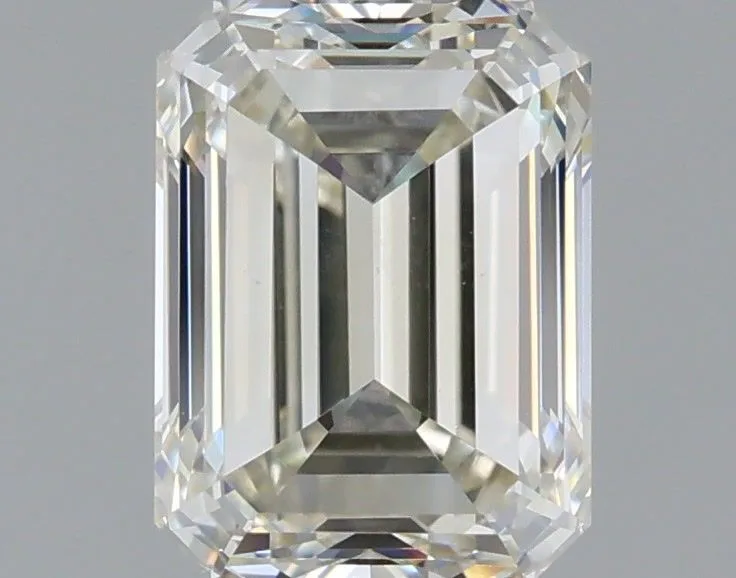
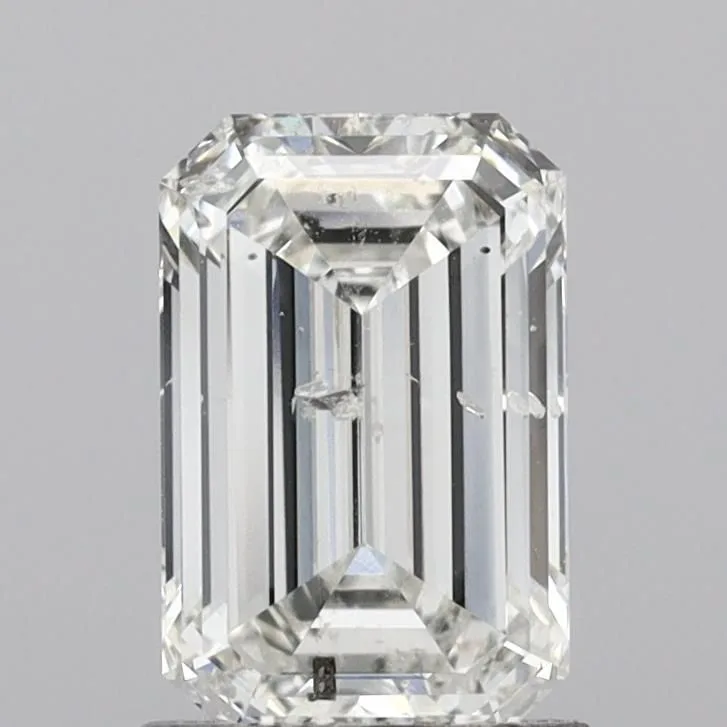
These images have different framing and unknown magnification. They show visible differences in the pictures, but cannot establish either subject’s clarity grade, material identity or eye-clean appearance in person.
Does shape change the clarity you need?
Yes. Step cuts, the emerald and the asscher, have long open facets and a large flat table that work like a window, so an inclusion a round would hide can show. Choose VVS2 or better for those. Brilliant shapes, including the round, oval, cushion, pear, marquise, princess and radiant, scatter light across many small facets, so VS1 is enough. Size matters too: the same inclusion is easier to see in a bigger stone, so watch the video closely at 2 carats and above.
Appearance and durability need separate attention. Some fractures or cavities near an edge or point can increase the risk of damage, even when they are inconspicuous. Ask a qualified jeweller to assess a concern in the actual stone and its intended setting. Hiding a feature behind a claw does not establish that it is safe. See GIA’s guidance on chipping.
How do colour and clarity work together?
They are graded separately: colour is how colourless the diamond is, from D down to Z, and clarity is what is inside it. Every diamond we sell is D, E or F and VS1 or better, and at 1 carat neither grade lines up neatly with price. On these medians F was the dearest colour, which is why we suggest any colour from D to F picked on price, with VVS2 clarity.
| Colour | VS1 | VVS2 | VVS1 |
|---|---|---|---|
| D | $1,290 | $1,308 | $1,351 |
| E | $1,246 | $1,303 | $1,330 |
| F | $1,330 | $1,384 | $1,420 |
Our complete rings use an E or F colour, VVS1 clarity, IGI-graded centre stone. See our 1 carat, 2 carat and 3 carat rings, from $2,950 at 1 carat in 18k gold. The diamond colour chart covers the full D to Z scale.
How is lab-grown clarity graded?
On the same scale as a mined diamond. IGI’s laboratory-grown reports grade each of the 4Cs and identify laboratory-grown origin. A close-up photograph cannot establish origin, so read the report rather than trying to identify growth method from visible features.
GIA introduced its Premium/Standard assessment on 1 October 2025 for qualifying loose colourless-to-near-colourless laboratory-grown diamonds of 0.15ct or more. Premium and Standard are overall quality assessments, so neither maps one-to-one to a clarity grade. Check the report type and issue date; our diamond certification guide explains how to compare reports.
Reporting information checked 17 October 2026. See GIA’s current laboratory-grown services, its October 2025 change and IGI’s laboratory-grown report.
Frequently asked questions
- What is the best clarity for a diamond?
- For a lab-grown diamond, VVS2. It looks the same as a flawless stone to the eye and, on the diamonds we sell, costs about the same as VS1 at 1 and 2 carats. For a mined diamond, where each step up costs far more, VS2 on a brilliant cut is the usual value choice.
- What is the highest clarity diamond?
- FL, flawless: a skilled grader sees no inclusions or blemishes at 10× magnification. IF, internally flawless, is next, with minor surface blemishes only.
- Is VS1 or VS2 better?
- VS1 is the higher grade, because its inclusions are slightly harder to find at 10×. Both are usually clean to the eye on a brilliant shape. Every diamond we sell is VS1 or better.
- What does VVS mean?
- Very very slightly included. VVS1 and VVS2 diamonds have minute inclusions that are very difficult for a skilled grader to detect at 10×, and VVS1 is the higher of the two. They are two of the three grades we sell.
- Is SI1 good enough?
- SI1 inclusions are readily noticeable to a grader at 10×, and whether you can see them without magnification depends on the stone, so each one has to be checked. We don’t sell SI stones: every diamond we sell is VS1 or better, and VVS2 costs about $30 more than VS1 at 1 carat.
- What clarity are Lily Dia’s diamonds?
- VS1, VVS2 or VVS1. Every diamond we sell is IGI graded and D, E or F colour, and our complete rings use an E or F colour, VVS1 centre stone. GIA-graded diamonds are available on request.
- Can diamond inclusions get worse over time?
- A vulnerable fracture or cavity can be damaged further by impact, especially near an edge or point. A photograph cannot establish that risk. Have a jeweller assess the stone, and stop wearing a chipped diamond until it has been examined.
Sources and further reading
- GIA: diamond clarity and the FL to I3 scale
- GIA: clarity factors, cutting style and eye-clean terminology
- IGI: eye-clean viewing conditions
- GIA: comparing reports and viewing loose diamonds
- GIA: diamond chipping and durability concerns
- GIA: the four separate diamond quality factors
- GIA: current laboratory-grown diamond services
- GIA: the 1 October 2025 laboratory-grown service change
- IGI: laboratory-grown diamond reports