The 4Cs of Diamonds: Cut, Colour, Clarity and Carat

By Jared James · Last updated 21 May 2026
Quick answer
The 4Cs are cut, colour, clarity and carat weight, and it helps to judge them in that order when you are choosing a diamond for a ring. Start with cut, since it controls the sparkle, then choose a colour grade that suits the metal, look for clarity that stays clean to the eye, and compare carat weight beside the stone's actual measurements.
The 4Cs of diamonds explained
The 4Cs are the grading framework used to describe a diamond, the cut, colour, clarity and carat weight. The standard was developed by the Gemological Institute of America, and it gives you a way to compare stones on paper, though it never quite replaces seeing how a diamond behaves once it is set.
Cut has the strongest effect on sparkle, so it is the place to start. Colour and clarity are best judged alongside the ring design, the metal colour and the stone's shape and size. Carat matters too, but a heavier stone will not always look better if it is cut deep or the cut itself is weak.
If you are still weighing up origins, read the lab-grown vs natural diamonds guide after this one. The same 4Cs apply to both, and what changes with origin is the price, the availability and the resale expectations.
The 4Cs of diamonds chart
| 4C | What it tells you | How to use it |
|---|---|---|
| Cut | How well the facets return light through the top of the diamond. | Judge this first. A lively cut can make a sensible colour and clarity grade look better. |
| Colour | How much yellow or brown body colour is visible in a white diamond. | Read it beside the setting metal. Yellow and rose gold are more forgiving than platinum. |
| Clarity | How many inclusions or blemishes are visible under 10x magnification. | Look for an eye-clean stone rather than chasing flawless grades that do not change the hand view. |
| Carat | The weight of the diamond, not the exact face-up size. | Compare dimensions, shape and cut before assuming the heavier stone will look larger. |
Diamond cut
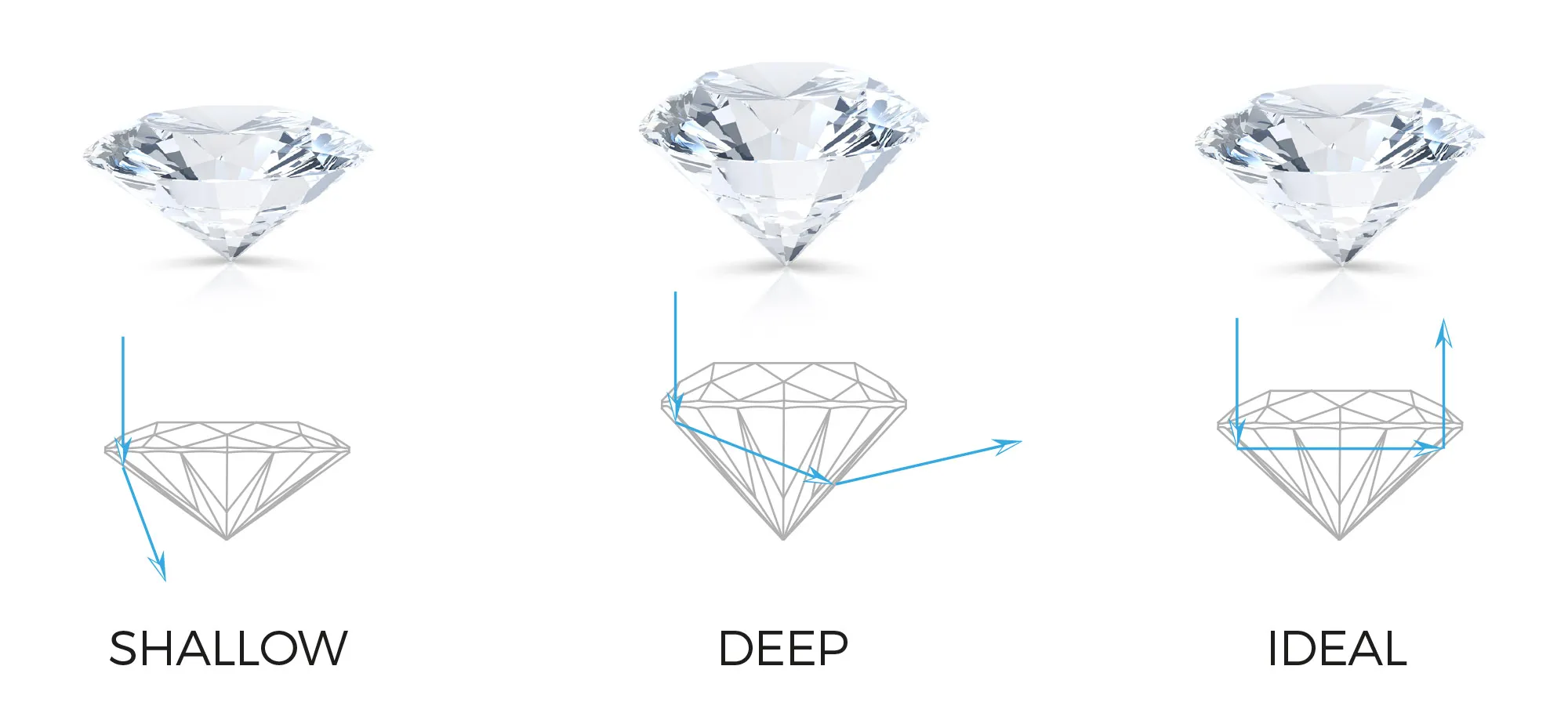
Cut describes how well the diamond's facets collect, reflect and return light, and it is not the same thing as shape. Words like round, oval, emerald cut or cushion describe the outline of the stone, while cut quality describes how well that shape has been proportioned and polished.
GIA gives round brilliant diamonds a cut grade, which makes rounds easier to compare on paper. Fancy shapes ask for more of your own judgement, because their grading reports do not tell the whole story. With ovals, pears and marquise cuts, look for the bow tie, and with emerald cuts, look for balanced flashes and clean symmetry.
If sparkle is your priority, start with the round brilliant cut, since it is the easiest shape to compare through cut data.
Diamond colour
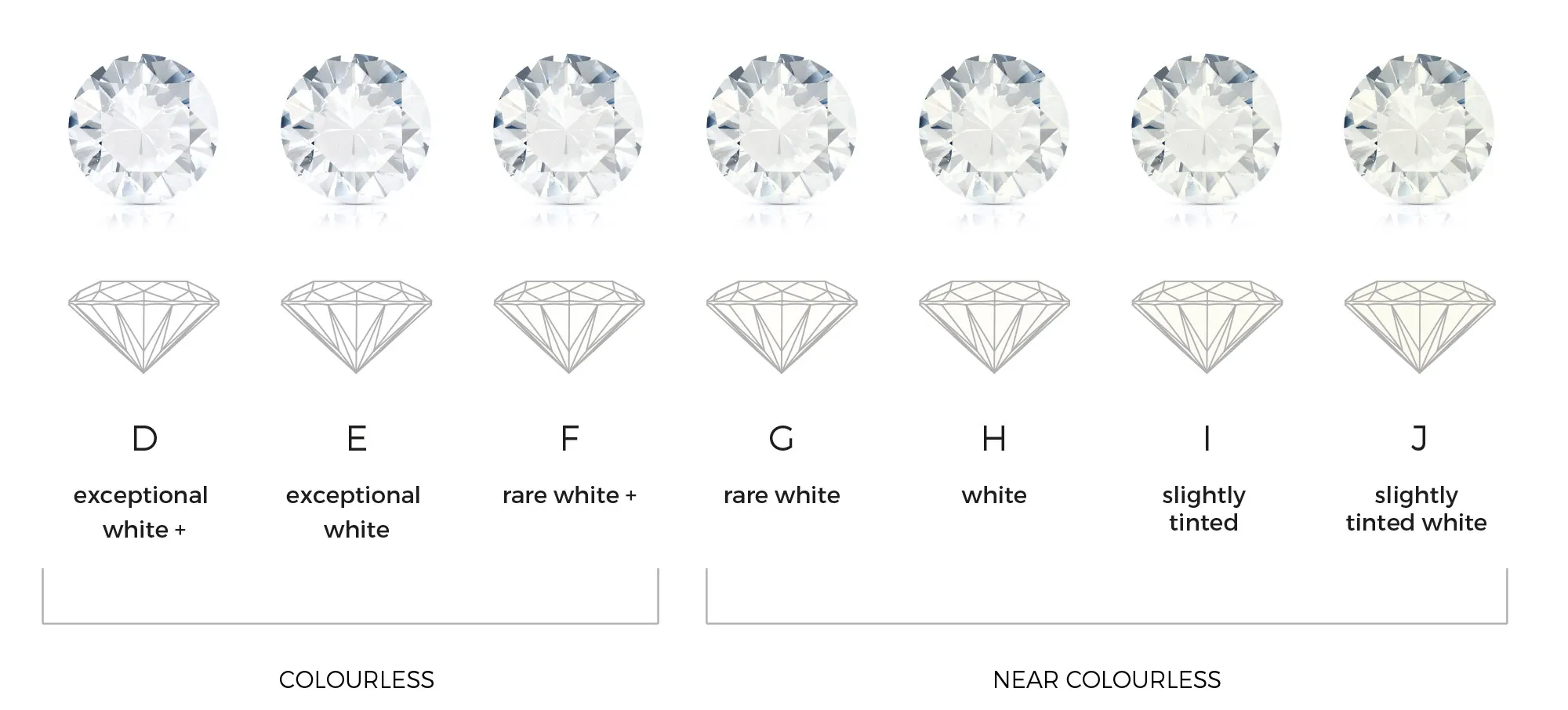
Diamond colour measures how much body colour sits in a white diamond. The scale runs from D, which is colourless, through to Z, which shows a light yellow or brown tint, and the difference between neighbouring grades can be very subtle once the stone is face-up in a ring.
The setting changes what your eye picks up. Platinum and white gold make any warmth easier to notice, while yellow and rose gold can let a near-colourless diamond settle and look balanced. Shape plays a part too, since elongated and step-cut stones tend to show colour more readily than a round brilliant does.
For grade-by-grade advice, read the diamond colour guide.
Diamond clarity
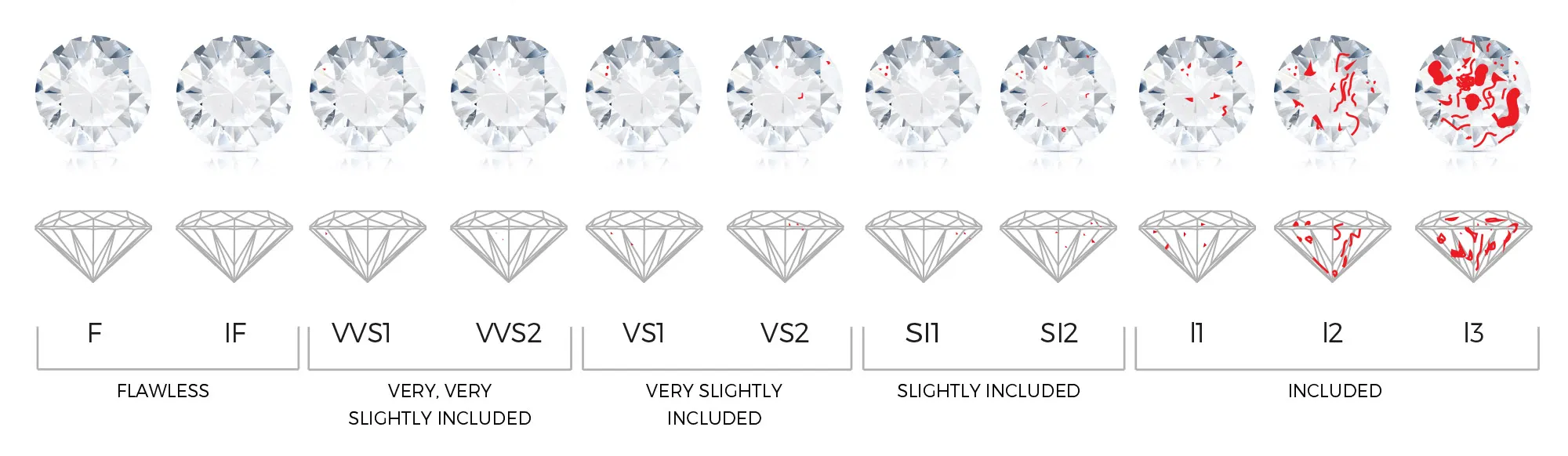
Clarity describes the inclusions inside a diamond and the blemishes on its surface. The grade is assigned under 10x magnification, so the question that really matters to you is whether any inclusion is visible to the naked eye from a normal viewing distance.
Brilliant cuts can hide small inclusions in their sparkle and facet pattern, while step cuts, and emerald cuts in particular, show more of the stone at once and usually need a cleaner grade. Where the inclusion sits matters as much as the grade itself, so a pale mark near the edge can be far less of an issue than a dark crystal sitting under the table.
Compare the full scale in the diamond clarity guide.
Diamond carat weight
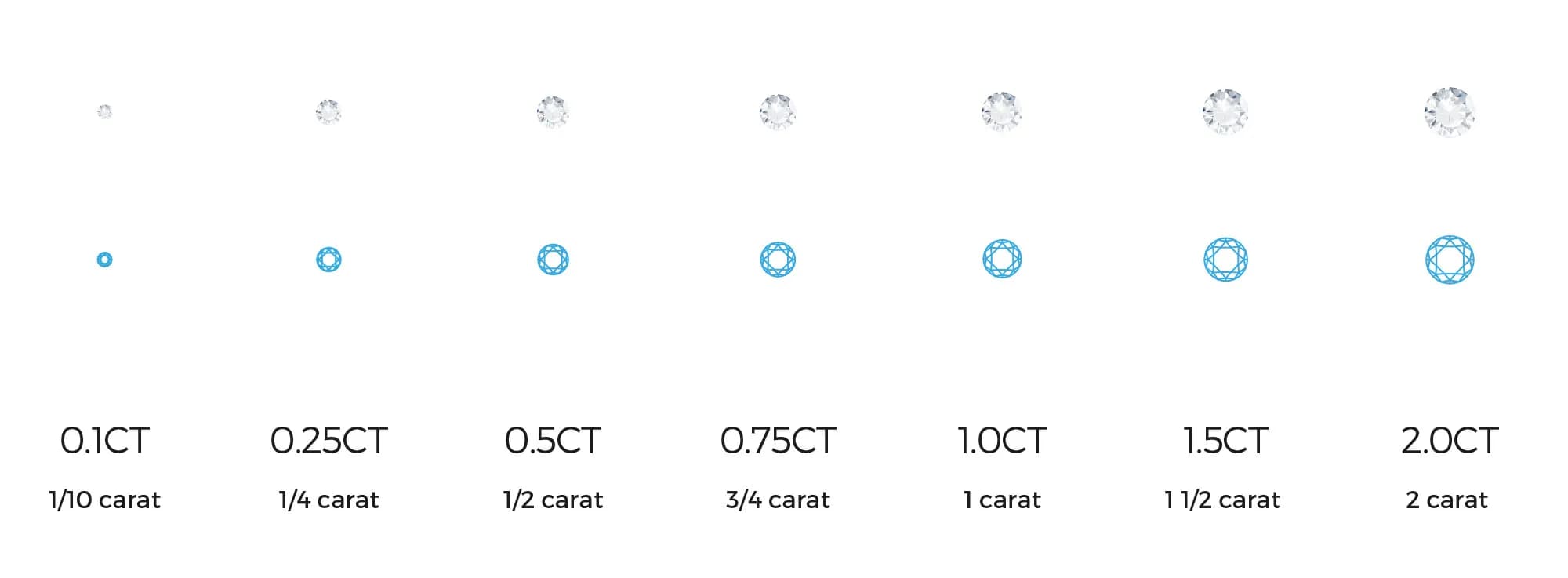
Carat is a measure of weight, not size. One carat equals 0.2 grams, but that weight does not translate straight into how big the diamond looks, because every stone carries its weight a little differently. A deep stone can weigh more and still look smaller from above.
Shape changes the face-up size as well. Oval, pear and marquise diamonds often look larger for their carat weight because they spread across the finger, while round diamonds can look a touch smaller at the same weight, though they are easier to compare for cut quality.
When two diamonds are close in price, compare their millimetre measurements, their cut quality and their shape before you reach for the heavier stone.
Lab-grown diamonds and the 4Cs
Lab-grown diamonds are graded on the same 4Cs as mined diamonds by laboratories such as IGI, and the report identifies the stone as laboratory-grown. GIA is the exception: from October 2025 its lab-grown reports use a simpler Premium or Standard rating in place of the 4Cs, though IGI and other labs still grade them the familiar way.
Because lab-grown diamonds usually cost less than a comparable mined diamond, you often have more room to put cut quality first, or to stretch to a larger stone or a stronger colour and clarity combination. The same discipline still applies though. Read the report, compare the actual stone, and try not to pay for grades you will never see.
Start with the lab-grown diamond guide if you want the broader picture on origin, grading and engagement rings.
Ready to compare
Use the 4Cs on real ring options
Browse lab-grown diamond engagement rings and compare cut, colour, clarity and carat weight once the stone is set.
View lab-grown ringsFrequently asked questions
- What are the 4Cs of diamonds?
- The 4Cs are cut, colour, clarity and carat weight. They are the main grading categories used to describe diamond quality and compare one stone with another.
- Which of the 4Cs is most important?
- Cut usually matters most for beauty because it controls how much light the diamond returns. Colour, clarity and carat still matter, but a poorly cut diamond can look dull even with strong grades elsewhere.
- Does carat mean diamond size?
- Carat means weight. Two diamonds with the same carat weight can face up differently because shape, depth and cut proportions change how much of the stone you see from above.
- Do lab-grown diamonds use the same 4Cs?
- Mostly. Laboratories such as IGI grade lab-grown diamonds by cut, colour, clarity and carat weight, the same way as natural diamonds. GIA is the exception: from October 2025 its lab-grown reports use a simpler Premium or Standard rating rather than the 4Cs.
- Can I save money on colour or clarity?
- Often, yes. Many buyers choose a near-colourless grade and an eye-clean clarity grade, then put more of the budget into cut quality, size or the setting.
Need a second look
Send us the diamond reports
If you are choosing between stones, send the grading reports or videos and we can help you compare the trade-offs.
Contact the studio