
What is a centre stone?
Last updated 17 October 2026
A centre stone is the main gemstone at the focal point of a jewellery design. It is often the largest stone, but the term describes its role and position rather than a required size: a three-stone ring can have side stones of the same size. A classic single-stone solitaire has no accent gems, while a halo frames the centre with smaller stones. The centre can be a diamond or a coloured gem, chosen with the setting and intended wear in mind.
Identify the centre by its place in the design
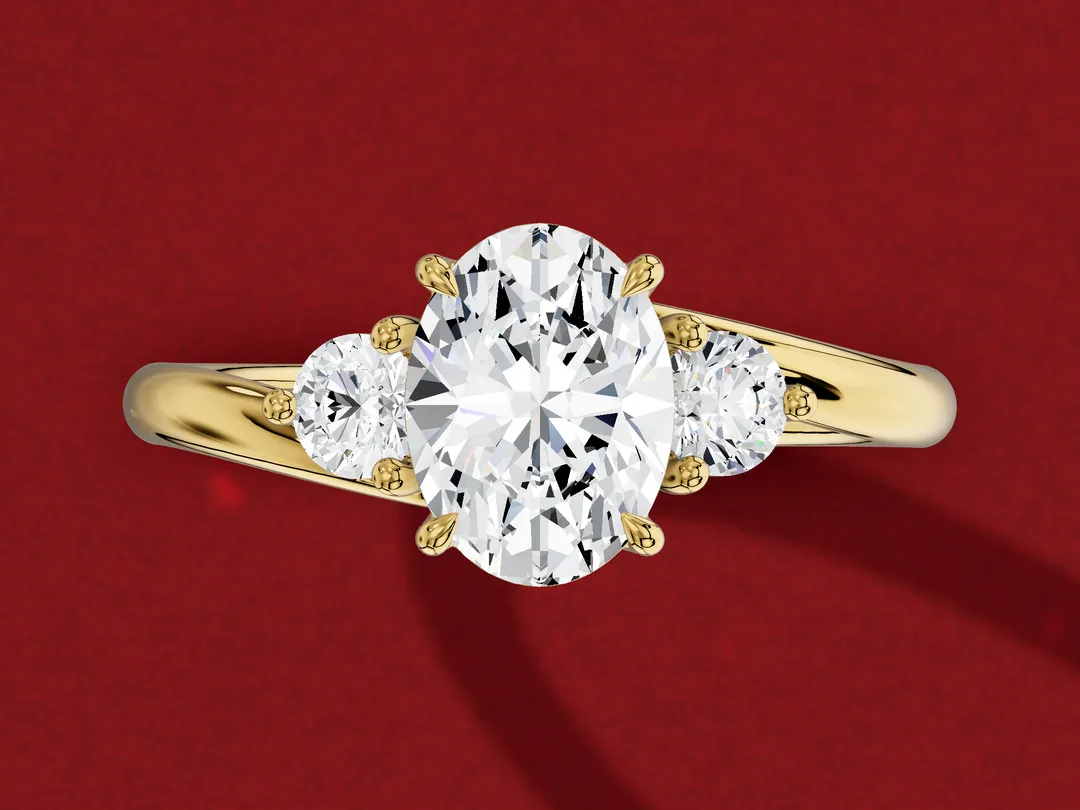
In this three-stone example, the oval centre is flanked by two round side stones. It is visibly larger here, but that size difference is not a requirement of the term. Three-stone designs can also use similarly sized gems; centre and side describe their positions.
Separate the centre outline from the halo
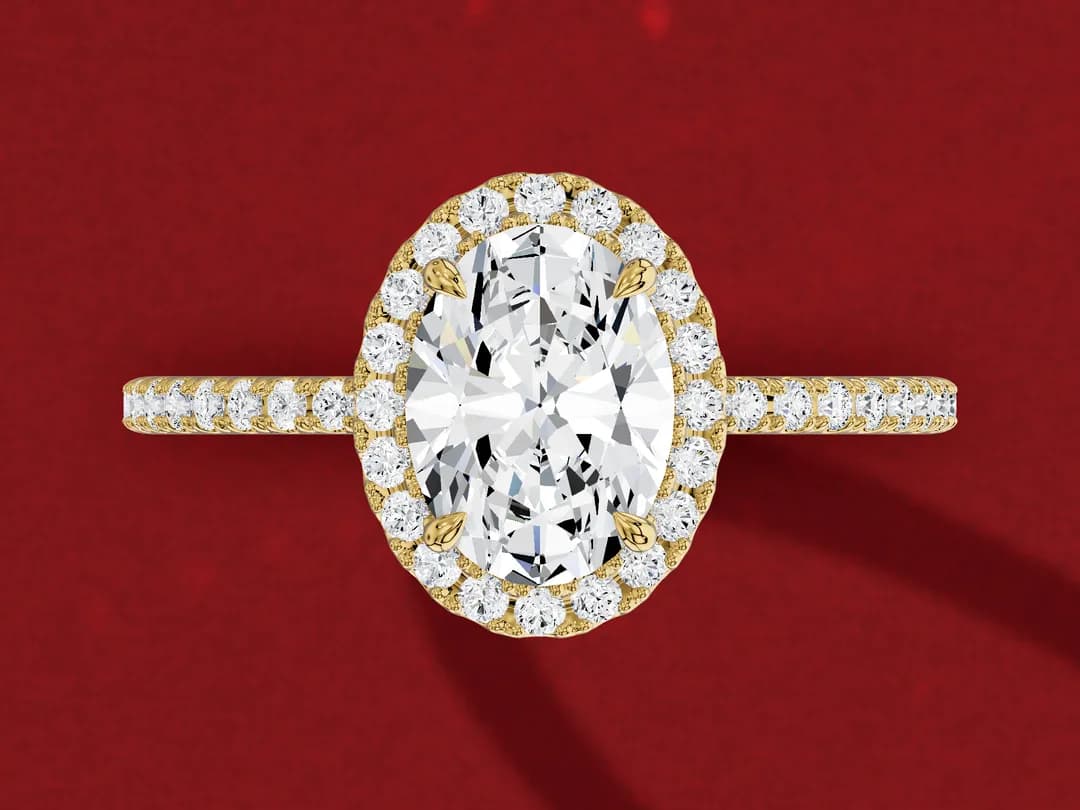
Trace the oval centre first, then the border of small accents around it. The full halo outline is wider than the centre alone. When comparing rings, ask for the centre’s measurements separately from the overall head dimensions, so the surrounding frame is not mistaken for a larger single stone.
Read weight and measurements separately
Carat is a unit of mass; millimetres describe physical dimensions. Shape, proportions and the gem material affect the relationship between them. Ask for the centre’s weight separately from the combined stone weight. For a ring with different gem materials, also check which stones each quoted total includes.
Frequently asked questions
- What is the most popular shape for a centre stone?
- Round brilliant is a common choice for diamond engagement rings, although preferences vary by market and time. Oval, cushion, pear and emerald-cut stones offer other outlines. Compare the shapes you like on the hand, and assess the actual stone: its outline alone does not establish how well it is cut.
- How big should a centre stone be?
- There is no required size. Compare the stone’s actual millimetre measurements, the ring’s overall proportions, comfort and your budget. Carat measures mass, so two stones of the same weight need not have the same visible dimensions. A halo or side stones add to the ring’s overall outline without increasing the dimensions of the centre stone itself.
- Can a coloured gemstone be a centre stone?
- Yes. Sapphire, ruby, emerald and many other coloured gems can take the centre position. Their resistance to scratching, chipping, heat and chemicals differs, and treatments may affect care. Ask a jeweller whether the particular gem and setting suit the way you will wear the ring. Colour alone is not a guide to durability or value.