
What is a halo setting?
Last updated 17 October 2026
A halo setting style frames a centre gemstone with smaller accent stones. The border may follow the centre’s shape or create a contrasting outline, and a double halo adds a second row. It can increase the ring’s face-up footprint, but it does not change the centre stone’s weight. Halo height, spacing and maintenance needs vary by design.
From above
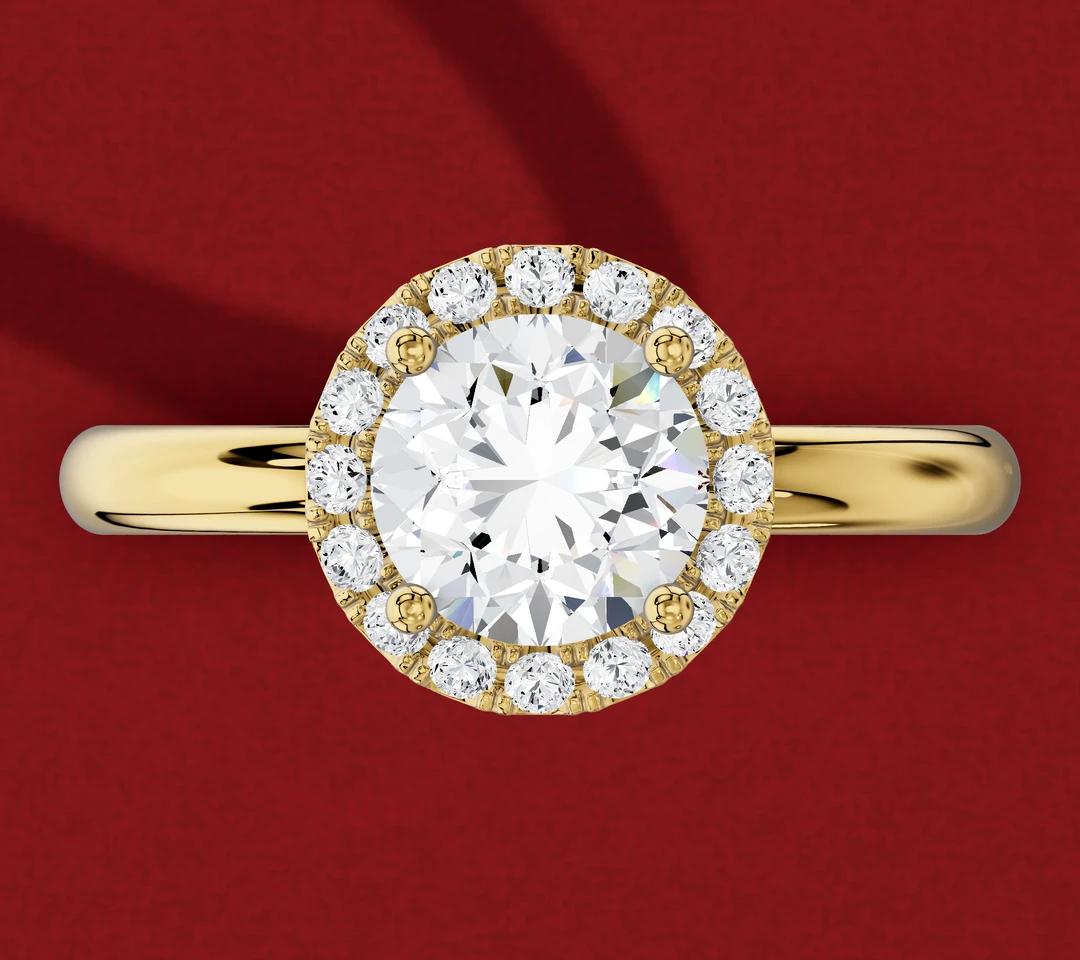
A row of small stones surrounds the centre and widens the face-up outline.
From the side
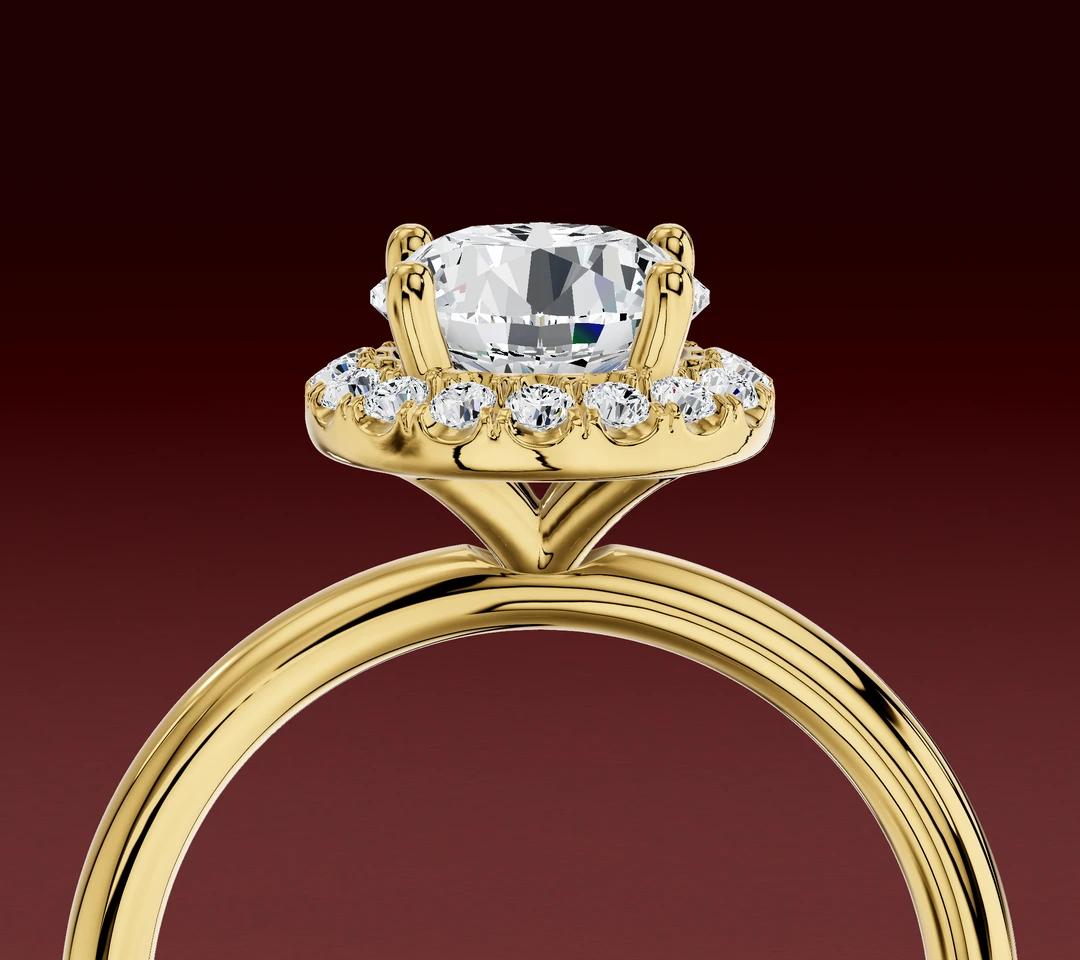
From the side, the halo row projects beyond the centre setting.
Compare footprint and weight separately
Ask for the centre-stone weight and the total weight of all stones as separate figures. Then compare the full top-view outline and the side profile. This prevents a wide halo or a total-carat figure from being mistaken for the size of the single centre stone.
Frequently asked questions
- Does a halo make a diamond look bigger?
- A surrounding row can enlarge the visible footprint and frame the centre stone. There is no reliable extra-carat equivalent: carat measures weight. Compare the overall millimetre dimensions and photographs at the same scale to understand the actual effect.
- What is the difference between a single halo and a double halo?
- A single halo has one surrounding row of accent stones; a double halo has two. Compare the overall width, row spacing and size of the accent stones to judge the balance around the centre.
- Are halo settings more prone to stone loss?
- Each small stone has retaining metal that can wear or be damaged. Professional checks can identify problems, but cannot guarantee against stone loss. Follow the jeweller’s care advice and arrange a check if a stone moves or the ring starts snagging.
- Does a halo need a contoured wedding band?
- Not always. The head height, gallery and projecting halo determine clearance. Try the actual pair or request a side view with the intended band; a straight band, contour or deliberate gap can each suit an appropriate design.