
What is a three stone ring?
Last updated 17 October 2026
A three-stone ring, also called a trilogy ring, has a centre gemstone flanked by two others. The centre is often larger, but equal-size arrangements also exist. Stones can match or contrast in shape and colour. Past, present and future is one familiar interpretation; it is not a rule about the design or its meaning.
Round side stones
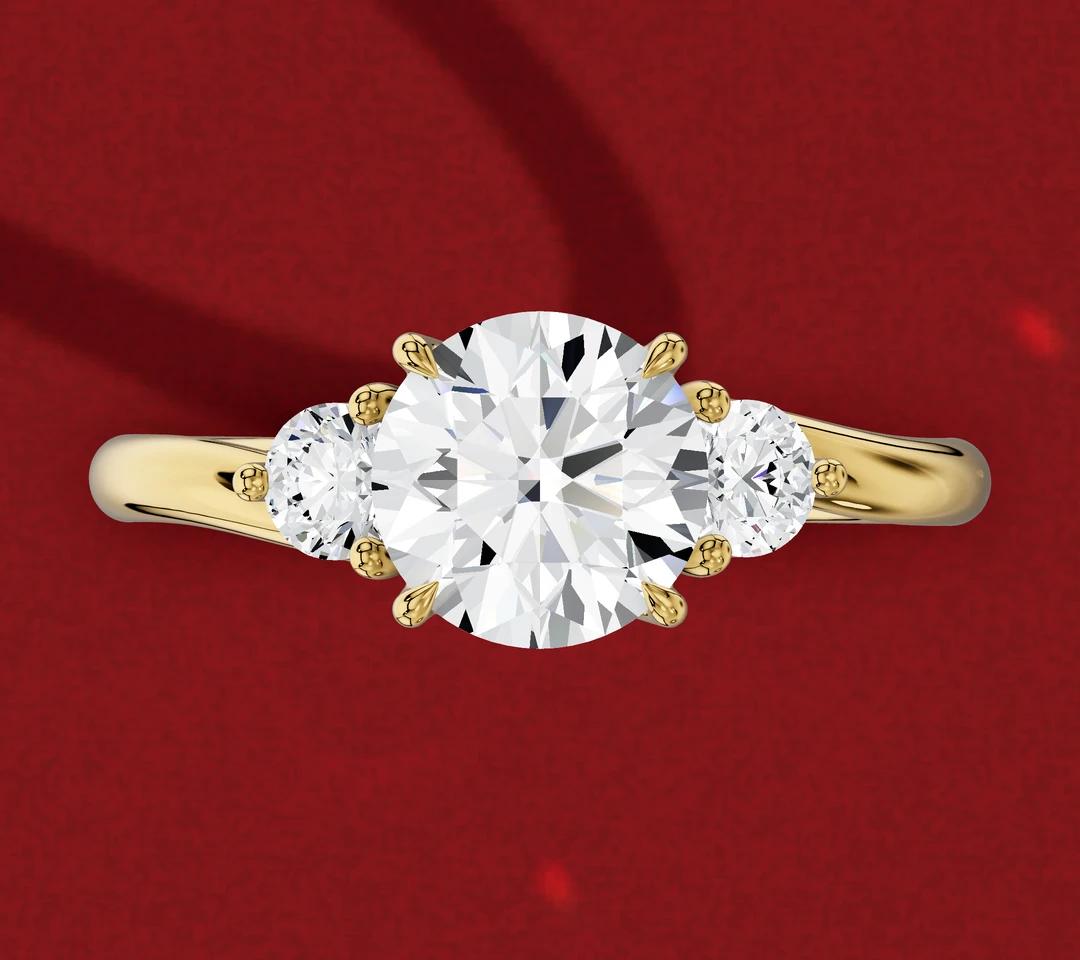
A round centre with a round stone on each side.
Pear side stones
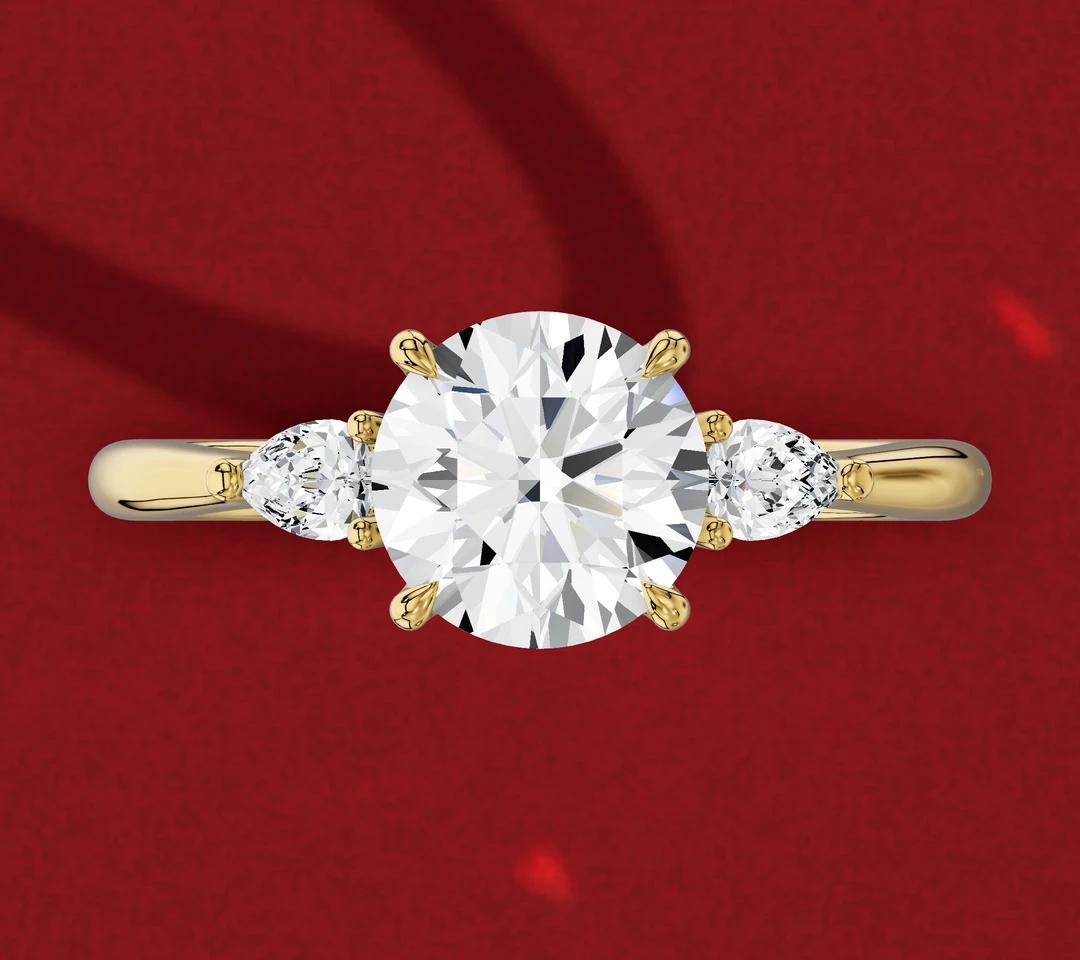
A round centre with pear-shaped side stones, their points facing outwards.
Compare the actual three stones
Look at the complete group at a consistent scale, with dimensions and weights for each stone. Check whether the side stones visually match each other and whether their colour and cutting style complement the centre. The preferred balance is a design choice, not a fixed percentage.
Frequently asked questions
- What do the three stones in a trilogy ring symbolise?
- Past, present and future is one familiar interpretation. Others choose friendship, love and fidelity, family meanings or no symbolism at all. The three-stone arrangement does not prescribe what the ring must represent.
- What is the ideal size ratio for a three stone ring?
- There is no universal ratio. Compare the stones’ face-up dimensions, shapes and spacing together. Smaller sides emphasise the centre; larger sides create a broader composition. Ask whether side-stone carat weight is quoted per stone or combined, and do not treat a weight percentage as a width percentage.
- What stone shapes work well in a three stone ring?
- Matching rounds create a repeating outline, while pears, tapered baguettes or trapezoids can create a tapered frame around a different-shaped centre. The proportions and orientation matter as much as the shape names. View the actual trio from above and from the side before deciding.
- Does a three-stone ring always sit higher than a solitaire?
- No. Height depends on stone depth, the heads and how the sides are arranged. Compare the actual profile and wedding-band clearance rather than inferring height from the number of stones.