Are Moissanite Earrings Worth It? Complete Guide

By Jared James · Last updated 25 May 2026
Quick answer
Yes. Moissanite earrings give you serious sparkle at a fraction of the cost of diamond studs, and because earrings sit protected on your earlobes, moissanite's durability isn't really tested the way it is on a ring. Here's what to spend, which shapes work best, and what to look for.
Are moissanite earrings worth it?
Yes, and the reasoning is mostly practical. Moissanite earrings give you more sparkle than diamond studs at a fraction of the cost, and because earrings sit protected on your earlobes, moissanite's durability isn't really tested the way it is on a ring.
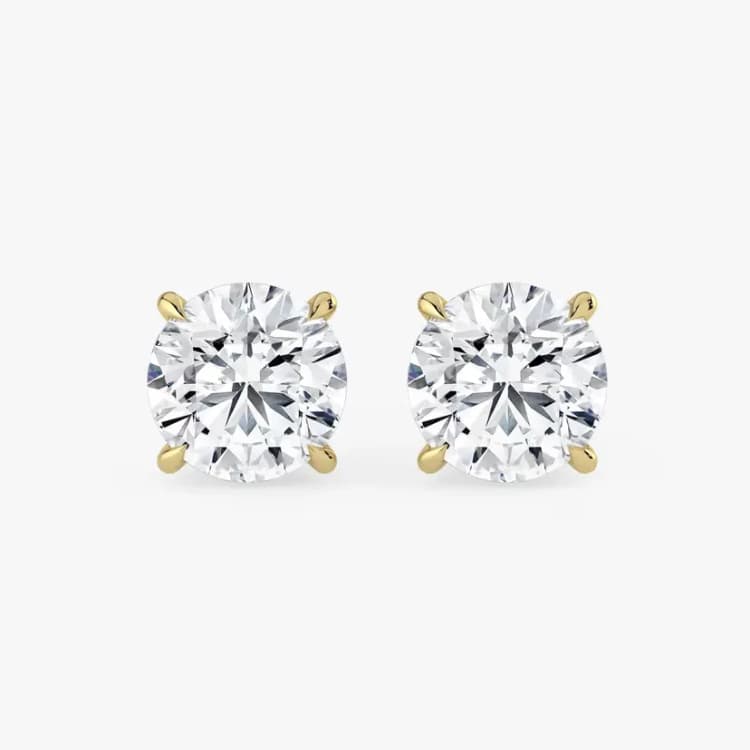
A 5mm round moissanite stud in D VVS1 quality, set in solid 9k or 14k gold with a screw back, sits between roughly $850 and $1480 AUD for a pair in Australia. An equivalent diamond stud set, same size and clarity, starts around $5000 AUD and climbs from there. You're not getting a worse stone for the price difference. Moissanite scores 9.25 on the Mohs hardness scale (harder than ruby or sapphire) and displays more fire than diamond, which means more visible colour flash when light hits it.
Earrings are also the application where moissanite makes the most sense. A ring takes constant hits on door frames, gym equipment, kitchen benches, and the underside of car steering wheels. Earrings sit on your earlobes and never really touch anything. The durability question that comes up with engagement rings basically doesn't apply here.
How much do moissanite earrings cost?
Australian pricing for quality moissanite stud earrings in solid gold settings sits in roughly these bands:
- 0.5ct pair (4 to 4.5mm round): around $500 to $900
- 1ct pair (5mm round): around $850 to $1480
- 2ct pair (6mm round): around $1200 to $2200
- 3ct+ pair (7mm and up): around $1800 to $3500
Pricing moves with metal choice (9k vs 14k vs 18k vs platinum), setting style (four-prong vs bezel vs martini), and stone shape. Fancy shapes like oval or princess generally cost a touch more than rounds at the same carat weight because they take more rough material to cut.
For comparison, lab-grown diamond studs at the same size and quality run roughly two to three times the moissanite price, and natural diamond studs run five to ten times higher.
Pros and cons of moissanite stud earrings
Pros
- Sparkle for the money. A high-quality moissanite pair lands at roughly 15 to 20% of the price of an equivalent natural diamond pair, and it gives you more fire (the rainbow flashes) than diamond does.
- Practical durability. 9.25 Mohs is well past the scratch threshold for daily ear wear, and moissanite handles ultrasonic cleaning, salt water, sweat, and sleep without complaint.
- Available in larger sizes. A 2ct moissanite pair sits at a price point that gets you a 0.4ct diamond pair, so most people buying moissanite go up a size or two.
- Lab-grown by default. Moissanite is produced in a lab, so there's no mining-supply-chain question to think through.
Cons
- Different sparkle profile. Moissanite shows more colour flash than diamond. Side by side in bright light, the two look distinctly different. In normal indoor light, the difference is mostly invisible.
- Low resale value. Like lab-grown diamond, the secondhand market for moissanite is close to zero. Buy them to wear, not to invest.
- Identifiable with a tester. A moissanite tester can tell the two stones apart in seconds. By eye, almost no one can.
Moissanite vs diamond stud earrings
A few practical differences worth knowing about:
- Sparkle pattern. Moissanite has a higher refractive index than diamond (2.65 vs 2.42), which translates to more visible fire. Some people prefer the cooler, whiter brilliance of a diamond, some prefer the colourful flash of moissanite. In normal indoor light most people don't notice.
- Hardness. Moissanite is 9.25 Mohs, diamond is 10. Both are well past the threshold where surface damage is a concern in earrings.
- Colour. D VVS1 moissanite reads as colourless to the naked eye and to most jewellers without a loupe. Cheaper moissanite grades (G-H or lower) often show a yellow or green tint that's visible in person.
- Identification. Modern moissanite testers tell the two stones apart in a few seconds, but you need the tester. In casual conversation, almost no one picks it.
- Resale value. Both sit close to zero on the secondhand market. Buy for what you want to wear, not for what you might sell.
For a deeper look at the comparison see our moissanite vs diamond stud earrings guide.
Best stud shapes for moissanite earrings
The shape choice depends on the face you're framing and the look you're after.
Round brilliant moissanite studs
The default stud shape. Round brilliants maximise sparkle for a given carat weight and work with every outfit and face shape. If you're new to moissanite or buying a first pair, round is the safest pick. Our Mia 5mm round studs are the most popular shape we sell.
Oval moissanite studs
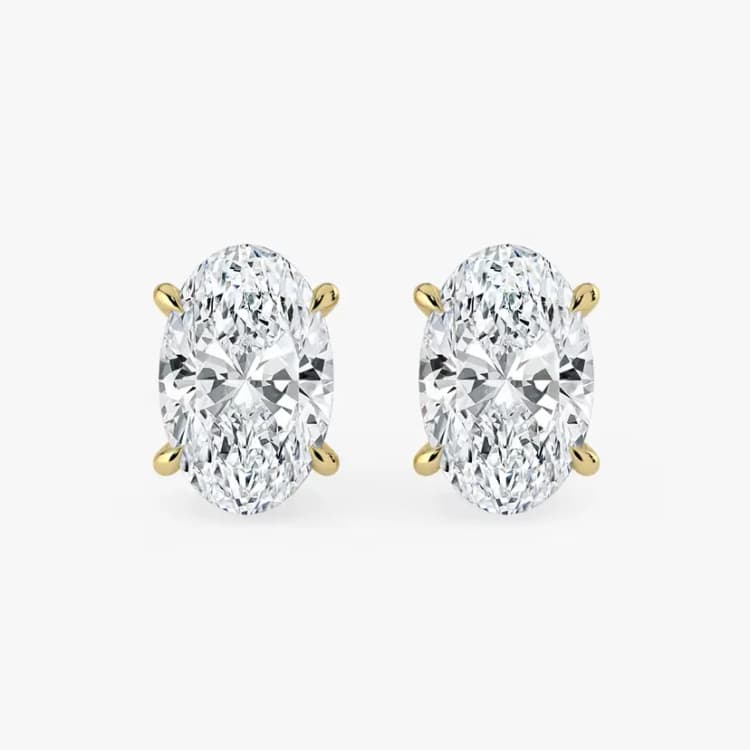
Ovals look about 10 to 15% larger than a round of the same carat weight because the stone is elongated along one axis. They tend to flatter rounder face shapes by adding vertical length. Our Lara 4x6mm oval studs sit in the elegant-but-not-flashy zone.
Princess cut moissanite studs
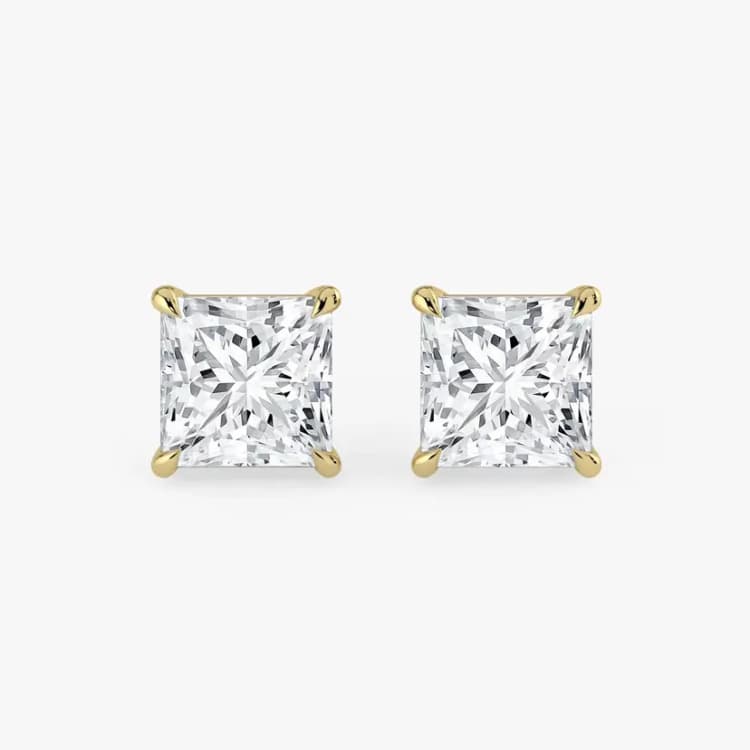
Square cut with sharp corners, much more geometric than round. Light moves through princess cuts differently, giving a flash-and-fade sparkle pattern instead of the steady twinkle of a round. The Whitney 4.5mm princess studs suit a more architectural style.
Heart-shaped moissanite studs
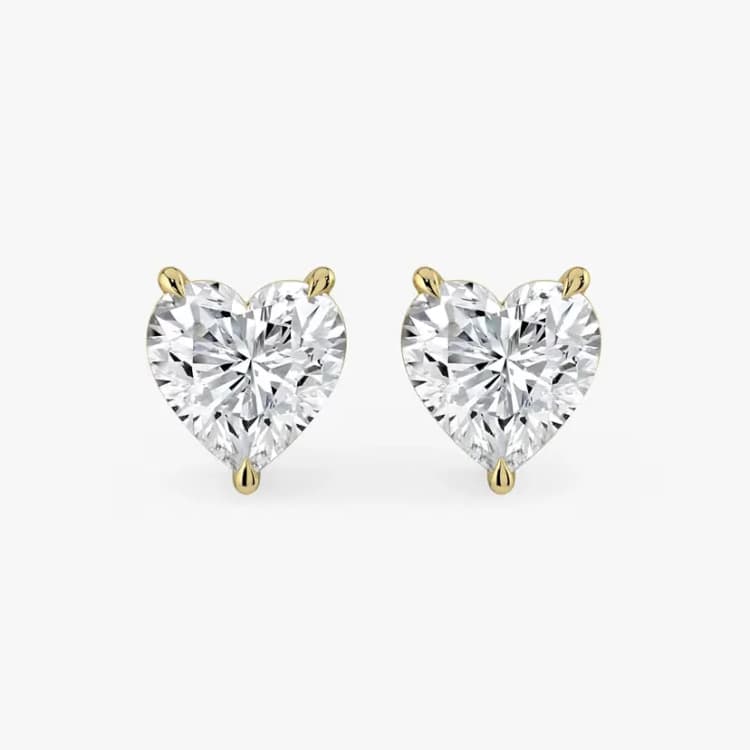
Less common, more personal. Heart studs read as more sentimental than round or oval and usually go down well as gifts. They're harder to cut well, so look closely at the symmetry. Our Olivia 5mm heart studs are a good example of the shape done right.
How to choose the right size moissanite stud earrings
Rough guides based on what we see people pick:
- 4 to 5mm (around 0.5 to 1ct total pair): Subtle. Sits flat to the lobe, looks polished at work, doesn't draw a second glance unless someone is close.
- 6mm (around 2ct total pair): The most common size. Visible from across a room, still appropriate for daily wear.
- 7mm and up (3ct+ total pair): Statement size. Reads as deliberately chosen, suits taller earlobes and more formal wear.
If you wear hoops or other earrings most days and are buying studs as an occasional piece, sizing up to 6mm or 7mm tends to feel worth it. If you'll wear them daily for years, 5mm is the safer commitment.
What to look for when buying moissanite earrings
A short checklist:
- D VVS1 quality. Anything lower starts to show colour and inclusions in person. The price difference between D VVS1 and lower grades is small, so there's no real reason to compromise here.
- Solid gold settings. 9k, 14k or 18k is fine. Avoid plated metals, which wear through at the post and the back of the setting first.
- Screw backs. Push backs are common but can loosen and let an earring fall out. Screw backs hold securely and are worth the small comfort trade-off on anything you don't want to lose.
- Symmetrical cut. Ask for a clear photo of both stones together. Cheap moissanite often pairs poorly, with one stone slightly off-shape from the other.
Things to be wary of:
- Lower clarity grades where inclusions are visible to the naked eye.
- Yellow or green colour casts on stones graded G or below.
- Plated settings that look identical to solid gold in photos but wear through within a year.
- Push backs on heavier studs, which loosen faster than they do on smaller stones.
Common questions about moissanite earrings
Will people know they're not diamonds?
Almost no one. By eye, including jewellers without a tester, moissanite at D VVS1 reads as a high-quality diamond. The fire pattern is slightly different up close, but the only way to be certain is with a moissanite tester or a thermal and electrical conductivity meter.
Do moissanite earrings cause skin reactions?
The stone itself is chemically inert and won't react with skin. Reactions almost always come from the metal of the setting, so stick with solid gold and you'll be fine. Plated metals can cause greening or irritation once the plating wears through.
Can I sleep, swim and shower in moissanite earrings?
Yes. Moissanite handles water, sweat, chlorine and saltwater without issue. The setting metal matters more than the stone here, and solid 14k or 18k gold handles all of the above without complaint.
Are moissanite earrings just fake diamonds?
Moissanite is a different mineral (silicon carbide, not carbon) and a real gemstone in its own right. It happens to look very similar to diamond when cut well, but it isn't an imitation. If that is the question you are weighing up, our does moissanite look fake guide goes deeper on what makes a stone read natural or cheap.
If you want to read more about moissanite as a stone, see our what is moissanite guide. Or browse our moissanite stud collection to see what's available in different shapes and sizes.
Thanks for reading,
Jared & Brie
Next step
See the stones set in real rings
Browse lab-grown diamond and moissanite engagement rings to see how they compare once they are set.
View lab-grown ringsNeed a second opinion
Talk to the studio
If you are weighing up a ring or comparing options, send the details through and we can help you think it through.
Contact the studio