
What Is Electroform Gold? Electroforming Jewellery Explained
Last updated 17 October 2026
Electroform gold is a gold or gold-alloy shell made by electroforming, a process that deposits metal from a solution onto the electrically conductive surface of a model called a mandrel. Removing a suitable mandrel leaves a hollow form, allowing a large piece with less weight. Some jewellery sold as electroformed retains a core or filler, so check the stated gold fineness and what is inside. Electroforming describes the method, rather than the amount of gold in a piece.
How a hollow electroformed piece is made
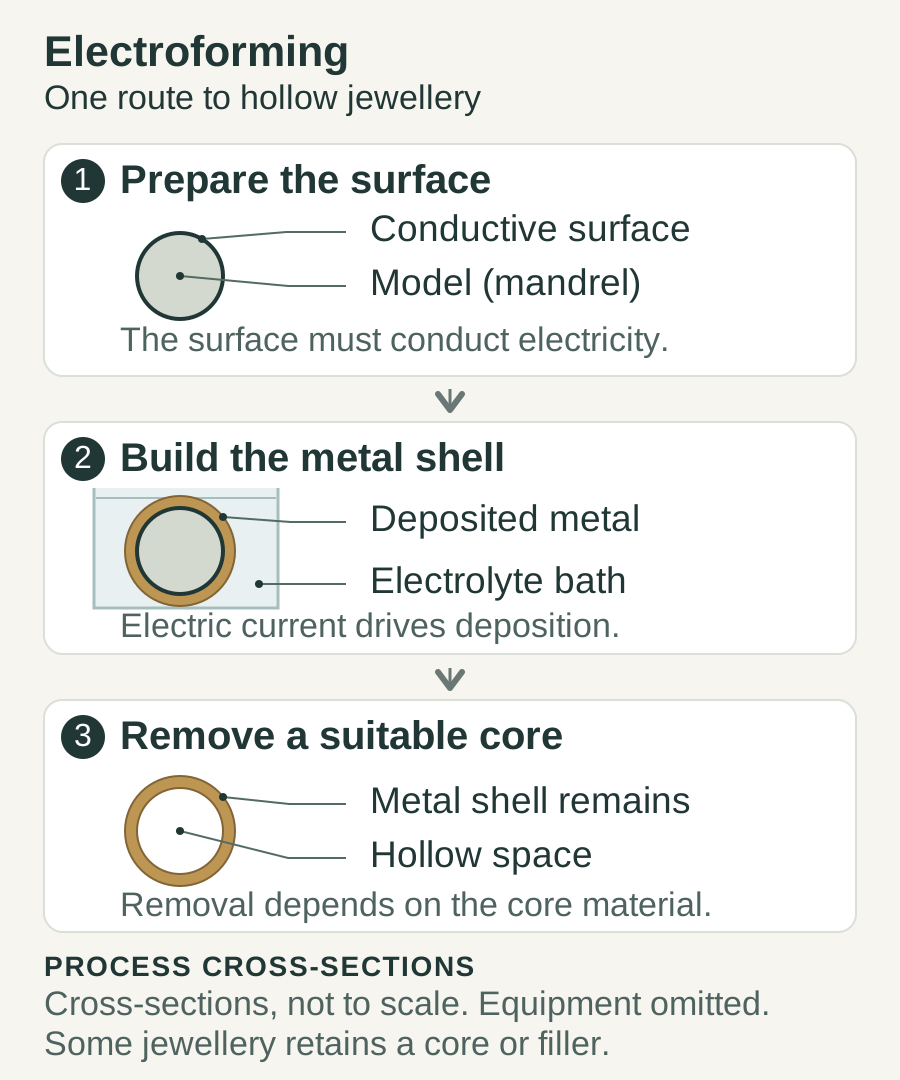
The model supplies the shape, and the deposited metal becomes the shell. This is one hollow-jewellery route; the materials and finishing steps vary with the design and manufacturing system.
- Prepare the surface. A model that does not conduct electricity, such as wax, needs a conductive layer before metal can deposit onto it.
- Build the shell. Electric current drives metal deposition from an electrolyte onto the prepared surface until the intended shell has formed.
- Separate and finish. A suitable mandrel is released or removed using a method chosen for its material. The shell can then be finished and assembled into jewellery.
Gold purity and what is inside
Gold purity describes the gold-bearing metal, while hollow or filled describes the construction. These are separate questions. A large electroformed piece can contain much less gold than its size suggests, particularly when part of its weight comes from a non-metal core. Ask for the metal weight separately from the total item weight when it is available.
- Check the description of the shell metal and any final plating, rather than judging by its gold colour.
- Ask whether the inside is hollow or contains resin or another material.
- For an uncertain or second-hand piece, ask a qualified jeweller about verification. GIA’s examination of a filled bracelet showed why surface analysis alone may miss the construction underneath.
What to ask about wear and care
Electroforming can give earrings and pendants a generous shape without the weight of a solid metal version. That advantage comes with design choices: the shell’s thickness and shape affect how well it resists pressure. The manufacturing label alone cannot tell you how a particular piece will stand up to wear.
- Ask the maker whether the piece suits your intended wear, particularly if it will be knocked or squeezed.
- Use the maker’s care instructions for the whole piece, including its finish, stones and any filler, and avoid pressure that could deform a thin shell.
- Before resizing, polishing or repair, tell the jeweller that the piece is electroformed and ask them to assess its construction.
Frequently asked questions
- Is electroformed gold real gold?
- Gold electroforming can produce a shell of genuine gold or gold alloy. Ask for the stated gold fineness and a description of the whole construction, including any core, filler or separate surface coating. The word electroformed describes a manufacturing method; it does not establish the amount or purity of gold in a particular piece.
- What is the difference between electroforming and electroplating?
- Both use electrodeposition. Electroforming builds the metal body of a piece, often as a shell around a removable model. Decorative electroplating adds a surface coating to an existing object. An electroformed piece can also receive a separate plated finish, so the shell metal and the surface finish may differ.
- Is electroformed jewellery durable?
- Its resistance to damage depends on the metal, shell thickness, shape and construction. A thin hollow piece can dent under pressure, while a different design may be stronger. Ask the maker about the specific piece, especially for a ring or bangle that will receive frequent knocks.
- Is all electroformed jewellery hollow?
- No. Removing a suitable mandrel produces a hollow shell, but some electroformed jewellery contains wax, resin or another core material. GIA has documented an electroformed bracelet with a wax or resin interior. Ask whether the piece is hollow, filled or formed around material that remains inside.
Sources and further reading
- Umicore, electroforming manufacturing stages and material choices, April 2026
- Umicore, gold electroforming and suitable mandrels
- GIA, Electroformed Gold Bracelet, Spring 2024
- Chris Corti, Recent Electroforming Developments, Ganoksin and MJSA
- Chris Corti, Electroplating Jewellery, Ganoksin and Gold Technology
- Stefan Müller and Beatriz Biagi, Electroforming for Innovative Design, Ganoksin