
What is a hidden halo engagement ring?
Last updated 17 October 2026
A hidden halo is a row or ring of small accent stones beneath the centre stone, usually most noticeable from the side. Its visibility from above depends on the design and viewing angle. It adds detail around the head; it does not by itself establish the ring’s height, wedding-band fit or the centre stone’s light performance.
From the side
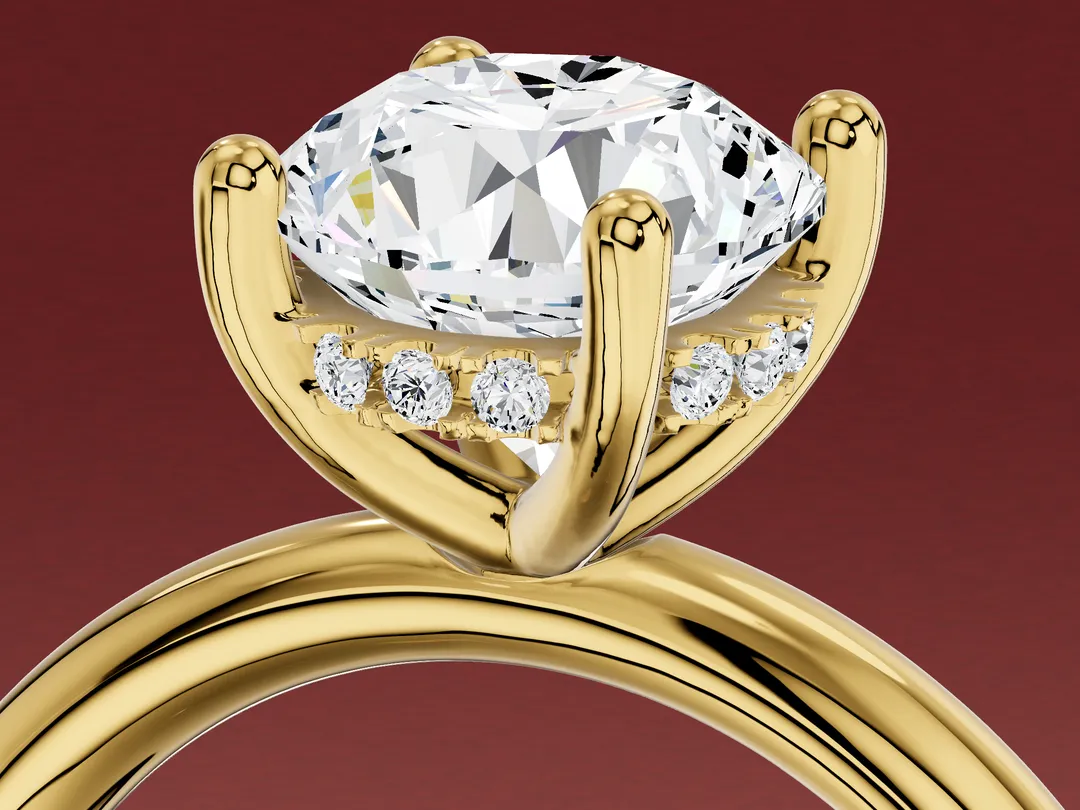
A row of small diamonds circles the head beneath the centre stone.
From above
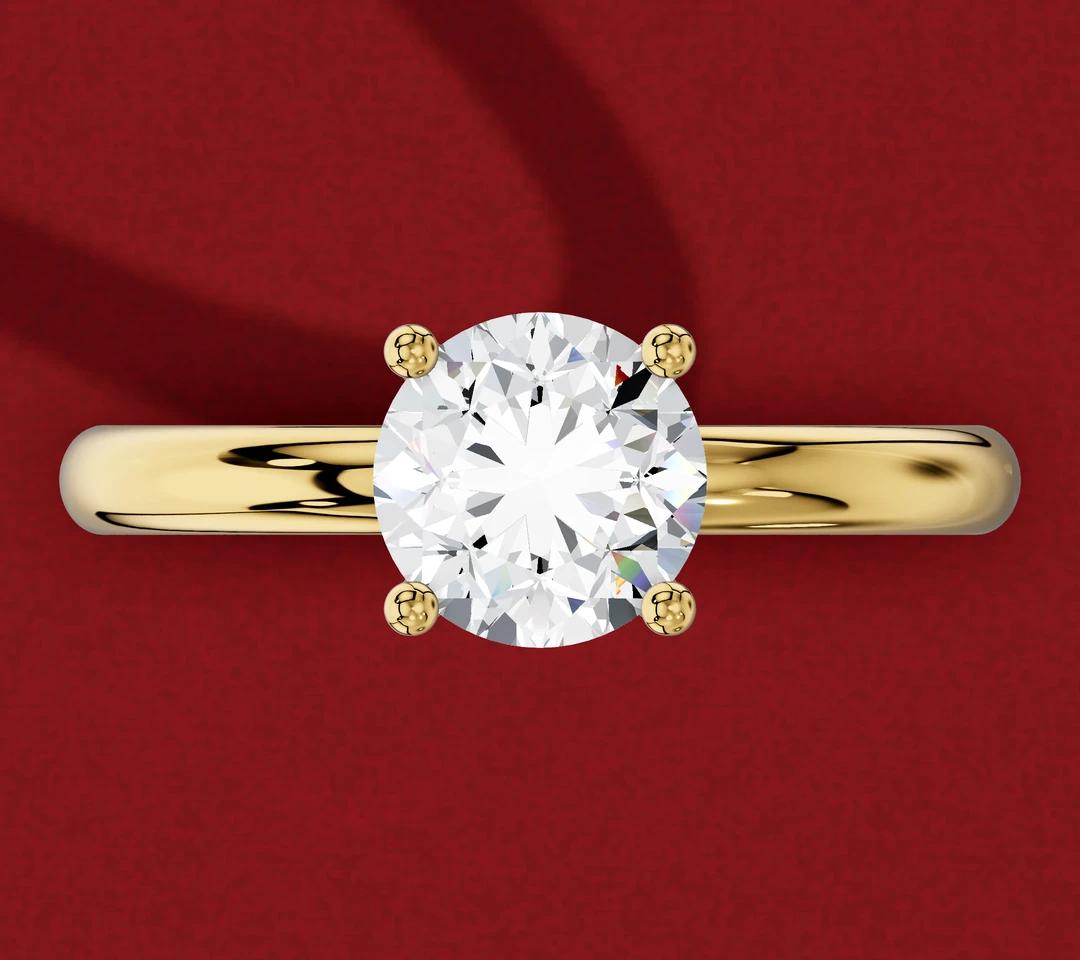
From above, the centre stone covers most of the hidden halo.
Read the ring from two views
Use the top view to understand the centre-stone outline, then the side view to locate the accent stones. Identify the actual small stones rather than a plain gallery rail. The same views also reveal where a wedding band could touch the head.
Frequently asked questions
- What is the difference between a hidden halo and a regular halo?
- A visible halo frames the centre stone in the face-up view. A hidden halo puts its accent stones lower in the head, where they are usually easier to see from the side. Check both views, since exact placement and visibility vary.
- Does a hidden halo make the centre stone look bigger?
- Its main visual effect is detail beneath the centre stone. It does not add the same face-up border as a surrounding halo. Compare photographs at the same scale rather than assuming a fixed size gain or improved light return.
- Is a hidden halo harder to clean than a standard setting?
- The small stones and spaces beneath the centre can collect residue and may be harder to reach than a plain solitaire. Follow cleaning advice for the complete ring and its materials. Ask a jeweller to check any loose stone or snagging detail before cleaning.
- Will a straight wedding band sit flush with a hidden halo?
- Only if the actual head and gallery leave enough clearance. Request a side-profile view with the intended band, or try both rings together. A solitaire-like top view does not prove that a straight band will fit.