

What can you do if your custom ring doesn't match the CAD?
First, take a breath and know that Australian law is on your side. Under Australian Consumer Law, anything you buy has to match its description and any sample you were shown. On a custom engagement ring, the CAD you approved, with its stone sizes, band width, setting height and metal listed, is the clearest written record of what you agreed to.
What you're entitled to depends on how big the difference is, as the ACCC sets out in its guide to repairs, replacements and refunds:
- For a smaller difference (a minor problem): Something that can be corrected cleanly on the bench, like reshaping claw tips or adding a forgotten engraving. The jeweller must at least repair it free within a reasonable time.
- For a major difference (a major problem): The finished ring is very different from what you approved, such as the wrong metal or karat, the wrong stone shape or size, a noticeably different setting profile, or a ring you wouldn't have ordered if you'd known how it would turn out. Here, you choose the remedy: a full refund, a remake or replacement, or keeping the ring with compensation for the drop in value.
Don't let a "no refunds on custom orders" clause stop you from speaking up. The ACCC is clear that it's illegal for a business to rely on terms like "no refunds" to deny your consumer guarantees, and Consumer Affairs Victoria adds that a seller cannot argue you should have spotted an error in the description before you bought. Even if a jeweller says a difference was unavoidable in production, Consumer Affairs Victoria notes the guarantee still applies if the difference is substantial.
What counts as not matching the CAD?
A computer render is lit, coloured and smoothed by software, whereas a finished ring is cast in metal and polished by hand, so the two will never look identical pixel for pixel. What has to match is the design you approved: the claws, the setting height, the band width and profile, the stones and every feature listed on your CAD.
| Usually a real mismatch | Usually a normal difference |
|---|---|
| A different claw style or number of claws from the CAD | The metal looking warmer, cooler or brighter than in a lit render |
| The stone sitting higher or lower than drawn, or touching the band | The ring weighing slightly less than the CAD estimate once polished |
| A band noticeably wider, thinner or shaped differently in profile | The diamond sparkling differently from the software stand-in |
| A different stone size or shape, or side stones that don't sit properly in their settings | Tiny pavé claws that CAD models often leave out |
| A missing detail: forgotten engraving, a missing hidden halo or omitted pavé | Edges looking slightly softer after hand polishing than crisp CAD lines |
| The wrong metal or karat | Hand-finished textures, like hammering, that never come out identical twice |
In practice, the clearest bench mistakes are structural or visible design errors: claws finished blunt and rounded when the CAD clearly drew pointed claw or eagle tips, a centre stone set so low its underside touches the band, tapered side stones forced into straight seats, or a missed engraving or hidden halo. If a jeweller brushes a mistake off as tiny, keep in mind that recasting a mount reuses the gold, so putting a genuine workshop error right is mostly bench time rather than wasted metal.
On the normal side, post-polish weight surprises a lot of buyers unnecessarily. CAD software calculates raw metal volume before casting, and filing and hand-polishing always remove a fraction of a gram, so a finished ring commonly comes back slightly lighter than the number printed on the CAD. The same goes for lighting and polish: yellow or rose gold looks warmer or softer in real daylight than under flat 3D render lighting, and sharp digital corners soften subtly once a jeweller polishes them by hand.
Is it a mismatch, or have you changed your mind?
The dividing line comes down to one question: did the jeweller make what you approved, or did your feelings shift once you saw it in person? Australian Consumer Law gives no refund for a change of mind, like realising a style doesn't suit your hand once you try it on, and the ACCC adds that you have no claim for a detail you were told about before buying. If the CAD showed thicker claws than your inspiration photo and you signed off on that CAD, thicker claws are what you agreed to.
Australian law firm Sprintlaw explains it with a plain custom-order example: if you approve a proof that says "Amelia" and the business prints "Amelie", you are not changing your mind; the finished piece fails to match the agreed order. If the proof said "Amelia" and you later decide you'd prefer "Emilia", that is a change of mind. On a custom ring, the CAD you approved is that proof.
If you're unsure where your ring sits, lay it beside the final CAD version you signed off on, rather than your original inspiration photos or an earlier draft.
What should you do, step by step?
- Leave the ring untouched. Don't take it to another jeweller to resize, polish or alter yet, because the business you bought from is entitled to inspect it as it arrived.
- Photograph it from your CAD angles. Take clear daylight photos from above, side-on and at three-quarter view to mirror your CAD sheet, and put a ruler or calipers beside the ring if the issue is a measurement like band width or setting height.
- Pull your paper trail together. Gather the approved CAD and its revision number, the email where you signed off, your quote or invoice, the stone's grading report and your delivery confirmation.
- Write to the jeweller clearly and calmly. List each specific detail that differs from the approved CAD, attach your side-by-side photos, state the remedy you're asking for (free repair, remake or refund), and note that you're relying on the consumer guarantees under Australian Consumer Law.
- Give them a reasonable chance to fix it. If they refuse or can't resolve it within a reasonable time, the ACCC states you can have it fixed elsewhere and claim the reasonable cost back, or ask for a refund or replacement.
- Escalate if you hit a wall. Contact your state or territory consumer affairs or fair trading office (such as Consumer Affairs Victoria, NSW Fair Trading or the Office of Fair Trading Queensland), and check with your bank about a card chargeback if you paid by credit or debit card and received something materially different from what you ordered. The ACCC logs reports but doesn't handle individual disputes.
The jeweller you paid is responsible even if they outsourced casting to another workshop. The ACCC states that businesses must not tell you to take the problem to the manufacturer, and the Jewellers Association of Australia gives the same practical advice: tell the jeweller clearly what doesn't match and give them the chance to put it right.
If the issue is transit damage or ring size rather than the design itself, our guide to an engagement ring that arrived damaged or the wrong size walks through what to do next.
How to prevent a CAD mismatch (and how we check at Lily Dia)
Most CAD mismatches happen when a buyer approves a render with no written measurements, or never sees the finished ring until the courier drops it off. With any custom jeweller, ask for the stone sizes, band width and metal to be written right on the CAD sheet, and ask for clear photos and a video of the finished ring before it ships so anything off can be fixed while the ring is still on the bench.
That is the exact checklist we run on every custom ring at Lily Dia: multi-angle CAD renders with written measurements and unlimited revisions, photos and video of your stone before setting, no casting until you sign off, and photos and a video of the finished ring before it ships. If a finished ring ever differs significantly from the CAD you approved, it counts as a fault under our returns policy; email accounts@lilydiajewellery.com with photos beside your CAD and we cover reasonable return shipping and put it right.
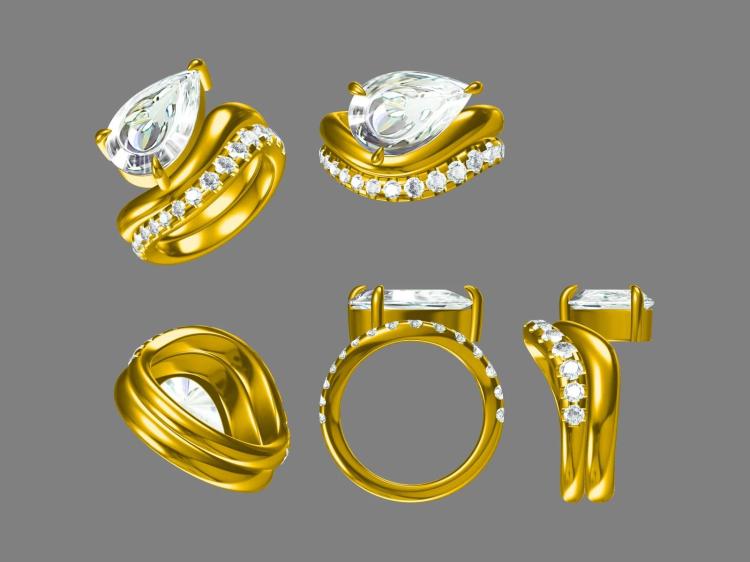
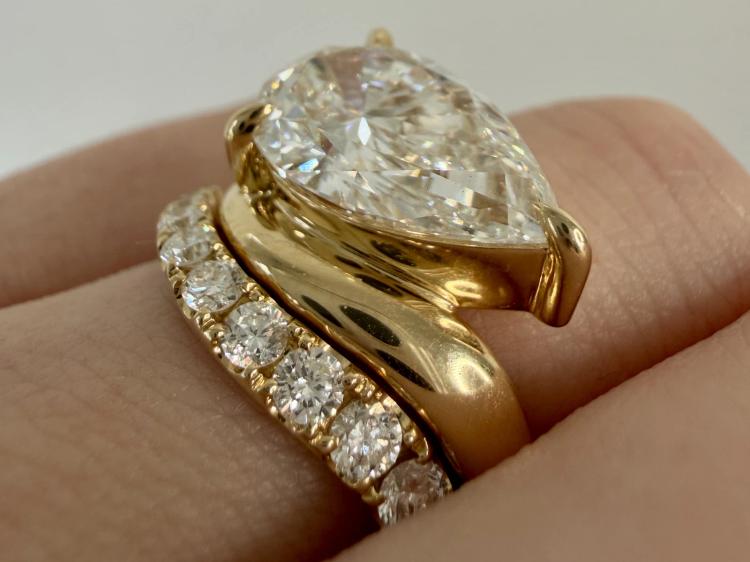
If you're still reviewing your CAD and haven't approved it yet, our guide to reading an engagement ring CAD walks through every view to check before you sign off.
Thanks for reading, Jared and Brie
Frequently asked questions
- What can I do if my custom engagement ring does not match the CAD I approved?
- Write to the jeweller with clear photos showing what differs from your approved CAD, and ask them to fix it. Under Australian Consumer Law, a ring must match its description and any sample you were shown, so the jeweller must at least repair a minor difference free, and if the ring is very different from what you approved you can choose a refund or a replacement instead.
- Can I get a refund if my custom ring does not match the CAD?
- Yes, when the difference is major. The ACCC says a product that is very different from its description or sample has a major problem, which lets you choose a refund or a replacement. For a smaller difference, the jeweller can repair it free first, and a no-refunds policy on custom orders cannot take away either right.
- What is a normal difference between a CAD and the finished ring?
- Metal looking slightly warmer or brighter than a computer render, the finished ring weighing a little less than the CAD estimate after polishing, a diamond sparkling differently from a software placeholder, and tiny pavé claws that were not drawn on the CAD are all normal. A different claw shape, a stone set too high or too low, a different band width or a missing feature is a genuine mismatch.
- What if I just do not like the ring now?
- If the jeweller made what you approved on the CAD, Australian Consumer Law does not give you a refund for a change of mind. The test is whether the finished ring matches what was agreed, rather than whether your taste changed after seeing it in person.
- The jeweller says their workshop made the mistake. Who is responsible?
- The jeweller you paid. The ACCC is clear that businesses must not tell consumers to take a problem to a third-party workshop or manufacturer; your remedy comes directly from the business that sold you the ring.
- Does a no-refunds policy on custom orders apply when the ring is wrong?
- No. The ACCC states that it is illegal for a business to rely on blanket "no refunds" terms to deny consumer guarantees. A custom order can exclude change-of-mind refunds, and still has to match the design you approved.
- How can I stop a CAD mismatch before my ring is shipped?
- Insist on written stone sizes, band width and metal on the CAD you approve, and ask your jeweller for photos and a video of the finished ring before it ships so you can compare it against the CAD while it is still on the bench. At Lily Dia, we send both before dispatch, and any significant variation from your approved CAD is treated as a fault under our returns policy.
Designed with you, made to order
Our jewellers in Melbourne and Auckland make every ring to order for the person wearing it. If this article helped, the collection shows how these choices look on real rings, and you can ask us anything before you decide.
Or ask us a question first