
What is the shoulder of a ring?
Last updated 17 October 2026
The shoulders are the upper sections of a ring’s shank on either side of the central setting. They form the transition between the band and the head. Shoulders may be plain, decorated, split or raised into cathedral-style arches. The term describes their position; it does not specify the ring’s height or how a wedding band will fit.
Straight
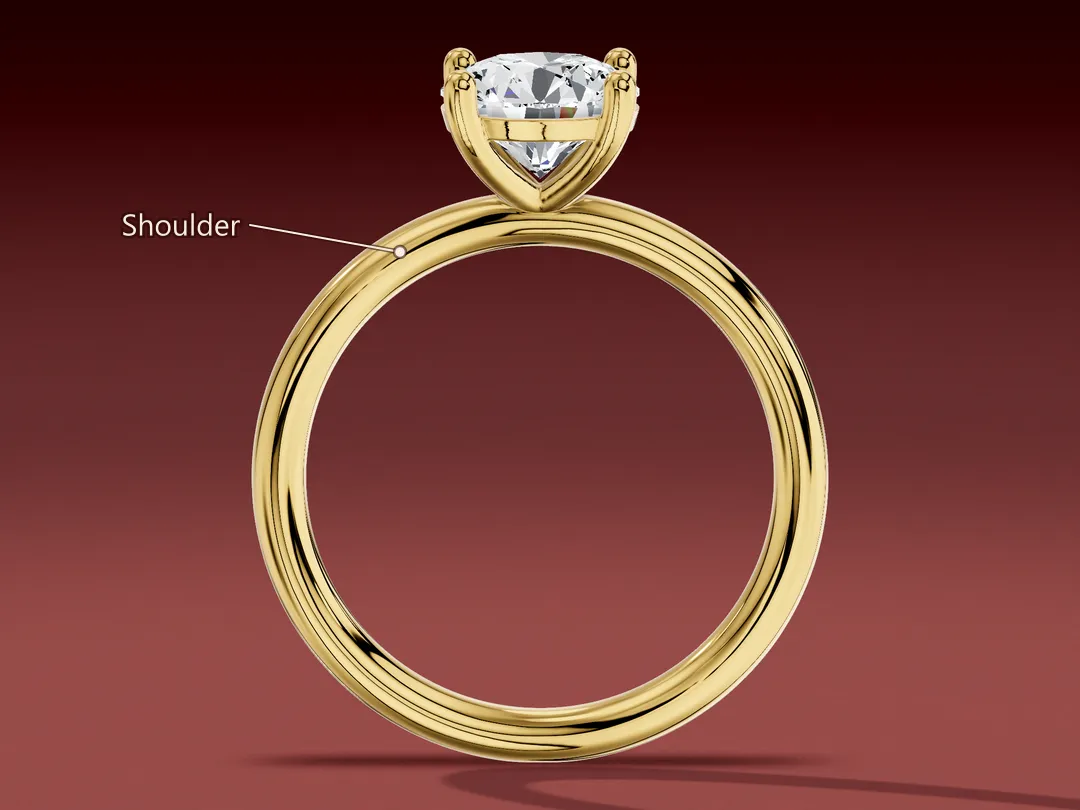
Here the shoulders follow the curve of the band up to the head.
Cathedral
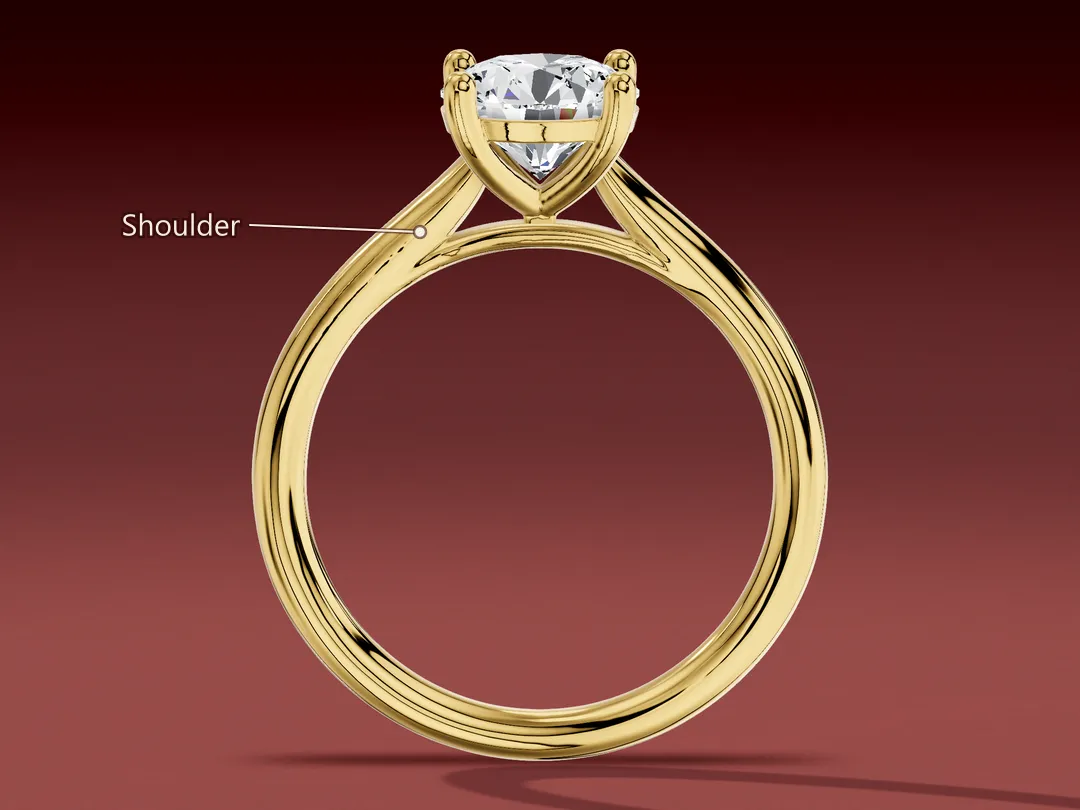
Cathedral shoulders arch up from the band to meet the head.
Shoulder style and stone-setting style can overlap
Cathedral describes shoulders that rise towards the central setting. Pavé describes a way of setting small stones. A design can have both. Likewise, a split shoulder can be plain or stone-set. These words identify different features rather than mutually exclusive ring categories.
Compare the transition into the head
Use the top view to follow the band towards the centre. Then use the profile to see whether the shoulders rise, stay lower or branch. Judge the visible outline without assuming that a thicker-looking area is stronger or that an opening guarantees wedding-band clearance.
- Trace each shoulder from the band to the head.
- Notice whether it is single, split, plain or decorated.
- Ask the jeweller about fit and construction separately from the visual style.
Frequently asked questions
- What is the difference between the shoulder and the shank of a ring?
- The shank is the band around the finger. The shoulders are its upper regions beside the head. They are parts of the shank rather than automatically separate pieces of metal.
- Can ring shoulders be set with diamonds?
- Yes. Small stones may be set along the shoulders using different techniques. Their placement and the way the metal retains them are separate design choices, so look at the actual setting rather than assuming every decorated shoulder is pavé.
- Do ring shoulders change how the centre stone looks?
- They frame the centre stone and can change its visual emphasis. The stone’s dimensions remain the same, and the effect depends on the whole design. Compare top and side views rather than relying on a rule that a certain shoulder always makes a stone look larger.
Sources and further reading
Talk through shoulder with us
Tell us what you have in mind, even if it is only a budget and a piece of jewellery type, and we will help you weigh up the options. We reply to every enquiry, usually within one business day.
Contact the studio