
What is table percentage in a diamond?
Last updated 17 October 2026
For a round brilliant diamond, table percentage compares the average measured table width with the average girdle diameter. Divide the former by the latter and multiply by 100. A 3.70 mm average table width on a 6.50 mm average diameter gives about 57%. It is one part of the cutting design, not a stand-alone quality score.
Compare two different widths
For the hypothetical round diamond below, divide the 3.70 mm average table width by the 6.50 mm average girdle diameter, then multiply by 100. The result is about 56.9%, or 57% when rounded to a whole percent. The table is one surface within the crown; its relative width is separate from total depth.
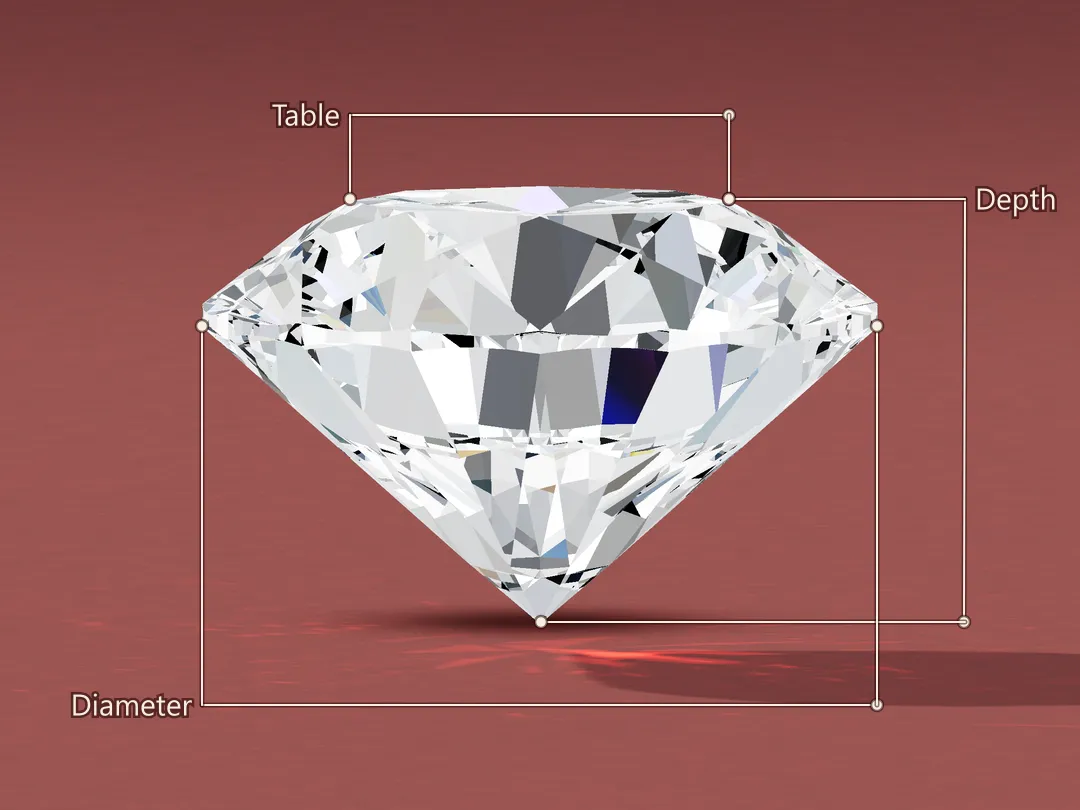
An average rather than one ruler line
GIA’s round-brilliant method averages four table measurements. A single width taken from a photograph does not reproduce that measurement: perspective and image scale can change the apparent span. Use the actual report, then assess the stone’s proportions together.
Frequently asked questions
- What is an ideal table percentage for a round brilliant diamond?
- No table percentage guarantees ideal performance by itself. Table size interacts with the crown, pavilion and other facets, and a laboratory cut assessment considers more than this single ratio.
- Can I choose a diamond from table percentage alone?
- No. The same table percentage can accompany different crown angles, pavilion angles and overall appearances. Read it with the other measurements and the applicable cut assessment; use different shape-specific considerations for fancy cuts.
- How is table percentage calculated?
- For a round brilliant, divide average table width by average girdle diameter and multiply by 100. GIA’s laboratory method averages four table measurements. A casual single width measurement is not equivalent to a complete laboratory assessment.
Sources and further reading
Shop lab-grown diamond engagement rings
Browse our lab-grown diamond engagement rings, each made to order in Melbourne in your choice of gold or platinum.
Shop lab-grown diamond engagement ringsTalk through table percentage with us
Tell us what you have in mind, even if it is only a budget and a piece of jewellery type, and we will help you weigh up the options. We reply to every enquiry, usually within one business day.
Contact the studio