Oval Cut Diamond

By Jared James · Last updated 21 May 2026
Quick answer
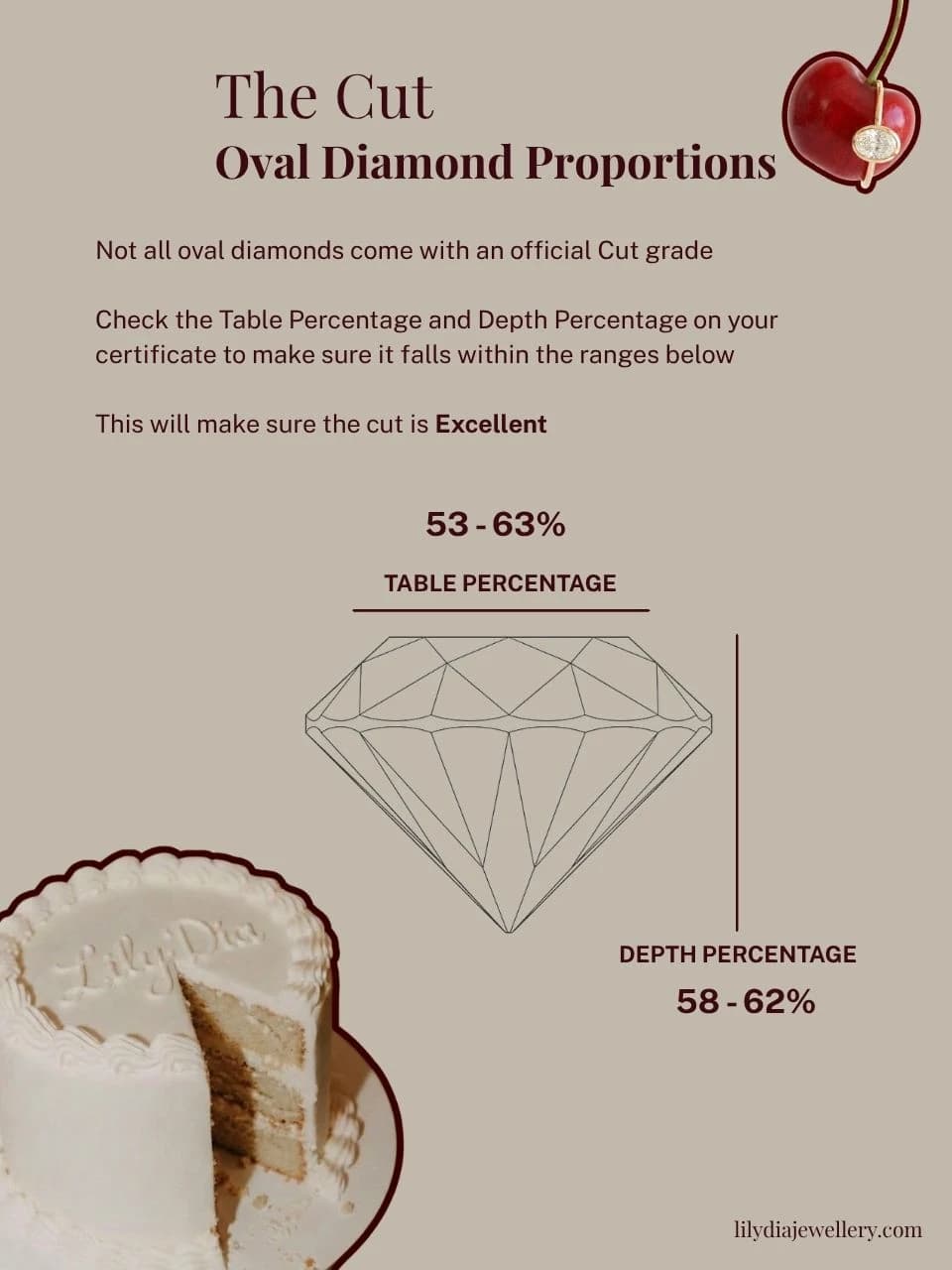
An oval diamond gives you a larger, more lengthening look than a round diamond of a similar weight, and it keeps the bright sparkle pattern of a brilliant cut. There is no single cut grade that tells you whether an oval is a good one, so the things to look at are the bow tie, the length-to-width ratio, the shape of the shoulders and how evenly the two ends mirror each other.
Shape at a glance

| Detail | Typical detail | Buying note |
|---|---|---|
| Facet pattern | Modified brilliant, usually with 56 to 58 facets. | You can expect bright brilliant-cut sparkle, but judge each stone on its own because oval quality varies a lot. |
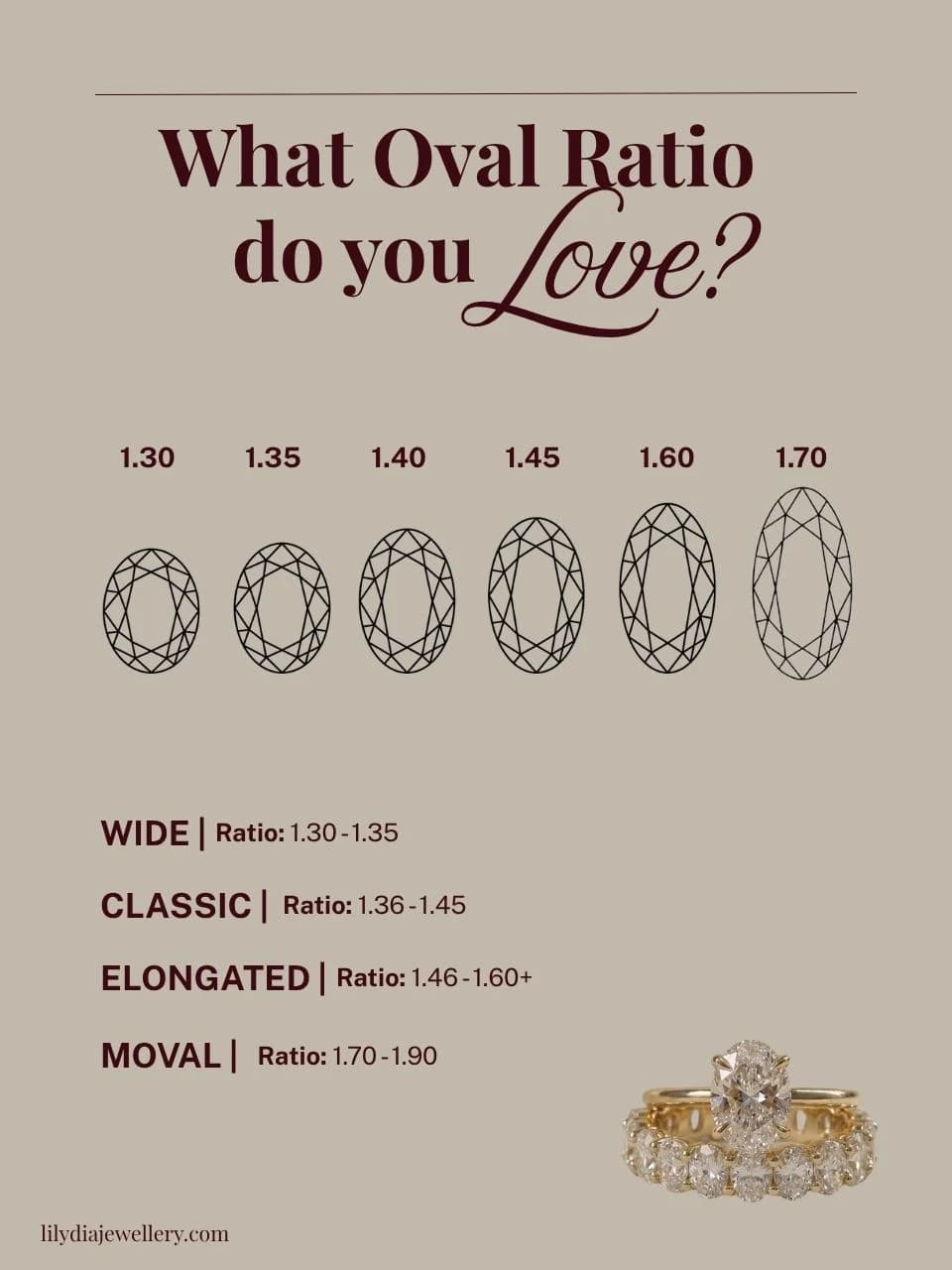
| Typical ratio | Around 1.30 to 1.50, with 1.35 to 1.45 reading balanced to many buyers. | Lower ratios look fuller and rounder, while higher ratios look longer and more slender. |
| Sparkle | Bright and lively when cut well, with possible bow tie through the centre. | A slight bow tie is normal, so just avoid any stone where the dark band takes over the centre. |
| Best for | Solitaire rings, hidden halos, three-stone rings and elongated hand proportions. | Choose oval when you want presence and length without moving to a sharp-cornered shape. |
What is an Oval Cut Diamond?
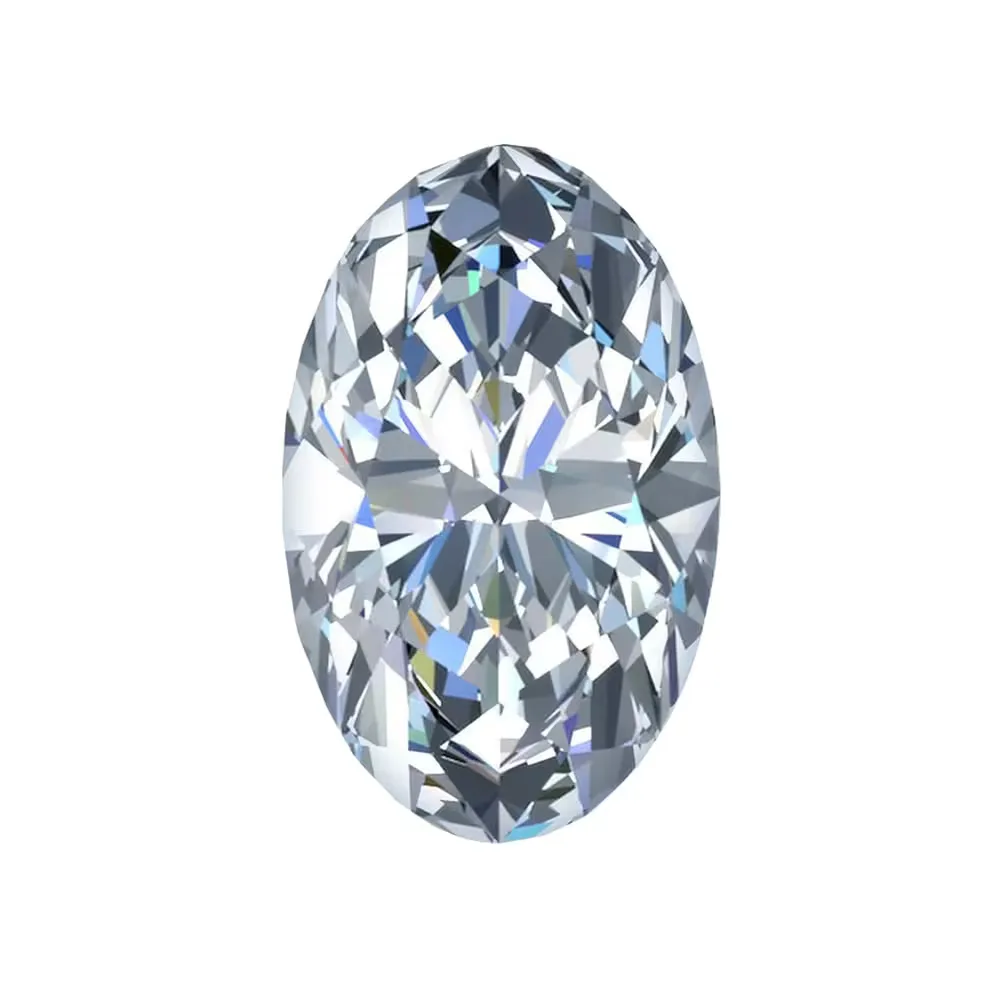
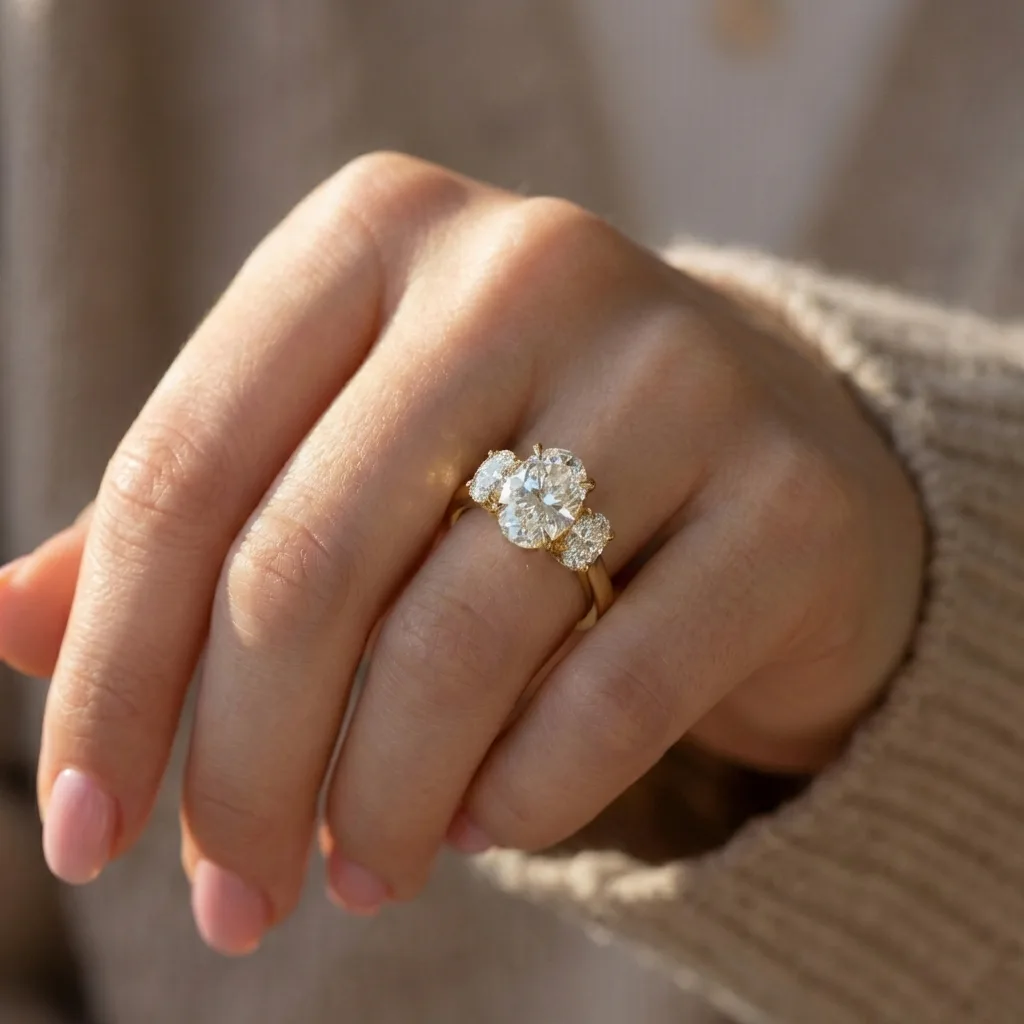
An oval diamond is an elongated brilliant cut, which means it takes the light-return geometry of a round brilliant and stretches it into a longer outline, and that extra length is what makes an oval look larger from above than a round of the same carat weight.
It has become one of the most popular shapes for engagement rings because it flatters the hand, sits comfortably in both plain and detailed settings, and keeps a softer outline than the pointed marquise or pear.
What to check before choosing
Check the bow tie
Almost every oval shows some shadow across its centre, and a soft, balanced bow tie that flickers as the stone moves is completely normal. What you want to avoid is a dark band that stays put and dull no matter how the diamond catches the light.
Choose the ratio by hand feel
A fuller oval feels classic and soft, while a longer one feels more dramatic, so the ratio that suits you really comes down to your finger length, the width of the band and the setting you have in mind.
Look closely at symmetry
Both ends of the oval should mirror each other and the shoulders should curve smoothly into the tips, because uneven shoulders or a slightly off-centre point are much easier to notice once the stone is set in a ring.
Settings that suit this shape
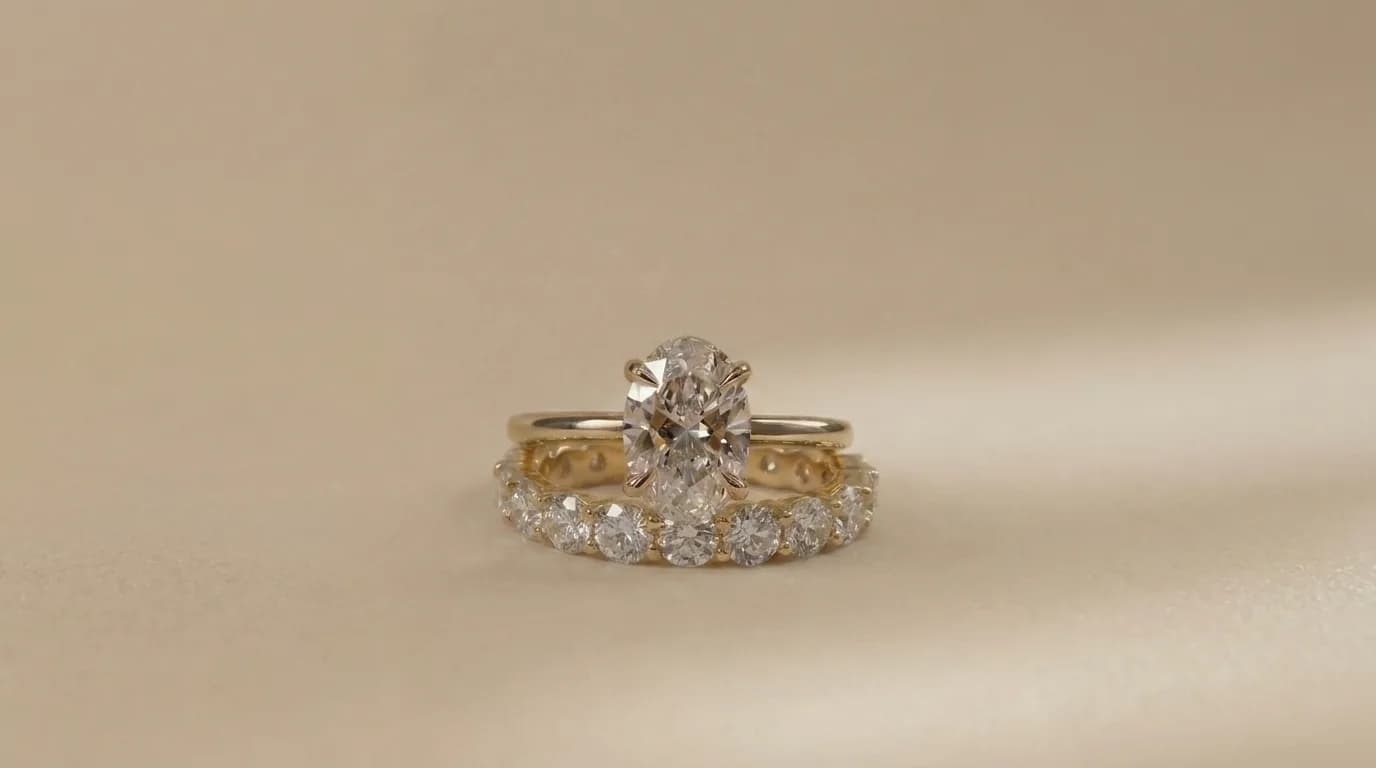
- A north-south solitaire, with the oval running along the finger, lengthens the hand and keeps all the attention on the stone.
- Turning the oval east-west, so it sits across the finger, gives the ring a more contemporary look and a lower profile.
- A hidden halo or a few delicate side stones add detail and a little extra sparkle without changing the clean oval outline too much.
Who does oval suit?
Oval suits anyone who wants a centre stone that looks generous for its weight, a graceful outline and plenty of sparkle. It works best when the ring design stays simple enough to let the shape itself carry the look.
Watch for
- A strong bow tie can leave the centre of the stone looking dull and shadowed.
- A very elongated oval can show a little more colour at its rounded tips.
- A narrow band makes the oval look larger, though it still needs enough metal in it to stand up to daily wear.
Watch: 4 facts before you buy an oval diamond
A quick run through four things worth checking before you choose an oval cut diamond.
Other diamond shapes
- #01
Round
If you want the most sparkle and the easiest stones to compare, the round brilliant is the shape to reach for. It is also the only common diamond shape that comes with a proper cut grade, so settle on cut quality first and then choose colour and clarity grades that still look clean and bright once the stone is set.
- #02
Emerald Cut
An emerald cut diamond is a step cut, which means it has long, open facets and neatly clipped corners, and it gives you a rectangular outline with broad flashes of light rather than the fast glitter of a brilliant cut. Clarity, colour and ratio all show up more clearly here than in other shapes, so most buyers start at VS1 or VS2 clarity, G colour or better, and a length-to-width ratio somewhere between 1.40 and 1.55 for a balanced, classic look.
- #03
Cushion Cut
A cushion cut diamond has a square or rectangular outline with soft, rounded corners, and depending on the facet pattern it can look antique, modern, chunky or crushed ice. Many buyers find themselves choosing between a true square cushion at a ratio close to 1.00 and an elongated cushion somewhere around 1.15 to 1.30, so it helps to decide the sparkle style and the outline you want first, then compare colour, depth and setting from there.
- #04
Marquise
A marquise diamond is a long brilliant-cut shape with two gently pointed tips, and it gives you one of the largest face-up looks you can get for the carat weight, so it always makes a statement. The trade-off is that it needs excellent symmetry, a bow tie you can live with and tips that are properly protected, so choose it when you want length, drama and presence.
- #05
Pear
A pear shaped diamond, sometimes called a teardrop diamond, has one rounded end and one gently pointed tip. The things worth checking are the length-to-width ratio, which most buyers like somewhere between 1.50 and 1.70, the point alignment, the bow tie effect through the centre, and the prongs that keep the tip protected. Choose pear if you want an elongated shape with a little more softness than a marquise.
- #06
Princess Cut
A princess cut diamond is a square brilliant cut with sharp, uncut corners and plenty of sparkle. It is often called a square diamond, and it is a popular modern alternative to a round brilliant that usually costs a little less per carat. The one practical catch is that the sharp corners need protecting from chips, so look for V-prongs or a bezel, and keep an eye on face-up size, symmetry and colour near the edges.
- #07
Radiant Cut
A radiant cut diamond pairs a square or rectangular outline with cropped corners and brilliant-style facets. It gives more sparkle than an emerald cut and has softer corners than a princess cut, so it suits anyone who wants geometry without giving up brightness. The first thing to decide is whether you want a square radiant at a ratio close to 1.00 or an elongated one at 1.15 to 1.35, and from there you can check the centre brightness and the facet pattern.
- #08
Asscher
An asscher cut diamond is a square step cut with cropped corners and long, parallel facets that draw the eye down into the stone, giving the deep, concentric hall of mirrors look the shape is known for. It is essentially a square version of the emerald cut, so the same things matter most: clarity sits on show through the open facets, body colour can be visible, and you want a ratio close to square at around 1.00 to 1.05.
- #09
Old Mine
An old mine cut diamond is an antique cushion-shaped cut, hand-cut from roughly the early 1700s through to the late 1800s, long before electric light and modern faceting. It has a soft, squarish outline, a tall crown, a small table and a large open culet that shows as a little circle in the centre, and it was cut to glow under candlelight rather than to throw out the bright sparkle of a modern brilliant. No two are quite alike, so each stone is judged on its own.
Ready to compare
See oval engagement rings
Browse oval engagement rings and compare how the shape behaves across solitaire, halo and custom settings.
View oval ringsFrequently asked questions
- What is the best oval diamond ratio?
- Plenty of buyers settle around 1.35 to 1.45, but the best ratio is really a visual choice, since fuller ovals look softer and longer ovals look more dramatic. Compare a few in a setting before you decide.
- Do all oval diamonds have a bow tie?
- Most ovals show some bow tie, so the aim is a soft shadow that moves and flickers with the stone rather than a dark band that sits over the centre and stays there.
- Are oval diamonds good for engagement rings?
- Yes. Oval diamonds are hard-wearing, bright and flattering on the hand, which makes them a lovely choice for an engagement ring as long as the stone has good symmetry and a balanced bow tie.
Still comparing shapes
Ask us to compare your shortlist
Send the shapes or ring styles you are considering and we will help you compare proportion, setting style and everyday wear.
Contact the studio