Round Brilliant Cut Diamond
Quick answer
A round brilliant diamond is the safest shape if you want maximum sparkle and easier comparison between stones. It is the only common diamond shape with a formal GIA cut grade, so prioritise cut quality first, then choose colour and clarity grades that still look clean and bright once set.
Shape at a glance
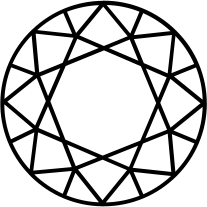
| Detail | Typical detail | Buying note |
|---|---|---|
| Facet pattern | 57 or 58 facets in a circular brilliant pattern. | Cut quality is easier to compare than with fancy shapes because round diamonds can receive a cut grade. |
| Typical ratio | Close to 1.00, because the outline should read circular. | Shape balance is rarely the challenge. Light performance and proportions matter more. |
| Sparkle | Strong white brightness, fire and scintillation when well cut. | Do not trade too much cut quality for carat weight. The stone can look larger when it is lively. |
| Best for | Classic solitaires, halos, three-stone rings, studs and tennis jewellery. | Choose round when you want the most familiar diamond look and a simpler comparison process. |
What is a Round Brilliant Cut Diamond?
A round brilliant diamond is a circular diamond shape cut for light return. The facet pattern is designed to send light back through the top of the stone, which is why round brilliants are the benchmark for sparkle.
Round diamonds suit both natural and lab-grown stones. Because the cut style is so well studied, reports and visual checks give buyers more information than they usually get with fancy shapes.
What to check before choosing
Start with cut quality
For round brilliants, cut quality does the most visible work. Compare the cut grade, proportions and actual images before chasing a higher colour or clarity grade.
Use colour in context
G and H often face up white in many settings, while warmer metals can make lower colour grades look balanced. Platinum and white gold are less forgiving.
Look for eye-clean clarity
VS2 is a safe starting point for many buyers, and some SI1 stones can work if the inclusions are small, pale and away from the centre.
Settings that suit this shape
- A 4-prong solitaire shows more of the diamond, while a 6-prong solitaire makes the outline read slightly rounder and adds security.
- A halo adds visual size and sparkle, but it can make the ring feel more detailed than a plain solitaire.
- Round diamonds are easy to pair with straight wedding bands, side stones and pave bands because the outline is balanced.
Who does round suit?
Round suits buyers who want strong sparkle, easy comparison and a ring shape that will feel familiar for decades. It is also the easiest shape to match across centre stones, side stones and wedding bands.
Watch for
- A lower carat round can look better than a heavier stone if the cut is stronger.
- Rounds often cost more per carat than fancy shapes, so decide whether sparkle or face-up spread matters more.
- Very thin bands can make a round look larger, but they need enough metal for daily wear.
Other diamond shapes
- #01
Oval
An oval diamond gives a larger, lengthening look than a round diamond of similar weight, while keeping a brilliant-cut sparkle pattern. The main buying checks are bow tie, length-to-width ratio, shoulder shape and symmetry, because there is no single cut grade that tells you whether an oval is beautiful.
- #02
Emerald Cut
An emerald cut diamond is a step cut with long, open facets and clipped corners, giving a rectangular outline with broad flashes of light rather than fast brilliant-cut sparkle. Clarity, colour and ratio show more clearly than in other shapes, so most buyers start at VS1 or VS2 clarity, G colour or better, and a length-to-width ratio between 1.40 and 1.55 for a balanced classic look.
- #03
Cushion Cut
A cushion cut diamond has a square or rectangular outline with softened corners. It can look antique, modern, chunky or crushed ice depending on the facet pattern, and many buyers choose between a true square cushion at a ratio close to 1.00 or an elongated cushion around 1.15 to 1.30. Decide the sparkle style and outline first, then compare colour, depth and setting.
- #04
Marquise
A marquise diamond is a long brilliant-cut shape with pointed tips. It gives one of the largest face-up looks for its carat weight and makes a strong design statement, but it needs excellent symmetry, a manageable bow tie and protected tips. Choose it if you want length, drama and presence.
- #05
Pear
A pear shaped diamond, sometimes called a teardrop diamond, has one rounded end and one pointed tip. The key checks are length-to-width ratio (most buyers prefer between 1.50 and 1.70), point alignment, the bow tie effect through the centre and prongs that protect the tip. Choose pear if you want an elongated shape with more softness than a marquise.
- #06
Princess Cut
A princess cut diamond is a square brilliant cut with sharp, uncut corners and strong sparkle. Often called a square diamond, it is a popular modern alternative to round, usually costing a little less per carat. The corners need protection from chipping, so check for V-prongs or a bezel, and watch face-up size, symmetry and colour near the edges.
- #07
Radiant Cut
A radiant cut diamond combines a square or rectangular outline with cropped corners and brilliant-style facets. It gives more sparkle than an emerald cut and softer corners than a princess cut, so it suits buyers who want geometry without giving up brightness. Choose between a square radiant at a ratio close to 1.00 or an elongated radiant at 1.15 to 1.35, then check centre brightness and facet pattern.
Ready to compare
See round engagement rings
Browse round engagement rings and compare how the shape behaves across solitaire, halo and custom settings.
View round ringsFrequently asked questions
- Is round the sparkliest diamond shape?
- Usually, yes. A well-cut round brilliant is designed for strong light return and is the easiest shape to compare through cut grade and proportions.
- Are round diamonds more expensive?
- Round diamonds often cost more per carat than fancy shapes because of demand and how the rough diamond is cut. The trade-off is easier comparison and strong sparkle.
- What setting is best for a round diamond?
- A solitaire is the cleanest choice, with 4-prong and 6-prong settings both common. Round diamonds also work well in halos, three-stone rings and pave bands.
Still comparing shapes
Ask us to compare your shortlist
Send the shapes or ring styles you are considering and we will help you compare proportion, setting style and everyday wear.
Contact the studio