
What does depth mean in gemstones?
Last updated 17 October 2026
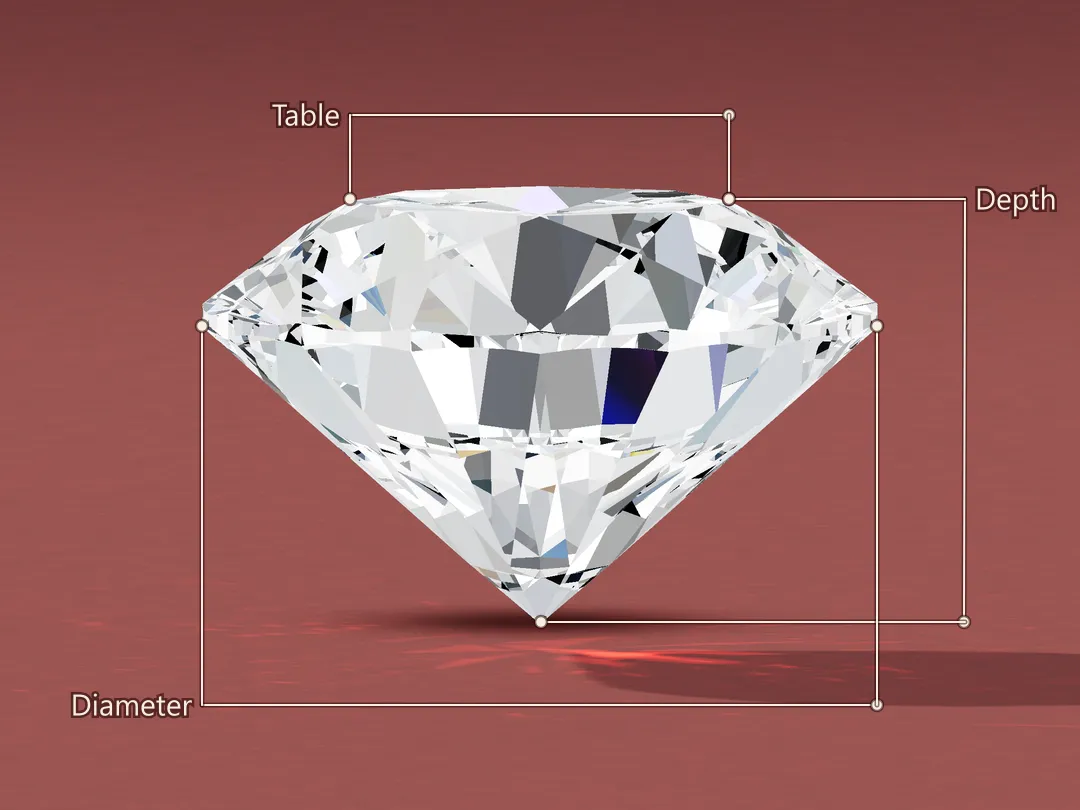
Depth is a gemstone’s height from top to bottom, measured in millimetres. For a faceted stone with a table, it runs from the table to the lowest point of the pavilion. Depth percentage compares that height with a specified width or diameter; it is a ratio, not a measurement of mass or a cut grade.
Read depth as a top-to-bottom measurement
The vertical measurement runs from the table to the stone’s lowest point. It is distinct from the width across the girdle. The example below uses invented dimensions to show those directions; it is not a size chart for a particular carat weight.
Frequently asked questions
- What is a good depth percentage for a round diamond?
- There is no single percentage that guarantees a good cut. Read total depth with the other proportions and the applicable laboratory assessment. A fixed “ideal” interval should not replace examination of the individual diamond.
- Does a shallower diamond always look better?
- No. A shallow stone may have a wide outline, but width and light performance are different questions. Assess the proportions together and inspect the individual diamond rather than choosing the lowest depth figure.
- Is depth the same as depth percentage?
- No. Depth is a millimetre measurement. For a round brilliant, depth percentage divides that measurement by average girdle diameter and multiplies by 100. The ratio describes proportions; it is not a cut grade.
Sources and further reading
Talk through depth with us
Tell us what you have in mind, even if it is only a budget and a piece of jewellery type, and we will help you weigh up the options. We reply to every enquiry, usually within one business day.
Contact the studio