

A split-shank ring has a band that branches as it approaches the centre setting. A single-shank ring keeps one continuous band on each side. The easiest way to choose between them is to follow the metal around the stone, then look at the space between the branches.
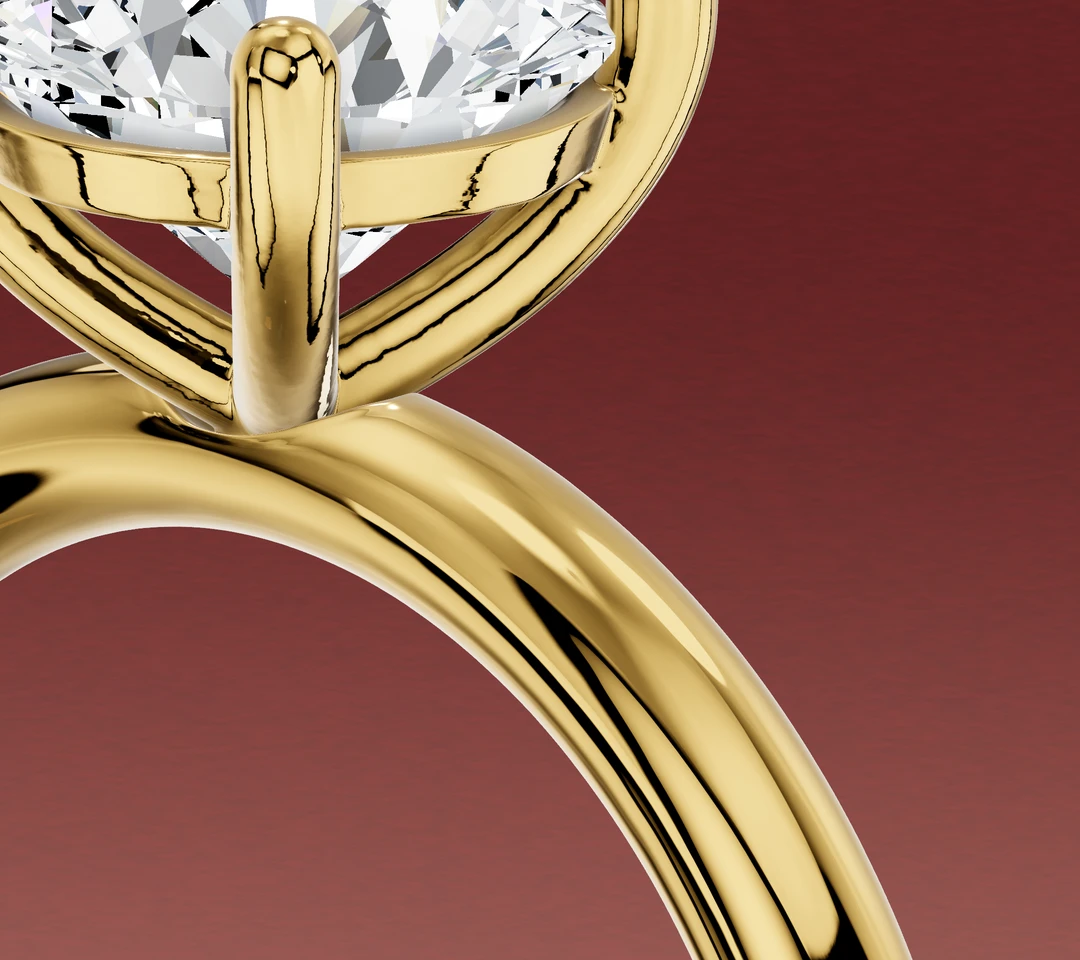
These plain-metal examples make that difference easier to see. Start with the top view to compare the overall spread, then use the angled shoulder view to confirm the opening. In this split-shank example, the setting hides part of that space from above. Turn the ring to check how the upper design continues into the lower band.
Start at the shoulder
The shoulders are the upper sections of the band beside the setting. In the single-shank example, each shoulder provides one uninterrupted route towards the centre. In the split-shank example, that route divides, leaving an opening between the arms.
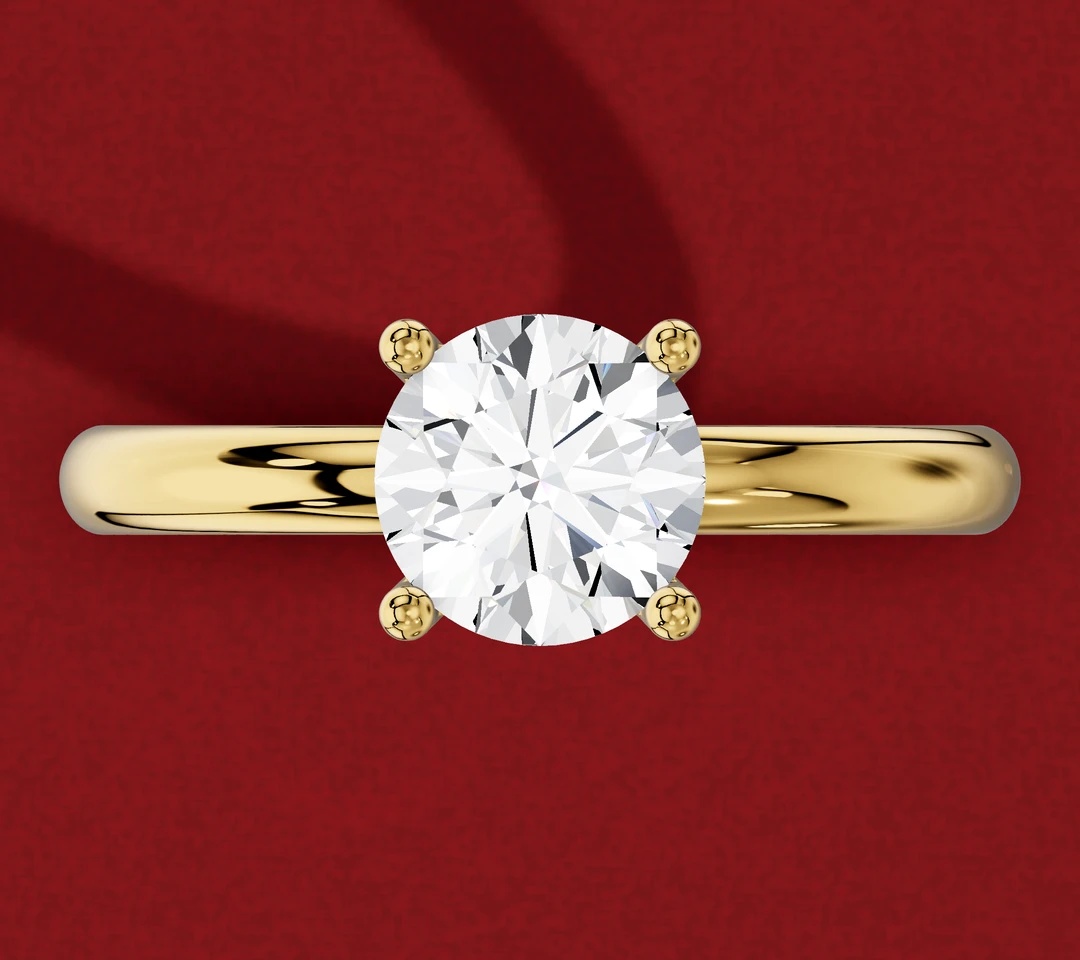
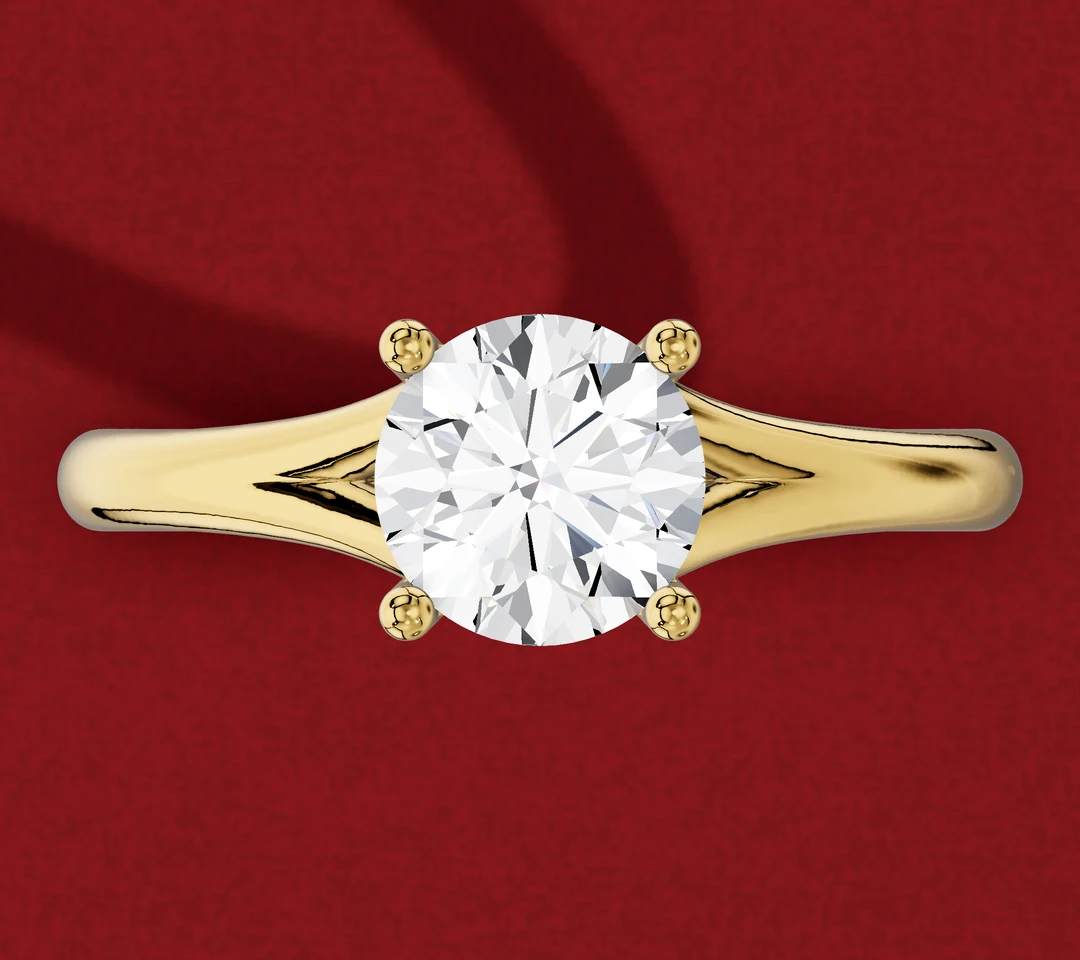
Look at the outline of the opening itself. Where does it begin? Does it stay narrow or widen as it approaches the stone? How much of it remains visible beside the setting? Those details help you distinguish two split-shank designs that might look similar in small catalogue pictures.
A dark stripe in a polished band can be a reflection. In another view, check that you are seeing a space between metal edges.
Compare the opening and the metal separately
A split shoulder has three things to look at: its overall spread, the width of each arm, and the open space between them. Two rings can occupy a similar width beside the stone while arranging that space very differently.
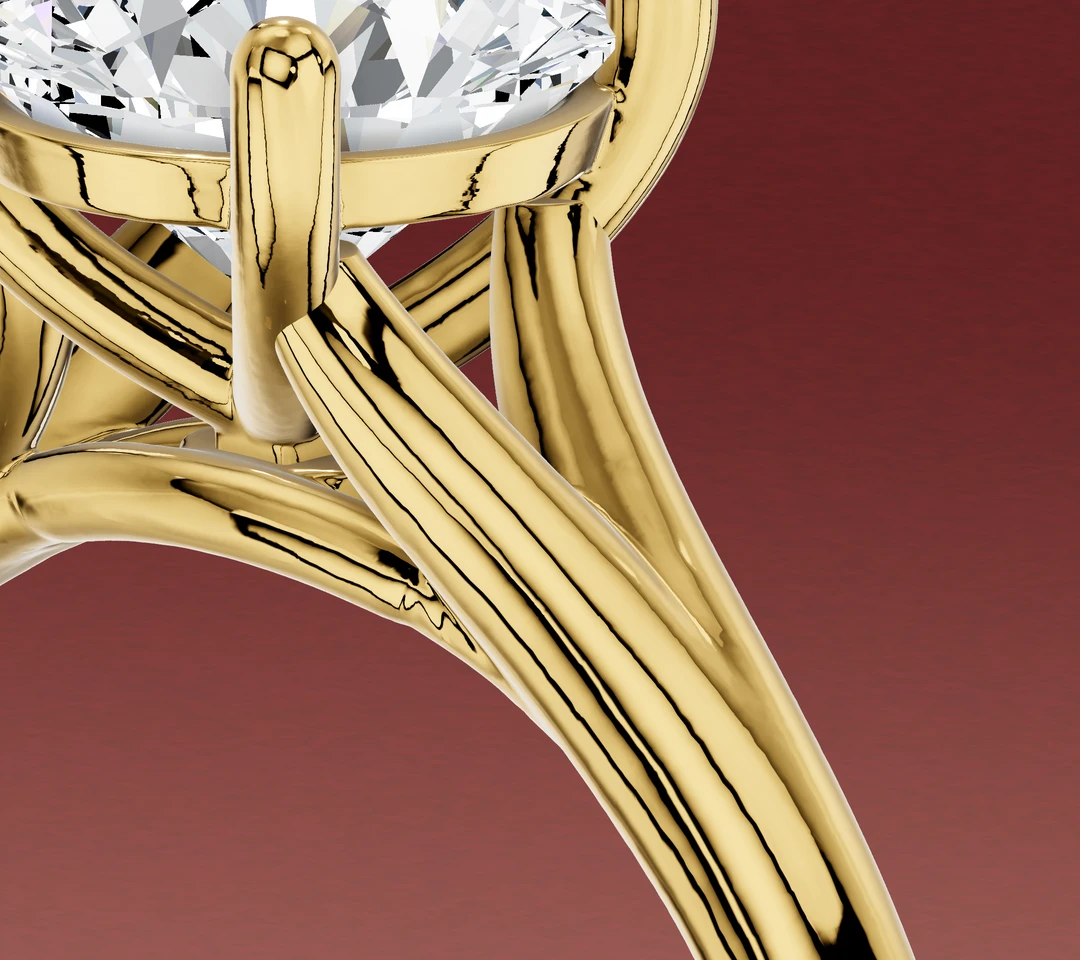
On a shortlist, compare:
- Where the split starts. An opening beginning close to the head creates a different outline from one extending farther down the shoulder.
- How the arms run. Follow both edges rather than judging only the widest point.
- How much space stays visible. The stone and its setting may obscure part of the opening from above.
If you ask for a band width, specify where it should be measured. The width across two split arms includes their gap; it does not tell you the width of either arm or of the lower band. Our band-width guide explains the broader measurement question.
Follow the band underneath
Turn the ring to see where the divided section returns to a continuous lower band. A top photograph cannot show the full route around the finger.
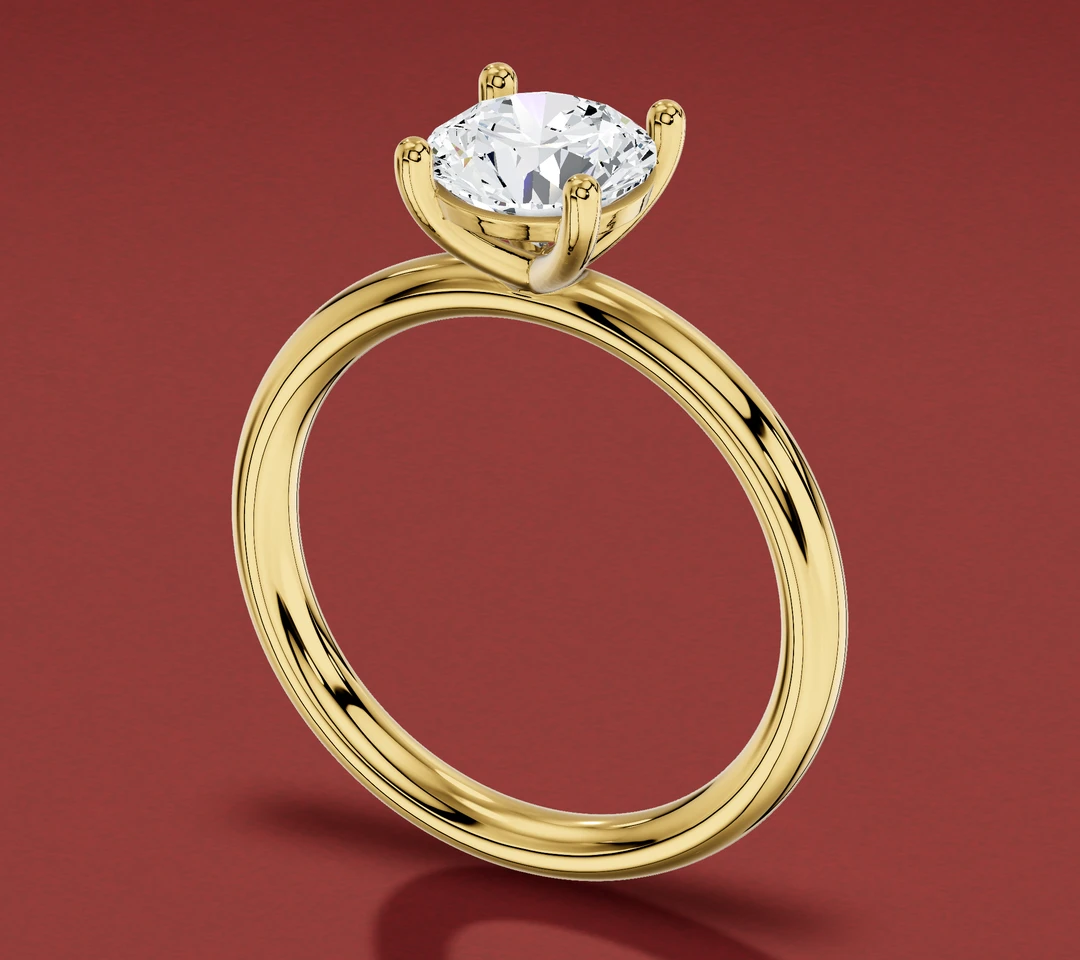
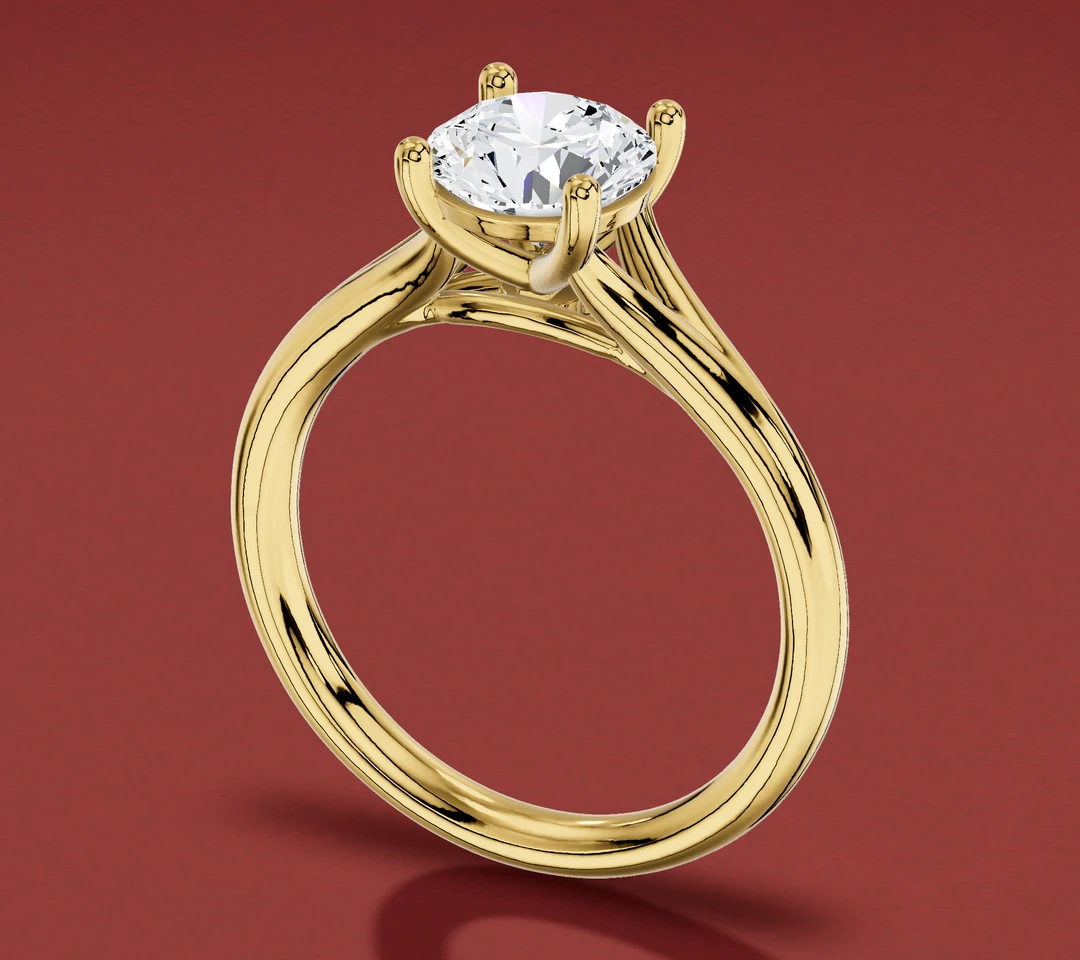
This is also the useful view to request before asking about sizing. GIA's ring-sizing guidance treats tapered bands, wider bands and rings with open space above the finger as different measurement situations. Ask how your specific design will be sized and what future adjustments are possible; the appearance of a split alone cannot answer that.
For a wedding-band pairing, ask to see the two exact designs together from above and from the side. The opening between the split arms is not a placement guide for a second ring. Compare the outlines of the complete pair and ask the jeweller to confirm clearance. See our guide to wedding-band gaps for that separate decision.
A split shank can still be a solitaire
“Split shank” describes the band. “Solitaire” describes the single-stone design, as explained in GIA's solitaire guide. The two plain-metal rings shown here both have one centre stone.
Keep those choices separate when searching. If you like a divided band without extra diamonds, ask for a plain split-shank solitaire. If you prefer an uninterrupted shoulder, ask to see single-shank options with the centre setting you like.
Make the choice from the detail you like
Choose a single shank if you prefer one continuous line beside the stone. Choose a split shank if the divided outline and visible opening are part of the design you want. Then check the exact ring's lower band, sizing and intended wedding-band pairing.
Save a top view and a lower view of your favourite example. A note such as “I like this opening, but want it to start closer to the stone” gives a clearer brief than “I want a delicate split shank”. You can send those references to Lily Dia online.
Designed by us in Melbourne, made to order
Lily Dia is a small studio, so every ring is drawn, set and finished for the person wearing it. If this article helped, the collection shows how these choices look on real rings, and you can ask us anything before you decide.
Browse engagement ringsOr ask us a question first