

A tulip setting takes its name from the flower-like metalwork around and beneath the centre stone. If that detail is what you love, start with a side view: the shape of the basket is easier to judge there than in a photograph looking straight down at the diamond.
Start below the stone
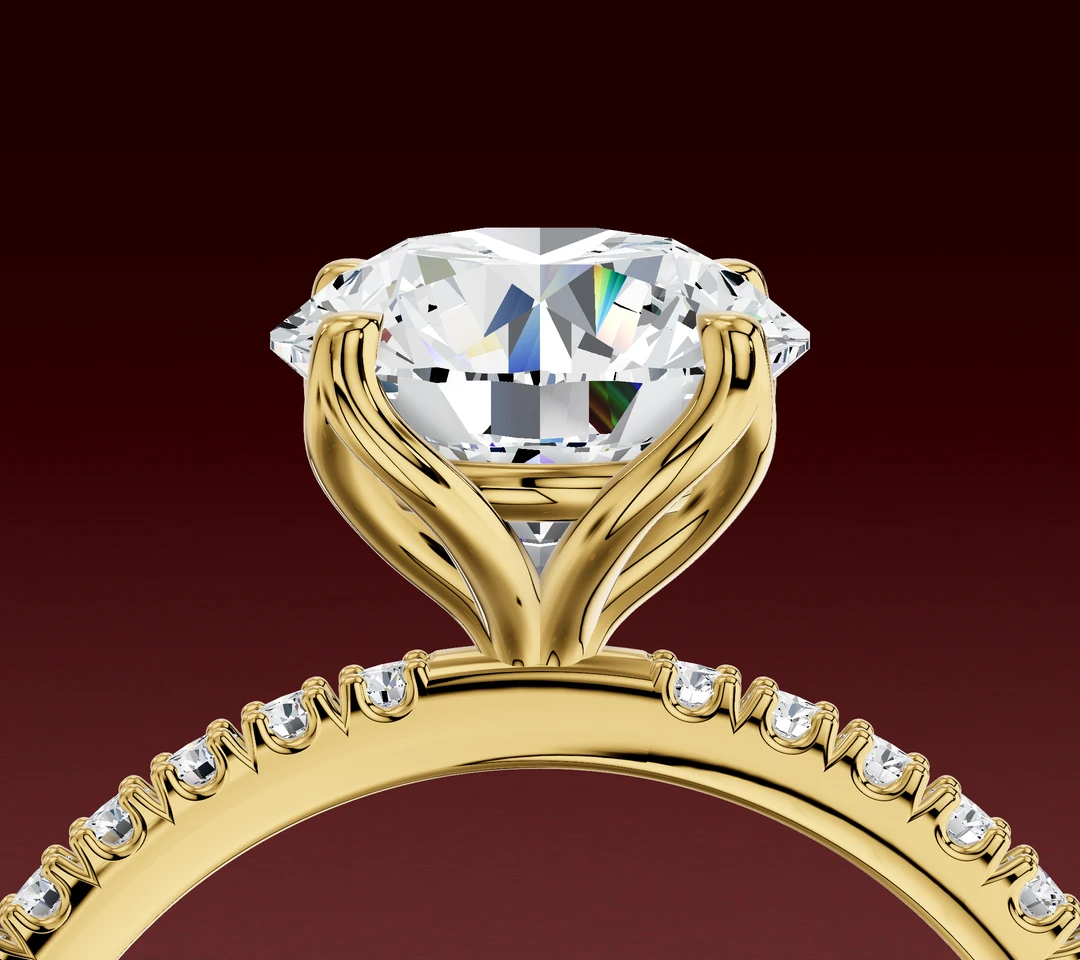
Find the centre stone, then follow the curved metal underneath it. Look at the outline of each visible petal and the spaces between neighbouring curves. Is the floral shape obvious, or does it read as a small detail beneath the diamond?
"Tulip" describes this floral treatment. Retailer North & South's examples show how the term is used for petal-like prong and basket designs. The name alone leaves plenty of room for different outlines.
Follow one petal, then find the tip
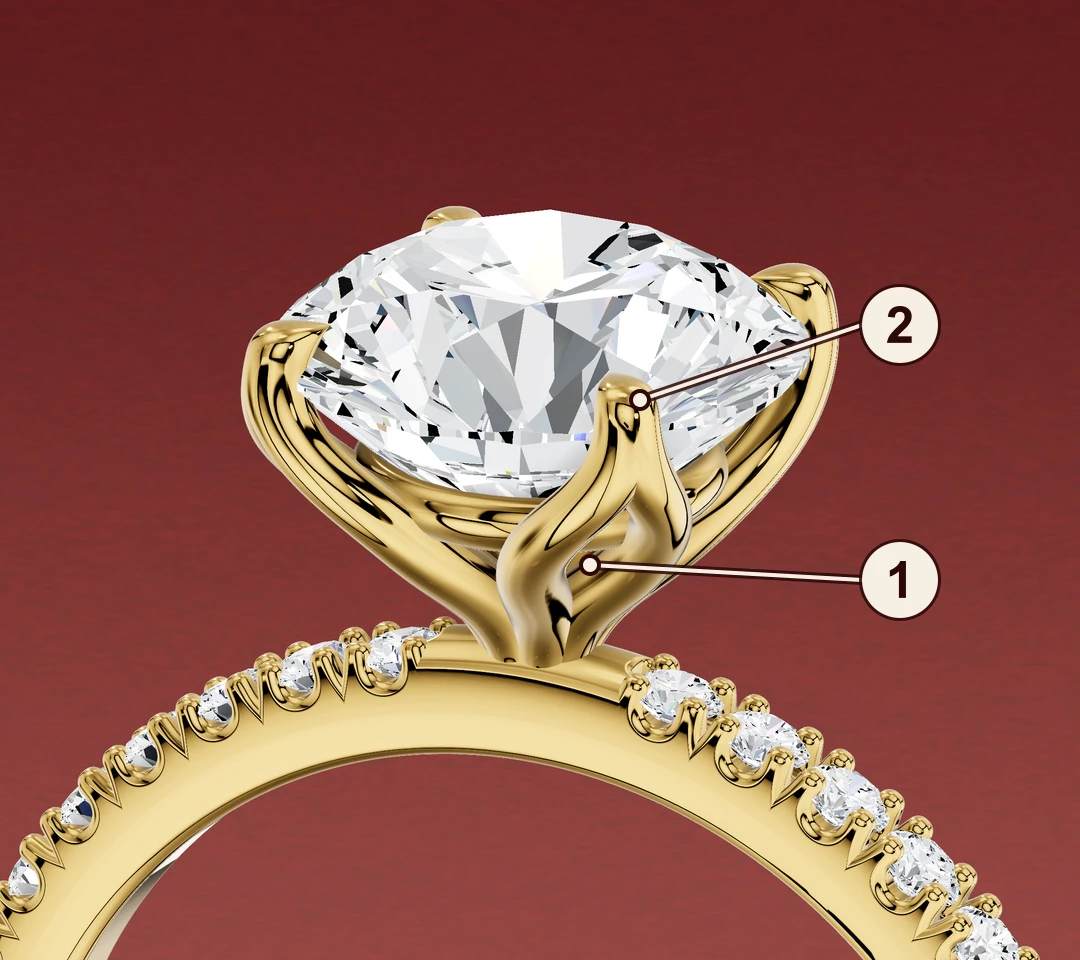
In the close-up, separate two details: the broad curve below the stone and the small prong tip at its edge. Ask which part you want to emphasise. A reference photograph might appeal because of the sweeping side profile even when the tips themselves are quite understated.
GIA's setting guide describes prongs as metal extending up and bending over a gemstone's edge. Its basket section explains the framework connecting prongs beneath the stone. Those terms help you point to the part you mean when discussing a floral design.
Check the same detail from above and at an angle
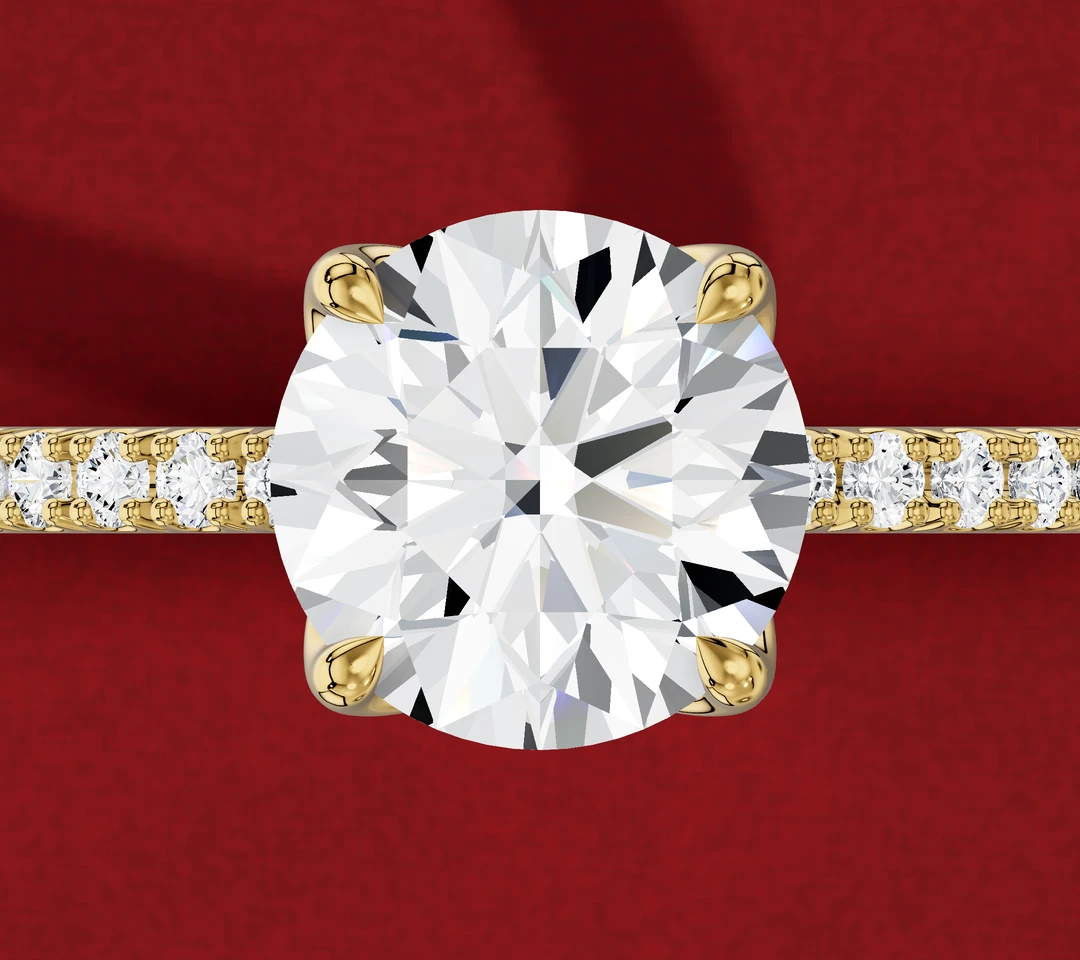
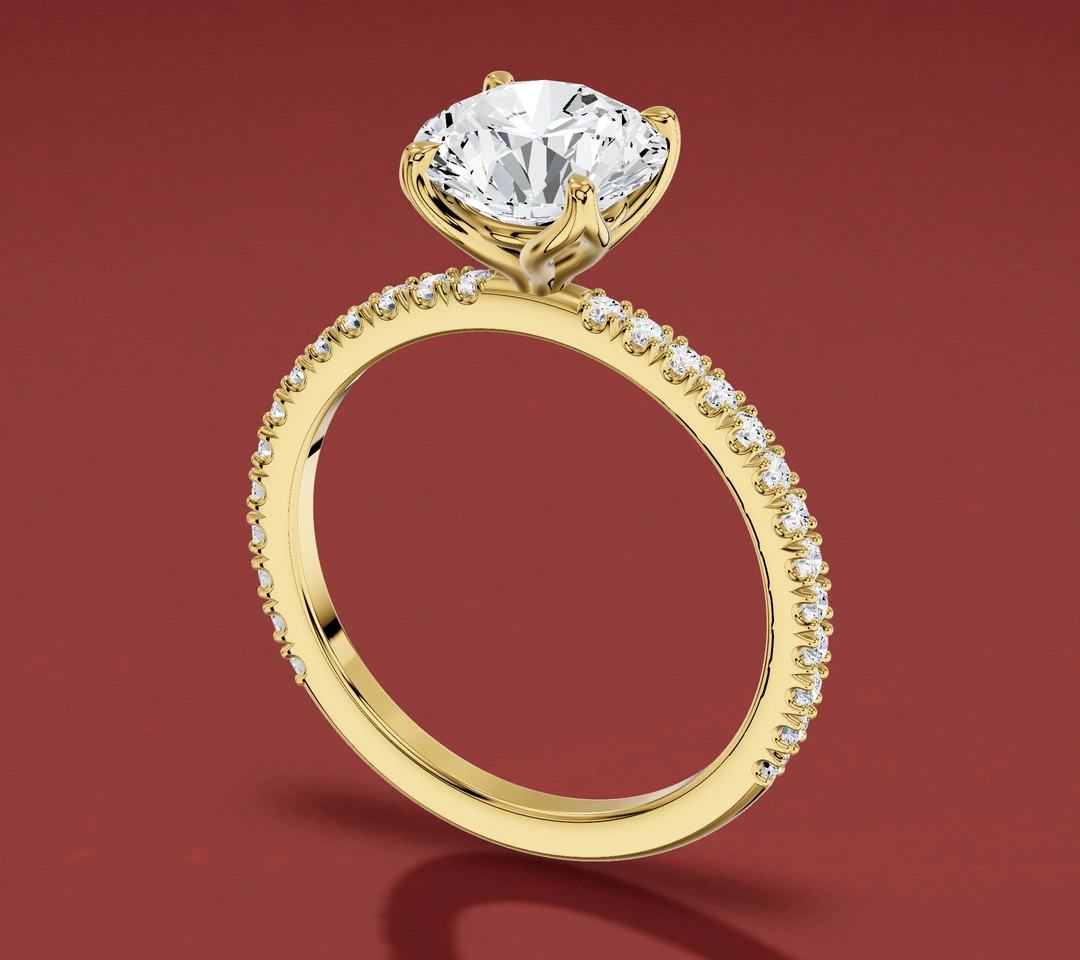
Use the top view to see the stone's outline and the metal visible around it. Then move to the angled view and find the petal again. This is a useful way to decide whether you like the whole design, as well as its most decorative side.
Keep the band in view. Its shape and any small stones are separate choices from the floral head. You can describe a favourite basket without asking for every feature of the reference ring.
Turn the detail you like into a clear brief
Save a side image and mark the curve you want to keep. Add a sentence about what appeals to you: "I like this rounded petal outline" or "I want the floral detail to show from an angle." Ask to see that detail with your chosen stone's dimensions before settling the design. Our CAD-reading guide helps you identify the views and mark your feedback.
Send us the detail you like for an online design discussion, or browse round engagement rings for the wider shape and style choices.
Designed by us in Melbourne, made to order
Lily Dia is a small studio, so every ring is drawn, set and finished for the person wearing it. If this article helped, the collection shows how these choices look on real rings, and you can ask us anything before you decide.
Browse engagement ringsOr ask us a question first