
Choose a straight shank if you want a simple line leading towards the centre stone. Choose a twisted shank if the curves of the band are part of what you love about the ring. Both can have a plain metal band and a single centre stone, so this decision does not have to involve adding more diamonds.
The useful comparison is between two similar rings. Keep the stone shape, metal colour and head style consistent, then look at what happens along the band.
Twisted and plain describe different things
The shank is the band that goes around your finger. The head holds the centre stone, and the shoulders are the areas where the band approaches the head. GIA's guide to ring settings explains these parts separately.
“Twisted” describes the band’s form. “Plain” usually means it has no accent stones or elaborate surface decoration. A twisted band can be plain metal; a straight band can carry diamonds. If you ask for “twisted versus plain”, it helps to say whether you mean the shape of the band or the presence of small stones.
For this comparison, both bands are plain metal. The choice is a straight line or a twisting line around the same kind of centre setting.
Start with the view from above
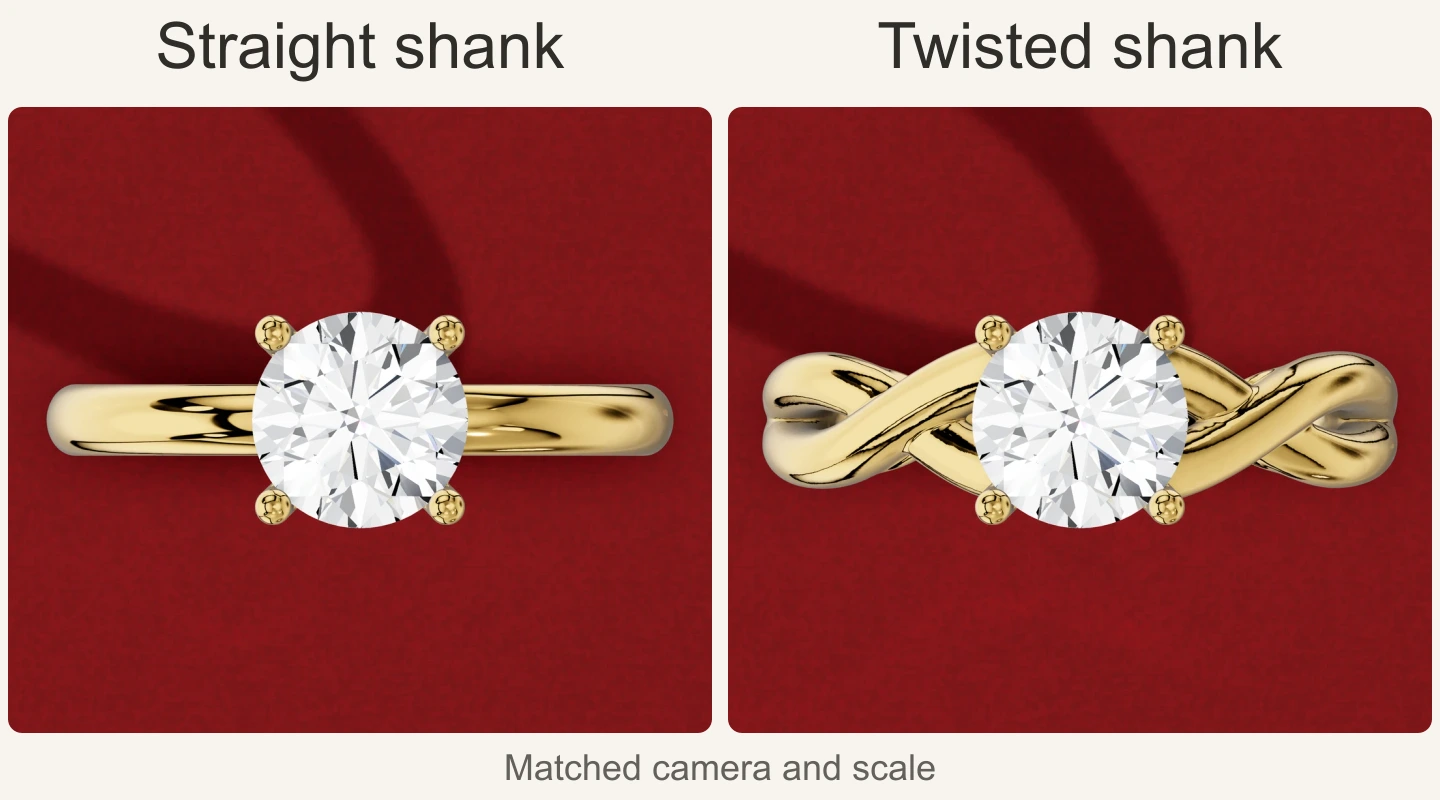
Look at the band on each side of the stone before zooming in on the diamond.
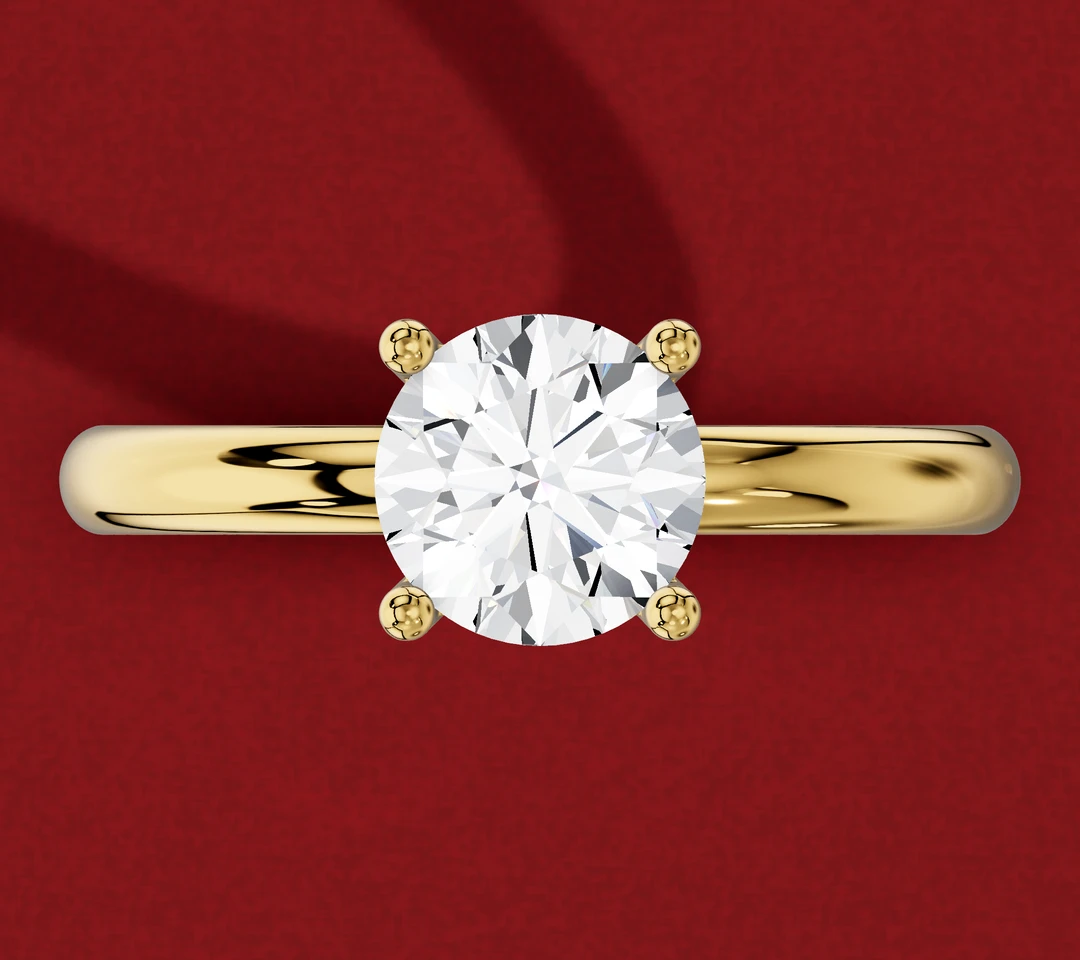
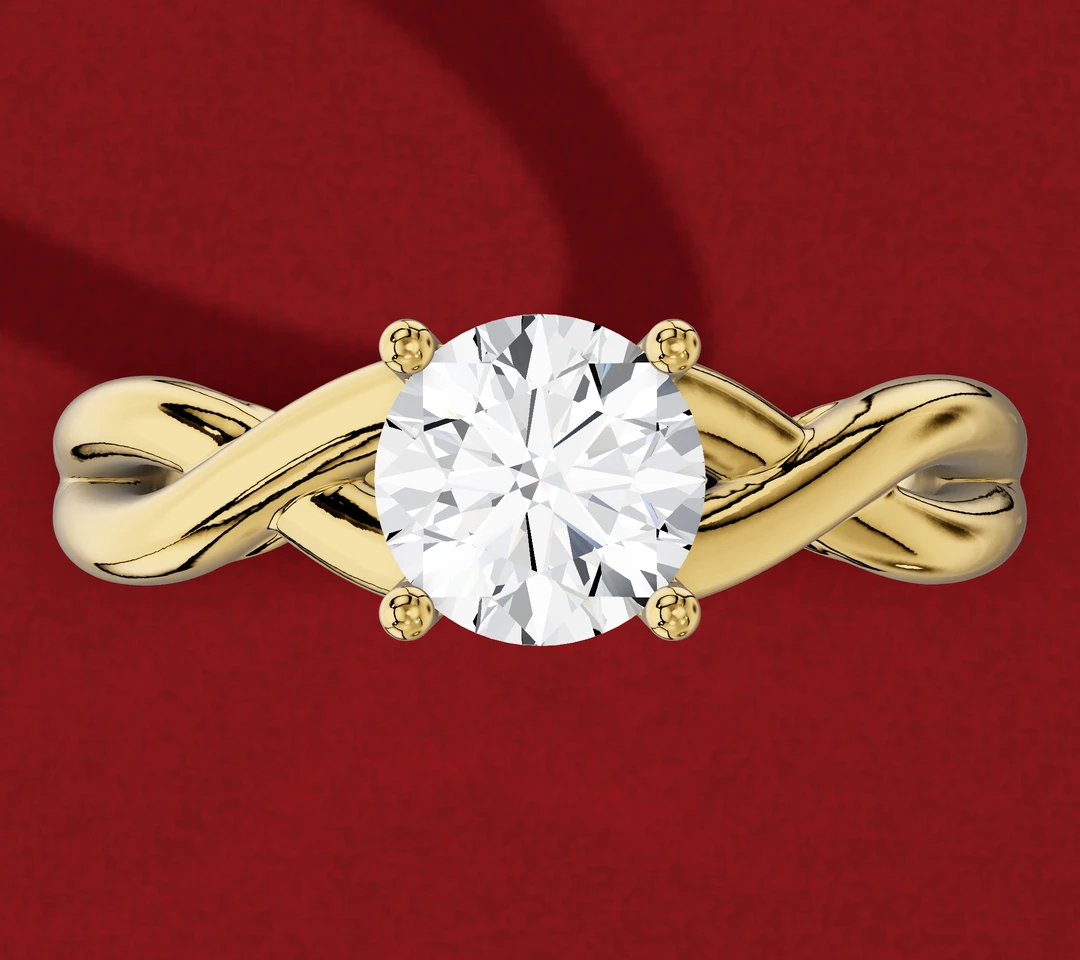
View the top comparison at full size
On a straight shank, the outline gives you a relatively direct path towards the setting. On a twisted shank, the changing direction becomes part of the design. You may prefer that extra detail even when the ring has no accent diamonds.
Ask yourself three questions:
- Do I want to notice the band immediately, or mostly notice the centre stone?
- Do I prefer a continuous outline or curves that change direction?
- Would I still like the twist in plain metal, without the distraction of small diamonds?
There is no need to decide which is more “timeless”. The more useful question is which outline you would choose again if both rings had the same stone.
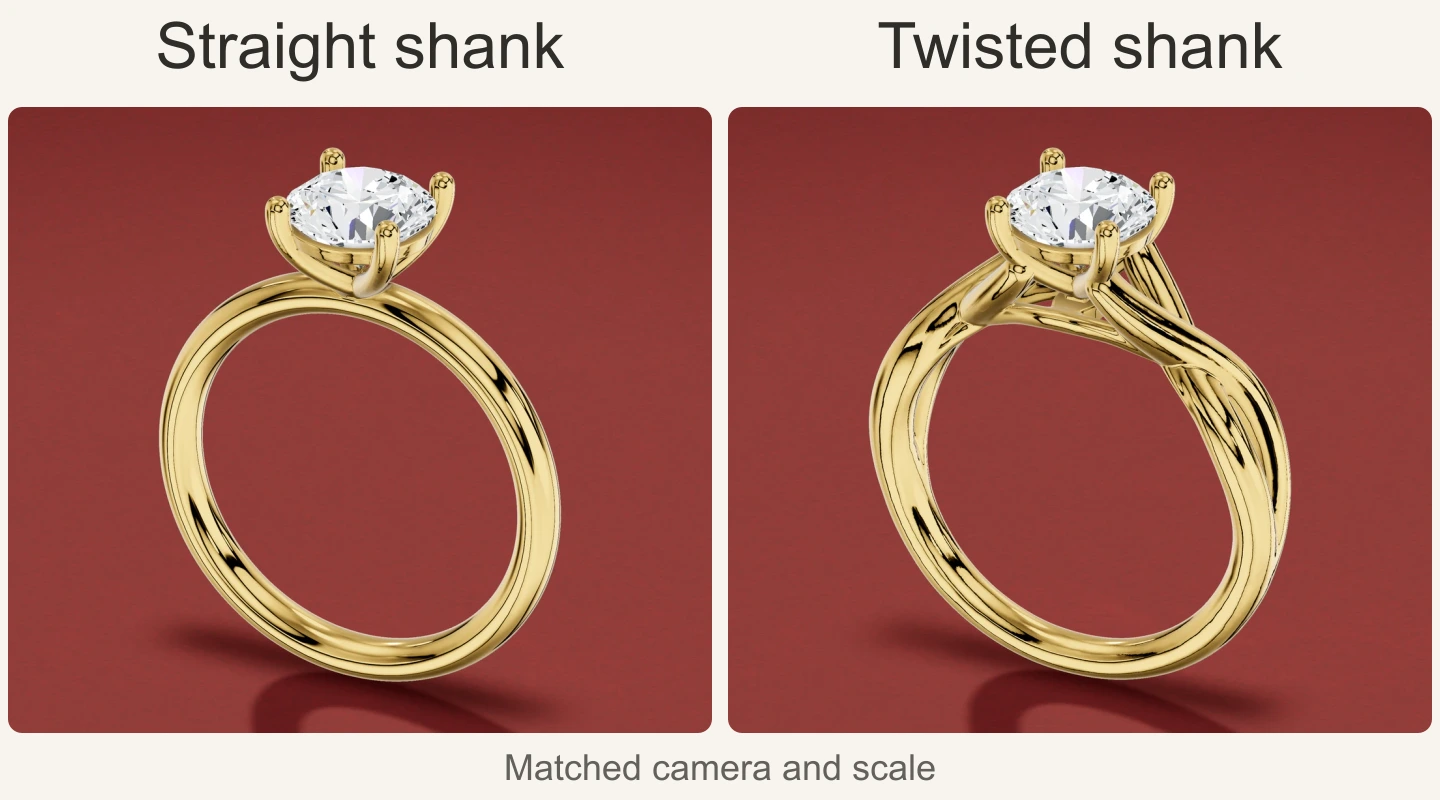
Then turn the ring to three-quarter view
“Twisted shank” covers a range of designs. Some have a gentle turn near the head; others have a more pronounced woven or crossing appearance. The name alone does not tell you how far the detail continues around the ring.
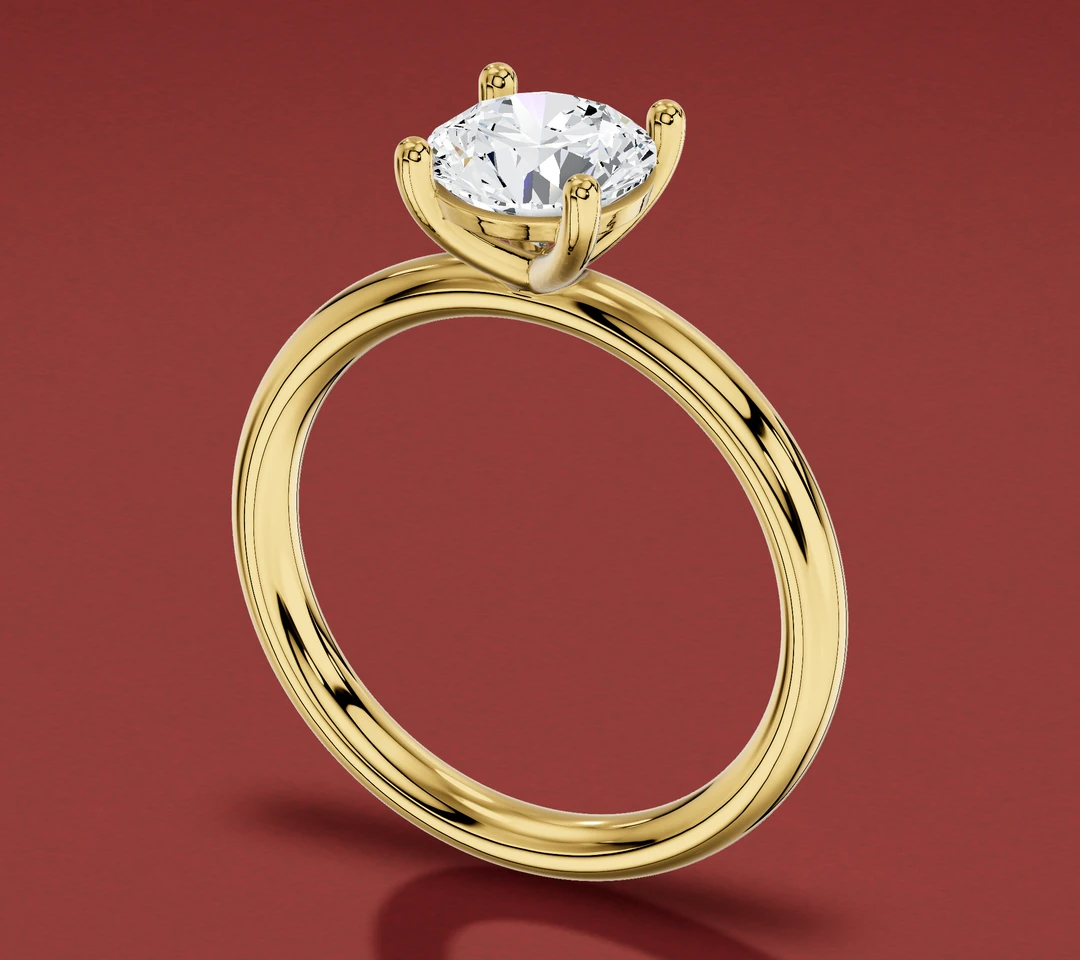
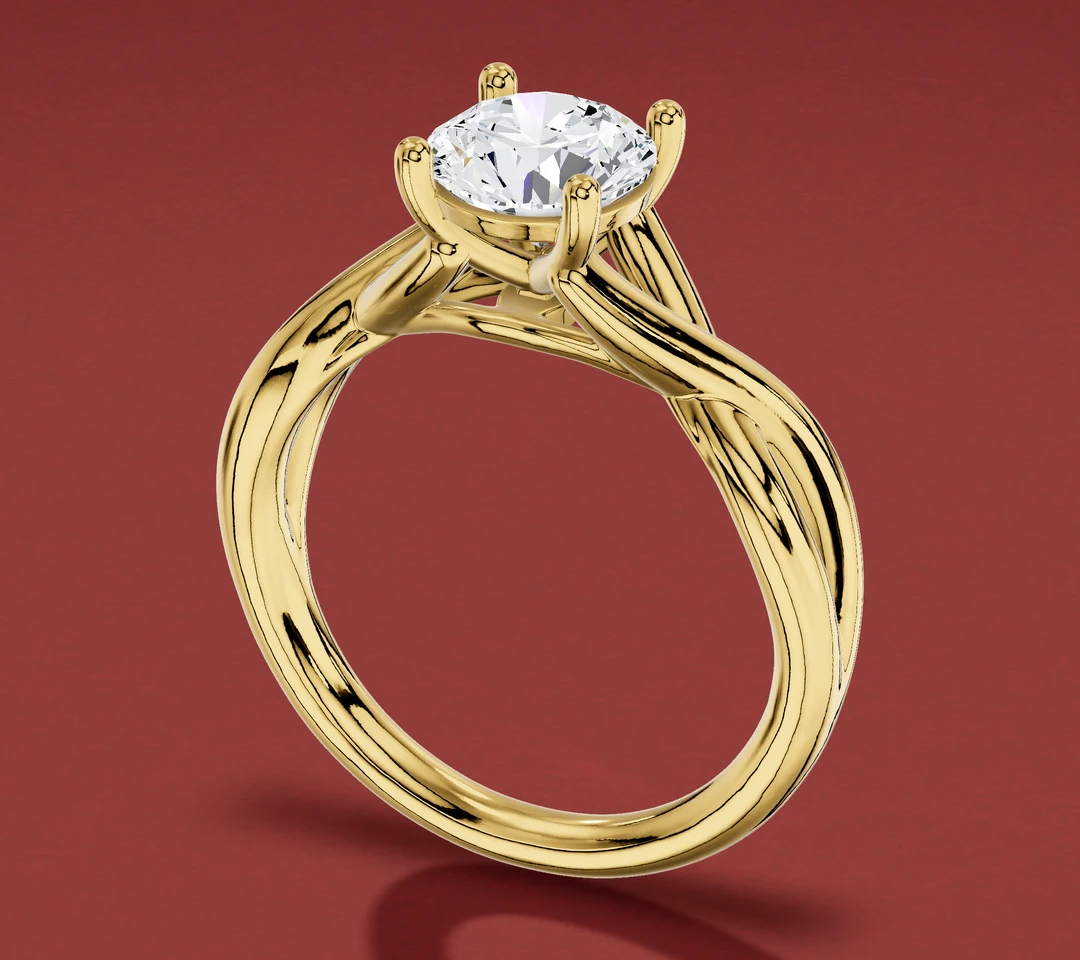
View the angled comparison at full size
At a three-quarter angle, follow the band from the side of the finger towards the stone. Look for where the twist begins, whether there are open spaces, and how the shoulders meet the head. This is also where you can decide whether you like the ring as a whole rather than just its top outline.
Compare one angle at a time. A close-up of a twisted ring beside a distant photograph of a straight one makes it harder to judge their proportions fairly.
Check the underside before deciding
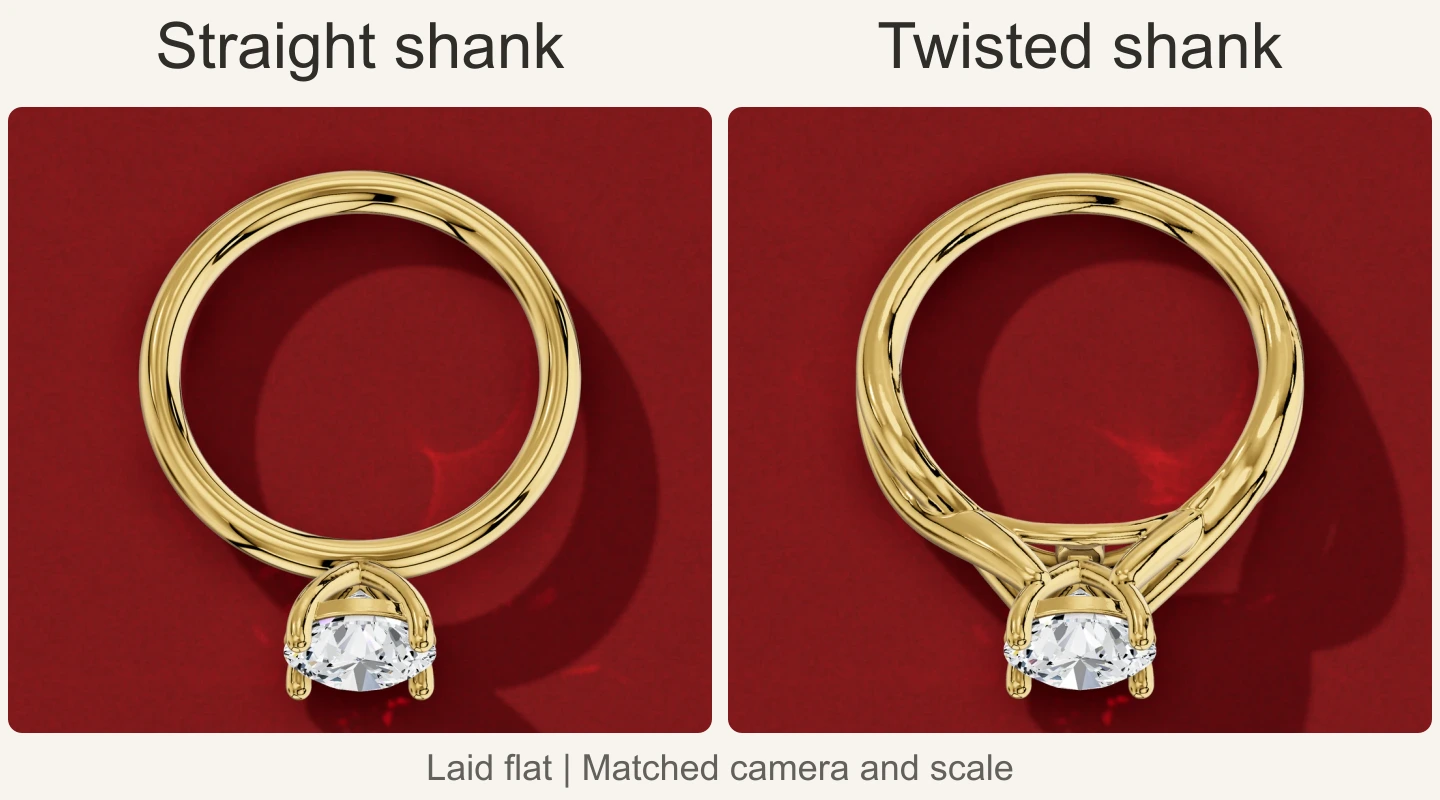
The back of the ring deserves a view of its own. Ask to see whether the decorative shape continues all the way around or transitions to a simpler section beneath the finger.
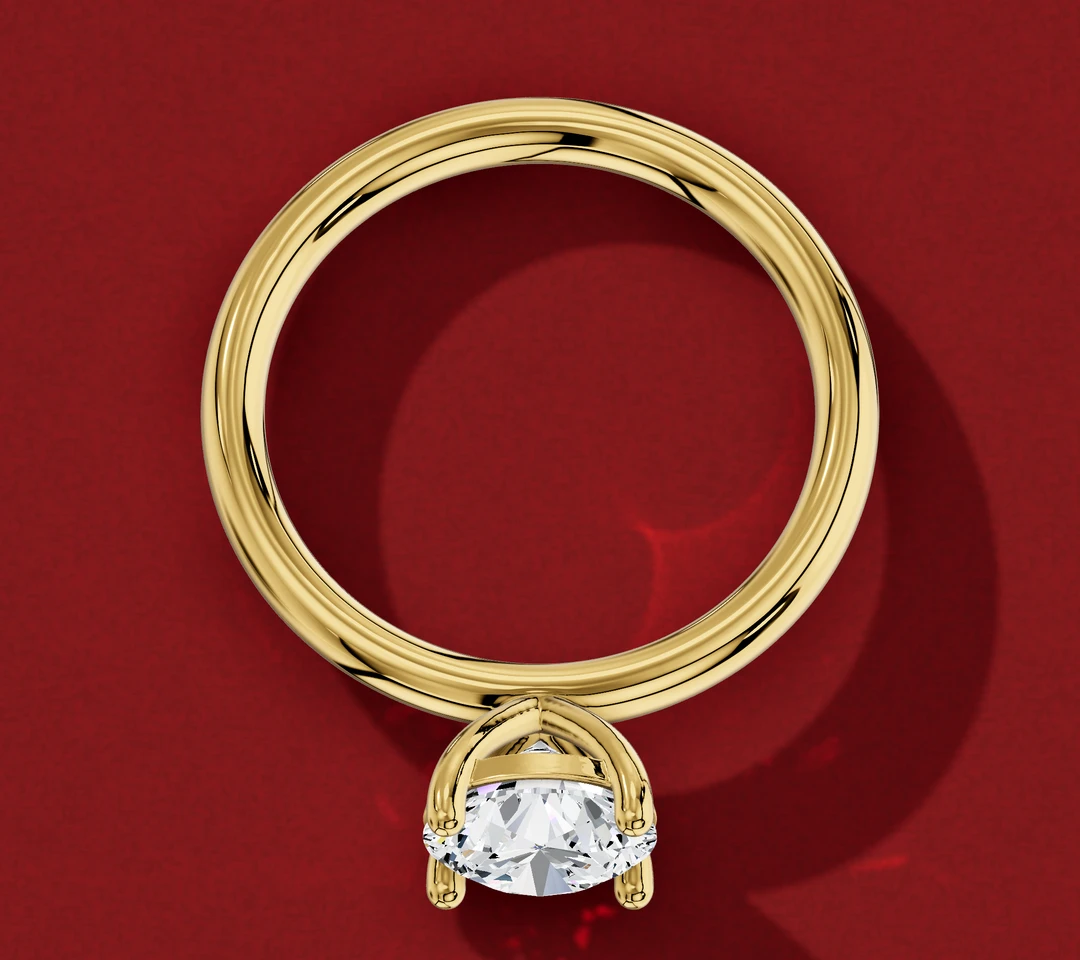
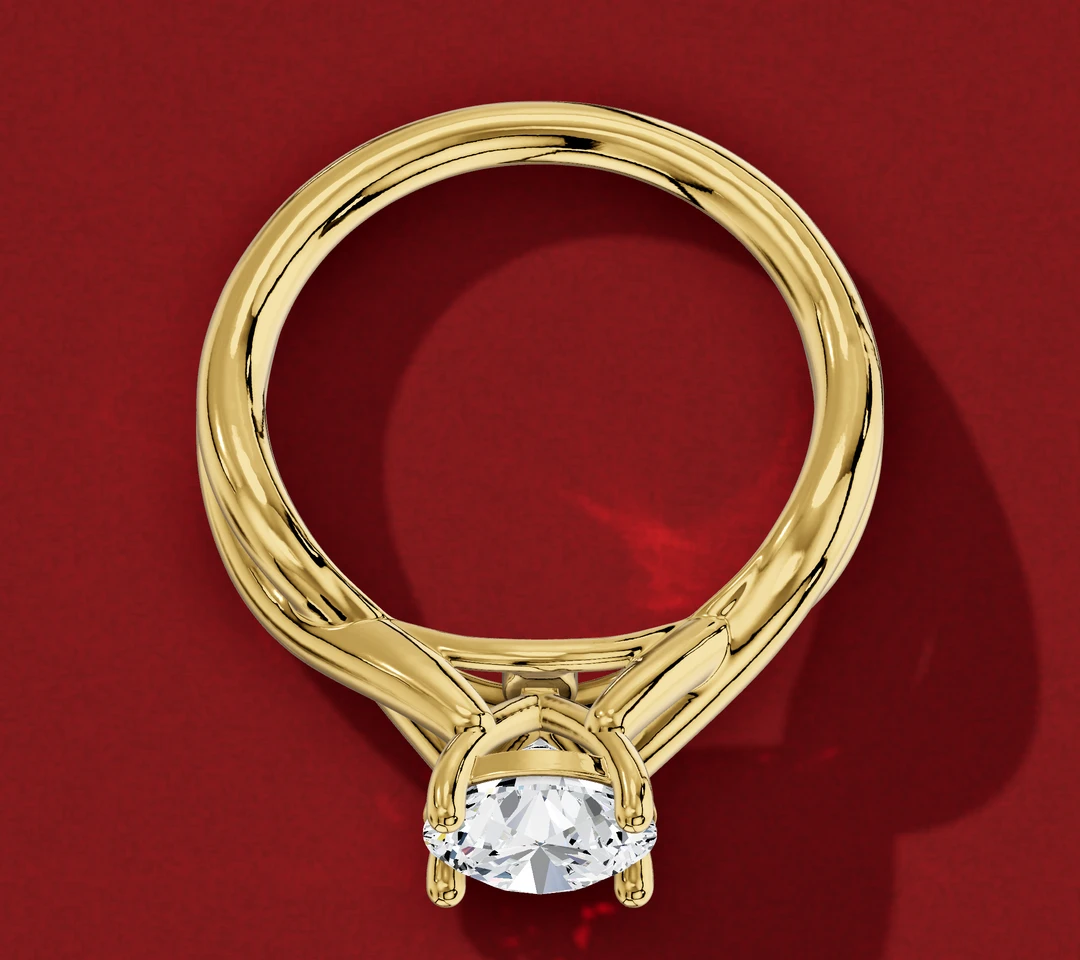
View the laid-flat comparison at full size
That question is useful for discussing future sizing. Ask the jeweller where an alteration would be made and how the original pattern would be preserved. Do not assume every twisted ring is impossible to resize, or that every straight band can be altered by any amount. The answer belongs to the particular design, metal and size change. Our engagement ring resizing guide explains the broader process.
For comfort, ask about the inside profile and the parts that sit beside your neighbouring fingers. A detailed outer surface does not tell you what the inside feels like.
Think about the wedding band as a separate choice
A straight engagement-ring shank does not guarantee a gap-free wedding set. The centre setting can still occupy the space where the wedding band would sit. A twisted shank does not automatically need a curved wedding band either.
Start with the combination you would actually want to wear. You might like a simple wedding band beside the twist, or prefer a shaped band that follows its outline. Ask to see the intended pair from above and from the side, with attention to the points where they meet.
If you already own a wedding band, send its width, profile and clear photographs when discussing the engagement ring. If you have not chosen one, decide whether a small gap bothers you before treating flush fit as a requirement. Our guide to wedding bands that do not sit flush covers the options in more detail.
Keep band shape separate from band width
A twist can give the outline more variation without telling you the dimensions of the metal itself. Ask for width and thickness measurements at identified points, rather than comparing two rings described only as “fine” or “delicate”.
For a twisted design, make clear whether a quoted width is the overall span of the decorative section or the width of an individual part. Those measurements answer different questions. The band-width guide is a starting point for understanding the dimensions.
Choose the silhouette you like first, then have its proportions and construction reviewed.
A simple way to make the choice
Lean towards a straight shank if you keep coming back to an uninterrupted band outline and want the centre setting to carry most of the visual detail.
Lean towards a twisted shank if the movement of the metal is a feature you would miss in the simpler ring. Try comparing plain-metal versions first so you can see whether it is the twist itself you want.
Before approving either design, ask for:
- Top, three-quarter, side and underside views of the exact ring.
- Band measurements with the measurement points identified.
- Advice on the wedding band you intend to pair with it.
- Confirmation of sizing options for that particular design.
Lily Dia works with you online. Send us the two designs you are considering, along with any wedding-band plans, and we can help you work through the details that matter to your choice.
Designed by us in Melbourne, made to order
Lily Dia is a small studio, so every ring is drawn, set and finished for the person wearing it. If this article helped, the collection shows how these choices look on real rings, and you can ask us anything before you decide.
Browse engagement ringsOr ask us a question first