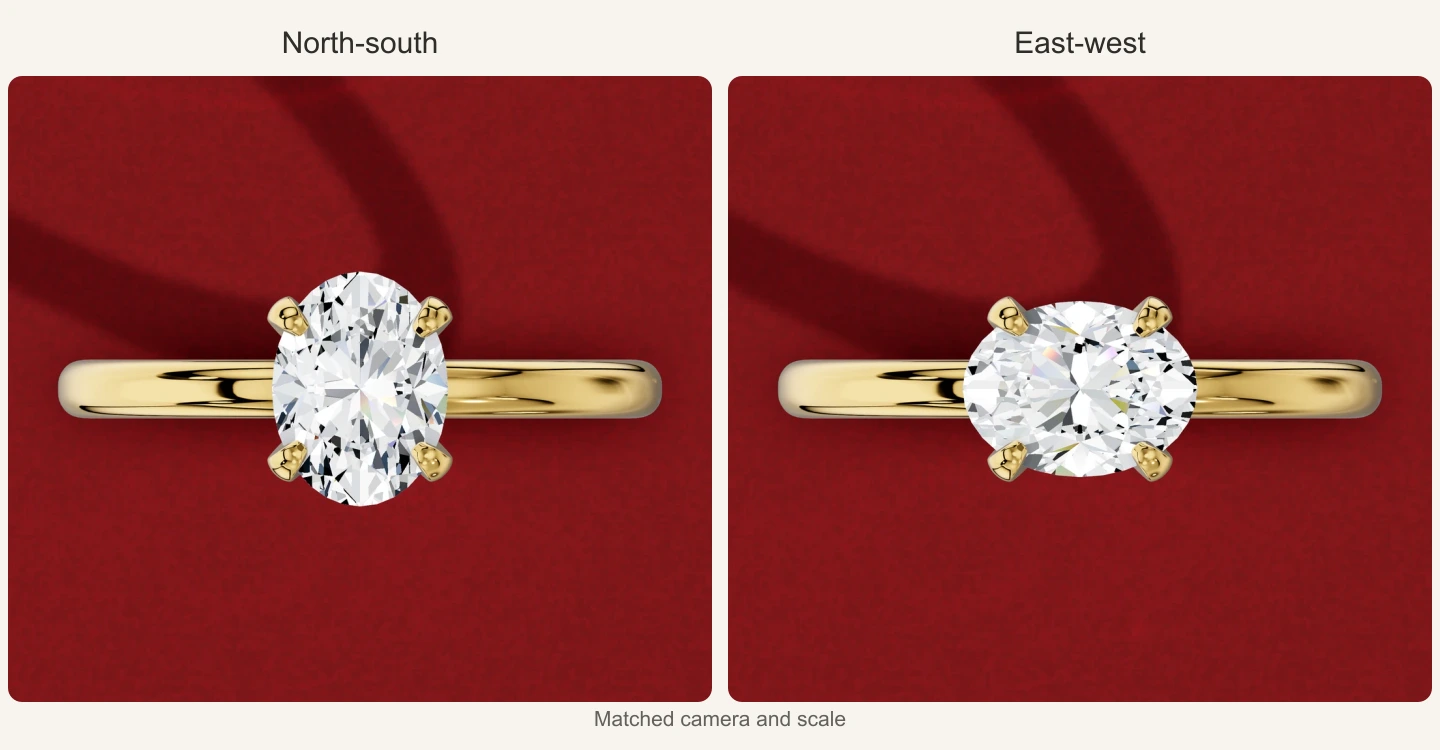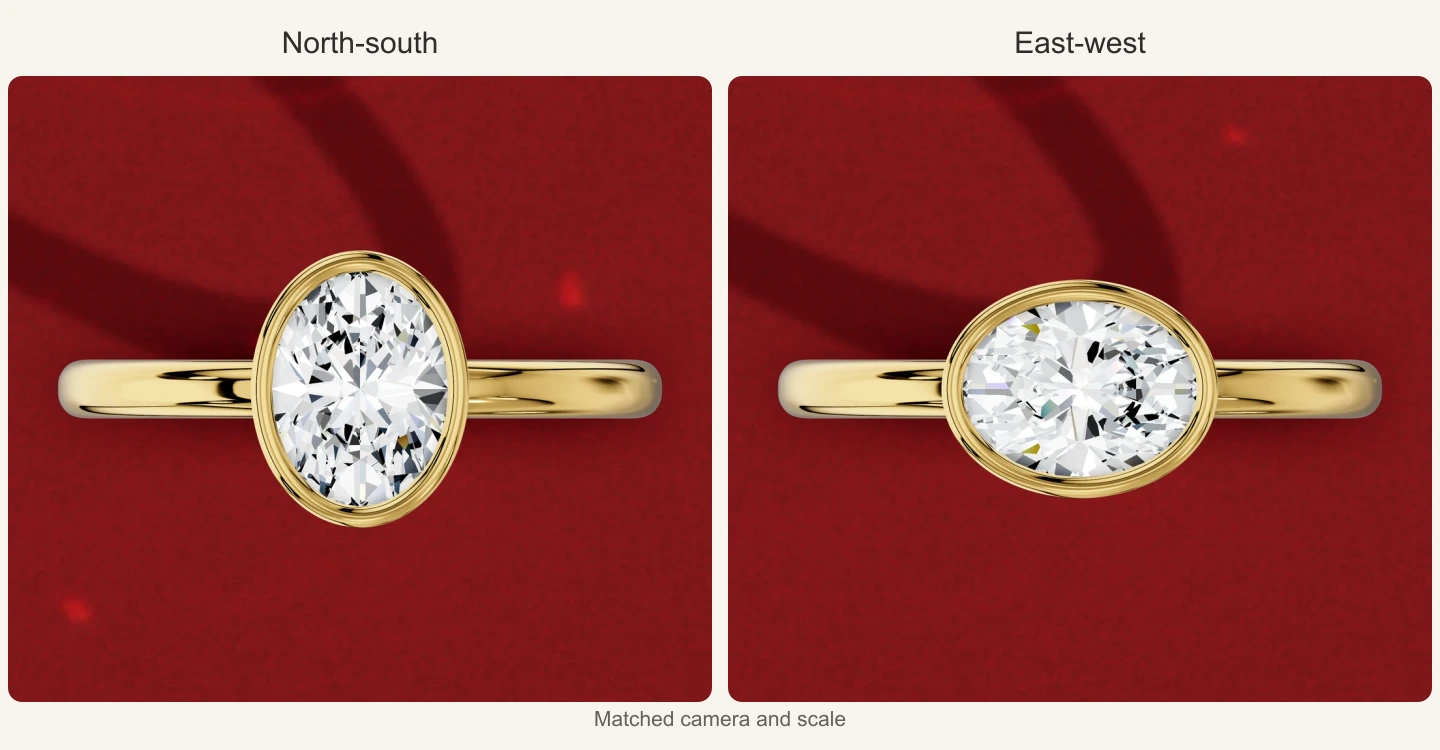

An oval can look quite different with a quarter-turn. Set north-south, its length follows your finger towards the fingertip. Set east-west, that same length runs across your finger, following the direction of the band.
The useful question is where you want the ring to have its presence. Across the finger or along it?
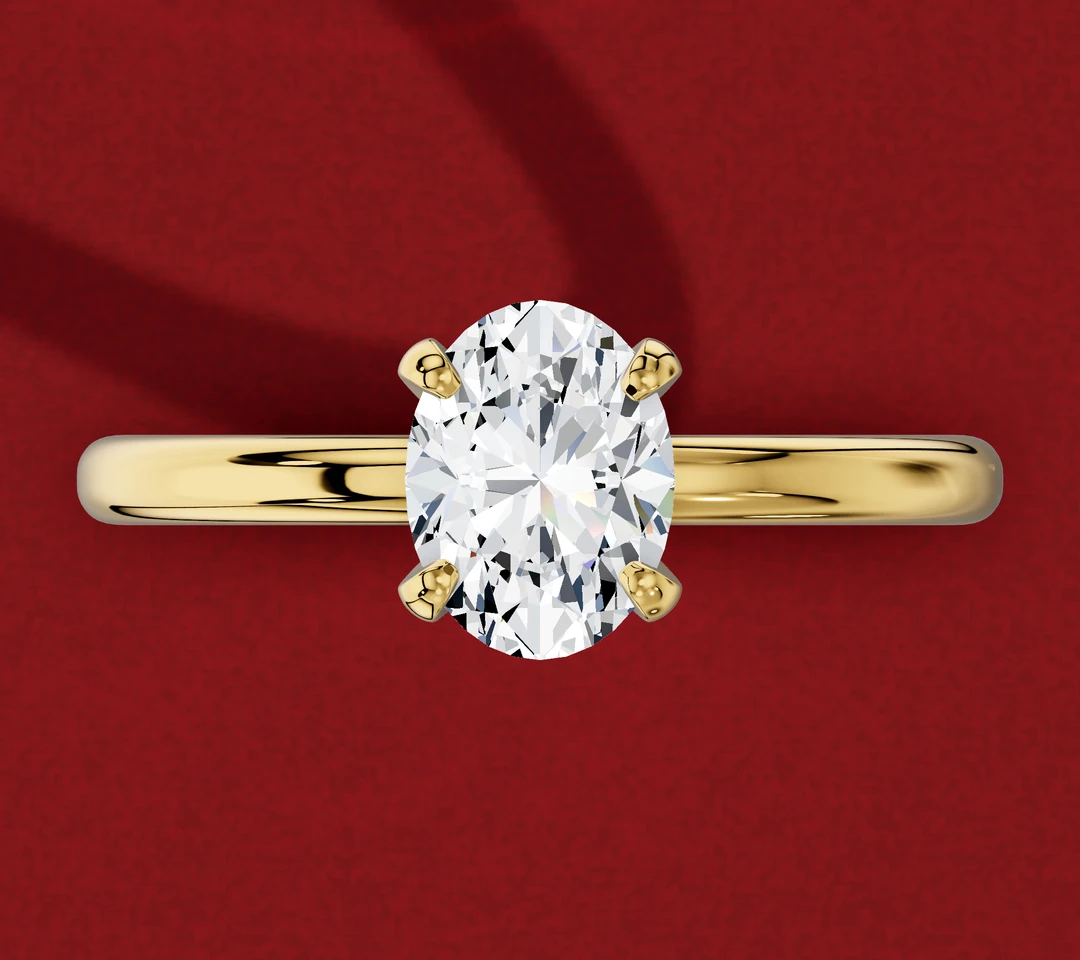
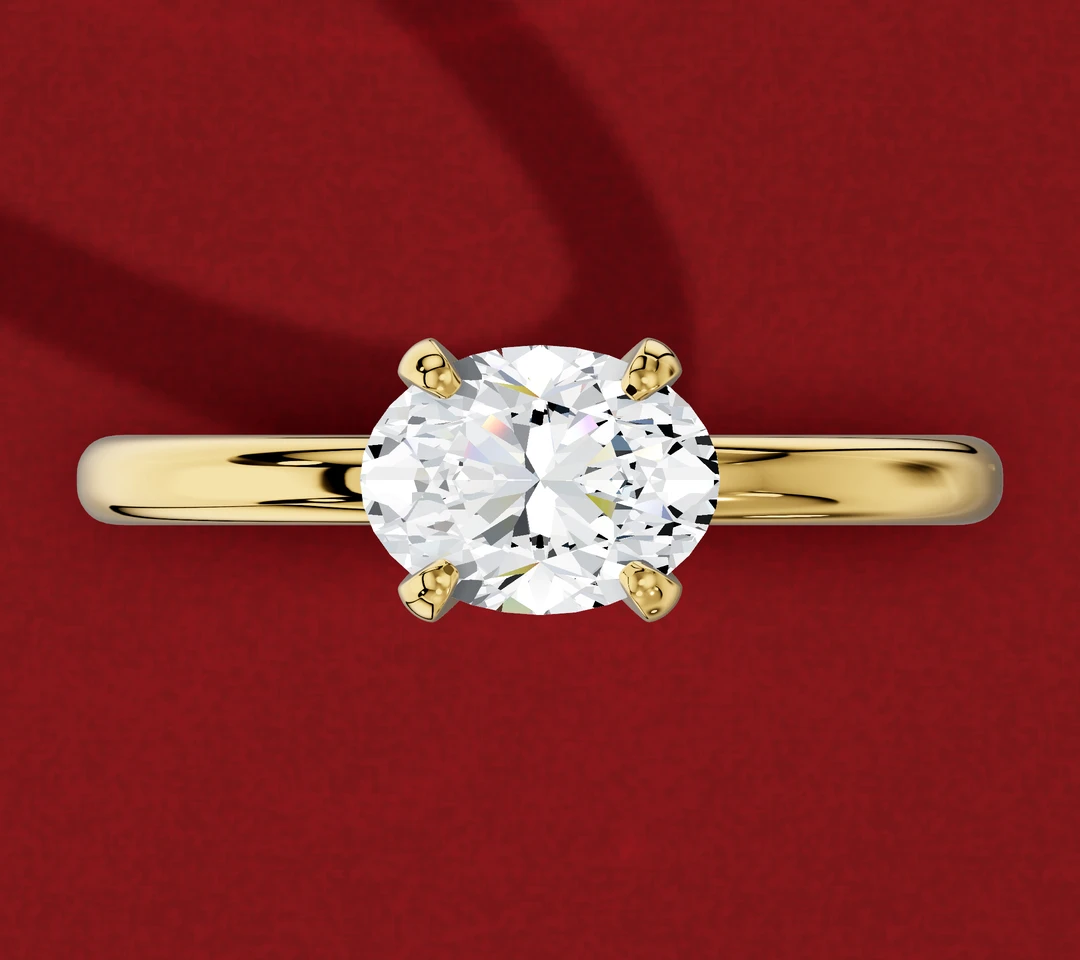
Start with the outline
Look at the oval from directly above. In the north-south position, its longer dimension runs towards the fingertip and the base of the finger. In the east-west position, the longer dimension runs towards the neighbouring fingers.
The stone has not gained any face-up area. Its length and width have changed direction. An east-west oval therefore covers more width across the finger, while the same oval set north-south covers more length along it.
This is why a sideways stone can feel more substantial across the hand without being a larger stone. It is also why “which looks bigger?” can be an unhelpful question. One person notices width first; another notices the distance a stone extends towards the fingertip.
Start by deciding which outline you prefer. You can work through the rest of the setting afterwards.
Look at the frame around the stone
Orientation and setting style are separate choices. An east-west oval can sit in prongs or a bezel, just as a north-south oval can.
Prongs hold the stone at individual points. A full bezel surrounds its edge with a continuous rim of metal. GIA's guide to ring settings explains the distinction.
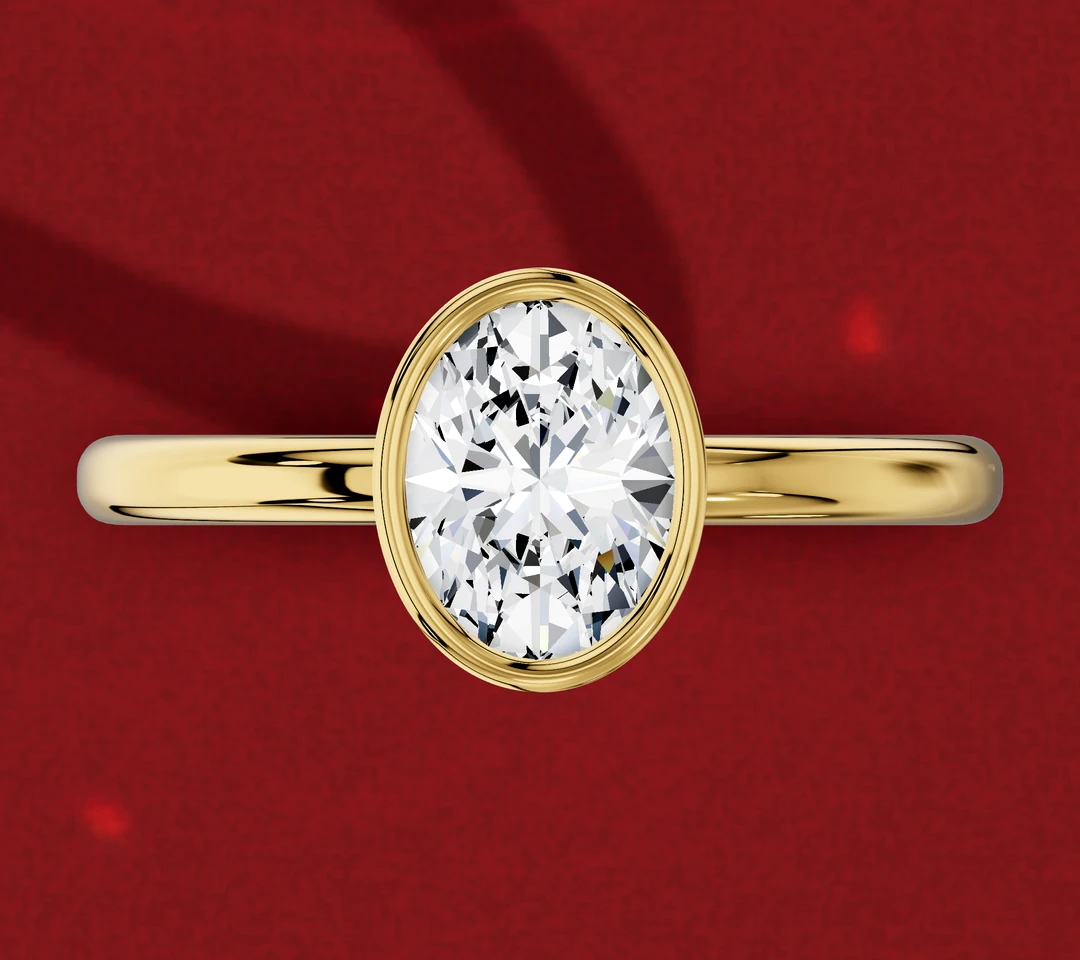
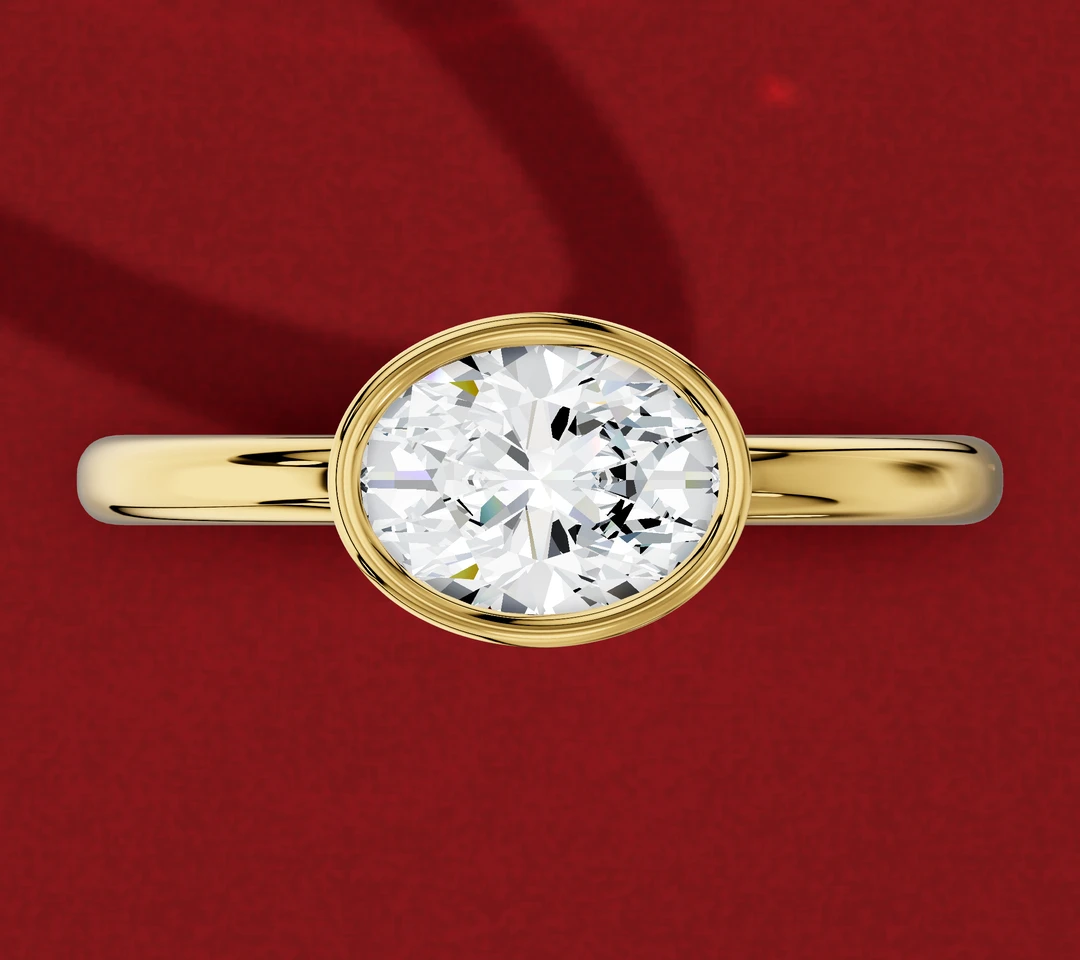
View this comparison at full size
In the bezel comparison, follow the metal border as well as the oval itself. Turning both sideways carries that framed outline across the finger. In the prong comparison, look at the spaces between the claws and how much of the stone's edge is visible.
Once you have a preferred orientation, consider the band. A slim, plain band and a broader band give the same centre outline different surroundings. Keep the band similar while you decide on direction, then explore its width and details.
East-west does not tell you the setting height
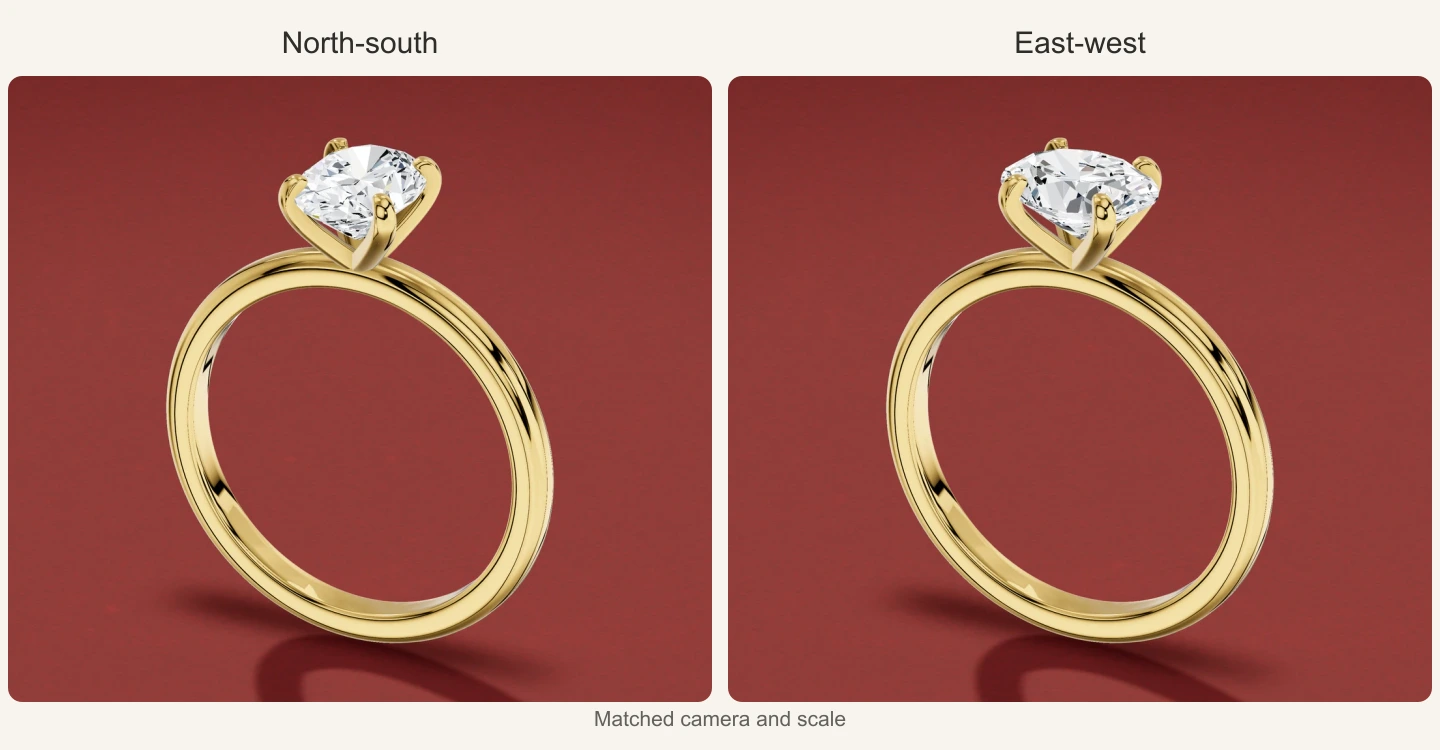
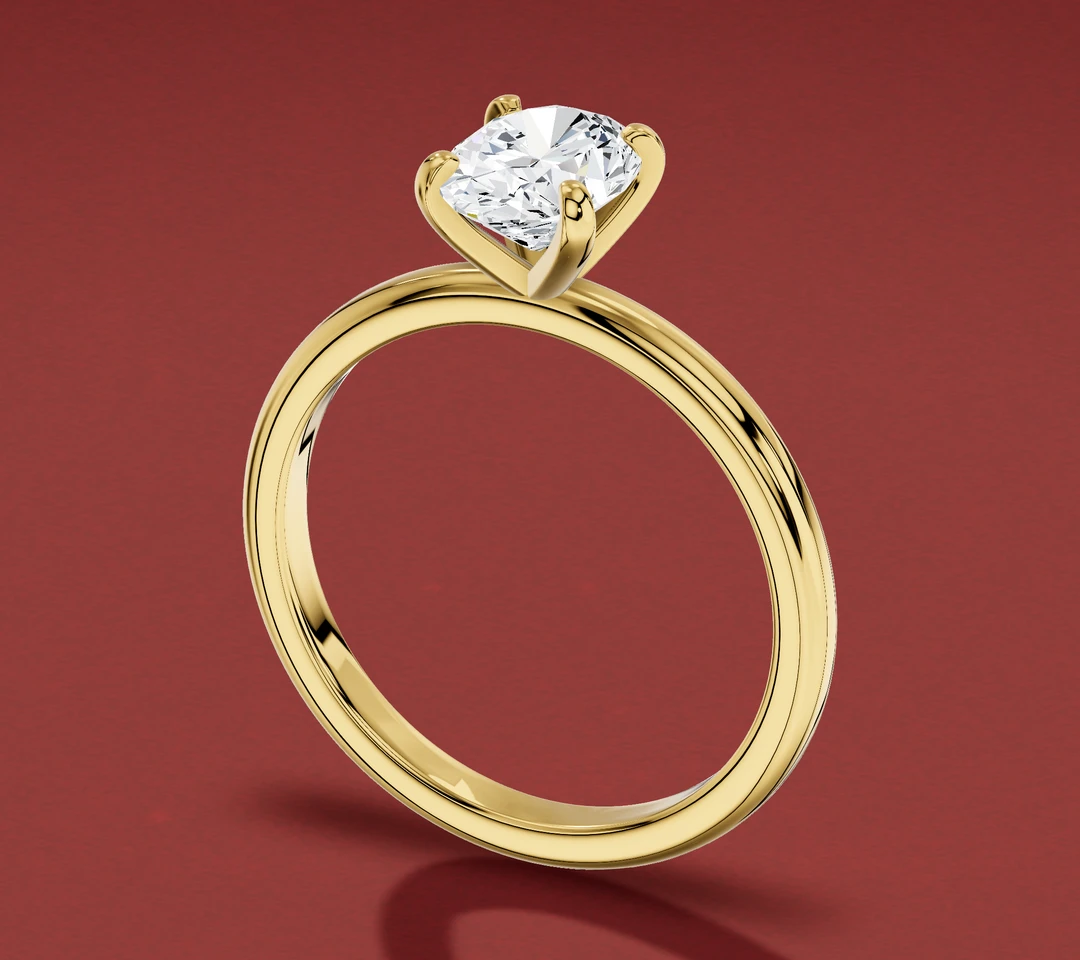
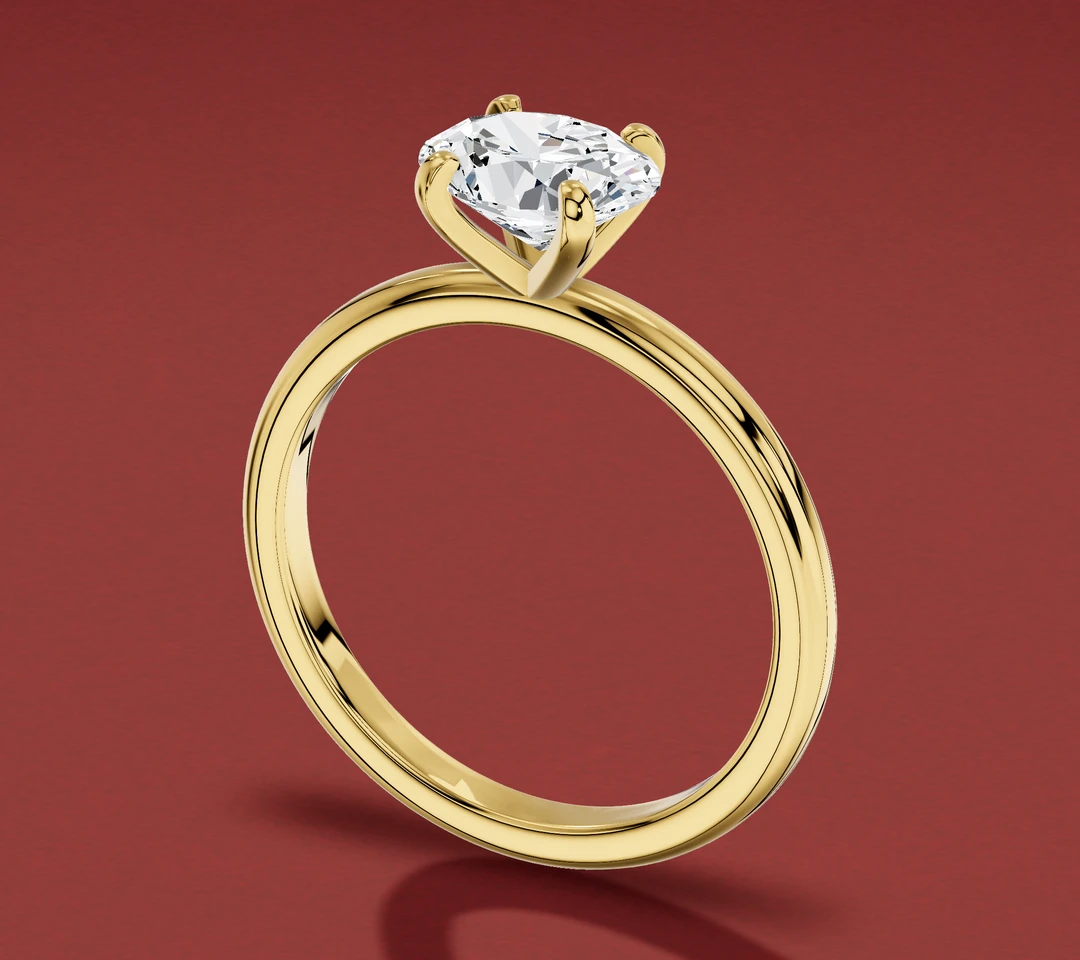
The top view shows direction. The side view shows how the stone is held above your finger.
An east-west setting can be high or low. The stone's depth, its supporting head and the way that head joins the band all matter. Rotating an oval sideways does not, by itself, reduce its depth or move it closer to your finger.
View this comparison at full size
For a real example, our Katy oval east-west ring offers both high and low setting options. Choose the height alongside the orientation, particularly if you have a strong preference for a ring that sits close to the hand.
Check the wedding band from the side
If you plan to wear a wedding band beside your engagement ring, bring it into the design conversation early.
A straight band needs enough space beside and beneath the engagement ring's head. A low basket, projecting metalwork or other details can interrupt that space. The wedding band's own height and shape matter too. Brilliant Earth's wedding-band guide identifies setting height and the surrounding structure as important factors in fit.
An east-west ring might work with a straight band, a shaped band or a deliberate gap. The orientation alone cannot decide which. Ask to see the exact pair together from above and from the side, rather than relying on a top-down engagement-ring image.
If a straight band meets the basket before the two bands sit as close as you want, a curved wedding band is one option to explore.
Pointed shapes need their own checks
Our comparison uses ovals. With a pear or marquise, you also need to consider the pointed ends.
GIA identifies the tips of a marquise as particularly vulnerable to damage and describes protective options such as V-prongs and bezels in its marquise diamond guide. The point of a pear deserves similar attention.
Turning a pointed stone sideways changes where those ends sit. It does not automatically protect them. Ask the jeweller to show how the particular setting supports and shields each point, and how far it extends towards the neighbouring fingers.
Compare the same details before choosing
For a useful side-by-side comparison:
- Keep the stone's shape and dimensions the same. Matching carat labels alone will not give you an identical outline.
- Keep the image scale and camera angle consistent. A tighter crop can make either option appear larger.
- Compare similar metal, band width and setting style before adding extra details.
- Check a top view, a side view and, where possible, both options on your own hand.
Choose north-south if you prefer the stone's length running along your finger. Choose east-west if you prefer that length running across it. Then settle the height, stone support and wedding-band fit around that choice.
You can explore our east-west engagement rings or talk through both orientations with us. Bring the same stone dimensions to each option so you can see what the change in direction does.
Designed by us in Melbourne, made to order
Lily Dia is a small studio, so every ring is drawn, set and finished for the person wearing it. If this article helped, the collection shows how these choices look on real rings, and you can ask us anything before you decide.
Browse engagement ringsOr ask us a question first