
What is the best ring shape for chubby fingers?
Oval, emerald, pear, marquise, elongated cushion and elongated radiant are the best ring shapes for chubby fingers, because they run along the finger and draw the eye from knuckle to fingertip. They also measure longer than a round of the same weight. Our 1 carat ovals are about 8.2mm long, where a 1 carat round is about 6.5mm across.
If you want one answer, oval is the best diamond shape for chubby fingers. In rough order of how often each one gets chosen:
- Oval. The usual first pick. It adds length, it suits nearly every setting, and a length-to-width ratio of 1.40 to 1.50 is the sweet spot. Our oval buying guide covers the details.
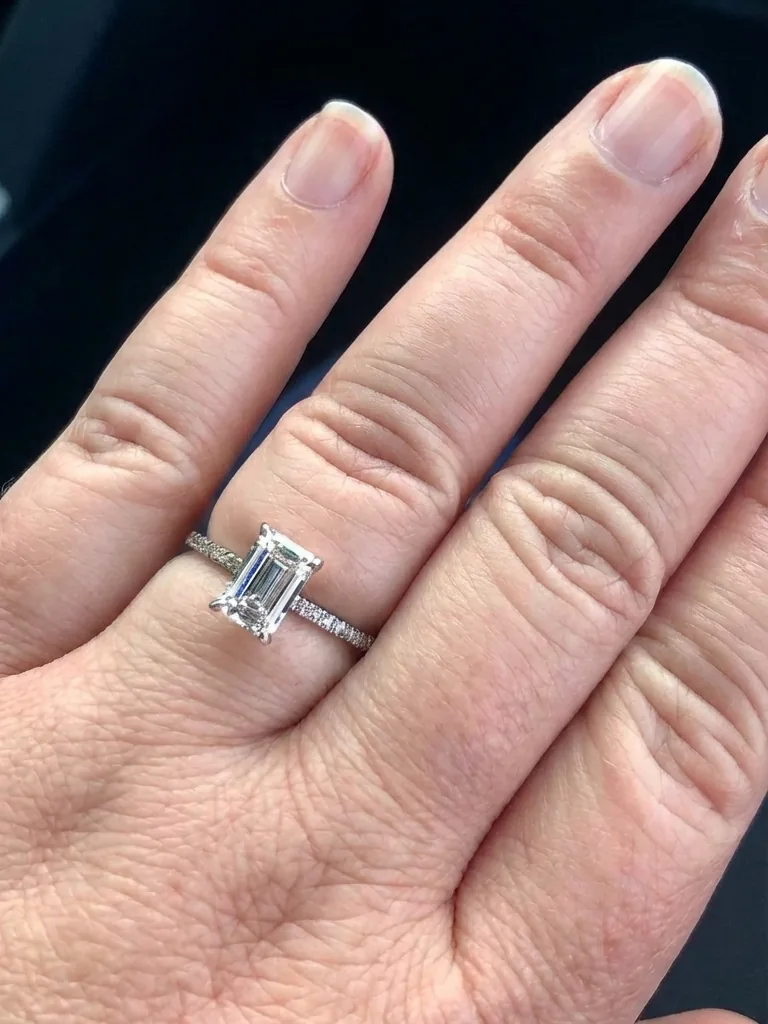
- Emerald. A clean rectangle with long step-cut lines that sit well on a wider finger.
- Pear. The point adds direction. Worn with the point towards the fingertip, it carries the eye along the finger.
- Marquise. The longest shape for its weight. Our 1 carat marquises are about 10.5mm long, and fuller fingers have the width to balance that length.
- Elongated cushion or radiant. Softer corners and more sparkle than an emerald, with the same rectangular outline.
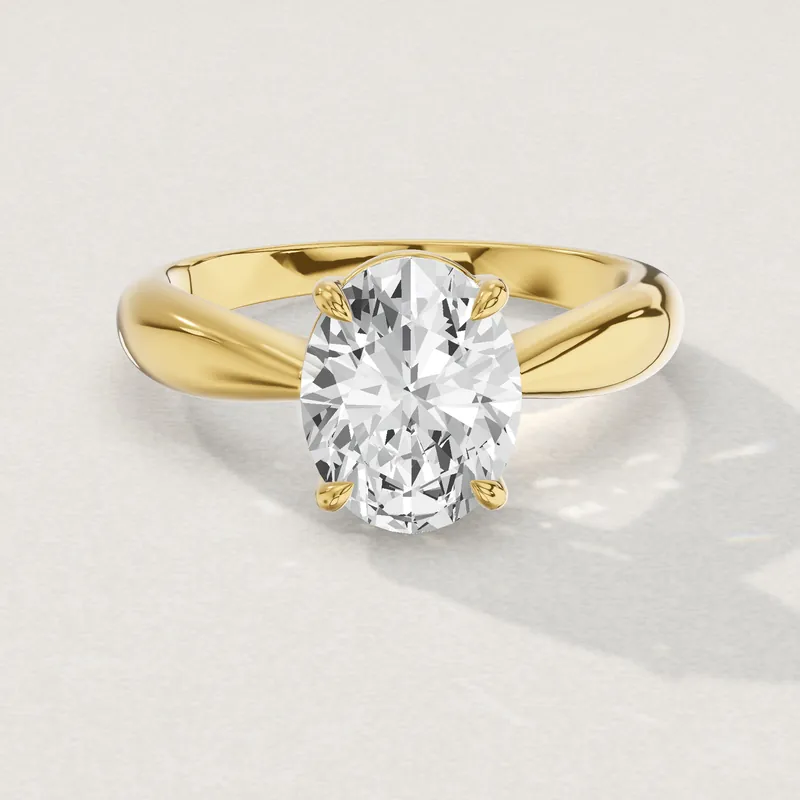
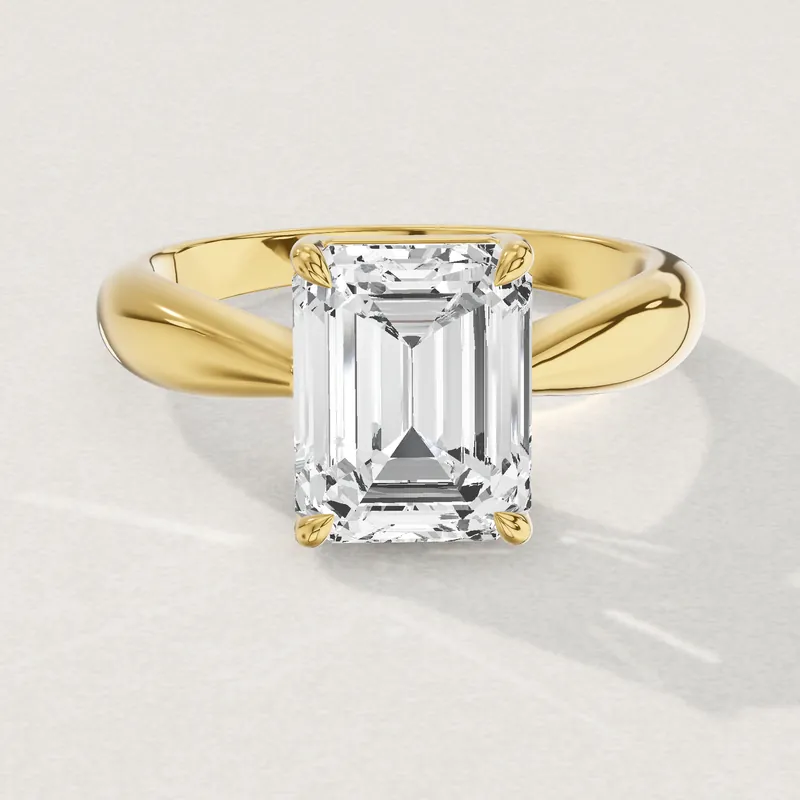
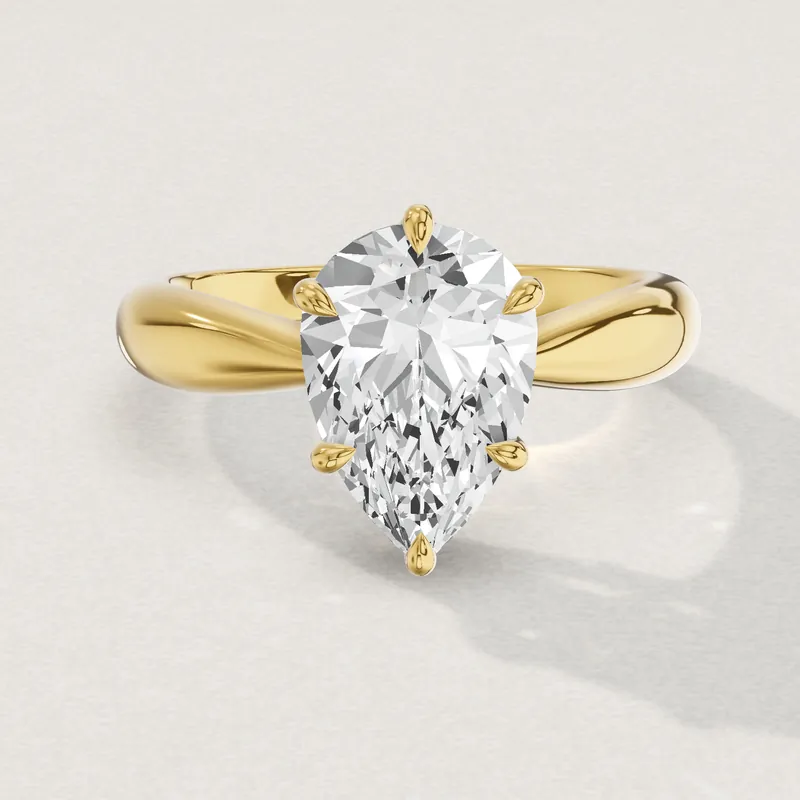
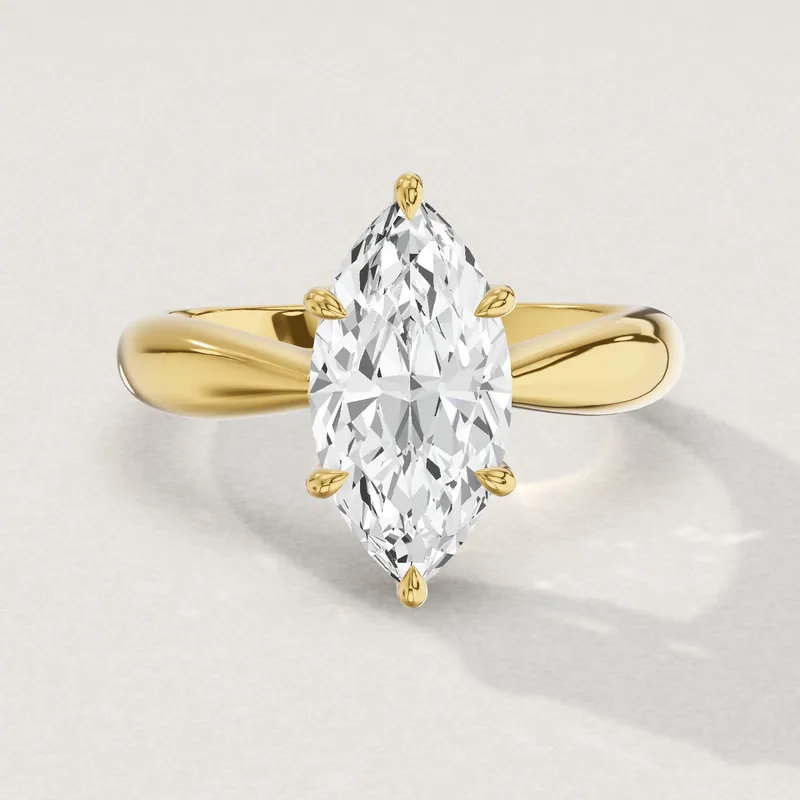
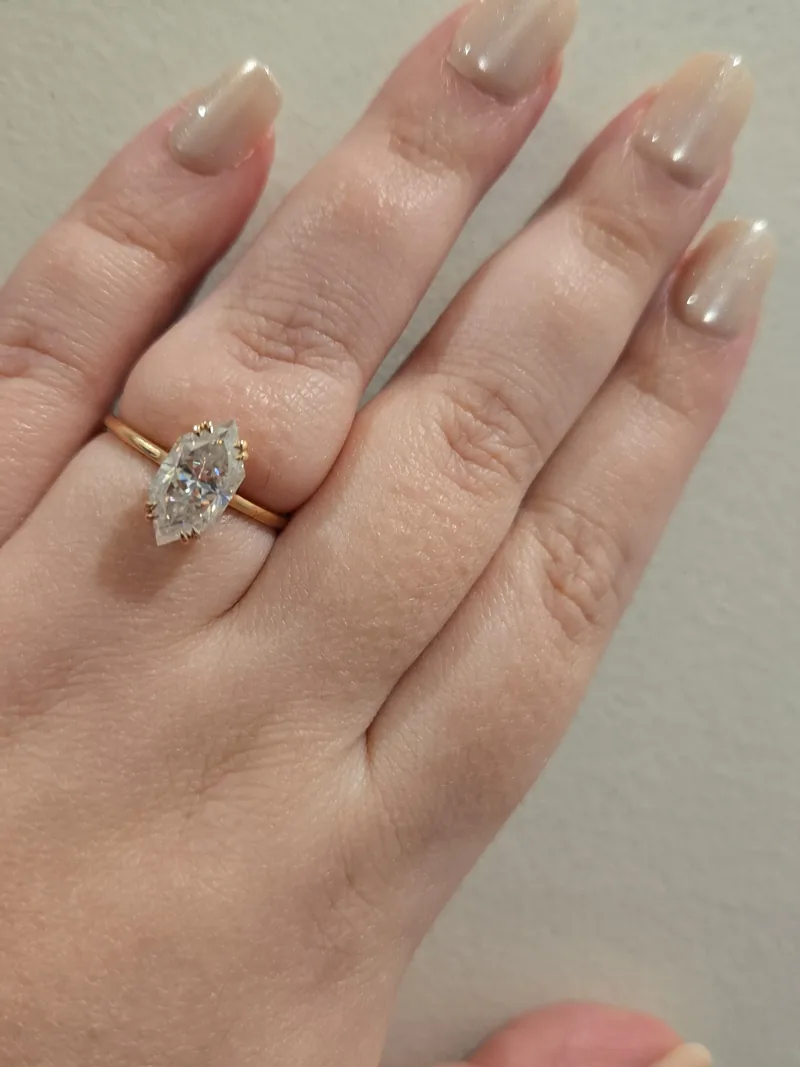
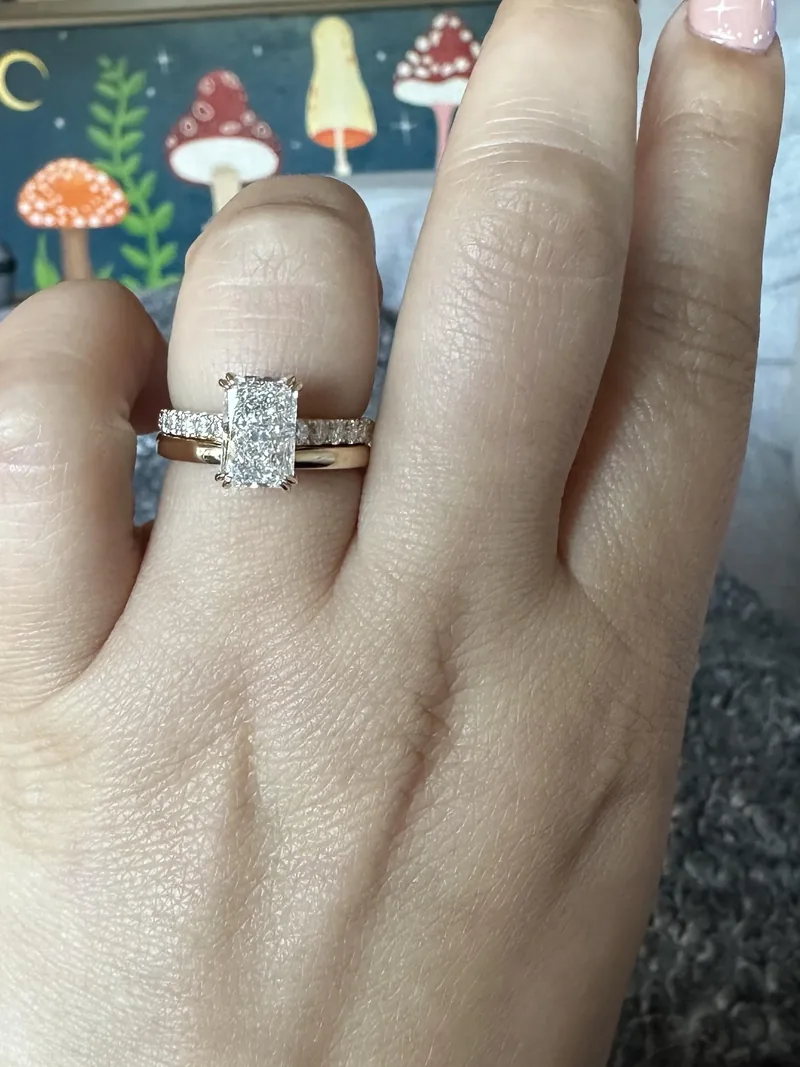
Round and square shapes suit chubby fingers too, and they look best with some size behind them, which the carat section below covers.
What is the best engagement ring for chubby fingers?
The best engagement ring for chubby fingers has an elongated stone of 1.5 carats or more, a band of 2.5mm or 3mm, and a setting that adds width at the top of the ring, like a halo or a three-stone. Fuller fingers carry substantial rings well, so the one thing to watch is going too delicate, where a small stone on a thin band looks smaller than it is.
The reason is proportion. A stone looks large or small against the finger it sits on, so the same diamond looks different on different hands. That gives you four things to adjust, in this order: stone size, stone shape, band width and setting style. You can work through all four across our bespoke engagement rings.
How big should the diamond be for chubby fingers?
Aim for 1.5 carats and up, and 2 carats if the budget allows. Most of our customers choose a 2 carat diamond, and on a wider finger that size sits comfortably in proportion.
If you are worried about the size of your fingers dwarfing a diamond, the numbers help. This is how much of the finger our round diamonds cover at each ring size, using the inside diameter of the ring as the width of the finger:
| AU ring size | Diameter (mm) | 1 carat round (6.5mm) | 2 carat round (8.1mm) |
|---|---|---|---|
| M (an average finger) | 16.7 | 39% | 49% |
| P | 17.9 | 36% | 45% |
| R½ (US 9) | 19.0 | 34% | 43% |
| T | 19.6 | 33% | 41% |
| V | 20.4 | 32% | 40% |
The 2 carat size is the median of our own 2.00 to 2.09ct lab-grown rounds on 28 October 2026, and the diameters come from our ring size chart. A 2 carat round on a size V finger covers about the same share as a 1 carat round on an average one, so going up a carat keeps the proportion a slimmer hand gets at 1 carat.
For the common question of 1.5 or 2 carats on a chubby US size 9 (AU R½) finger, both work and 2 carats is the safer choice. An elongated shape goes further again: our 2 carat ovals are about 10.3mm long and 7.2mm wide, and our 2 carat pears are about 11.4mm long. A round under about 1.5 carats is where a halo helps most.
What band width suits chubby fingers?
A 2.5mm or 3mm band suits chubby fingers best. Our band width by hand size guide recommends 2.5mm to 2.8mm for AU sizes O to Q and 2.5mm to 3mm for size R and up. Our settings come in 1.8mm, 2mm, 2.5mm and 3mm, so in practice that means 2.5mm or 3mm.
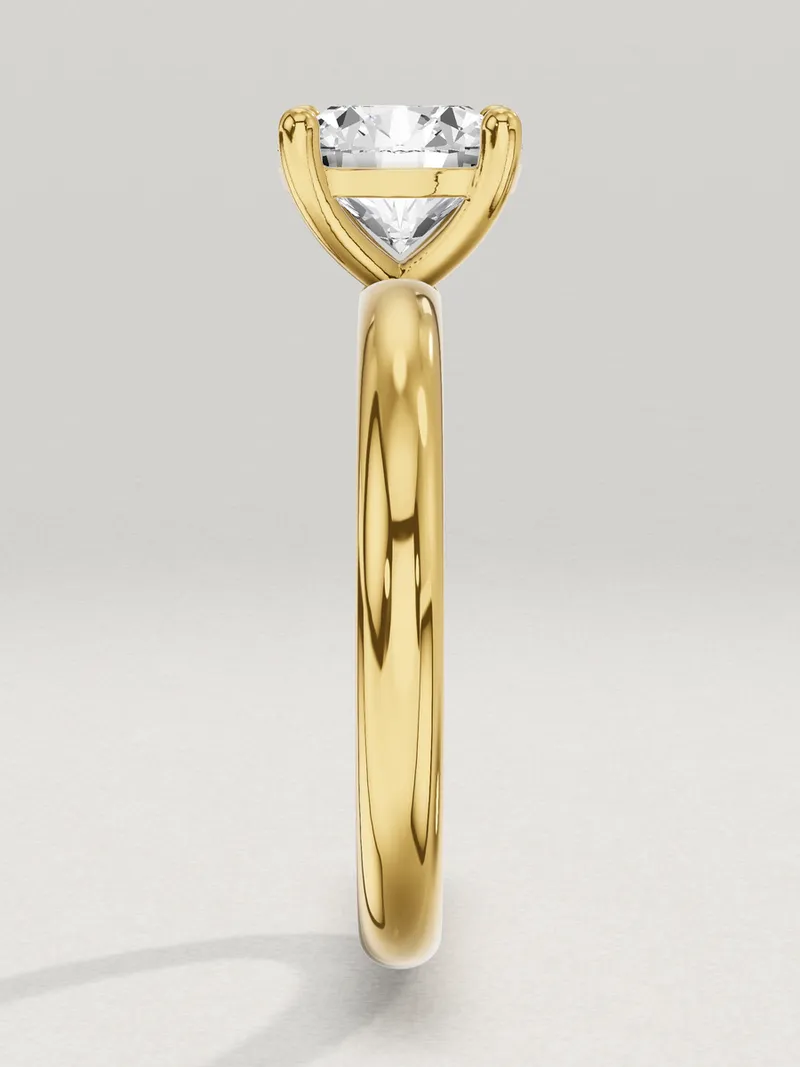
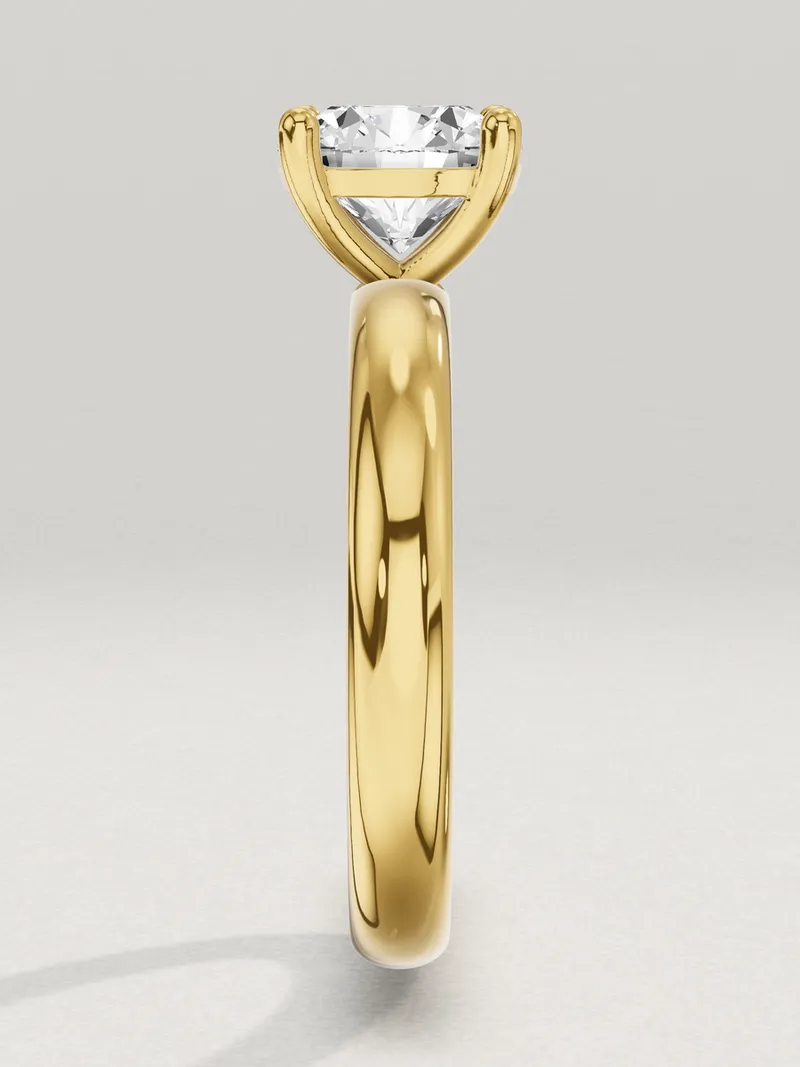
A wider band sits in proportion to the finger and gives a larger stone a base that matches it. The stone has a say as well: at 1.5 carats and up we suggest at least 2mm, and at 2.5 carats and up at least 2.5mm. A very thin band on a larger ring size has more length to flex, so it bends more easily.
When you add a wedding band, keep it within about 0.3mm of the engagement ring so the two look like a pair.
Which settings add presence on a wider finger?
Halo, three-stone, pavé and bezel settings all make the ring look wider across the finger without a bigger centre stone.
- Halo. A ring of small diamonds around the centre stone widens its outline. It is the most useful addition to a smaller centre stone.
- Three-stone. Side stones spread the top of the ring across the finger. An elongated centre with tapered side stones is the classic version.
- Pavé band. Diamonds along the shoulders add sparkle across the finger. Our pavé bands are 2mm, a little finer than the plain band we suggest above, so they look best under a larger centre stone.
- Bezel. A rim of metal around the stone adds to its outline, protects it, and suits a 2.5mm or 3mm band.
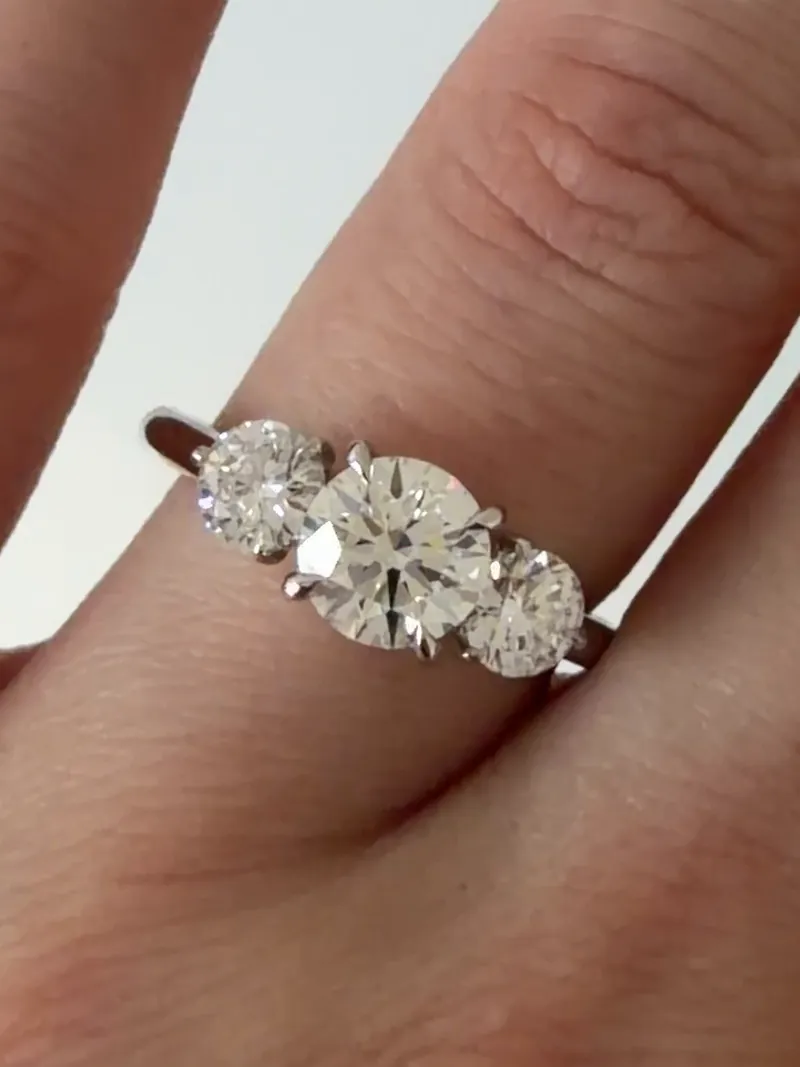
A lower setting is worth considering as well. A tall setting catches on things more often, and a lower basket or bezel is easier to wear every day.
What if my knuckles are bigger than the base of my finger?
Size the ring to pass the knuckle and choose a wider band. Big knuckles are common, and when the knuckle is wider than the base of the finger the ring has to fit over it, so it can sit a little loose below and turn. A wider band turns less. Our guide to whether a ring should be tight or loose explains the fit test we use.
We have no showroom, so we work through sizing with you by video, phone or email before your ring is made.
Does the same advice apply to large fingers and big hands?
Yes. People also search for engagement rings for large fingers, engagement rings for big hands, and rings for wide or fat fingers, and the advice is the same for all of them: an elongated stone, a 2.5mm or 3mm band, and a setting with some width.
Big hands with long fingers have one more option. There is room for a longer stone, so a pear or marquise at 2 carats sits comfortably.
What should I avoid on chubby fingers?
Three combinations tend to disappoint:
- A small stone on a thin band. A 0.5 carat solitaire on a 1.8mm band looks lovely on a slim hand and gets lost on a wider one. If the budget caps the stone size, put the difference into a halo or a wider band.
- Tiny accent details. A single small side stone or very fine detail can look fussy against a broader finger. Fewer, larger details work better.
- Stacks of very thin bands. Several fine bands together sit unevenly on a wider finger. One 2.5mm or 3mm band looks more settled.
thin band
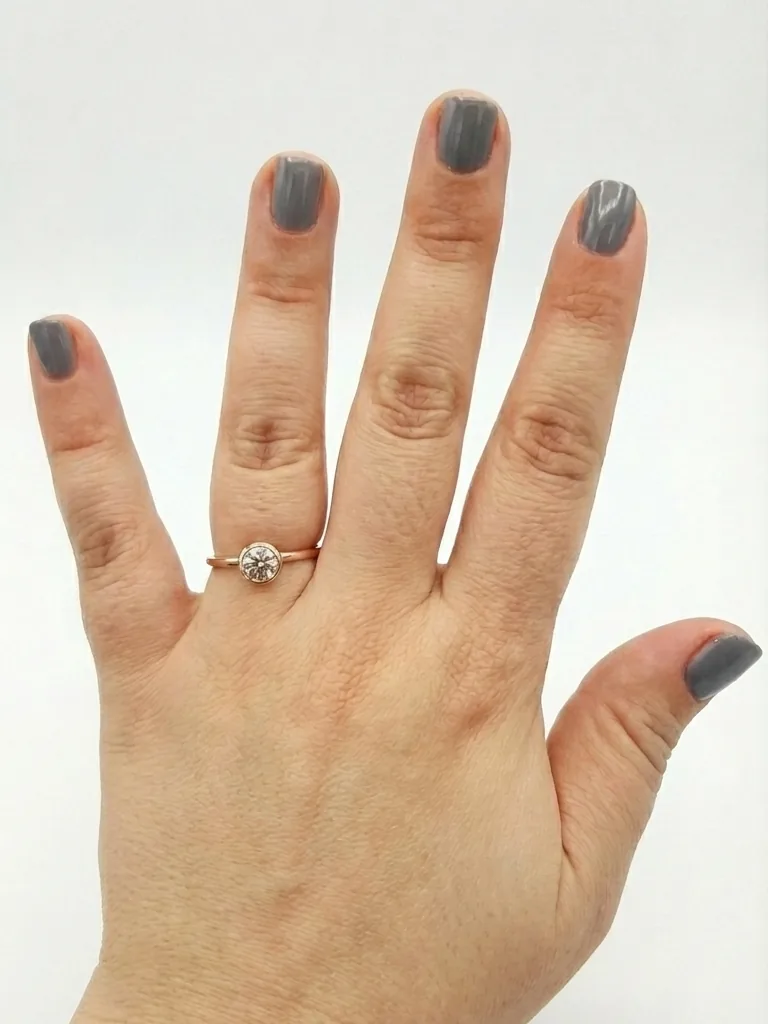
thin band
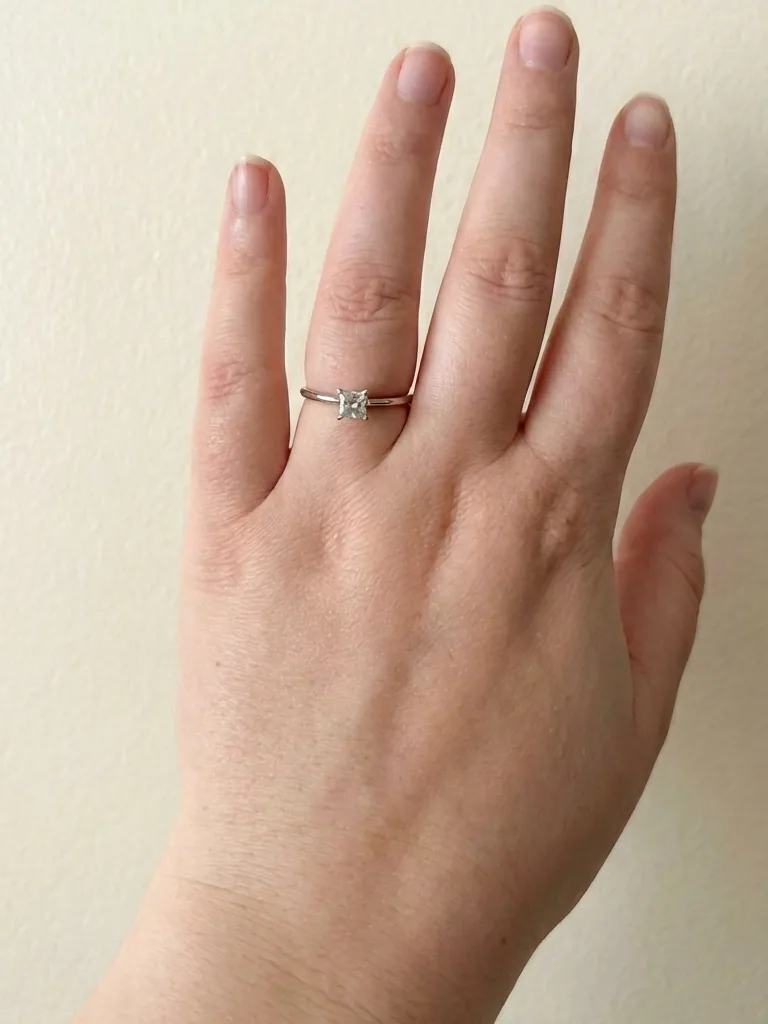
Wear what you love. These are the proportions we see work in the rings we make, and the pattern is consistent: chubby fingers look best in rings with some substance.
The simple framework
Choose an elongated shape at the largest carat the budget supports, put it on a 2.5mm or 3mm band, and add a halo or side stones if the centre stone is under about 1.5 carats. Size the ring to the knuckle and let the wider band keep it from turning. It is the mirror of our guide to long, skinny fingers, where the choice is between following the length of the finger and balancing it with width.
View our thick band engagement rings, which all open at 3mm, or our lab-grown diamond engagement rings to compare shapes on real designs, all made to order in Melbourne.
Thanks for reading,
Jared and Brie
Designed with you, made to order
Our jewellers in Melbourne and Auckland make every ring to order for the person wearing it. If this article helped, the collection shows how these choices look on real rings, and you can ask us anything before you decide.
Or ask us a question first