
What is the best diamond shape for short fingers?
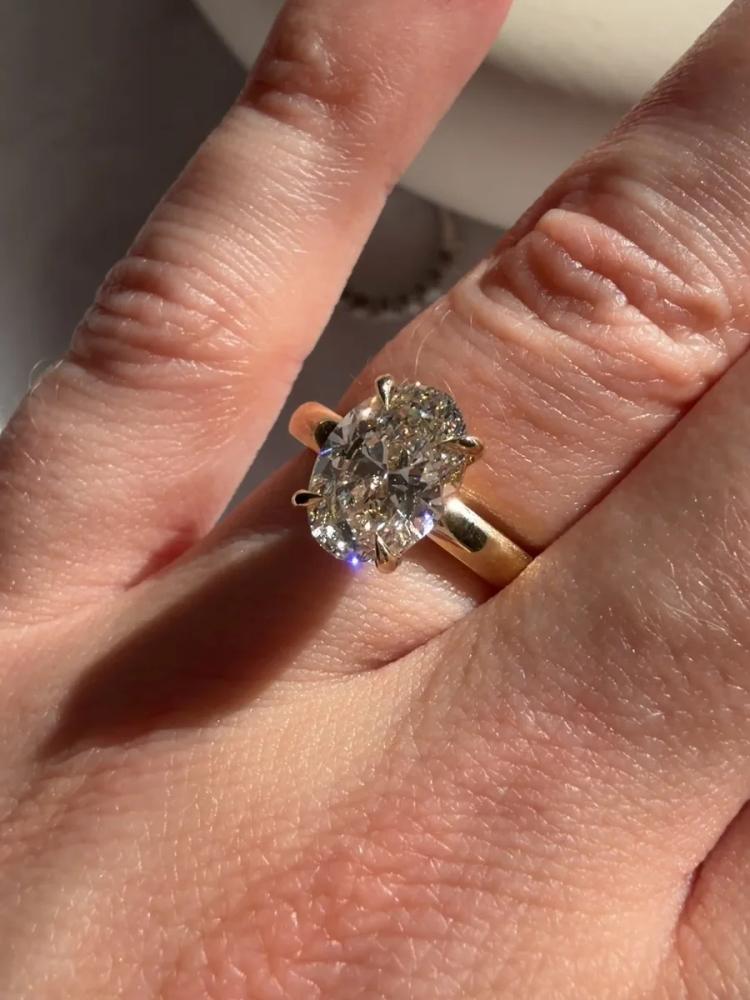
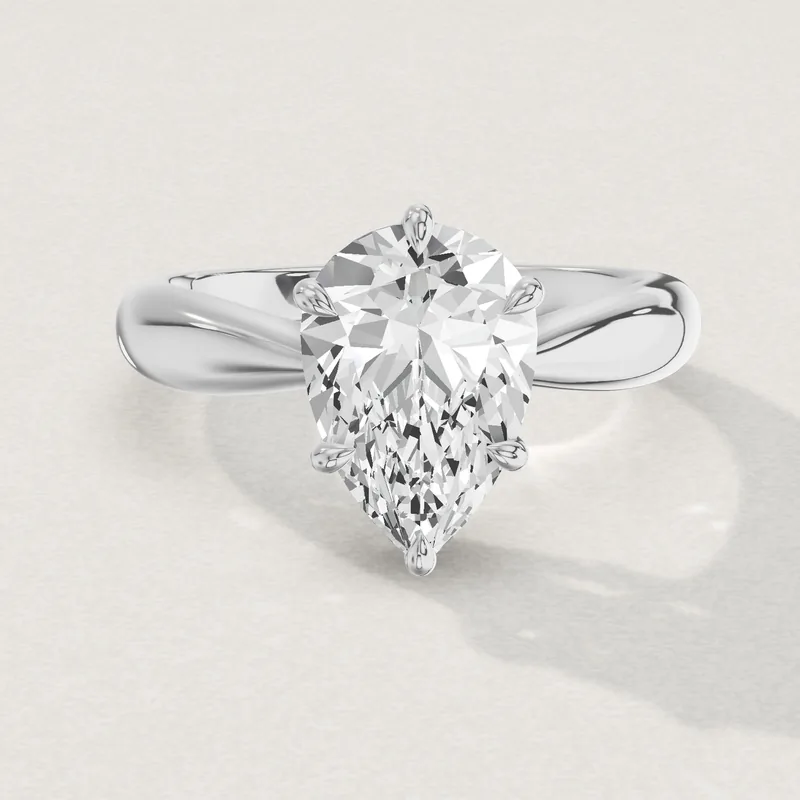
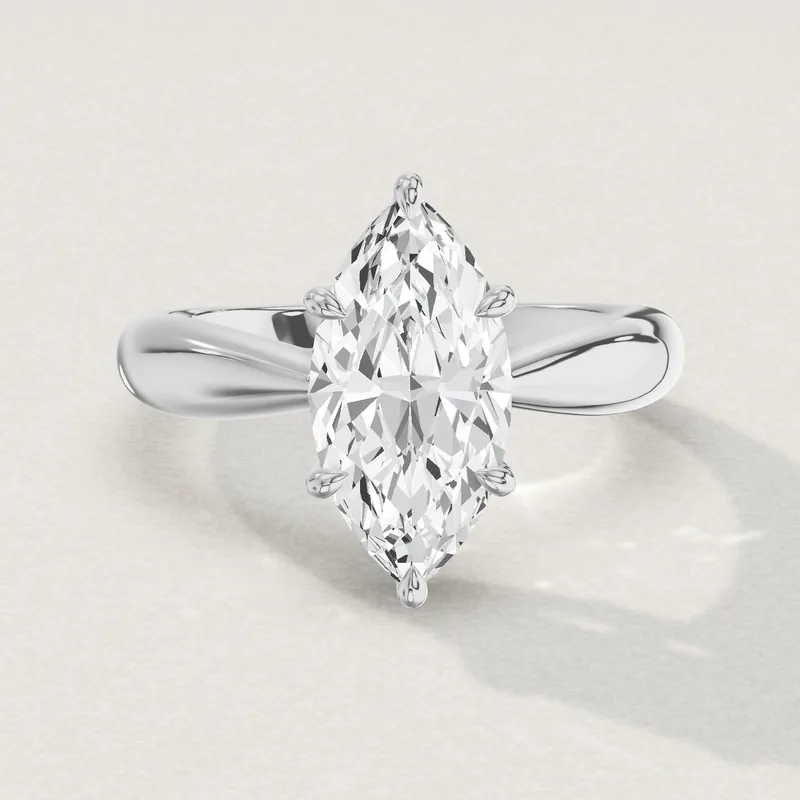
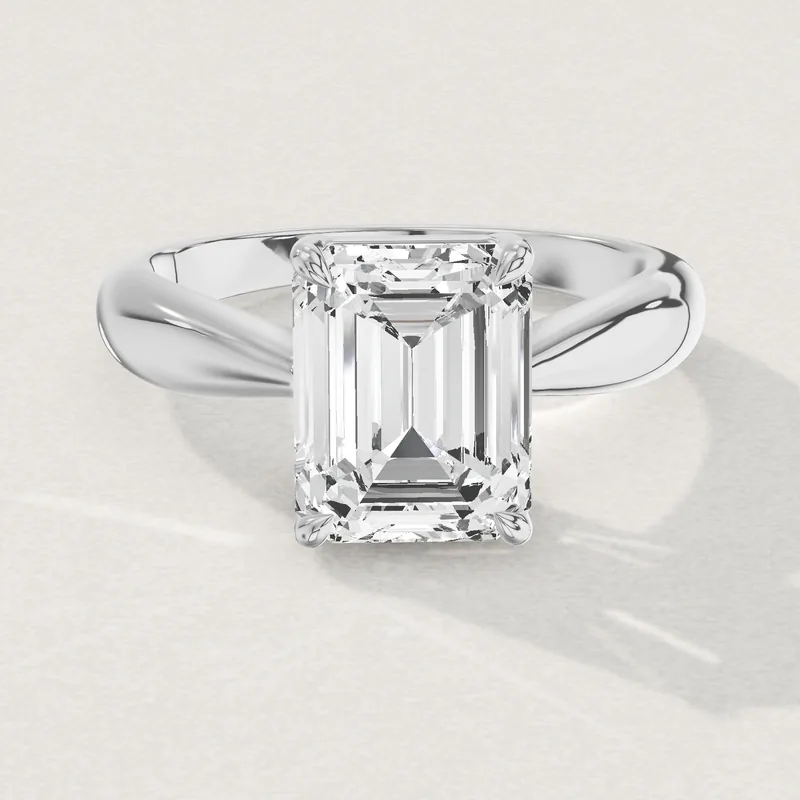
Oval, pear, marquise, emerald, elongated cushion and elongated radiant are the best diamond shapes for short fingers, worn north-south, which means the length of the stone runs along the finger. They draw a line from knuckle to fingertip, so the finger looks longer. They also measure longer than a round of the same weight: at 1 carat our rounds are about 6.5mm across, where our ovals are about 8.2mm long, our pears 9.1mm and our marquises 10.5mm.
If you want one answer to what diamond shape looks best on short fingers, it is oval. In the order we would try them:
- Oval. The usual first pick. It adds length with no points to think about, it suits nearly every setting, and our ovals sit at a length-to-width ratio of about 1.43. Our oval buying guide covers the details.
- Pear. The point adds direction. Worn with the point towards the fingertip, it carries the eye along the finger. Our pear vs oval guide compares the two.
- Marquise. The longest shape for its weight, about twice as long as it is wide. It gives a short finger the most length, so check it against the measurement further down before you choose one.
- Emerald. A clean rectangle with long step-cut lines. It is the shortest of the elongated shapes at each weight, about 6.9mm long at 1 carat, which helps when there is little room to work with.
- Elongated cushion or radiant. Softer corners and more sparkle than an emerald, with the same rectangular outline.
What is the best engagement ring for short fingers?
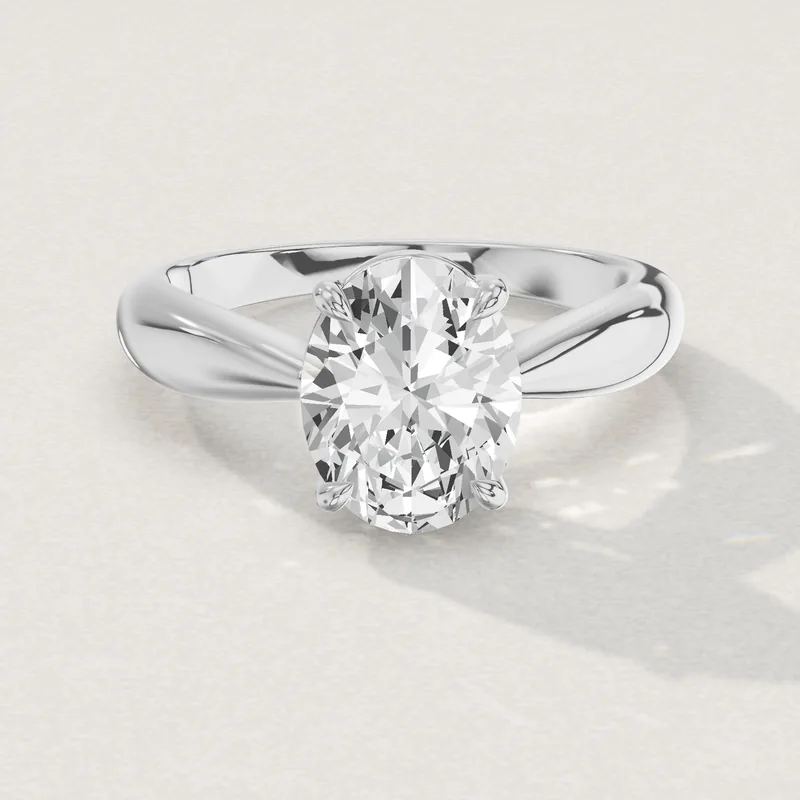
The best engagement ring for short fingers is an elongated stone set north-south in a solitaire, on a 1.8mm or 2mm band. Every part of that ring does the same job: the stone draws a line along the finger, and the slim band and plain setting leave as much of the finger showing as they can.
The reason is proportion. On a short finger the thing in short supply is length, so each choice either keeps length on show or uses it up. That gives you three things to adjust: stone shape, band width and setting style.
The answer is the same whether you searched for the best ring shape for short fingers or for engagement rings for short stubby fingers. If your worry is a small ring size more than the length of your fingers, our guide to engagement rings for small hands is the one to read.
Is round or oval better for short fingers?
Oval is better for short fingers than round. A round is the same in every direction, so it draws no line along the finger or across it, where an oval draws one towards the fingertip.
The measurements show how much further an oval goes. Our 1.5 carat ovals are about 6.5mm wide, the same width as a 1 carat round, and 9.3mm long. So a 1.5 carat oval covers the same width of the finger as a 1 carat round, and runs about 2.8mm further along it.
If a round is the shape you love, wear a round, on a 1.8mm or 2mm band so the band leaves the finger showing. Our oval vs round guide compares the two shapes.
How long should the stone be on a short finger?
The stone sits between the crease at the base of your finger and your middle knuckle, so that gap is the length you have to work with. Measure it in millimetres with a ruler and compare it with the lengths in this table: the more of the gap a stone fills, the less finger shows above and below it.
| Shape (length x width) | 1 carat | 1.5 carats | 2 carats |
|---|---|---|---|
| Oval | 8.2 x 5.8mm | 9.3 x 6.5mm | 10.4 x 7.2mm |
| Pear | 9.1 x 5.6mm | 10.3 x 6.4mm | 11.4 x 7.1mm |
| Marquise | 10.5 x 5.3mm | 11.9 x 6.0mm | 13.1 x 6.6mm |
| Emerald | 6.9 x 4.8mm | 7.9 x 5.5mm | 8.5 x 6.0mm |
| Round | 6.5mm across | 7.4mm across | 8.1mm across |
These are the medians of the lab-grown diamonds we listed at each weight on 13 November 2026, and our lab-grown diamonds start at 1 carat.
A long marquise or pear uses more of a short finger than an oval does. At 1.5 carats our marquises are about 11.9mm long and our ovals about 9.3mm. If your gap is small, an oval or an emerald is the safer length: a 1.5 carat emerald, at 7.9mm, is shorter than a 1 carat oval.
What band width suits short fingers?
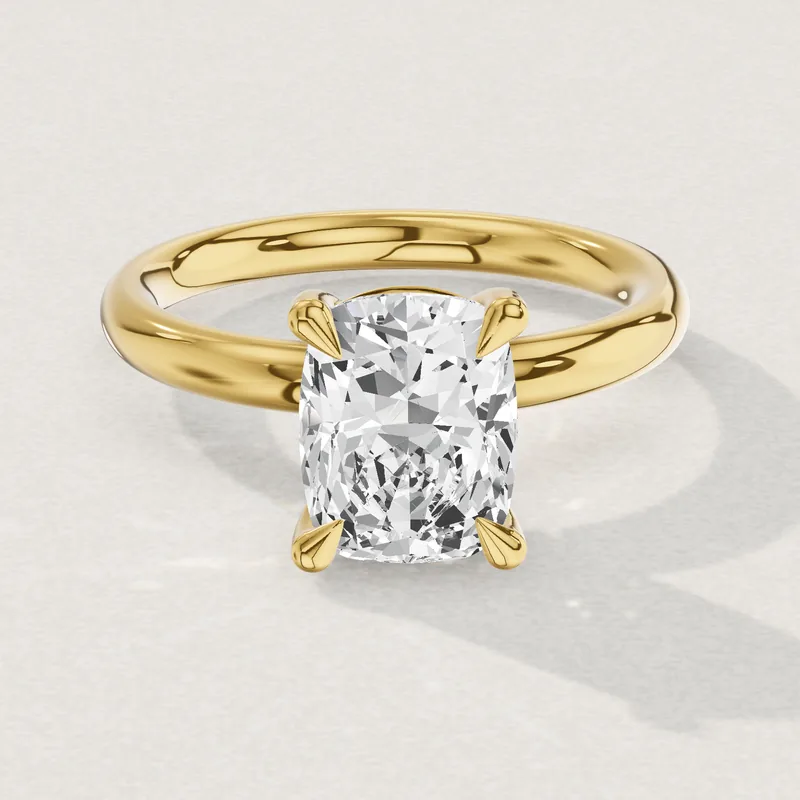
A 1.8mm or 2mm band suits short fingers best. A thin band leaves more of the finger showing, and a wide one uses up length that a short finger has less of to give.
Our band width by hand size guide recommends 1.8mm to 2mm for AU sizes F to J and 2mm to 2.5mm for sizes K to N, and it tells short fingers to stay at the bottom of their row. Our settings come in 1.8mm, 2mm, 2.5mm and 3mm, so the first two are the ones to look at.
The stone has a say as well. From about 1.5 carats we recommend at least 2mm, so the band gives the stone a base that matches it. A tapered band, which narrows towards the stone, keeps the shoulders slim where the band meets the setting.
from the front
from the side
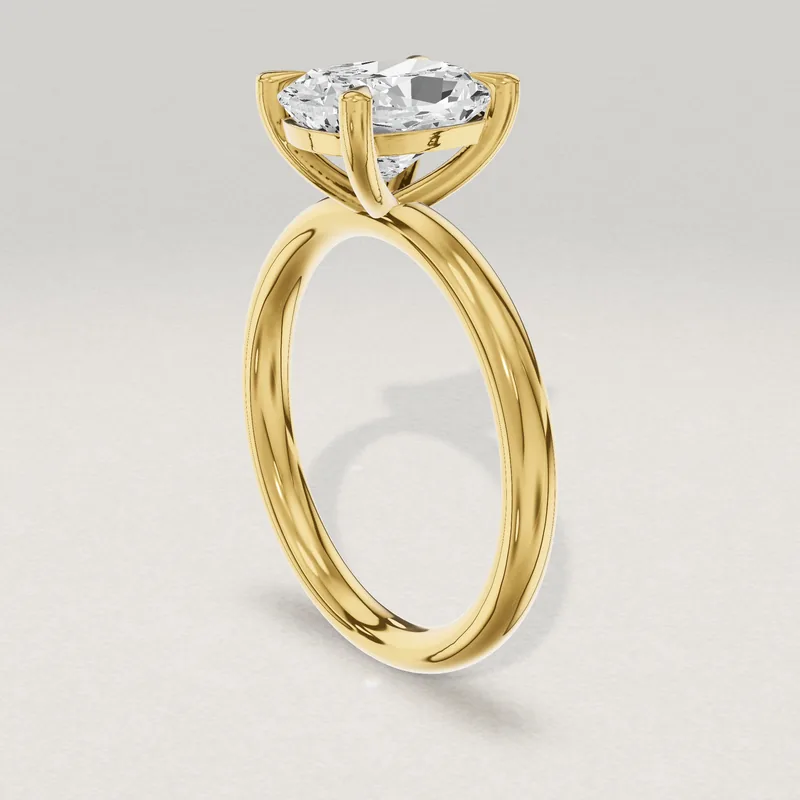
Which settings suit short fingers?
A solitaire suits short fingers best, because claws hold the stone with nothing else around it and the outline of the ring stays clean.
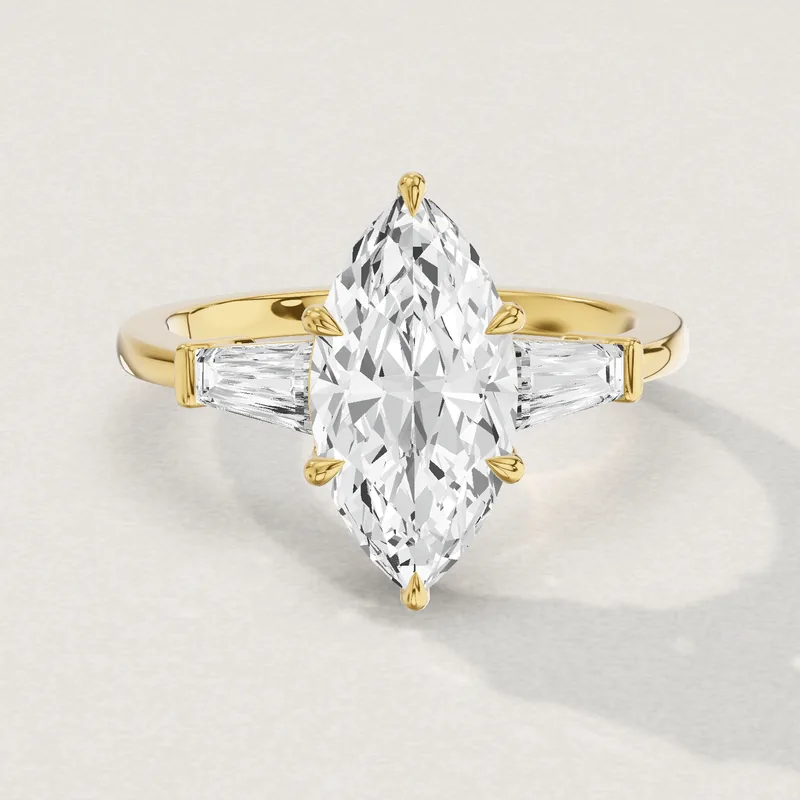
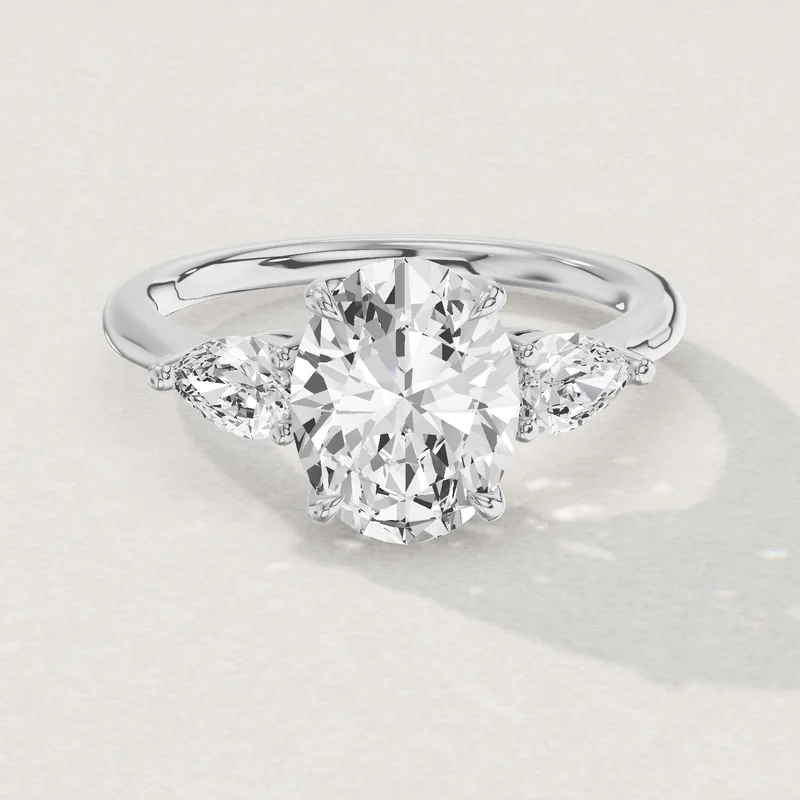
A three-stone works too, when the side stones are small and the centre is elongated, so the line still runs along the finger.
tapered baguettes
pear side stones
A lower setting is worth considering as well. A tall setting catches on things more often, and a low profile engagement ring is easier to wear every day.
Should the stone sit north-south or east-west on short fingers?
North-south is the usual pick for short fingers. An east-west setting turns the stone sideways, which keeps its length off the finger, and that can help when the gap below the knuckle is small. The trade-off is that it draws a line across the finger, so the finger looks wider rather than longer.
East-west suits long fingers best, as our guide to long, skinny fingers explains, and our east-west vs north-south guide shows the two side by side.
What is the best ring shape for short chubby fingers?
An elongated shape set north-south is the best ring shape for short chubby fingers, and oval is the best diamond shape for short chubby fingers if you want one answer.
The band is what changes. Our guide to engagement rings for chubby fingers recommends 2.5mm or 3mm, and this page recommends 1.8mm or 2mm, so for short chubby fingers choose between the two at 2mm to 2.5mm. That is thin enough to leave the finger showing and wide enough to sit in proportion.
A pear is close behind the oval. A solitaire is the most flattering place to start on a short, plump hand, and a three-stone with small side stones is the next thing to try.
How do you wear a wedding band with an engagement ring on short fingers?
Keep both rings slim and close in width: 1.8mm to 2mm each, and within about 0.3mm of each other so the two look like a pair. Two rings take up more of the finger than one, which is why a short finger can feel like an awkward amount of room for both. There are three ways to handle it:
- A slim matched pair. Two slim bands look better on a short finger than one wide one, and matching the widths keeps the pair tidy.
- A curved band. A curved wedding band follows the outline of the stone and sits flush against the engagement ring, so there is no gap between the two.
- One ring. Some people wear one ring for both. Our guide to using your engagement ring as your wedding ring covers how that works.
What should I avoid on short fingers?
Three things tend to work against a short finger:
- Very wide bands. A band of 3mm or more covers a lot of a short finger before the stone is counted.
- Wide clusters and large halos. Anything that spreads across the finger draws the line sideways, where an elongated solitaire draws it along.
- Stacks of several bands. Each band takes more length. Keep a stack to two slim bands.
A very long stone on a very short gap belongs on the list too, and the measuring check above catches it before you order.
Wear what you love. These are the proportions we see work in the rings we make, and short fingers look best when the ring leaves plenty of finger showing.
The simple framework
Choose an elongated shape, set it north-south in a solitaire, and put it on a 1.8mm or 2mm band, with 2mm from about 1.5 carats. Measure from the base of your finger to your middle knuckle before you choose the shape, and pick an oval or an emerald if the gap is small. Keep the wedding band slim and close in width to the engagement ring.
View our thin band engagement rings, which open at 1.8mm, or our oval engagement rings to compare designs, all made to order in Melbourne.
Thanks for reading,
Jared and Brie
Designed with you, made to order
Our jewellers in Melbourne and Auckland make every ring to order for the person wearing it. If this article helped, the collection shows how these choices look on real rings, and you can ask us anything before you decide.
Or ask us a question first