

What is the best engagement ring for small hands?
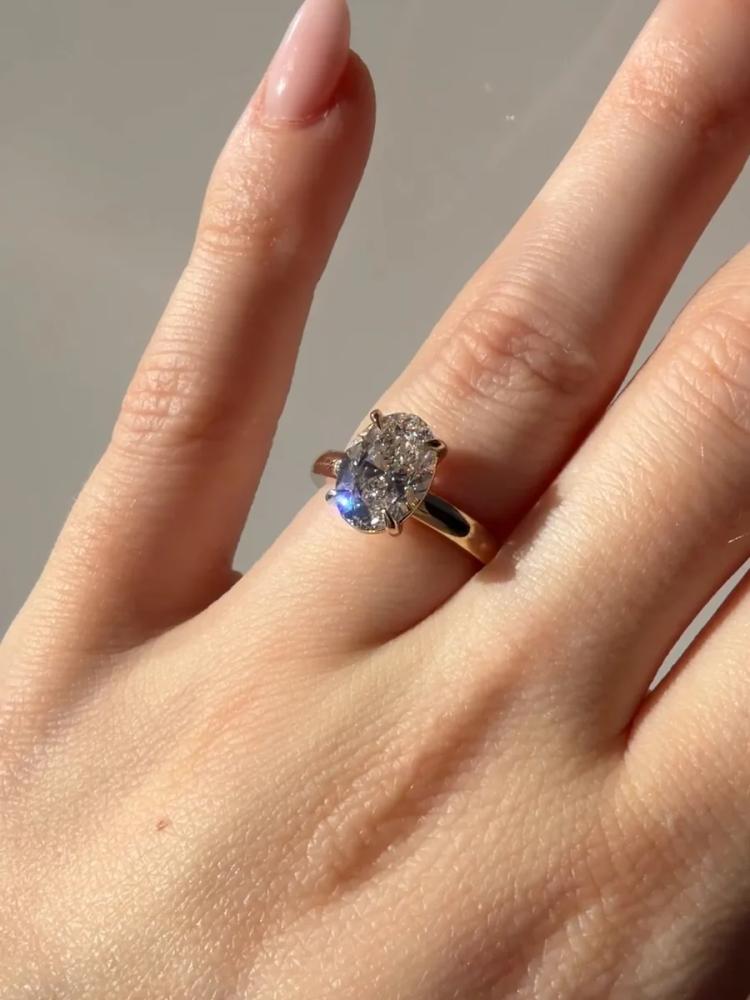
The best engagement ring for small hands is an elongated stone of 1 to 1.5 carats on a 1.8mm or 2mm band, set as a solitaire. The best engagement ring for small fingers is the same ring, because the thing that matters in both cases is how wide the finger is.
A stone looks large or small against the finger it sits on, and on a small hand the same diamond covers more of a narrower finger, so it looks bigger. A 1.5 carat round covers 50% of the width of a US size 4 finger, which is about what a 2 carat round covers on an average finger. In other words, a stone looks about half a carat bigger on a US 4 than it does on an average hand.
That works in your favour. You can choose a smaller stone and get the look of a larger one, or choose the larger one and enjoy it. You can try each combination across our bespoke engagement rings.
What is the best diamond shape for small hands?
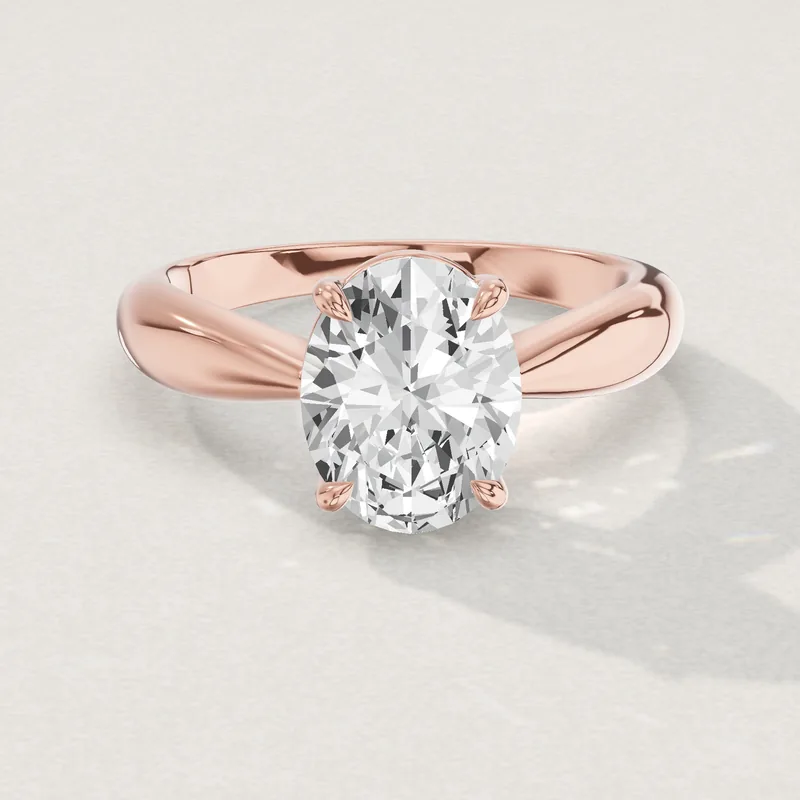
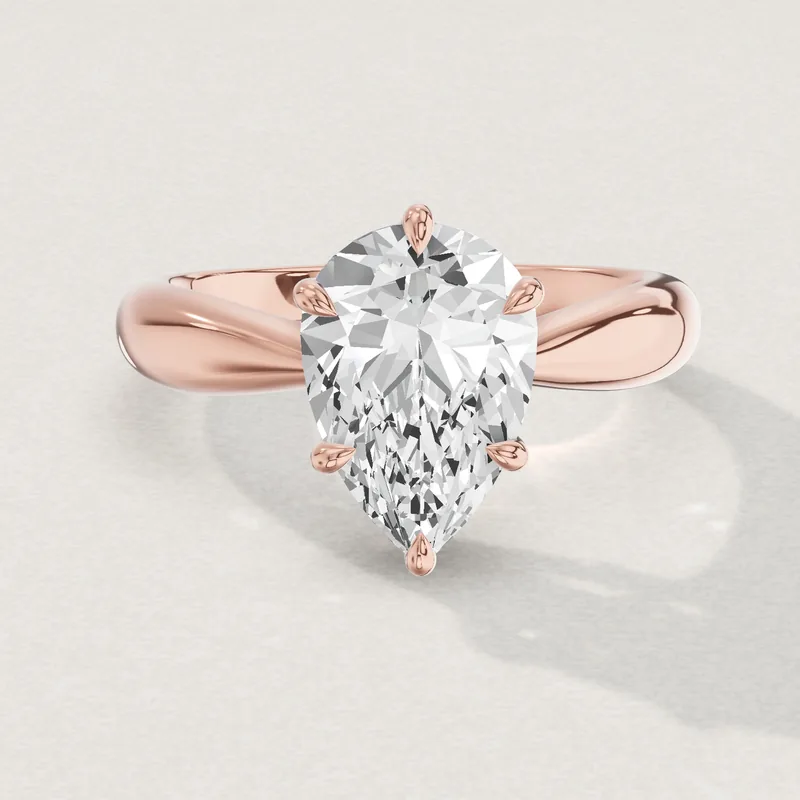
Oval is the best diamond shape for small hands, followed by pear, marquise and emerald. Elongated shapes run along the finger instead of across it, and they give more look for each carat: at 1 carat our rounds are about 6.5mm across, where our ovals are about 8.2mm long.
If you are asking which is the best ring shape for small hands, this is the order we would try them in:
- Oval. The first pick. Our 1.5 carat ovals are about 6.5mm wide, as wide as a 1 carat round, and 9.3mm long, so the extra weight goes along the finger. Our oval buying guide covers the details.
- Pear. About 9.1mm long and 5.6mm wide at 1 carat. Worn with the point towards the fingertip, it carries the eye along the finger.
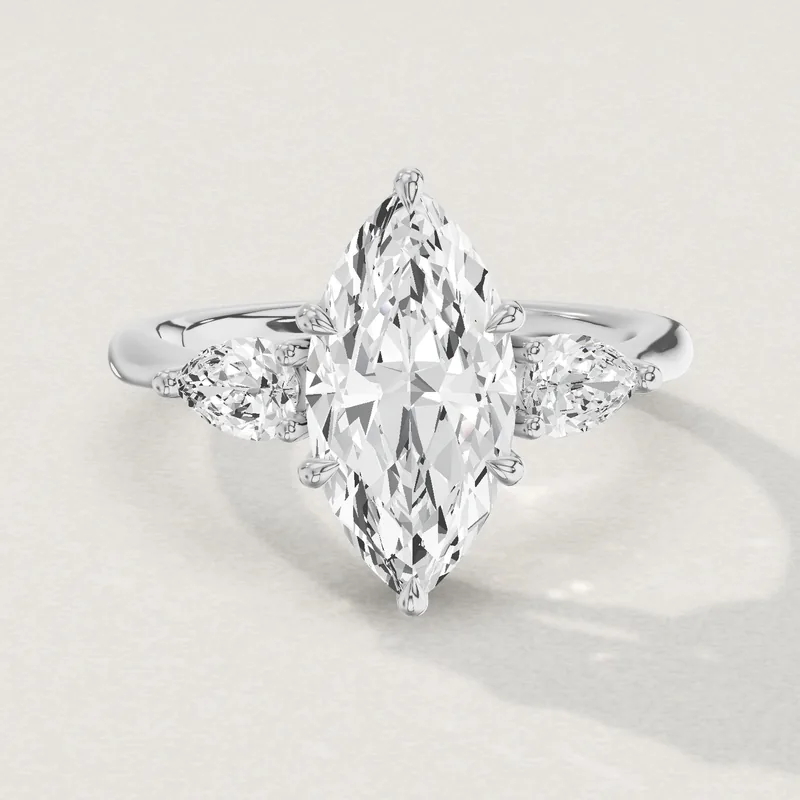
- Marquise. The longest shape for its weight, about 10.5mm long at 1 carat and only 5.3mm wide, so it leaves the most finger showing on either side.
- Emerald. The shortest of the four, about 6.9mm by 4.8mm at 1 carat, with clean step-cut lines that look neat on a small finger.
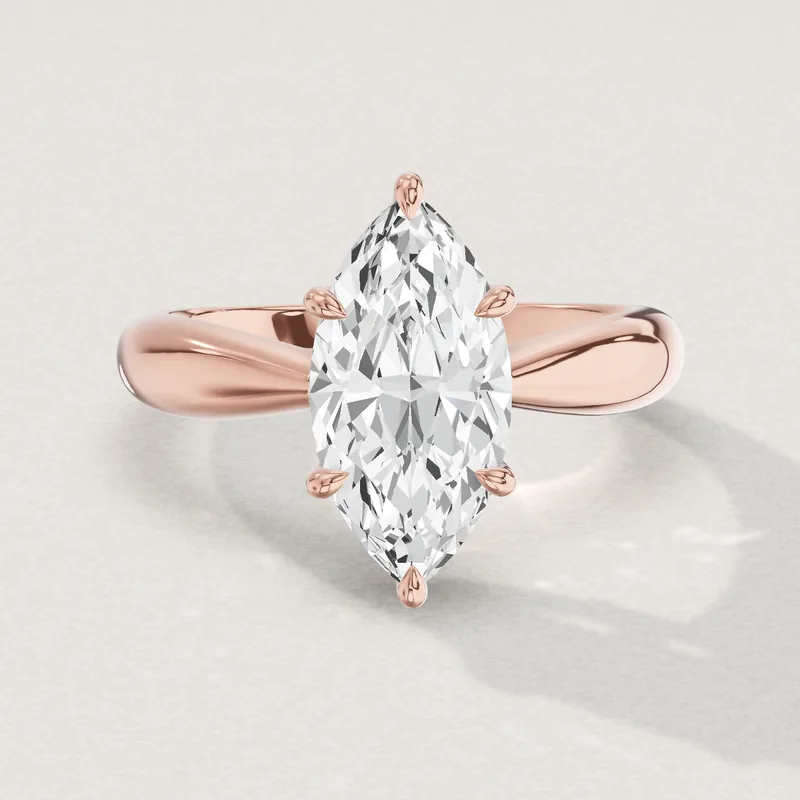
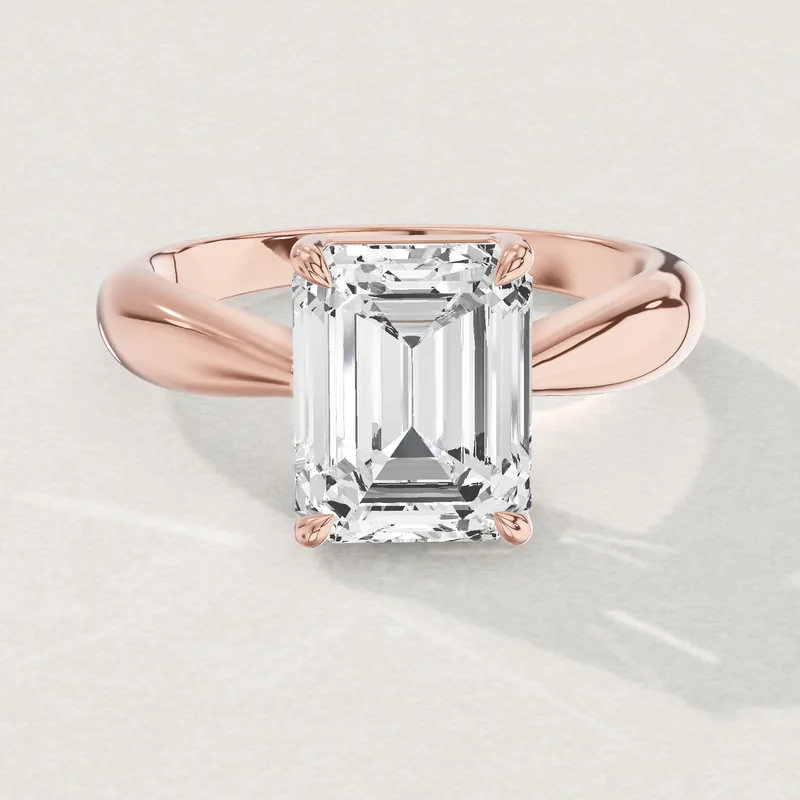
Round is the classic, and it works well on a small hand at 1 to 1.5 carats. A 1 carat round on a US 4 finger covers 44% of its width, the same share a 1.5 carat round covers on an average finger. Our oval vs round comparison shows the two side by side.
Is a 1.5 carat diamond too big for small hands?
No. A 1.5 carat diamond looks generous on small hands and stays in proportion, covering about half the width of a US 4 finger. No carat is too big if you love it, and the practical limits are comfort and how far the stone sits over the fingers on either side.
This is how much of the finger our round diamonds cover at each ring size, using the inside diameter of the ring as the width of the finger:
| AU ring size (US) | Diameter (mm) | 1 carat round (6.5mm) | 1.5 carat round (7.4mm) | 2 carat round (8.1mm) |
|---|---|---|---|---|
| F (US 3) | 14.1 | 46% | 53% | 58% |
| H (US 4) | 14.9 | 44% | 50% | 55% |
| I (US 4½) | 15.3 | 43% | 48% | 53% |
| J½ (US 5) | 15.7 | 41% | 47% | 52% |
| K½ (US 5½) | 16.1 | 40% | 46% | 50% |
| M (an average finger, US 6¼) | 16.7 | 39% | 44% | 49% |
The stone sizes are the medians of our own lab-grown rounds on 13 November 2026, and the diameters come from our ring size chart. Our carat size chart on hand shows more sizes.
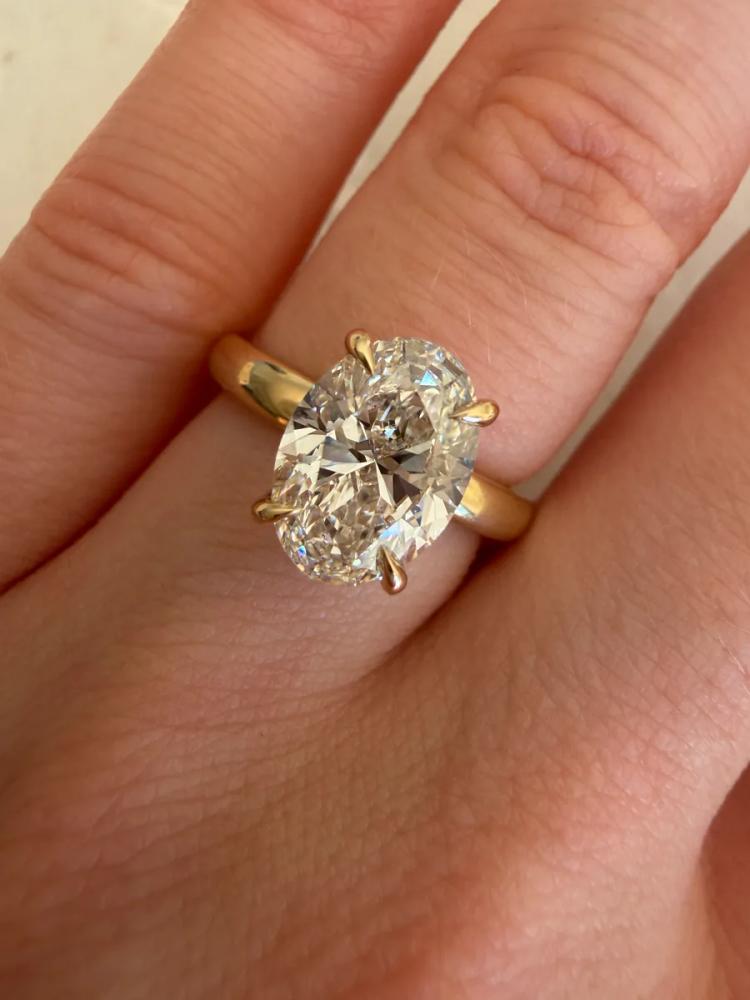
Is a 2 carat diamond too big for a size 4 finger? It is a bold look, covering 55% of the finger, which is more than a 2 carat covers on an average hand, and it is yours to wear if you love it. If you want that weight with less width, choose an oval: our 2 carat ovals are about 7.2mm wide, a little narrower than a 1.5 carat round, and 10.4mm long.
If you are asking what size diamond suits a size 4 finger, 1 to 1.5 carats is the comfortable range. It covers 44% to 50% of the finger, which is the look a 1.5 to 2 carat stone has on an average hand.
What suits a size 3 or size 4 finger?
A 1 carat stone on a 1.8mm band suits a US size 3 to 4 finger (AU F to H) very well. At a US 3 a 1 carat round already covers 46% of the finger, more than a 1.5 carat round covers on an average one, so a stone looks its biggest here.
Every ring we make is made to order in Melbourne to the size you give us, so a size F is made the same way as any other size. If you are unsure of your size, ask and we will post you a free ring sizer before you order.
What band width suits small hands?
A 1.8mm or 2mm band suits small hands best. Our band width by hand size guide puts AU sizes F to J at 1.8mm to 2mm, and a slim band makes the stone look larger by contrast.
The stone has a say as well. From about 1.5 carats we recommend at least 2mm, so the band gives the stone a base that matches it. Our slimmest band is 1.8mm, and if you are wondering about going finer, we answer that in is a 1.5mm ring band too thin.
Which settings suit small hands?
A solitaire suits small hands best, because it keeps the metal around the stone light and lets the stone and the finger both show.
- Solitaire. Claws and nothing else around the stone, so the least metal across the finger and the most stone. Our solitaire engagement rings start here.
- Tapered band. The band narrows as it meets the stone, which makes the stone look larger against it.
- Three-stone with small side stones. Side stones well under the size of the centre add sparkle either side of it and keep the focus on the centre stone. See our three-stone engagement rings.
- A lower setting. A larger stone that sits closer to the finger feels more in scale with a small hand and is easier to wear every day. Our low profile engagement rings are a good place to look.
pear side stones
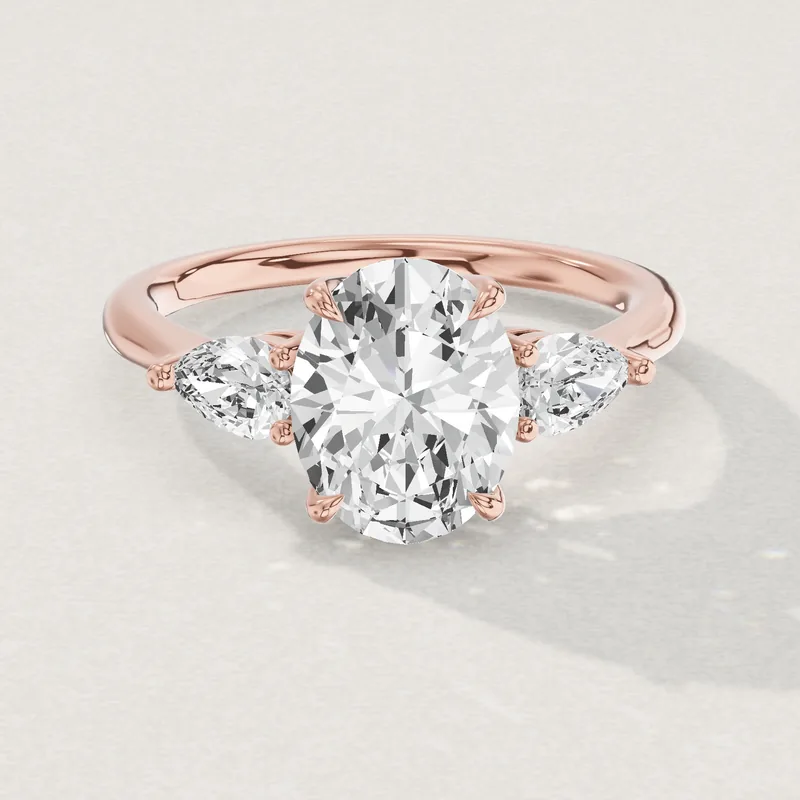
pear side stones
How do I stop a wedding set looking clunky on small hands?
Keep the two rings slim and close in width. A wedding band within about 0.3mm of the engagement ring looks like a pair, so a 1.8mm engagement ring sits best with a band of about the same width. Two slim bands look lighter on a small finger than one wide one.
What if I have small fingers and big knuckles?
Size the ring to pass the knuckle. When the knuckle is wider than the base of the finger the ring has to fit over it, so it can sit a little loose below. Our guide to whether a ring should be tight or loose explains the fit test we use. We have no showroom, so we work through sizing with you by video, phone or email before your ring is made.
Does the same advice apply to petite hands and small fingers?
Yes. People also search for engagement rings for petite hands and engagement rings for small fingers, and the advice is the same for all of them: an elongated stone, a 1.8mm or 2mm band, and a light setting.
Small hands with long fingers have one more option. There is room for a longer stone, so a pear or marquise sits comfortably, and our guide to long, skinny fingers covers that hand in full. If your worry is the length of your fingers more than your ring size, read our guide to engagement rings for short fingers.
What should I avoid on small hands?
Three things tend to disappoint:
- Very wide bands. A wide band covers more of a small finger and makes the stone look smaller beside it. Stay at 1.8mm or 2mm.
- A tall, heavy setting. A lot of metal sitting high above a small finger looks top-heavy and catches on things more often. A lower, lighter setting wears better.
- Chunky stacks. Several bands together take up much of the finger. An engagement ring with one slim wedding band is enough.
Wear what you love. These are the proportions we see work in the rings we make, and the pattern is consistent: small hands look best in rings that are light in metal and generous in stone.
The simple framework
Choose an oval or another elongated shape at 1 to 1.5 carats, put it on a 1.8mm band, or 2mm from 1.5 carats up, and keep the setting light. Remember that the stone will look about half a carat bigger on your hand than it does on an average one, and go larger if you love it.
View our thin band engagement rings, which all open at 1.8mm, or our 1.5 carat engagement rings to see the size on real designs, all made to order in Melbourne.
Thanks for reading,
Jared and Brie
Designed with you, made to order
Our jewellers in Melbourne and Auckland make every ring to order for the person wearing it. If this article helped, the collection shows how these choices look on real rings, and you can ask us anything before you decide.
Or ask us a question first